The crowds have filled St. Mark’s Square, the narrow lanes seem to point in every direction, and the original plan already feels too large for one day. The best response is not to rush toward another famous landmark, but to use Venice’s quieter neighborhoods as the structure of the visit.
How to Build a Venice Route That Works
Use one district as the day’s anchor
The most reliable Venice itinerary follows geography rather than a long list of attractions. Select one anchor district, one main destination, and two flexible stops nearby. This approach limits unnecessary crossings and leaves room for delays caused by busy bridges, crowded lanes, ferry queues, or a wrong turn.
- Start with a major arrival point, such as the railway station, Piazzale Roma, or a vaporetto stop.
- Walk toward one district instead of zigzagging between distant landmarks.
- Schedule the most time-sensitive visit before lunch or late in the afternoon.
- Leave at least thirty minutes between planned stops for bridges, photographs, and navigation mistakes.
- Finish beside a vaporetto route or a clear land connection rather than in an unfamiliar dead-end lane.
Plan around walking speed, not map distance
Venice maps can be misleading. A route that appears short may involve several bridges, narrow passages, or a detour around a canal with no nearby crossing. A comfortable walking pace often falls below ordinary city speed, especially when luggage, heat, rain, or crowds are involved.
Use landmarks that are easy to recognize: a church façade, a broad campo, a canal junction, or a public boat stop. Street names can change or appear on small signs, while visual landmarks remain easier to confirm. Downloading an offline map helps, but a written sequence of stops is still useful when phone signals or battery life become unreliable.
For a first visit, the strongest structure is a half-day loop and a short evening walk. That gives the day a beginning and an end without turning every hour into a deadline.
Which Venice Neighborhood Fits the Day?
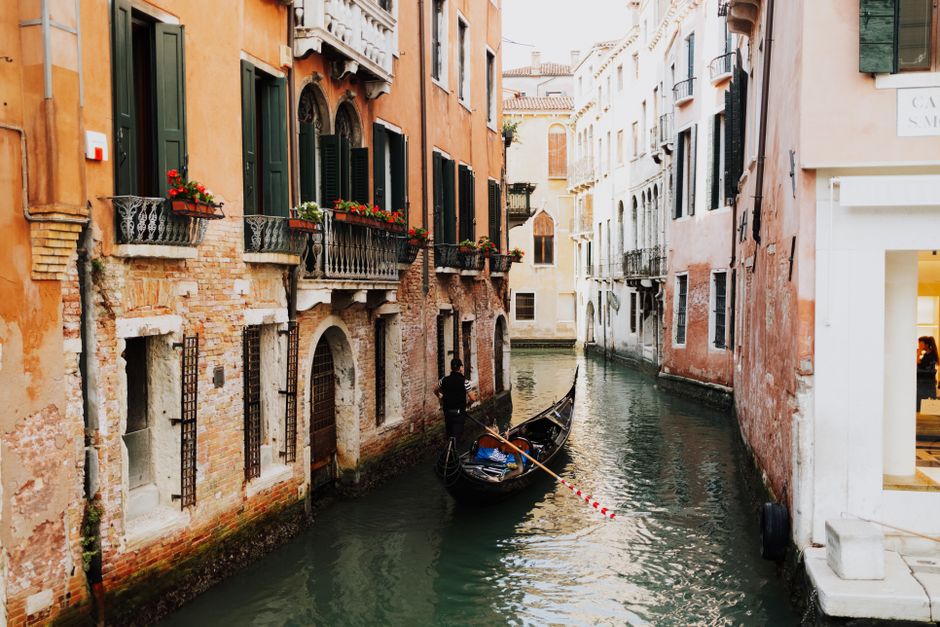
Cannaregio for atmosphere and a slower northern route
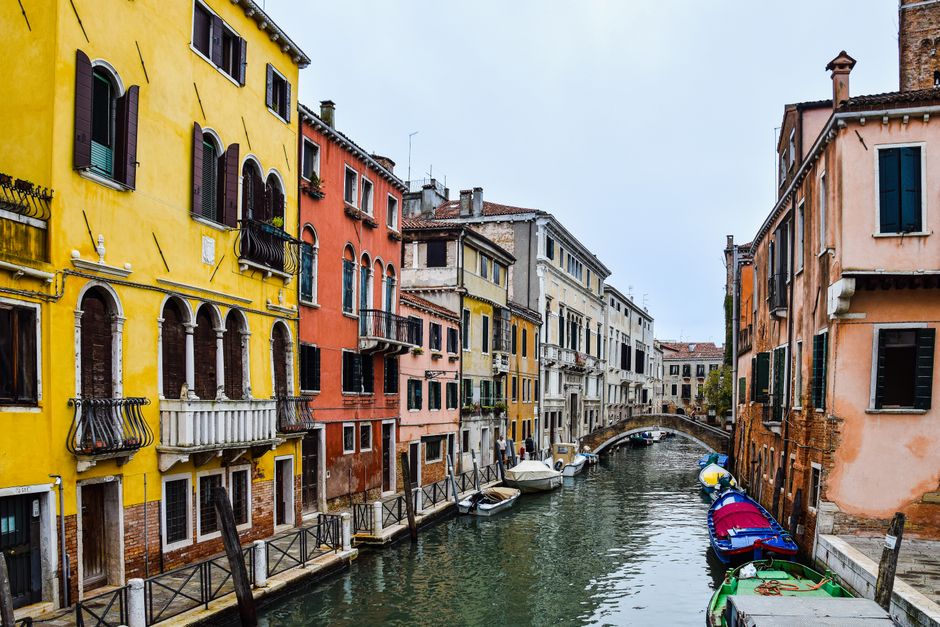
Cannaregio is the best choice for travelers who want a gradual transition away from the central crowds. The district includes busy pedestrian links near the railway station, but its northern and eastern lanes quickly become calmer. The canal-side route toward the lagoon offers a different rhythm from the ceremonial center, with fewer large groups and more residential views.
Dorsoduro for art, water, and open space
Dorsoduro suits visitors who prefer a mix of cultural stops and quiet walking. The district has broad waterfront stretches, university streets, small squares, and views across the Grand Canal. It is a strong option during the middle of the day, when shaded lanes and open edges beside the water make the heat easier to manage.
Castello for residents’ Venice and eastern walks
Castello works best for repeat visitors or anyone willing to walk farther from the central monuments. The western end remains close to St. Mark’s Square, while the eastern side feels more residential. Long promenades, local streets, and quieter corners make Castello the clearest choice for seeing how Venice expands beyond its most photographed center.
| District | Best for | Suggested time | Main trade-off |
|---|---|---|---|
| Cannaregio | Quiet lanes, canals, neighborhood atmosphere | Three to five hours | Some routes feel less direct |
| Dorsoduro | Waterfront walks, art, open squares | Four to six hours | Popular cultural stops can become busy |
| Castello | Residential streets, long walks, eastern Venice | Four to six hours | More walking is required |
| San Polo | Market areas, central canals, compact exploring | Two to four hours | Central lanes can remain crowded |
The clearest choice for most first-time visitors is Cannaregio because it offers an easy contrast with St. Mark’s Square without requiring a full-day commitment. Dorsoduro is stronger for culture and water views, while Castello rewards visitors who value distance from the main tourist circuit.
What Does a One-Day Itinerary Beyond St. Mark’s Look Like?
The most effective one-day plan uses St. Mark’s Square as a starting reference, not as the entire destination. It should include one concentrated central visit, a meal or pause in a less crowded district, and a long afternoon route with no more than one fixed appointment.
Morning: establish the city’s main landmarks
Begin early around St. Mark’s Square and the nearby waterfront. Allow enough time to understand the layout rather than trying to enter every major site. Walk through the surrounding lanes toward Rialto, then continue into San Polo if the streets remain comfortable. This first section provides the classic Venetian setting while the city is still relatively manageable.
By late morning, move away from the busiest crossing. A short break in a campo is more useful than adding another distant sight to the schedule. The goal is to reset before the afternoon route, not to collect one more photograph.
Afternoon and evening: choose Cannaregio or Dorsoduro
For Cannaregio, follow a northern route from the central districts toward quieter canals and lagoon-facing streets. For Dorsoduro, cross toward the southern side and follow the waterfront before turning through the district’s smaller lanes. Both options work better when treated as open-ended walks rather than strict checklists.
End near a vaporetto stop or a familiar bridge. Evening light often softens the stone façades, and the crowds usually thin on residential streets. A final walk beside the water can provide the sense of place that a packed schedule often misses.
This route does not cover every major attraction. That is a strength. Venice rewards depth in one area more than hurried coverage of five.
How Can Visitors Move Around Venice Without Losing Time?
Are walking and boats better than taxis?
For most visitors, walking should be the primary method and public boats should solve longer crossings. Walking reveals small bridges, changing canal views, and neighborhood details that disappear from a fast transfer. Boats become valuable when the route crosses the Grand Canal, connects distant districts, or gives tired travelers a direct return route.
Private water taxis can save time for a specific transfer, but they are not necessary for ordinary sightseeing. The practical question is not which method feels most luxurious. It is whether the transfer removes a difficult crossing or simply replaces a pleasant walk.
How should ferry stops and schedules be handled?
Check the route direction before boarding. Stops may share similar names, and a boat traveling in the opposite direction can turn a short trip into a long loop. Arrive early when a route serves a major interchange, particularly around the first and last parts of the day.
Keep a second route in mind. Water levels, weather, maintenance, and crowd control can affect service. If a boat is full, walking to the next stop may be faster than waiting in a dense queue. A simple rule works well: use boats for distance, walking for discovery, and never schedule a tight connection after a long crossing.
Comfort also matters. Bridges have steps, cobblestones can be uneven, and luggage changes the calculation. Shoes with stable soles and a small day bag make the city easier to navigate than an ambitious transport plan.
What Should Visitors Expect Beyond the Famous Center?
The city becomes quieter, not empty
Beyond St. Mark’s Square, Venice does not suddenly become undiscovered. Popular churches, museums, viewpoints, and waterfront paths still attract visitors. The difference is that tourist activity is spread across a larger area. A quiet street may lead to a busy attraction, and a famous route may contain an unexpectedly peaceful corner.
Expect more walking than a standard city break. Bridges create repeated changes in elevation, and there is no simple grid to correct every wrong turn. That friction is part of the city’s design. It also means that a short route can feel substantial, especially when weather or luggage adds effort.
How the opening problem gets resolved
The traveler who begins surrounded by crowds does not need to escape Venice entirely. A deliberate turn toward Cannaregio, Dorsoduro, Castello, or San Polo is enough to change the experience. One district, one clear direction, and a flexible return route usually produce a fuller day than a checklist of distant attractions.
St. Mark’s Square still deserves its place. It establishes the scale, history, and drama of the city. But the quieter streets explain how Venice functions after the tour groups move on. The strongest itinerary holds both views together: the famous center for context, and the surrounding neighborhoods for character.
When the crowded square becomes overwhelming, the practical answer is already close: cross one bridge, choose one district, and allow Venice to unfold at walking speed. That is how a difficult first impression becomes a more balanced and memorable visit.