A traveller lands in Tashkent with one week available, then discovers that the famous Silk Road cities sit hundreds of kilometres apart. The challenge is not finding beautiful places; it is building a route that leaves enough time for courtyards, markets and evening walks instead of turning the trip into a chain of station transfers.
Which Silk Road cities belong on a first Uzbekistan route?
Samarkand delivers the strongest first impression
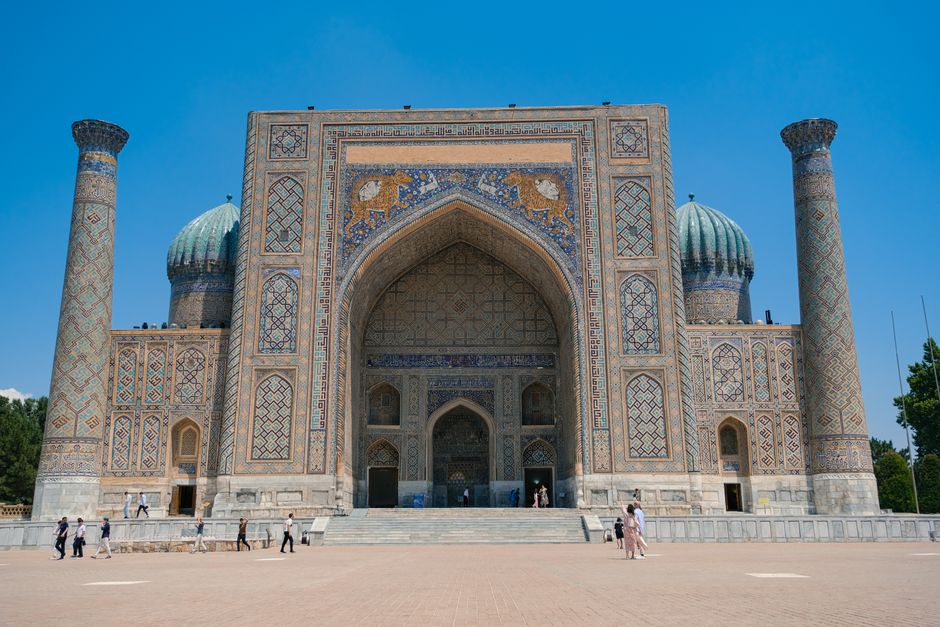
Samarkand should anchor a first visit because it combines monumental scale with a manageable city layout. The main sites feel grand and polished, but the surrounding lanes reveal a quieter city of bakeries, neighbourhood courtyards and shaded streets.
Bukhara and Khiva solve different travel problems
Bukhara is the best choice for travellers who want living urban history. Its old centre supports long walks between mosques, trading domes, courtyards and small workshops. Khiva feels more concentrated and theatrical. The walled centre can be crossed on foot, making it the easiest place for an unhurried day of architecture and photography. For a seven-day route, choose all three only when long travel days are acceptable. For slower travel, pair Samarkand with Bukhara and leave Khiva for a separate journey.
Verdict: Samarkand is the essential first stop, Bukhara offers the richest street-level experience, and Khiva is the clearest introduction to a preserved walled city.
How long should be spent in each city?
A simple allocation for seven days
| City | Recommended stay | Core experience | Travel note |
|---|---|---|---|
| Tashkent | 1 night | Arrival, metro, food markets | Useful buffer after an international flight |
| Bukhara | 2 nights | Old town, trading domes, evening squares | Allow roughly 2 to 3 hours by train when available |
| Khiva | 2 nights | Walled city, gates, towers and courtyards | Longer transfer; air or rail timing needs checking |
Where the schedule becomes fragile
The weakest plan tries to sleep in every city while also fitting museums, markets and travel connections into seven days. A delayed departure can remove an entire sightseeing block. Keep the first night flexible, and avoid placing an important guided visit immediately after a cross-country transfer.
The practical choice
For a balanced route, use Tashkent as an arrival buffer, spend two nights in Samarkand, two in Bukhara and two in Khiva. For a shorter trip, remove Tashkent sightseeing rather than cutting a night from Samarkand. The historical cities reward daylight and walking time more than a longer checklist.
How to experience Samarkand beyond the postcard view
Start with the major monuments before the crowds
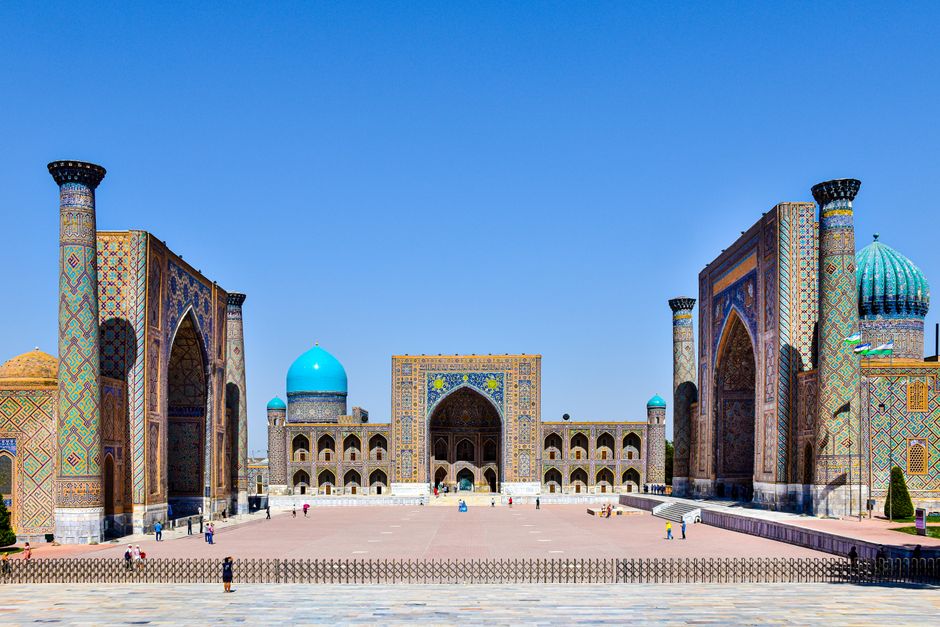
Samarkand works best when the day begins early. Reach the Registan before the strongest heat and before large tour groups gather. The three madrasas are not interchangeable decorations: their façades, tile patterns and proportions reflect different building periods and visual choices. Take time to stand at an angle rather than viewing the square only from the centre. The changing light makes the blue tilework look sharper in the morning and softer later in the day.
Build a walking sequence instead of isolated stops
Its narrow passage, tiled mausoleums and steps create a very different mood from the open scale of the Registan. Modest clothing and quiet behaviour matter here because the site remains religious as well as historic.
Leave room for ordinary Samarkand
Do not fill every hour with monuments. A late afternoon walk through residential streets, a shared meal and time beside a public square often produce a better sense of place than another ticketed entrance. The city is not a museum set. Traffic, construction, school groups and family life continue around the heritage sites.
Best approach: reserve the first morning for the iconic sights, the second day for linked neighbourhood routes, and the final evening for an unscheduled walk. That rhythm gives the city room to feel lived in.
How to plan the route without wasting travel time
Use this seven-step planning sequence
- Check entry rules and passport validity before choosing dates.
- Arrive in Tashkent and keep the first evening light.
- Book the Tashkent to Samarkand connection before committing to timed visits.
- Place the largest Samarkand monuments across two mornings rather than one crowded day.
- Travel to Bukhara after breakfast, leaving the afternoon for the old town.
- Use the second Bukhara day for a slower circuit through trading domes, courtyards and local food streets.
- Reach Khiva with a full following day available, since the longer transfer can absorb unexpected delays.
Protect the important days
Keep at least one unscheduled half-day in the seven-day plan. It can absorb a late train, a missed connection, heat exhaustion or a site that deserves more time. This is not wasted capacity. It is the difference between seeing a city and merely passing through it.
Pack for movement and weather
Comfortable shoes matter more than dressy travel clothes because old streets can be uneven and distances expand during sightseeing. Carry a light layer for early mornings, sun protection for exposed squares and clothing that covers shoulders and knees at religious sites. A small day bag keeps water, documents and a scarf accessible without slowing movement.
The best route is the one that protects evening time
The strongest itinerary puts architecture in the morning and local life after sunset. This choice improves the trip because the most dramatic monuments are easier to read in softer light, while the cities become more social once the heat drops. A schedule built only around entrances misses the hours when plazas fill, families walk and food stalls become active.
Why the evening changes the experience
Samarkand feels expansive after dark, Bukhara becomes atmospheric around its central ponds and Khiva grows quieter once day visitors leave the walls. These are not separate attractions with fixed opening hours. They are parts of the city that appear when the sightseeing timetable ends.
When to slow the plan
Reduce the number of formal visits if the forecast brings intense heat, if a religious site is unusually busy or if the route includes a long transfer. Travellers who treat every delay as a crisis usually lose the most memorable parts of the day. The better tradeoff is one fewer monument and a proper meal in a neighbourhood with time to observe the setting.
For most first-time visitors, the clear choice is a three-city route with two nights in each historic centre. It covers the essential contrasts without turning every morning into a departure.
Common questions about Uzbekistan’s Silk Road cities
Is Tashkent worth more than one night?
Yes, if the trip includes modern Uzbekistan as well as heritage sites. Tashkent offers broad avenues, Soviet-era planning, busy markets and a different pace from the compact old towns. With only seven days, one arrival night is enough for the route, but adding a second night makes sense when the flight arrives late or the itinerary needs recovery time.
Which city is easiest for independent walking?
Khiva is the simplest because the main historic centre is enclosed and compact. Bukhara is also highly walkable, although its attractions spread across a wider network of lanes. Samarkand requires more planning because major sights sit farther apart and the city feels less concentrated.
Should a guide be used?
Independent walking works better for markets and residential areas. The best balance is a focused guided visit followed by free time, not a full day of continuous commentary.
What is the biggest planning mistake?
Trying to cover every major city in too few nights. The route looks efficient on a map, but transfers consume attention and daylight. Two well-experienced cities create stronger memories than four rushed checklists.
What to expect before travelling
Prepare for comfort without expecting uniform convenience
Accommodation, transport and public facilities vary between the capital and smaller historic centres. The main tourist districts are straightforward, but side streets can have rough paving, limited shade and fewer signs in English. Carry offline maps, learn a few basic greetings and keep important addresses written in the local script when possible.
Avoid the mistakes that flatten the experience
- Do not schedule the hottest outdoor sites at midday when an early start is possible.
- Do not assume every train departure has the same timetable throughout the year.
- Do not enter religious spaces in beachwear or treat active places of worship as photo sets.
- Do not judge a city only by its restored central monuments.
- Do not leave every meal to the most visible tourist street.
The final verdict
Uzbekistan’s Silk Road cities reward a route built around contrast: Samarkand for monumental ambition, Bukhara for layered daily life and Khiva for a concentrated walled setting. The strongest journey leaves enough space for heat, delays and unplanned streets. As rail links and visitor facilities continue to improve, the best itineraries will still be the ones that protect time for looking closely rather than moving constantly.