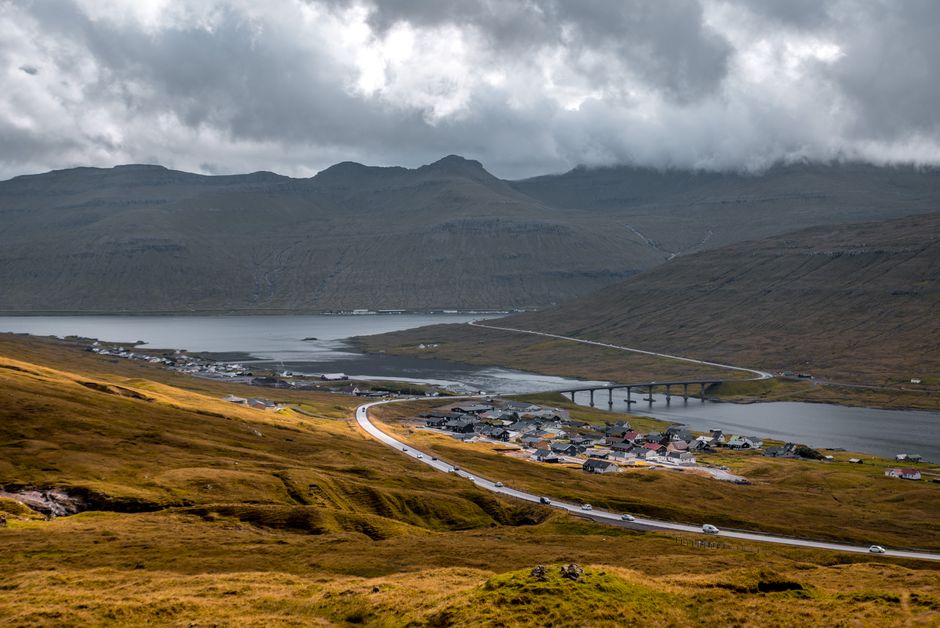
The Faroe Islands reward travelers who leave room for wind, fog and missed departures. A sensible trip combines a few villages, one major hike at a time and enough spare hours to change plans when the North Atlantic does.
How many days should you spend in the Faroes?
The practical answer
Five to seven full days is the best starting point for most visitors. Four days can cover the capital, Vágar and one northern route, but the schedule becomes fragile when a ferry is delayed or a mountain disappears into fog. Ten days gives you time for Suðuroy, Sandoy or slower village walks.
| Trip length | Best use | Suggested base | Main limitation |
|---|---|---|---|
| 3–4 days | Tórshavn, Kirkjubøur, Vágar and one hike | Tórshavn or Sørvágur | Little weather backup |
| 5–7 days | Vágar, Streymoy, Eysturoy, Kalsoy and northern villages | Two bases or Tórshavn with a car | Remote islands still need planning |
| 8–10 days | Add Suðuroy, Sandoy, Mykines or extra hiking days | Three bases | Higher accommodation and ferry costs |
A workable seven-day shape
Use the first day for Tórshavn and Kirkjubøur. Give Vágar a full day for Gásadalur, Bøur and Sørvágsvatn. Reserve another day for Saksun and Tjørnuvík, then place Gjógv or Eiði on a separate day. Save Kalsoy for a clear-weather window rather than locking it into the first available date. This order matters because the most dramatic places are also the most exposed to cancellations.
Do not treat the islands as a checklist. The strongest itinerary leaves one half-day unassigned.
Which Faroese villages deserve priority?
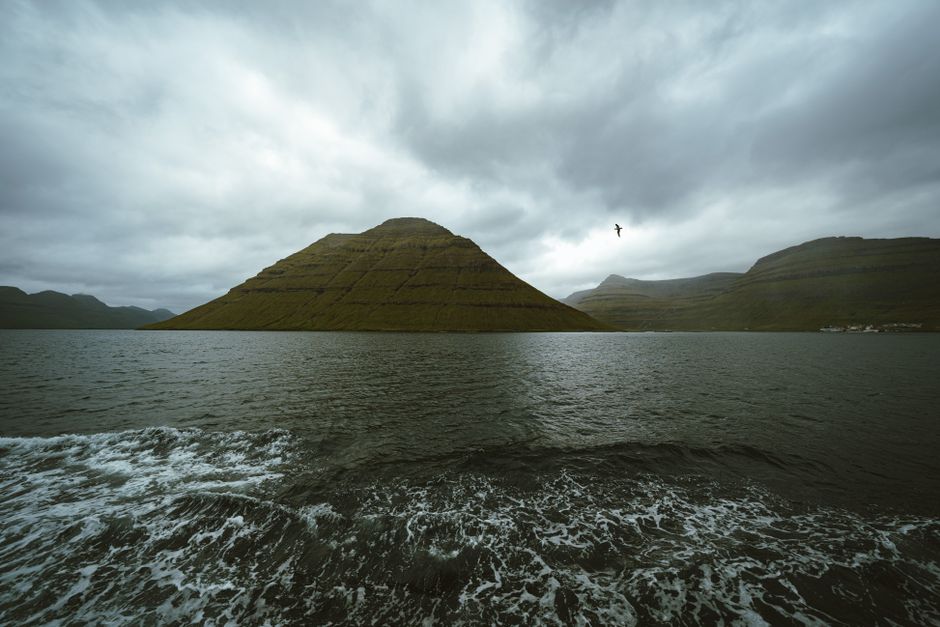
West and central islands
- Tórshavn: Choose the capital for restaurants, museums, harbor walks and the easiest transport connections. It is the best base when weather may disrupt day trips.
- Kirkjubøur: Visit for medieval history, the ruins of Saint Magnus Cathedral and the old farmhouse Roykstovan. It works well as a short outing from Tórshavn.
- Bøur and Gásadalur: Pick these villages for sea-stack views and Múlafossur waterfall. Bøur is a viewpoint stop; Gásadalur deserves more time because the landscape opens gradually around the village.
- Saksun: Go for the grass-roofed settlement, tidal lagoon and narrow valley. Check access rules and tide conditions before walking toward the beach.
North and east
- Gjógv: This is the clearest village choice for a first visit to Eysturoy. The natural harbor, village paths and views toward the sea make it worthwhile even without a long hike.
- Tjørnuvík: Choose it for the black-sand beach and views toward the sea stacks known as the Risin and Kellingin. The road is narrow, so arrive early and never use a passing place as a parking spot.
- Viðareiði: Visit when you want a remote northern setting and a serious mountain backdrop. The village is more rewarding for travelers who accept that the view may be hidden by cloud.
The clearest verdict is simple: first-time visitors should prioritize Tórshavn, Kirkjubøur, Gásadalur, Saksun, Gjógv and Tjørnuvík before chasing every smaller settlement.
How do you choose a safe Faroese hike?
Match the route to the forecast, not the photograph
Faroese hiking is less about distance than exposure. A short trail beside a cliff can demand more judgment than a longer valley walk. Before leaving, check the route description, forecast, visibility and wind. The official hiking guidance advises visitors to stay on marked paths, avoid fog and darkness, carry food and water, and tell someone where they are going. The official safe-hiking guide also provides route information and safety advice.
For a first serious walk, choose a route with a clear turnaround point. The Sørvágsvatn–Trælanípa walk is close to Vágar Airport, and the viewpoint is roughly 45 minutes from the start in each direction according to local tourism guidance. It is a better introduction than beginning with a high ridge in poor visibility. The Kallur Lighthouse hike on Kalsoy is more exposed, more dependent on ferry timing and subject to a hiking fee; treat it as a full day rather than a quick photo stop.
Know the failure modes
- Do not start beside a cliff when fog is moving in. Stop if you cannot see the next cairn.
- Do not wear jeans or smooth-soled sneakers on wet, uneven ground. Waterproof layers and grippy footwear are practical safety equipment.
- Do not assume a popular path is unrestricted. Trælanípa, Kallur and Mykines have access rules or fees that can change.
- Do not hike alone on a remote route. Leave your plan with your accommodation, and carry a charged phone, water, food and a power bank.
- Do not ignore seasonal activity. Hare hunting takes place from 2 November through 31 December, and visitors should ask the local information centre or landowner before entering mountain areas.
For most travelers, the best hiking strategy is one major route per day plus a low-risk village walk as a backup.
What is Faroese weather really like?
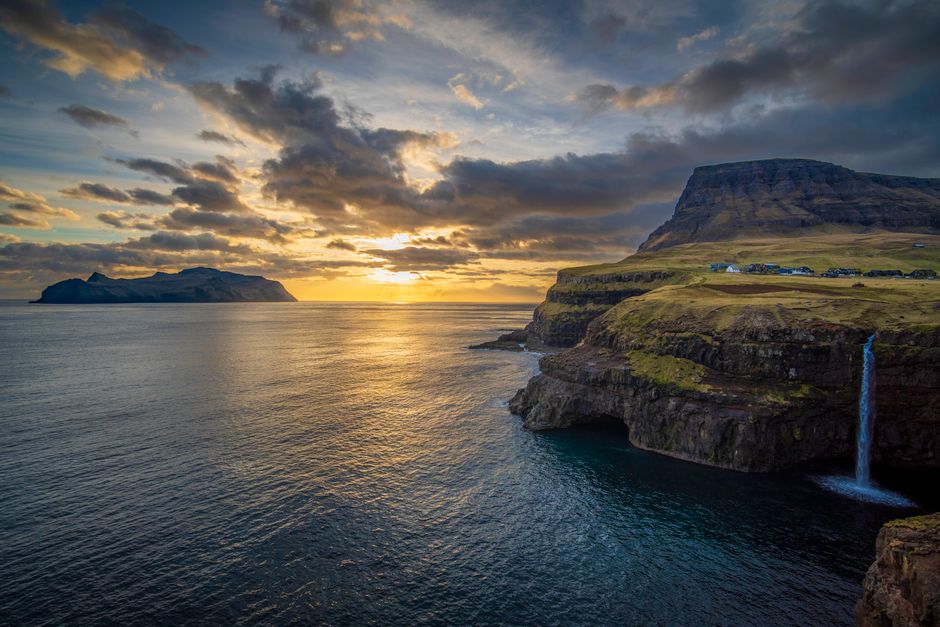
Is summer reliably warm?
No. Summer is the easiest season for long daylight and more hiking options, but average temperatures are still cool, around 10–13°C from June through August. Wind, drizzle and fog can arrive within hours, and one side of a mountain may look bright while the next valley is hidden. The local climate guidance describes the islands as mild, windy and highly changeable rather than severely cold.
What should you pack?
Build clothing around layers. Bring a waterproof and windproof shell, warm mid-layer, hat, gloves and trousers that dry quickly. Sturdy waterproof boots matter on wet grass and loose rock. Even on a town day, carry a waterproof jacket because a clear forecast does not guarantee clear conditions at the coast.
How should weather change your plan?
Put sheltered activities beside exposed ones. If the forecast shows strong wind, replace a cliff hike with Tórshavn, Kirkjubøur or a museum. If fog blocks a summit, walk through a village rather than waiting beside the trailhead for hours. Check the official Faroese forecast on the morning of every hike, then check road cameras before driving. The right question is not “Will it rain?” but “Can I still see the path, control my footing and return before conditions worsen?”
The strongest weather verdict is this: visit in summer for flexibility, but pack and plan as if every season can appear in one day.
Should you rent a car or use public transport?
Rent a car for route flexibility; choose public transport for a slower, lower-stress trip.
A car is the better choice for travelers who want Saksun at sunrise, Gásadalur between showers and remote northern villages on the same day. The road network includes narrow lanes, single-track sections, tunnels and passing places. Headlights are required day and night, the general speed limits are 50 km/h in built-up areas and 80 km/h on rural paved or gravel roads, and passing places are for meeting traffic, not parking.
Public transport works well when you accept fixed departures. Strandfaraskip Landsins operates buses and ferries, while its tourist travel card costs 500 DKK for four days or 700 DKK for seven days for adults. The card does not cover vehicles or the Mykines route. Route 300 connects Tórshavn with Vágar Airport and Sørvágur, and Route 56 links Klaksvík with Kalsoy. Check departures immediately before travel because weather can affect boats and buses.
When should you avoid a car?
Skip a rental car if you dislike reversing in narrow tunnels, plan to drink, or want to spend the trip looking out of a window instead of watching road edges. Do not bring a large campervan into villages with restricted access, including Tjørnuvík and Múli. Subsea tunnels also involve toll payments, and payment arrangements differ by rental company. Atlantic Airways is the main air link for many visitors, while Smyril Line serves travelers arriving by sea; neither removes the need to check local road and ferry conditions after arrival.
For a seven-day first trip, a compact rental car is the strongest choice if you can drive calmly on narrow roads.
What mistakes ruin a Faroe Islands trip?
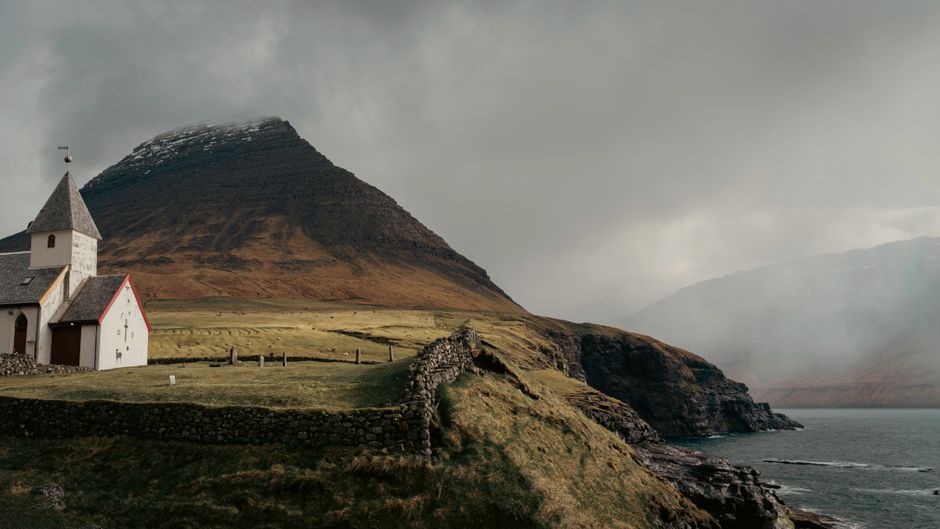
Five avoidable planning errors
- Overbooking every day: Leave at least one weather buffer. A ferry delay can erase an entire plan.
- Chasing famous photographs: Do not step beyond barriers or approach cliff edges for a better angle. The landscape is powerful without the extra risk.
- Ignoring village life: Keep gates closed, stay away from homes, lower your voice near birds and sheep, and never treat private land as a public shortcut.
- Assuming every hike is free: Check current access rules for Kallur, Trælanípa, Mykines and other popular routes before setting out.
- Relying on one forecast: Compare the official forecast with road cameras and the advice of your accommodation host. Local conditions can differ sharply from the airport or capital.
What should a careful traveler do instead?
Use Tórshavn as an anchor, group nearby villages into sensible day trips and place exposed hikes only in clear windows. Book ferries ahead when space is limited, arrive early for departures and keep a backup walk ready. Mykines deserves special caution: local guidance currently reports a landslide and closure on the path to the lighthouse, so visitors must check the latest access notice before planning that excursion.
This is not legal advice — consult a licensed attorney.
The single most important takeaway is to plan around changing weather and local access rules, because flexibility makes the Faroe Islands safer and far more rewarding.