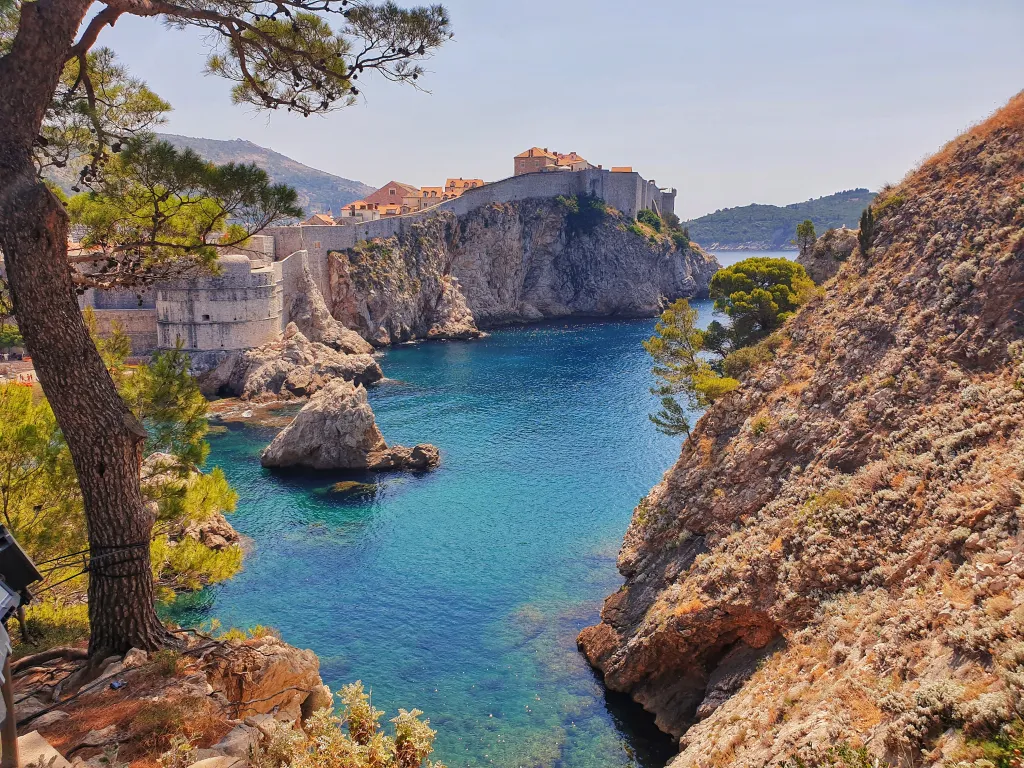
Start with the City Walls at 8am on Day 1. That single decision will determine whether your whole trip feels worth it. Dubrovnik receives over 10,000 cruise ship passengers on busy summer days, all of them funneling into a medieval old town that covers 1.4 square kilometers. The walls walk at 8am is a completely different experience than the same walk at 11am — quieter, cooler, and with views that aren’t blocked by a column of guided tour groups.
Three days is enough to see Dubrovnik properly, but only if you resist the gravitational pull of Stradun at midday. This itinerary front-loads the heat-sensitive and crowd-sensitive attractions and leaves afternoons for things that actually get better as the day progresses.
What to Know Before You Arrive
Dubrovnik is expensive by Croatian standards and benchmarks closer to Barcelona than to Split. The cheapest sit-down restaurants inside the Old Town walls charge €15–20 for a main course. The better ones charge €30–40. If you budget for a mid-range Croatia trip, you will overspend by 40%.
The city’s peak season runs from late June through August. Cruise ships dock at Gruž harbor, several kilometers west of the Old Town, and buses shuttle passengers in throughout the morning. By 10am in July, Stradun can feel genuinely suffocating. By 2pm, the heat alone is reason to be somewhere else.
Where to Stay
Don’t stay inside the Old Town unless you enjoy carrying luggage up steep stone steps with no car access and paying 40% more for the privilege of location. Most visitors stay in Lapad or Babin Kuk — residential peninsulas 4km west of the Old Town, connected to Pile Gate by public bus 1A and 1B. Fare is about €2 per journey. Buses run frequently and reliably.
The Valamar Dubrovnik President in Babin Kuk is a solid mid-range hotel with a pool and direct sea access, running around €180–220 per night in peak season. Smaller guesthouses and apartments in Lapad drop to €80–120. Both are better value than Old Town accommodation and significantly quieter in the evenings.
The Dubrovnik Pass
Buy the Dubrovnik Pass before you arrive. The 72-hour version costs €65 per person and covers: City Walls entry (€35 if bought separately at the gate), Fort Lovrijenac (€10 separately), the cable car to Mount Srđ (€26 return separately), and several museums including the Rector’s Palace and Maritime Museum. It also includes unlimited bus rides. If you complete the full three-day itinerary below, the pass pays for itself before noon on Day 1. Buy it online to skip the queue at the gate.
Getting Around
Dubrovnik Airport is 20km south of the city. The Croatia Airlines shuttle bus to Pile Gate costs €6 and takes 30–40 minutes. Taxis charge €35–45 for the same route. Within the city, you have two options: feet and public bus. There’s no tram, no useful bike infrastructure, and no reason to rent a car unless you’re doing a day trip to Montenegro or the Pelješac Peninsula.
Day 1: Walk the Walls at Dawn, Then Go Underground
The gate opens at 8am. Be at the Pile Gate entrance on the western side at 8:05. You’ll have roughly 45 minutes before the first tour groups arrive. The walk is 1.9km — allow 60 to 90 minutes depending on how often you stop.
- 8:00am — City Walls: Enter at Pile Gate, walk clockwise. The Minčeta Tower at the north end is the highest point and the best panoramic view. Three exit points break the circuit if you need to leave early. Bring water — there’s almost no shade, and in July this walk is genuinely punishing after 10am.
- 10:00am — Stradun and the Franciscan Monastery: Walk the 292-meter limestone main street while it’s still cool. The Franciscan Monastery at the western end (€5 entry) contains one of the oldest continuously operating pharmacies in Europe, founded in 1317. The cloister is beautiful and takes about 20 minutes. Skip the Dominican Monastery on this trip — the Franciscan does the job better, and your time is finite.
- 11:30am — War Photo Limited: The most underrated thing in Dubrovnik. A permanent exhibition of documentary war photography, mostly focused on conflicts in the former Yugoslavia. Located on Antuninska street, €7 entry, two floors, about 45 minutes. Almost never crowded. The quality of the work on display is genuinely museum-grade — walk past it and you’ve made a mistake.
- 1:00pm — Lunch at Nishta: Small vegetarian restaurant on Prijeko street, mains €12–18. Better quality-to-price ratio than most Old Town neighbors. Reserve ahead or arrive right at opening.
- 3:00pm — Banje Beach: Five minutes east of Pile Gate. Pebble beach, clear water, the Old Town walls rising directly above you. Sun loungers rent for around €15/day. The Banje Beach Club above is overpriced — bring your own drinks and use the public section.
- 7:00pm — Gundulićeva Poljana at dusk: This open square off Stradun has outdoor café seating under open sky. A coffee or glass of local plavac mali wine costs less here than on the main street. Worth lingering until dark.
Why Lokrum Island Is the Best Half-Day You’ll Spend
Skip it and you’ll regret it. Lokrum is a small uninhabited island 600 meters offshore — and it’s the sanest place in the Dubrovnik area during summer. No restaurants, no souvenir shops, no tuk-tuks. Pine trees, swimming, and peacocks that have lived here since 1859.
The ferry leaves from the Old Town harbor every 30 minutes from 9am. Return ticket: €15. There’s a separate island access fee of €5 at the dock on arrival. Total cost: €20 per person. Not covered by the Dubrovnik Pass — worth paying regardless.
What’s Actually on Lokrum
The Benedictine Monastery ruins are a 10-minute walk from the dock. The main swimming spot is the Dead Sea — a landlocked saltwater lake on the southeast end of the island, connected to the open Adriatic by an underground channel. Calm, warm, no waves. Consistently better than Banje Beach for a proper swim. A nudist beach (FKK) sits on the western rocks. Peacocks wander everywhere and are completely indifferent to tourists.
Day 2 in Full
- 9:00am: First ferry to Lokrum. The island is quiet before 11am.
- 12:30pm: Return ferry. Lunch at Konoba Ribar on the harbor waterfront — fish-focused, better value than interior Old Town restaurants at the same quality level.
- 2:00pm — Buža Bar: Two cliff bars built into gaps in the southern city walls. Enter through a small opening in the wall (look for signs reading “cold drinks”). You swim off the rocks directly into the Adriatic. Drinks run €5–8. Nothing special about the drinks themselves — the situation does all the work.
- 5:00pm — Fort Lovrijenac: The fortress on the western cliff, jutting out over the sea just outside the walls. €10 entry (covered by Dubrovnik Pass). Used by Game of Thrones as the exterior of the Red Keep. The view back toward Pile Gate in late afternoon light is arguably the best angle in the entire city. Almost empty after 5pm.
- 8:00pm — Proto Restaurant: One of the older fine-dining options in the Old Town, fish-focused menu, mains €30–40. Consistently good quality and a proper terrace. Reserve in advance.
Day 3: Mount Srđ, Then Get Out of Dubrovnik
Most people waste their last morning on Stradun. Mount Srđ — the 412-meter ridge directly above Dubrovnik — is better. The cable car takes four minutes and costs €26 return (free with the Dubrovnik Pass). Go in the morning before cloud cover builds. The view shows the full geometry of the Old Town, Lokrum, and on a clear day, the silhouette of the Montenegro coast to the south.
At the summit, Fort Imperial dates to the Napoleonic period and was used by Croatian forces during the 1991–1992 Siege of Dubrovnik. A small permanent exhibition inside the fort covers this — it gives meaningful context to everything you’ve walked through in the Old Town below. Allow an hour total at the top.
Afternoon: Cavtat or Montenegro — Pick One
Cavtat is the relaxed choice. It’s a small coastal town 17km south, reachable by public ferry from the Old Town harbor (€10 return, 45 minutes). Quieter than Dubrovnik, a prettier harbor front, and better lunch prices. The Račić Mausoleum designed by Ivan Meštrović sits above the town (€10 entry) and is worth the uphill walk. If you haven’t felt like you’ve had a genuinely local Croatian experience yet, Cavtat provides it.
Montenegro — specifically Kotor — is the ambitious option. Organized day tours from the Pile Gate area cost €50–70 per person including transport and a guide. Drive time each way is 2.5 hours including the border crossing, leaving 3–4 hours in Kotor itself. Kotor’s old town is UNESCO-listed and genuinely rivals Dubrovnik for beauty at a fraction of the visitor density. The math only works if you’ve finished Dubrovnik first — if you still have things to see, save Kotor for a dedicated trip.
Leaving the City
The Croatia Airlines shuttle bus runs from Pile Gate to the airport several times daily for €6. Book the earliest departure you can tolerate — the Old Town before 9am on your last morning is at its quietest, and you’ll leave with a better final impression than the midday crowd allows.
The Real Cost of 3 Days in Dubrovnik
Here’s a per-person budget breakdown for the full itinerary above, based on 2026 pricing. Dubrovnik raises attraction prices most years — verify current entry fees at the gate or on the official city tourism site before you go.
| Expense | Budget | Mid-Range | Notes |
|---|---|---|---|
| Accommodation (3 nights, per room) | €180 | €540 | Lapad guesthouse vs. Valamar Dubrovnik President |
| Dubrovnik Pass (72h, per person) | €65 | €65 | Covers walls, cable car, Fort Lovrijenac, museums, unlimited bus |
| Lokrum Island ferry + entry (per person) | €20 | €20 | Not included in Dubrovnik Pass |
| Meals — 3 days (per person) | €90 | €220 | Budget uses Konzum + budget sit-downs; mid includes Proto and Nishta |
| Day trip (Cavtat or Montenegro) | €10 | €65 | Cavtat public ferry vs. organized Montenegro tour |
| Miscellaneous (beach, drinks, War Photo Limited) | €40 | €80 | War Photo is €7; Buža Bar drinks ~€15/session; beach loungers €15/day |
| Total per person — 3 days (flights excluded) | ~€315 | ~€680 |
The single biggest lever is food. Konzum has a branch on Stradun itself — 90 seconds from Pile Gate — selling breakfast supplies, snacks, and drinks at normal supermarket prices. Most tourists walk past it without noticing. Using it for breakfast and one meal per day cuts your food budget roughly in half without any meaningful sacrifice.
Four Mistakes That Will Ruin Your Trip
Walking the City Walls between 10am and 3pm in summer. This single mistake accounts for the majority of “Dubrovnik was overcrowded and too hot” reviews. At 8am the walls are genuinely beautiful. At 11am they’re a sun-exposed queue. There is no partial credit for going slightly early — go at opening or reschedule entirely.
Eating every meal on Stradun. The main street restaurants are priced for people who won’t return. Walk one block to Prijeko street or toward the harbor and the same quality costs 20–30% less. Those restaurants are selling location, not food.
Skipping Fort Lovrijenac because it looks like another fortification. The view from its walls at late afternoon is the best vantage point in Dubrovnik — better than the cable car, better than the City Walls walk. It’s also nearly empty after 5pm, which is reason enough.
Trying to drive into the Old Town. The barriers close automatically. There is no tourist exception. Park at the Dubrovnik Iza Grada car park north of Pile Gate (around €20 per day) and walk the final 500 meters. Dubrovnik keeps adding visitors, the Old Town stays the same size, and the gap between people who plan around that and people who don’t keeps widening.