Most people think Patagonia hiking requires a $3,000 expedition tent and a personal sherpa. It doesn’t. The real problem is simpler: people bring too much stuff, or they bring the wrong stuff. And they pick a route that sounds epic but breaks them on day two.
I’ve hiked the W Trek, the O Circuit, and the trails around Fitz Roy across three separate trips. The gear that matters is a short list. The routes that work for first-timers are even shorter. Here’s what I’ve learned.
The One Mistake That Ruins Most First Patagonia Hikes
Overpacking kills more trips than bad weather. A 65-liter pack stuffed with “just in case” items turns a beautiful day into a back-breaking slog. Patagonia’s weather changes every 20 minutes—you don’t need a different jacket for every condition. You need a system.
The second mistake: choosing the wrong route. Torres del Paine’s W Trek is famous for a reason. It’s 5 days, 76 kilometers, and offers refugios (mountain huts) so you can sleep in a bed. That makes it the ideal first multi-day hike. The O Circuit adds 8 more days and serious altitude. Skip that for year two.
Third mistake: ignoring foot care. Blisters end hikes. Your boots should be broken in with at least 50 kilometers of walking before you arrive. Bring two pairs of merino wool socks—wear one, let the other dry. Rotate them at lunch.
W Trek vs. O Circuit vs. Fitz Roy: Which Route Fits Your Experience Level?
| Route | Days | Distance | Difficulty | Best For |
|---|---|---|---|---|
| W Trek (Torres del Paine) | 5 days | 76 km | Moderate | First-timers, refugio lodging, iconic views |
| O Circuit (Torres del Paine) | 8-10 days | 130 km | Strenuous | Experienced hikers, remote camping, solitude |
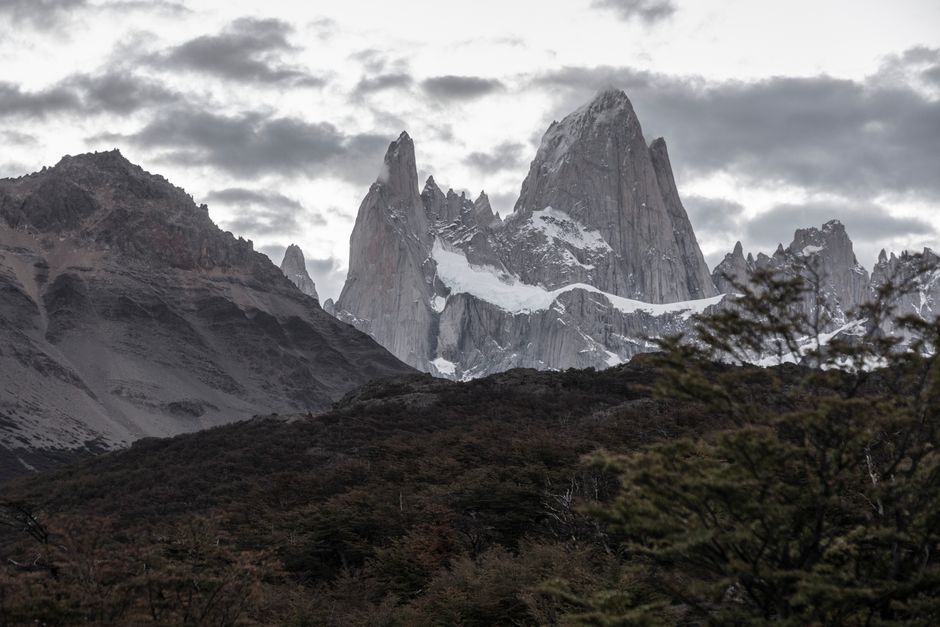
| Fitz Roy / Laguna de los Tres (El Chaltén) | 3-4 days | 40-60 km | Moderate | Day hikes + one overnight, flexible itinerary |
| Los Glaciares Ice Trekking | 1-2 days | Varies | Easy with guide | Non-hikers, glacier experience, all fitness levels |
For a first-timer, the W Trek is the clear pick. You get the famous Torres del Paine sunrise, the Grey Glacier, and the French Valley—all without carrying a tent if you book refugios. Book refugios 6 months ahead. They sell out by September for the December-March season.
If you want more flexibility and lower costs, base yourself in El Chaltén (Argentina) and do the 8-hour round trip to Laguna de los Tres. It’s a single hard day, not a multi-day commitment. You can add a second day to Cerro Torre or Loma del Pliegue Tumbado.
The 5-Layer Clothing System That Actually Works
Patagonia’s weather is a rotating door of sun, wind, rain, and snow—sometimes in the same hour. A 5-layer system lets you adapt without stopping to repack. Here’s the exact setup I use:
Layer 1: Merino wool base layer. Icebreaker 200 Oasis or Smartwool Merino 150. These wick sweat and don’t stink after three days. Cost: $80-100 each. Polyester alternatives (like Patagonia Capilene) dry faster but smell worse. Your choice.
Layer 2: Lightweight fleece or grid fleece. The Patagonia R1 Air ($169) or the Decathlon MH100 fleece ($15). The Decathlon works 90% as well for 10% of the price. Save your money for the rain jacket.
Layer 3: Insulated mid-layer. A 800-fill down jacket (like the Mountain Hardwear Ghost Whisperer, $350) packs tiny and weighs 230 grams. For wet conditions, use a synthetic puffy like the Arc’teryx Atom LT ($300). Down is lighter; synthetic works when wet.
Layer 4: Waterproof shell. This is where you spend real money. The Arc’teryx Beta AR ($650) or the Outdoor Research Foray ($250). Both use Gore-Tex. The Foray has pit zips for ventilation—critical when you’re hiking uphill in the rain.
Layer 5: Rain pants. The Outdoor Research Helium pants ($140, 170 grams). Most people skip these. That’s a mistake. Patagonia’s wind will freeze your legs in 10 minutes once it starts raining.
Total weight of this system: under 2.5 kilograms. You can wear all 5 layers at once in a storm and stay comfortable.
Footwear: The Single Most Important Gear Decision
I’ve seen people finish the W Trek in trail runners. I’ve also seen people with blisters the size of golf balls because they wore brand-new leather boots. Here’s the rule: wear what you’ve trained in for at least 50 kilometers.
For Patagonia, I recommend waterproof mid-height boots with good ankle support. The terrain is uneven—loose scree, wet roots, and steep descents on the way down from the Torres. My pick: the Salomon X Ultra 4 Mid GTX ($210). They’re light (490 grams each), waterproof, and have a grippy Contagrip sole that handles wet rock well.
If you prefer a more traditional boot, the Lowa Renegade GTX ($260) is a classic. It’s heavier but more durable. For trail runners, the Hoka Speedgoat 5 ($155) works if you have strong ankles and accept wet feet. They dry fast, but you will step in puddles.
Bring one pair of camp shoes—cheap Crocs or lightweight sandals. After 8 hours in boots, your feet need air. This is a non-negotiable comfort item.
Packing List: The Minimalist Approach That Saves Your Back
Here’s the exact packing list I use for a 5-day W Trek. Total pack weight including food and water: under 12 kilograms.
- Backpack: Osprey Atmos 50L ($230) or Gregory Zulu 40L ($200). The Osprey has better ventilation; the Gregory carries weight more comfortably.
- Sleeping bag: Sea to Summit Spark SP III ($480, 900 grams, -3°C rating) or the cheaper REI Trailbreak 20 ($130, 1.2 kg).
- Sleeping pad: Therm-a-Rest NeoAir XLite ($210, 370 grams, R-value 4.5). Insulates you from the cold ground.
- Water filter: Sawyer Squeeze ($40). Streams are everywhere. Don’t carry 3 liters of water. Filter as you go.
- Headlamp: Black Diamond Spot 400 ($40). 400 lumens, red light mode for preserving night vision.
- First aid kit: DIY. Moleskin for blisters, ibuprofen, antihistamine, bandages, antiseptic wipes. That’s it.
- Food: 1.5 kg per day of dehydrated meals (Mountain House, $8-10 each), trail mix, protein bars, instant coffee packets.
- Water bottles: 2 x 1-liter Smartwater bottles. They’re light, cheap, and fit the Sawyer Squeeze thread perfectly.
Leave behind: camp chair, extra shoes, jeans, cotton anything, towel (use your buff), stove if you’re in refugios (they have kitchens).
How to Book Refugios and Permits for 2026
The W Trek requires booking refugios or campsites in advance. You cannot just show up. For 2026, bookings open in August 2026. Use the official site: torresdelpaine.com. Expect to pay $80-120 per night for a refugio bed (includes dinner and breakfast). Campsites cost $25-40 per night and include restrooms and hot showers.
For El Chaltén (Fitz Roy area), no permits are needed. You just show up and hike. Campsites at Laguna Capri are free (first-come, first-served). The town has hostels starting at $30 per night.
For the O Circuit, you need a reservation at all campsites. Book through Vertice Patagonia or Fantástico Sur. The O Circuit requires carrying a tent and all food—there are no refugios on the back side. This is a serious commitment. If you’re reading this as a first-timer, skip the O Circuit.
Transport: Fly into Punta Arenas (Chile) or El Calafate (Argentina). From Punta Arenas, take a bus to Puerto Natales (3 hours, $15), then another bus to the park entrance (2 hours, $20). From El Calafate, take a bus to El Chaltén (3 hours, $25).
When to Go and What Weather to Expect
The hiking season runs from October to April. The sweet spot: November and March. December and January are peak season—crowded trails, fully booked refugios, but the warmest weather (12-18°C daytime). February is slightly cooler but still good.
October and April are shoulder months. Fewer people, lower prices, but more rain and wind. I’ve hiked in October and had 70 km/h winds at the Torres viewpoint. It’s doable but not comfortable. Bring extra layers.
Winter (May-September) is for experienced mountaineers only. Snow blocks most trails. Don’t go.
The wind is the real enemy. Patagonia’s winds average 30-50 km/h and can gust to 100 km/h. A good windproof shell is not optional. The Arc’teryx Beta AR mentioned earlier handles this well. The Outdoor Research Foray has a longer cut that covers your hips—better for sitting on wet rocks during lunch breaks.
One final thought: Patagonia will never be a perfectly planned trip. The weather will change. A trail will close. A refugio will lose your booking. That’s part of the experience. The hikers who have the best time are the ones who pack light, plan the route, and accept that some things will go wrong. Go anyway.