LVLP Spray Guns for Auto Painting: The Spec That Actually Matters
Most buyers compare price and fan pattern width. The spec that separates a $50 discount spray gun from a $300 professional tool is transfer efficiency — the percentage of paint that actually reaches the surface versus what drifts off as overspray. LVLP (Low Volume Low Pressure) guns consistently outperform conventional high-pressure guns on this metric by 30-40 percentage points. Understanding why changes how you shop.
The misconception worth clearing up immediately: LVLP is not simply a cheaper version of HVLP. They solve the overspray problem through different mechanisms, require different compressor setups, and suit different applications. Buying the wrong type for your equipment is the most expensive mistake in this category.
LVLP vs HVLP vs Conventional: A Data-First Comparison
The spray gun market breaks into four distinct categories. Map your compressor output and project type to the right column before spending anything.
| Technology | Operating Pressure | Transfer Efficiency | CFM Requirement | Best Application | Price Range |
|---|---|---|---|---|---|
| Conventional High-Pressure | 40–60 PSI | 25–35% | 4–8 CFM | Fast coverage, industrial | $20–$80 |
| Pneumatic HVLP | 10 PSI at air cap | 65–70% | 8–15 CFM | Furniture, cabinets, walls | $40–$500+ |
| Pneumatic LVLP | 8–10 PSI at air cap | 65–75% | 3–7 CFM | Auto painting, detail finish work | $60–$600+ |
| Electric Turbine HVLP | Self-contained turbine | 60–65% | No compressor required | DIY home projects, latex paint | $40–$350 |
The critical row is LVLP. It uses less air volume than pneumatic HVLP while delivering comparable transfer efficiency — which is why it works on home garage compressors that would stall under an HVLP gun’s demand. Most 20-gallon compressors produce 4–6 CFM at 90 PSI. A standard HVLP gun needs 8–15 CFM sustained. Running HVLP on an undersized compressor means constant cycling, pressure drops mid-panel, and inconsistent atomization. LVLP sidesteps that problem entirely.
Where Professional Shop Guns Earn Their Price
The DeVilbiss GTi Pro Lite ($220–$280) and Iwata W400 ($400–$450) dominate professional auto body shops. Both use precision-machined needle assemblies, tight air cap tolerances, and gravity-feed cups designed to hold spray angle without viscosity variation across a full panel. The consistency those guns deliver — door to quarter panel, hood to fender — comes from manufacturing precision that $80 guns cannot replicate.
For a weekend restoration project or a full car respray done once every few years, that level of consistency is genuinely hard to justify at 4–5x the price. The gap between a well-set-up $100 LVLP gun and a DeVilbiss GTi Pro Lite is measurable under controlled conditions. It’s much harder to see in a single-color repaint done in a home garage.
Where Budget LVLP Guns Fall Short
Budget LVLP guns in the $40–$65 range from Astro Pneumatic or TCP Global perform adequately at first. The failure point is materials. Zinc alloy bodies, aluminum fluid passages, and chrome-plated needle seats begin to degrade after 15–25 uses with solvent-based automotive paints. Lacquer thinner and urethane reducer attack aluminum oxide coatings over time. The finish quality on day one looks fine. Six months and eight projects later, the needle seat leaks and the tip pits.
The Tilswall Pinto LVLP: Why the Flow Channel Material Is the Spec to Read
Most spray gun marketing is vague about materials. Terms like “durable construction” and “professional-grade components” appear on guns ranging from $30 to $400. The Tilswall Pinto LVLP ($94.99) specifies an all-stainless steel flow channel — the internal pathway from the fluid inlet through the needle valve seat to the air cap. That specificity matters because it’s the component most exposed to solvent attack and abrasion.
Two mechanisms explain why stainless steel in the flow channel matters for extended service life. First, the solvents in automotive paints — lacquer thinner, urethane reducer, acetone wipe-down products — don’t corrode stainless steel the way they degrade anodized aluminum and chrome-plated zinc over repeated cleaning cycles. Second, metallic automotive basecoats contain aluminum flake and mica particles that are mildly abrasive. A stainless needle seat maintains its sealing geometry under repeated use; a softer alloy seat scores and begins to pass fluid inconsistently.
At $94.99, this gun occupies a tier that has historically been served by guns with aluminum or zinc flow paths. The stainless steel specification is the engineering decision that justifies paying $30–$40 more than an Astro LVLP. Whether that premium matters depends on use frequency. For someone spraying one car per year, it probably doesn’t. For someone spraying parts regularly — motorcycles, restoration panels, custom furniture refinishing with solvent lacquers — it extends usable service life in a way that shows up in total cost over three years.
Rated 5.0/5 across its current review pool — a small sample size, which means the data should be treated as directional rather than definitive. The product is newer to market. The stainless steel flow channel specification is verifiable and the core argument for its price point.
Nozzle Size and Paint Compatibility
The Pinto ships with a 1.3mm nozzle — the correct size for automotive clearcoat and most solvent-based basecoats. High-build primer and epoxy primer typically require 1.4mm–1.7mm for proper atomization without aggressive thinning. If your project involves both a primer coat and a topcoat, you’ll either thin the primer significantly for the 1.3mm tip or pick up a replacement tip set ($8–$15 from third-party suppliers) to cover the full range. The included 1.3mm tip handles approximately 90% of automotive finish coats without modification.
Pressure Setup and Fan Pattern Calibration
Set your regulator to 28–30 PSI at the gun inlet. Cap pressure drops to 8–10 PSI through the gun’s internal restriction — that’s the target operating range for LVLP atomization. Fan width of 8–10 inches suits door panels and hoods. For trim, mirror housings, and detail sections, dial down to 6–7 inches. Always test on cardboard before committing to a panel — a 12-inch pass at 6–8 inches from the surface should leave a wet, even coat with no dry-spray texture and no runs.
Gun speed matters more than most first-time users expect. A consistent 10–12-inch-per-second stroke rate produces even film thickness. Slowing down mid-stroke as you approach an edge causes heavy buildup; speeding up through the middle causes thin coverage. Speed consistency is the skill that separates a usable finish from a professional one.
The 800W Electric HVLP: Right Tool, Wrong Job If Used Interchangeably
The Tilswall 800W HVLP electric sprayer ($59.99) carries 1,980 reviews at 4.3/5 — a statistically meaningful sample that makes it one of the better-validated tools in this price tier. It includes a 1,300mL detachable container, three nozzle sizes (1.0mm, 1.5mm, 1.8mm), three fan patterns, and a 2.5m air hose. It does not replace the LVLP gun for automotive work. The turbine pressure range is wrong for automotive clearcoat atomization, and the motor cannot handle undiluted solvent-based paints reliably.
What it does well: latex wall paint thinned to 70–80% viscosity, chalk paint at full viscosity, water-based primers, deck stain, and wood sealers. For furniture refinishing, cabinet painting, or an exterior fence project, this is the simpler and cheaper correct answer. No compressor, no regulator, no air line — plug in and paint. At $59.99 with nearly 2,000 reviews, the value case is solid for its application range.
Five Mistakes That Produce Bad Results with a Good Gun
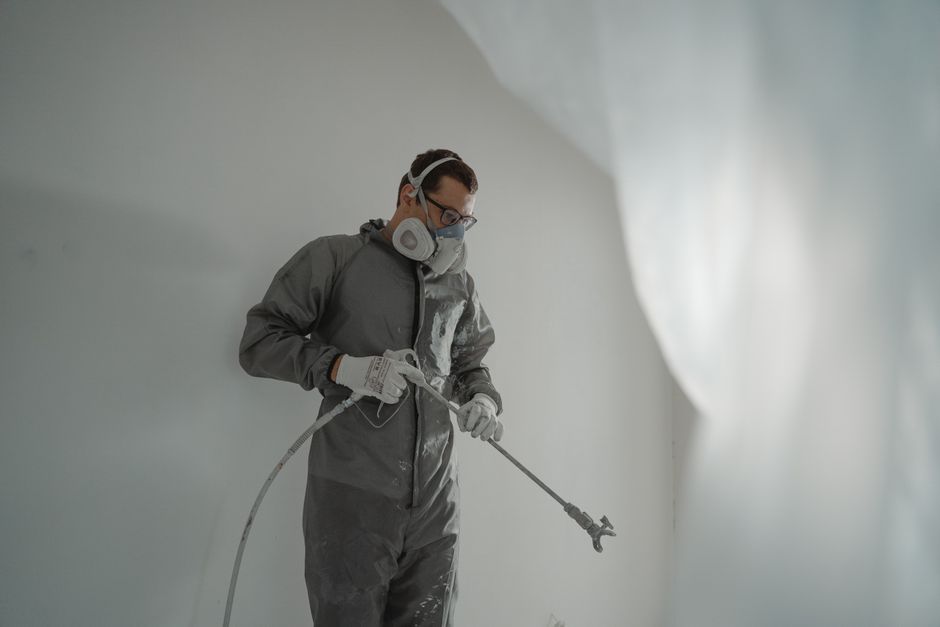
These errors account for the majority of poor spray results independent of gun quality. A $400 Iwata will produce orange peel if the operator makes mistake number one.
- Skipping viscosity measurement. Automotive basecoat straight from the can is too thick for most LVLP guns. Thin to manufacturer spec — typically 20–25 seconds measured in a Ford #4 viscosity cup at 70°F. No viscosity cup means guessing, and guessing causes tip clogging and orange peel texture.
- Ignoring ambient temperature. Paint viscosity changes with temperature. A mix calibrated at 75°F will run at 85°F and dry-spray at 55°F. Spray between 65°F and 80°F. Below 60°F, most automotive paints don’t atomize or cure correctly regardless of gun setup.
- Dirty air supply. Oil and moisture in compressed air cause fisheyes and blistering in automotive topcoats. A water separator and oil coalescing filter installed within 12 inches of the compressor outlet costs $15–$25 and prevents contamination that causes full re-shoots. Wall-mounted filters alone are not sufficient — condensate builds up in the hose run.
- Inconsistent overlap. Standard technique uses 50% overlap on each pass. Inconsistent overlap — tightening near panel edges, loosening in the center — creates visible stripes in the finished coat. Slow down at edges rather than reducing overlap width.
- Spot-only cleanup. Solvent-based paints begin to tack inside a gun within 30 minutes of spraying stopping. Full disassembly — cup removal, needle extraction, air cap soak in reducer — after every session is the difference between a gun that lasts five years and one that needs a rebuild kit after eighteen months.
A non-negotiable safety note: two-component (2K) isocyanate clearcoats require a supplied-air respirator or a properly fitted half-face respirator with OV/P100 cartridges rated for isocyanates. A standard N95 does not provide adequate protection. This is an occupational health regulatory standard, not a precaution that scales with how long you’re spraying.
Compressor Specs vs Gun Specs: Which One Is Actually Limiting You?
Will My Shop Compressor Run an LVLP Gun?
Check two numbers: CFM output at 90 PSI, and tank volume. A 6-gallon pancake compressor — the California Air Tools 8010 produces 2.6 CFM at 90 PSI, the PORTER-CABLE C2002 produces 2.6 CFM — falls below the 3–7 CFM range that LVLP guns need for sustained operation. You’ll hear the compressor cycling constantly. That’s workable for small sections but produces pressure variation that shows up as inconsistent atomization on full panels. A 20-gallon or larger compressor producing 5+ CFM at 90 PSI is the practical minimum for continuous automotive spray work without compressor-induced variation.
Does Regulator Placement Affect Atomization?
Yes — and this resolves a significant number of “the gun isn’t atomizing correctly” complaints. Pressure drops across hose length. Setting 30 PSI at the compressor tank gauge may deliver 22–24 PSI at the gun after 25 feet of hose. Measure and regulate at the gun inlet, not the tank. An in-line regulator installed within 12 inches of the gun handle costs under $20 and eliminates hose-length pressure variation entirely.
Gravity Feed vs Pressure Feed: Which Setup Is Correct?
Gravity feed cups — mounted on top of the gun — drain by gravity, use lower atomizing pressure, and waste less paint. They work for the full range of automotive topcoats and most home project paints. Pressure feed cups are pressurized from below, which suits high-viscosity materials and inverted spray angles. For 90% of automotive and furniture work, gravity feed is the right configuration. The Tilswall Pinto uses a gravity feed design, which is standard and appropriate for its target applications.
When the Pneumatic LVLP Is the Wrong Answer

Buy an electric turbine sprayer instead if you’re painting interior walls or exterior siding over 400 square feet, you have no compressor and no plan to purchase one, or your projects involve water-based latex paint without aggressive thinning. Electric turbines atomize full-viscosity latex better than pneumatic LVLP guns, which need latex thinned past the point that affects washability and durability on walls. For outdoor furniture, deck railings, or porch floors, an 800W electric HVLP produces faster results with less setup and cleanup complexity than a pneumatic rig.
The calculus inverts for automotive work. Electric turbines cannot produce the fine atomization that metallic automotive basecoats and high-gloss clearcoats require. Solvent resistance in the fluid path is also a concern — most electric sprayer cups and fluid passages are not rated for continuous solvent-based paint use. If the project involves a car, a motorcycle tank, or any surface requiring gloss levels above furniture-grade, a pneumatic LVLP gun is the correct tool.
For someone who needs both capabilities — occasional automotive work and regular furniture or cabinet refinishing — a pneumatic LVLP gun with the appropriate compressor handles both, while the electric HVLP handles only the latter. Buying both if budget allows is reasonable. Buying only the electric sprayer and expecting it to cover automotive finishes is a specification mismatch that no amount of technique corrects.
Specific recommendation: for automotive finishing and detail paint work where service life matters, the Tilswall Pinto LVLP at $94.99 is the strongest value in the sub-$150 segment based on its stainless steel flow channel specification — a material choice that competes with guns priced $40–$60 higher. For home and furniture projects with no automotive use, the 800W electric HVLP at $59.99 with its 1,980-review track record is the correct and more cost-efficient choice. Matching the tool to the application is what produces the result — not the price tag alone.