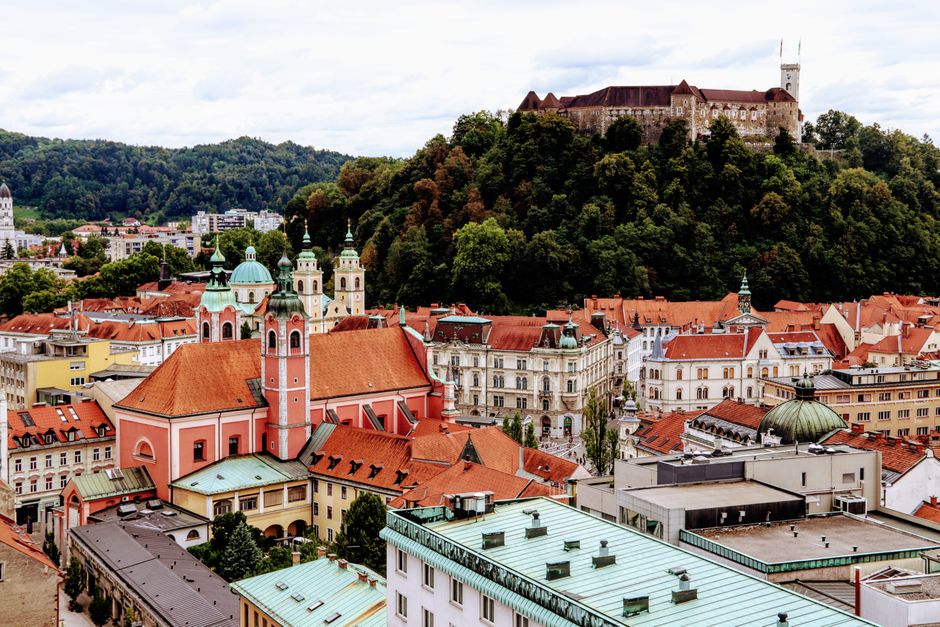
Ljubljana’s central pedestrian area is compact enough to cross in roughly 20 minutes, yet it contains medieval streets, Art Nouveau facades, riverside cafés, a working market and a castle on a wooded hill. That compact scale is the city’s advantage. A good visit does not require a packed schedule. It requires the right order.
The strongest plan starts beside the Ljubljanica River, crosses the central bridges, moves through the market and older lanes, then climbs Castle Hill before the afternoon crowds and tired legs take over. The route below explains what to see, how long to allow, what commonly goes wrong and when the hill is better skipped.
What Can Fit Into One Day in Ljubljana’s Centre?
The practical answer is more than most visitors expect, but less than an ambitious checklist suggests. Ljubljana rewards a slow loop rather than constant backtracking. The route works best when the river remains the main reference point and Castle Hill becomes the final high point.
A workable one-day itinerary
| Time | Area | What to do |
|---|---|---|
| 8:30–9:30 | Central Market and riverside | Walk through the market, cross the nearby bridges and watch the city wake up. |
| 9:30–11:30 | Old Town lanes | Follow Mestni trg, Stari trg and Gornji trg, pausing for courtyards and facades. |
| 11:30–13:00 | Riverfront | Take a relaxed lunch break beside the Ljubljanica and avoid rushing to the next landmark. |
| 13:00–15:30 | Castle Hill | Walk up, explore the castle grounds and use the viewpoints before descending. |
| 15:30 onward | Old Town or Tivoli direction | Return to the centre for coffee, a second river walk or a longer park stroll. |
Best verdict: give Ljubljana one full day if the goal is a clear first impression. A rushed half-day covers the bridges and the castle, but misses the quieter streets that make the centre memorable. The route is especially strong for travellers arriving by train or bus because the centre is easy to reach without arranging transport.
The Best Walking Order Is Simple
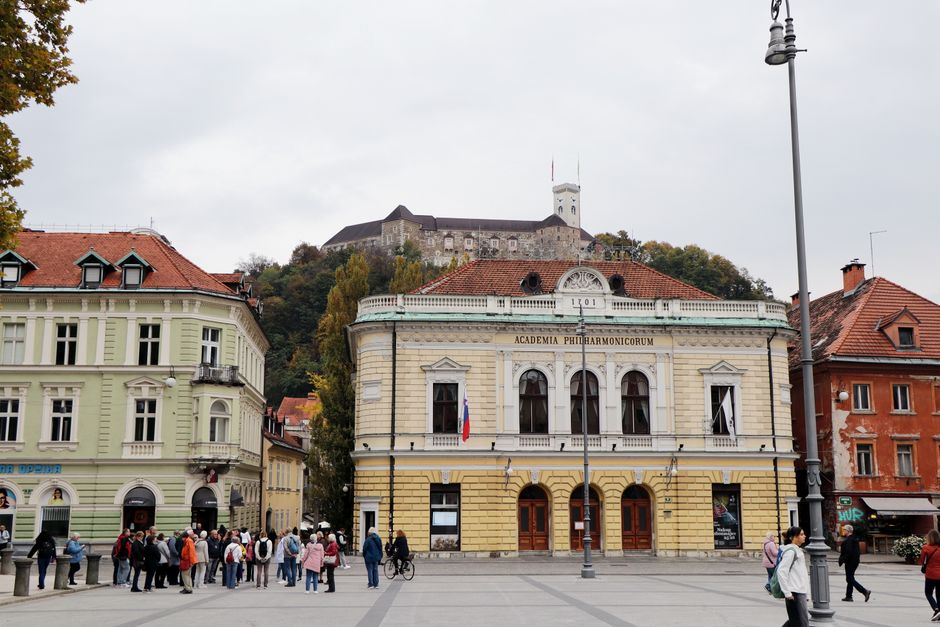
Start low, follow the river, explore the Old Town, and climb Castle Hill last. This order gives the day a visual build: water and bridges first, colourful squares and historic lanes next, then a wide view across the red roofs and surrounding hills. Starting with the castle creates the wrong rhythm because the descent leaves the lower city feeling like an afterthought.
The route also protects time. The riverside and Old Town can be shortened without losing the shape of the visit, while the climb needs a clear block of time. If rain arrives, the castle can move earlier; if the weather is hot, the shaded hill paths work better before midday. The plan is flexible, but the basic direction should stay the same.
For a first visit, the river-to-castle sequence is the clear winner. It is easier to follow, easier on the legs and more satisfying than jumping between isolated sights.
How to Read Ljubljana’s Old Town Without Rushing
Ljubljana’s centre is small, but small does not mean simple. Its appeal comes from the way different layers sit beside one another: medieval street plans, Baroque buildings, nineteenth-century civic architecture and the clean lines associated with Jože Plečnik. The city makes more sense when those layers are read as a continuous walk instead of a list of monuments.
Use the Ljubljanica as the main compass
The river is the easiest navigation tool in the centre. Bridges connect the main pedestrian areas, and the embankments provide clear sightlines when the lanes become confusing. The Triple Bridge is the obvious starting point, but it should not be the only stop. Walk along both sides of the river, then turn into the squares behind the embankment. The change is immediate: the open riverfront gives way to narrower streets, shaded passages and small details at eye level.
Keep an eye on the paving and building fronts. Some lanes feel grand because they open into large squares; others are more intimate, with long facades and irregular corners. The best discoveries often take less than five minutes and do not need a separate ticket or a fixed appointment.
Let the squares set the pace
Mestni trg, Stari trg and Gornji trg form a useful sequence through the Old Town. They are close enough to connect in one walk, but different enough to prevent the centre from feeling repetitive. Mestni trg feels formal and civic. Stari trg narrows the route and adds a more intimate rhythm. Gornji trg points naturally toward the hill and makes a good place to decide whether the climb still suits the day.
Do not treat every church, courtyard or facade as a required stop. Choose a few, then leave room for wandering. The strongest experience comes from seeing how the streets connect, not from collecting every named building.
Expect the hill to change the mood
Castle Hill is not just a viewpoint. The wooded paths create a sharp break from the polished centre, and the change is part of the experience. Some routes are steep, uneven or slippery after rain. Comfortable shoes matter more than speed. The funicular offers a useful alternative for travellers with limited mobility or little time, but walking up provides more shade, quieter corners and a better sense of the hill’s shape.
At the top, the best reason to stay is the view. The city centre appears compact from above, which confirms how well the lower route fits together. On clear days, the wider landscape becomes part of the visit. On grey days, the castle grounds still justify the climb, but the panorama should not be treated as guaranteed.
Mistakes That Ruin the Castle Hill Walk
Castle Hill is easy to underestimate. The map makes the distance look short, while the slope, heat and stopping time add up quickly. Avoid these common errors:
- Starting too late. A midday climb can feel harder than expected, especially in warm weather. Begin the hill section before the busiest part of the afternoon whenever possible.
- Counting only the vertical climb. The visit includes the approach, the paths around the grounds, indoor areas and the descent.
- Wearing smooth-soled shoes. Cobbles and forest paths create different problems. Flat, secure footwear is the sensible choice, especially after rain.
- Assuming every viewpoint is open. Weather, maintenance or event arrangements can affect access. Keep the Old Town and riverfront as a complete plan rather than treating the castle as the only reason to visit.
- Ignoring the descent. Legs often feel worse going down because visitors rush after the main stop. Take the same care on the return route and use the gentler path if the steeper option feels unstable.
- Trying to photograph everything. The city is more enjoyable when the camera comes down between major stops. Pause at one bridge, one square and one high viewpoint instead of stopping every few metres.
The clearest decision is also the simplest: skip the climb if heavy rain, poor mobility or a very short schedule makes it stressful. The Old Town is not a consolation prize. The river, bridges, market and historic lanes form a complete half-day visit on their own.
Practical Questions Before Setting Out
Is one day enough for Ljubljana Old Town and Castle Hill?
Yes. One full day is enough for a well-paced first visit because the core sights sit close together. The best use of the day is a focused route with time to stop. Travellers with two days can repeat the riverfront at a slower pace and add areas beyond the centre.
What is the best time to visit the Old Town?
Morning is the strongest choice for the market, bridges and photographs with fewer people. Late afternoon brings warmer light and a lively riverfront, but it also brings more visitors. A split day works well: walk the lower centre early, rest around midday, then return to the river after the castle. This avoids treating every hour as sightseeing time.
Is Castle Hill worth visiting if the weather is cloudy?
Usually, yes, if the paths are dry and the climb is comfortable. The view loses some impact, but the hill still adds woodland, elevation and a different perspective on the city. Skip it when rain makes the paths slippery or when the climb would turn the day into a physical chore. A strong Ljubljana visit does not depend on one panorama.
What should visitors remember about the pedestrian centre?
Cars are limited in much of the central area, but bicycles and delivery vehicles still move through parts of it. Stay aware at crossings and avoid blocking narrow bridges or busy lanes. Keep voices low near residential doorways, leave room for people walking to work and treat the riverfront as a lived-in neighbourhood rather than a themed set.
Final recommendation: spend the morning on the river and in the Old Town, take a real break, then climb Castle Hill in the early afternoon. That route gives first-time visitors the clearest picture of Ljubljana without turning a compact city into a race.