Where should a first-time visitor stay, what should be seen first, and how can Berlin be explored without wasting hours crossing the city? The answer starts with one fact: Berlin is not a compact old town. Its major sights spread across several districts, each with a different mood and history. The best first visit combines a central base, a simple route through the main landmarks, and enough time to experience one local neighbourhood beyond the postcard sights.
Which Berlin neighbourhood is best for first-time visitors?
The right neighbourhood depends on the kind of trip being planned, but Mitte is the strongest all-round base for a first visit. It places Museum Island, the Brandenburg Gate, the Reichstag and the Holocaust Memorial within an easy sightseeing route. Other districts offer more nightlife or a stronger local feel, but they add travel time.
| Neighbourhood | Best for | What to expect |
|---|---|---|
| Mitte | First-time sightseeing | Central landmarks, museums, formal squares and busy daytime streets |
| Kreuzberg | Food, nightlife and street culture | Canals, international restaurants, late evenings and a relaxed edge |
| Prenzlauer Berg | Quiet streets and cafés | Leafy avenues, restored buildings, family-friendly squares and brunch spots |
| Friedrichshain | Nightlife and modern history | East Side Gallery, clubs, bars and a younger atmosphere |
| Charlottenburg | Museums and a calmer stay | Grand streets, cultural venues and a more polished western Berlin feel |
Mitte for the shortest sightseeing routes
Mitte works best when the priority is seeing major landmarks on foot. The district is not uniformly quiet or local, yet it reduces the need for repeated journeys across the city. Choose it for a two- or three-day visit.
Kreuzberg or Friedrichshain for evenings
Kreuzberg suits travellers who want restaurants, bars and neighbourhood energy after sightseeing. Friedrichshain is the better pick for late-night venues and the East Side Gallery. Both are less convenient than Mitte for an early morning visit to the government quarter.
Berlin accommodation areas are large, so check the nearest U-Bahn, S-Bahn or tram stop before booking. A location that looks central on a map can still require several changes.
How many days are needed for a first trip to Berlin?
Three full days is the best target for most first-time visits. Two days can cover the headline landmarks, but the schedule will feel tight. Four or five days allow time for museums, parks and neighbourhoods without turning every morning into a race against the clock.
Two days
Use the first day for Brandenburg Gate, the Reichstag area, the Holocaust Memorial and Unter den Linden. Spend the second day on Museum Island and the Berlin Wall sites around Bernauer Strasse or the East Side Gallery. This plan works for a short break, but it leaves little room for slow meals or weather changes.
Three days
Add one full morning for Museum Island and one afternoon in Kreuzberg, Prenzlauer Berg or Friedrichshain. This is the strongest balance between history and present-day Berlin. It also leaves a small buffer for queues, closed rooms or rain.
Four or more days
Use the extra time for Charlottenburg Palace, the Jewish Museum, Tempelhof Field, the Topography of Terror and a longer walk through Tiergarten. A day trip outside Berlin can fit here, but it should not replace the city’s central history on a first visit.
Which Berlin landmarks explain the city best?
Berlin’s landmarks make more sense when treated as parts of a historical sequence rather than isolated photo stops. Start with the political centre, move through the memorial sites, then finish with the divided-city story along the former Wall route. That order gives the visit a clear shape and reduces unnecessary backtracking.
Brandenburg Gate and the Reichstag
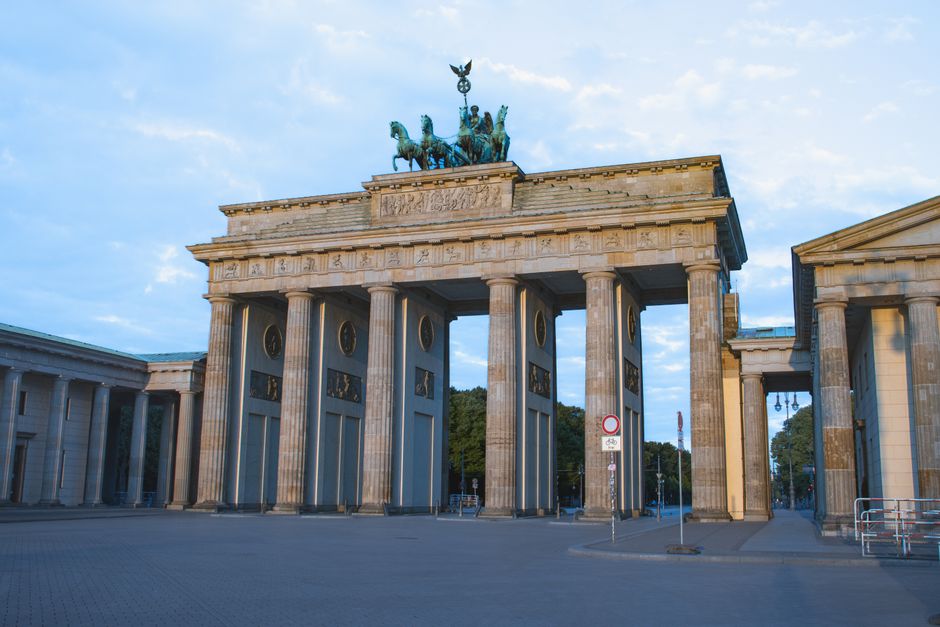
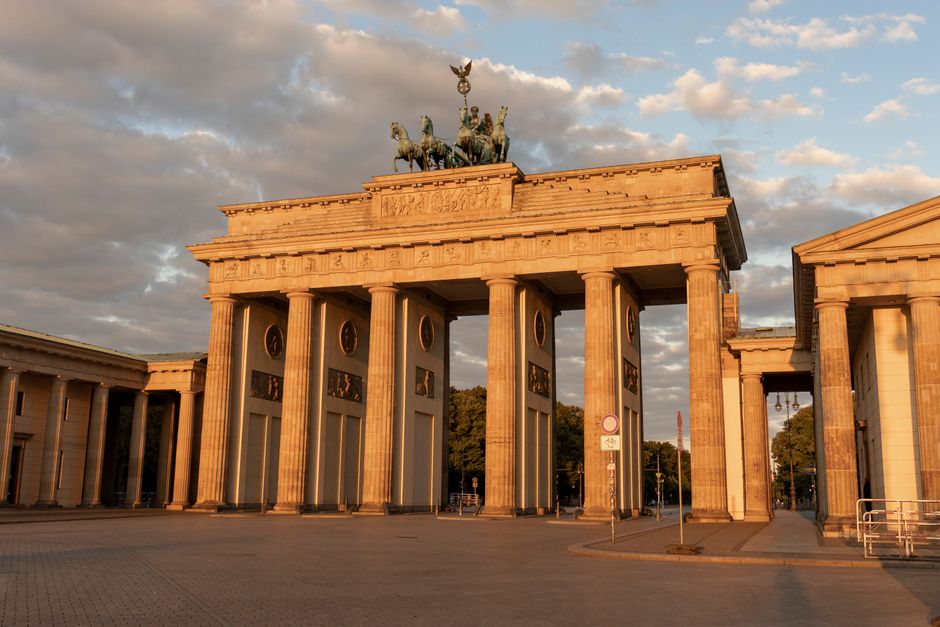
Begin at Brandenburg Gate early in the day, before the surrounding Pariser Platz becomes crowded. Walk east along Unter den Linden to see the broad boulevard and the buildings around the former royal centre. Then continue towards the Reichstag. The government quarter shows how Berlin rebuilt its political identity after reunification. Security procedures can take time, so pre-booking an available visit slot is sensible when access to the dome matters.
Holocaust Memorial and the Topography of Terror
The Holocaust Memorial should be visited quietly, without treating the concrete field as a playground or a quick backdrop. Its narrow passages create a changing sense of scale, but the memorial does not explain the full history by itself. Pair it with the Topography of Terror, which presents the institutions and crimes of the Nazi regime in a more documentary format. Together, the sites provide stronger context than either one alone.
Museum Island and the Berlin Wall sites
Museum Island deserves at least half a day. Select one or two museums rather than attempting every collection in a single rush. For divided-city history, the East Side Gallery offers a vivid stretch of surviving Wall covered in murals, while Bernauer Strasse gives a more detailed account of escape attempts, demolitions and the effect of the Wall on ordinary residents. The two locations serve different purposes: one is visually immediate, the other is more explanatory.
Do not judge Berlin by one landmark.
What should a practical three-day Berlin itinerary include?
- Day one: the historic centre. Start at Brandenburg Gate, then walk to the Reichstag, the Holocaust Memorial and the former border area around Potsdamer Platz. Continue along Unter den Linden towards Museum Island. Finish near Hackescher Markt or the Spree, where the central route becomes less formal and more suitable for an evening meal.
- Day two: museums and a neighbourhood. Spend the morning at one or two museums on Museum Island. Leave the afternoon open for Kreuzberg, beginning around the Landwehr Canal and continuing through streets with independent restaurants and small cultural venues. Do not stack several distant museums onto this day; the neighbourhood walk is part of the itinerary, not spare time.
- Day three: Berlin Wall history and open space. Visit Bernauer Strasse in the morning, then travel east to the East Side Gallery. After the Wall sites, choose between Tempelhof Field for a wide open walk and Friedrichshain for cafés and evening activity. This day shows how Berlin moved from division to a more improvised, creative urban culture.
Allow at least thirty minutes between major stops when planning public transport. Stations can be larger than expected, and a short journey on the map may include a long walk, a platform change or a crowded connection.
What do first-time visitors often get wrong in Berlin?
The biggest mistake is treating Berlin like a small historic centre. A landmark-heavy plan can look efficient on paper and still consume the day through cross-city travel. Group sights by area, then leave one flexible block each afternoon.
Trying to see every museum
Berlin has too many major collections for a single short trip. Choose one theme, such as ancient history, twentieth-century politics or modern art, and give the selected museum enough time. Three rushed museums create less understanding than one focused visit.
Assuming every district feels the same
Mitte is polished and landmark-heavy. Kreuzberg is more mixed and informal. Prenzlauer Berg feels calmer, while Friedrichshain is more nightlife-oriented. Avoid planning a late meal, a museum visit and a landmark photo stop in three different districts unless the transport route is genuinely direct.
Ignoring Sunday and closing-day patterns
Some museums close on a fixed weekday, while smaller venues may open late or close early. Check opening times before assigning a whole morning to one site. Sunday is often useful for markets, parks and neighbourhood walks, but it can be a poor day for a museum-heavy schedule.
Berlin also rewards practical habits: carry a reusable water bottle, wear shoes suitable for uneven paving, and keep a small amount of time for simply sitting in a square or park. The city’s scale becomes easier to understand when the schedule has breathing room.
What should first-time visitors know before arriving?
Is Berlin easy to explore without a car?
Yes. A car is a burden in the central districts because parking is limited and many useful routes are faster by rail, tram or on foot. Public transport connects the main sightseeing areas, but allow extra time for station walks and service changes. A day spent within one district is often more enjoyable than a sequence of short car journeys.
Is Berlin mainly a historic destination?
No. History shapes the city, but Berlin is also defined by parks, waterways, food markets, music venues and converted industrial spaces. The strongest first visit pairs formal landmarks with one neighbourhood afternoon. That contrast prevents the city from feeling like a chain of memorials and museums.
What should be avoided on a first visit?
Avoid an itinerary that includes every famous site, a distant day trip and several late nights in only two days. Avoid assuming that a central-looking address sits next to every landmark. Avoid photographing memorials without reading their purpose. Berlin is more rewarding when the schedule leaves room for context, quiet and the unexpected turn down a side street.