Krabi combines a mainland town, a busy coastal base, limestone islands and the boat-access-only shores of Railay. The best visit depends less on seeing every attraction and more on choosing the right base, planning around tides and allowing enough time for the landscape to set the pace.
Is Railay Beach an island or a peninsula?
Why Railay feels separate from Krabi
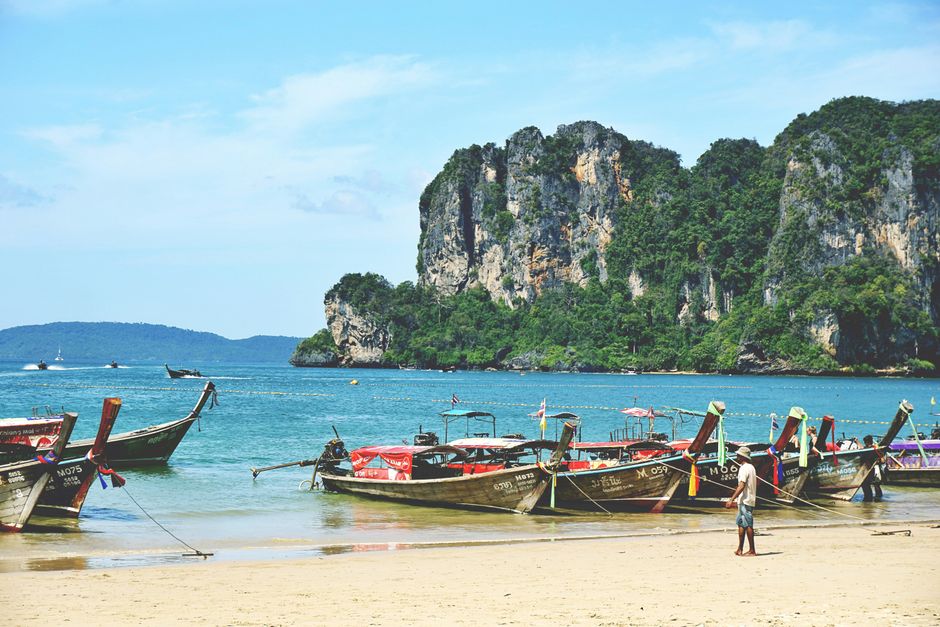
Railay is technically a peninsula, not an island, but towering limestone cliffs cut it off from the mainland road network. Every visitor completes the final part of the journey by boat. That separation creates the destination’s main appeal: no through traffic, no ordinary roads and a compact landscape of beaches, climbing walls, forest paths and caves.
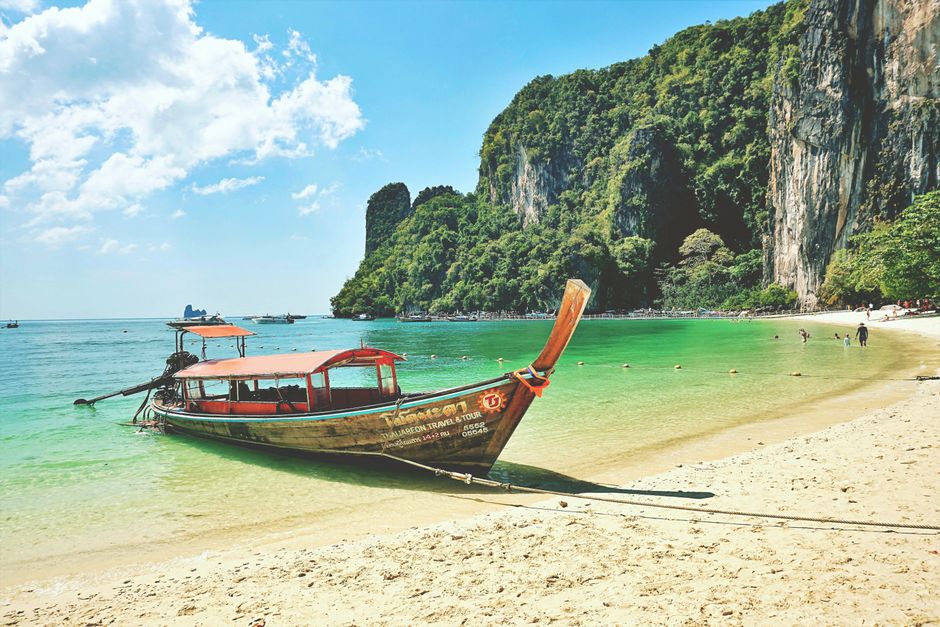
The coast has several distinct areas. Railay West has the broad sandy beach and is the usual arrival point from Ao Nang. Railay East has mangroves, shallow water and muddy flats, so it works better for arrival, walking and accommodation than for swimming. Phra Nang Cave Beach sits at the southern end and combines pale sand, clear water and dramatic rock scenery. Ton Sai, just north of Railay, attracts climbers and travelers who prefer a quieter, more rugged setting.
What Railay does better than Ao Nang
Railay is the better choice for scenery and atmosphere. The cliffs rise almost directly from the water, and short walks connect most of the important places. Ao Nang offers more road access, restaurants, transport choices and evening activity. Railay offers a stronger sense of place, but it also brings practical limits: luggage must be carried from the beach, boats depend on sea conditions, and the quietest areas become very quiet after day-trippers leave.
For a first visit, Railay works best as a focused part of a Krabi trip rather than a substitute for the whole province. Two nights are enough to explore the beaches and viewpoints. A longer stay suits travelers who want climbing, kayaking or slow beach days.
How to reach Railay from Krabi
Choose the departure point
The simplest route runs from Ao Nang Beach to Railay West. The longtail crossing usually takes about 15 to 20 minutes, but the service often works as a shared boat rather than a fixed ferry timetable. Boats may wait until enough passengers arrive, so a short crossing can still require patience.
Krabi Town offers another route from the riverfront area, with a longer crossing that can take roughly 30 to 45 minutes. Ao Nam Mao provides a useful alternative, especially for accommodation on Railay East. The exact journey time changes with weather, tide and the landing point.
Pack for a beach landing
- Use a small backpack or soft-sided bag instead of a rigid suitcase.
- Put phones, passports and cameras inside a waterproof pouch before reaching the beach.
- Wear sandals or shoes that can get wet because passengers may wade through shallow water.
- Allow extra time when traveling with children, heavy luggage or limited mobility.
- Check the final boat back before starting a late afternoon hike or beach visit.
There is no normal pier at Railay West. Boats pull onto the sand, and waves can make boarding awkward. Travelers who arrive after dark should arrange the final transfer carefully because fewer shared boats operate and sea conditions can change quickly. During rough weather, the longer route from Krabi Town may become uncomfortable, while Ao Nam Mao can be more practical for some stays on the eastern side.
Which Krabi base suits your itinerary?
Compare the main bases
| Base | Best for | Main advantage | Main limitation |
|---|---|---|---|
| Krabi Town | Local food, markets and mainland travel | More residential atmosphere and useful road connections | Longer boat journey to Railay |
| Ao Nang | First-time visitors and day trips | Easy access to Railay and other coastal routes | Busier streets and a more developed feel |
| Railay | Beaches, cliffs and a slower stay | Walkable scenery without mainland traffic | Boat-dependent access and limited road transport |
The strongest base for most first visits
Ao Nang is the best all-round base for a first Krabi trip. It keeps the Railay crossing short while providing more flexibility when rain, rough seas or tiredness disrupt a plan. It also makes early departures and late returns easier than staying on the peninsula.
Railay becomes the better choice when the landscape matters more than convenience. Staying there lets visitors see the beaches before the first day boats arrive and after most visitors leave. The trade-off is real: groceries, luggage transfers and evening transport require more planning.
When Krabi Town makes more sense
Krabi Town suits travelers who want markets, river walks, local restaurants and access to inland attractions. It is less convenient for a beach-centered holiday, but it can add a more grounded view of the province. A split stay works well: spend one or two nights in town, move to Ao Nang or Railay, then use the coast for boat trips and beach time.
How to spend two or three days around Railay
A practical two-day plan
- Day one morning: Travel to Railay, leave luggage and walk from Railay West toward Railay East. This first loop shows how quickly the beaches change from swimming sand to mangrove shoreline.
- Day one afternoon: Continue to Phra Nang Cave Beach. Swim only when conditions allow, keep clear of boat lanes and check the return route before the light fades.
- Day one evening: Watch the sunset from Railay West or return to Ao Nang for a wider choice of evening food and transport.
- Day two morning: Start early for the viewpoint trail or a guided climbing session. The trail can be steep, muddy and slippery, so ordinary beach footwear is not enough.
- Day two afternoon: Keep the final hours flexible for swimming, a short kayak outing or a weather backup in Krabi Town.
How to add a third day
A third day should not become a race through every nearby island. Use it for one longer activity, such as sea kayaking through limestone scenery, a climbing lesson or a carefully timed boat trip to another coast. Leave space for delays. Wind, rain, low tide and shared-boat waiting times can turn a tightly packed plan into a stressful one.
The clearest itinerary divides experiences by energy level: easy beach walks on arrival, a demanding trail or climbing session early in the stay, and a flexible final day. This order protects the main experience if the weather changes.
How tides and weather change the beaches
Read the shoreline before swimming
Railay does not have one uniform beach experience. Railay West is the main swimming shore, but the usable sand and water depth change with the tide. Phra Nang can feel spacious at one point in the day and crowded or shallow later. Railay East is attractive for views and mangroves, yet its muddy flats make it a poor swimming choice.
Boat traffic also matters. Longtails approach the beach, unload passengers and turn close to shore. Swim away from marked landing areas and follow local instructions. Strong currents, sharp rocks and sudden waves create more risk than the calm surface may suggest.
Plan for the monsoon months
The drier season usually brings more predictable sea conditions, but it also brings larger crowds. During the wetter months, rain can arrive quickly, boat crossings may become rough and viewpoint trails can turn into slippery climbs. A cloudy day does not ruin the landscape, but it changes the value of a long boat trip and reduces visibility from higher trails.
Carry a dry bag, water and a light rain layer on every boat day. Do not schedule the final airport transfer immediately after a cross-water journey. A delayed boat, rough landing or sudden storm can affect the whole day. The most reliable plan keeps the hardest activity close to the start of the visit and treats the last day as a transport buffer.
What is the best Krabi and Railay itinerary?
The clearest recommendation
For a first visit, stay in Ao Nang and spend one full day plus one overnight in Railay. This arrangement gives easy access, a strong first view of the cliffs and enough time to experience both the busy daytime atmosphere and the quieter evening landscape.
Choose Railay as the main base instead when the priority is walking from beach to beach, climbing or waking up beside the limestone cliffs. Choose Krabi Town when local food, markets and mainland culture matter more than daily swimming. These choices are not interchangeable, and forcing one base to cover every interest creates unnecessary transfers.
Final planning checklist
- Set aside at least two hours of flexibility around boat transfers.
- Check tide and weather conditions before planning swimming or hiking.
- Use Railay West for the classic beach view and Railay East for access and walking.
- Visit Phra Nang early if beach space and calmer conditions matter.
- Keep the final day close to the airport or mainland transport route.
Krabi works best when the itinerary leaves room for weather, tides and unplanned pauses. The strongest plan is not the one with the most stops: it is two or three days split between Ao Nang’s convenience and Railay’s cliffs, with enough time to enjoy each place at its natural pace.