After the bright signs, crowded sidewalks, and nonstop traffic around Times Square, New York City can feel like a different place. A short subway ride leads to tree-lined streets, quiet waterfronts, historic houses, food markets, public parks, and neighborhoods where the city moves at a slower pace.
How to plan a three-day route without backtracking
A practical New York itinerary follows geography. Group nearby sights together, leave space for delays, and avoid placing two distant neighborhoods on the same half-day. The route below gives each day a different character while leaving room for meals and unplanned discoveries.
A route that respects the shape of the city
| Day | Morning | Afternoon | Evening |
|---|---|---|---|
| Day 1 | Central Park and the Upper West Side | Walk south through Midtown and Chelsea | West Village streets and local dining |
| Day 2 | Lower Manhattan and Chinatown | SoHo, Nolita, and the Lower East Side | East River walk or neighborhood theater |
| Day 3 | Brooklyn Heights and DUMBO | Brooklyn Bridge Park and Cobble Hill | Return to Manhattan by subway or ferry |
How to keep the schedule realistic
Allow at least three hours for each major neighborhood cluster. A museum, viewpoint, or landmark often takes longer than expected because of queues, security, rest stops, and the time needed to reach the entrance. Put the most weather-sensitive activity in the morning and keep flexible streets or food areas for later. The strongest three-day plan has one major anchor each day, not six.
How to move around New York City without wasting time
Use the subway for distance and walking for discovery. That simple rule produces a better trip than relying on taxis for every transfer or trying to walk across the entire city.
The walking rule
- Walk when two stops are close and the route passes through an interesting neighborhood.
- Use a map to check the full distance before leaving; a route that looks short may cross wide avenues, bridges, or steep streets.
- Wear comfortable shoes and plan a short indoor break every two or three hours.
- Keep the final destination flexible. A bakery, bookshop, public plaza, or small park can become part of the route.
The subway rule
Use the subway when the journey crosses several neighborhoods or moves from one side of Manhattan to the other. Check the train direction before entering: uptown and downtown usually make sense, but some lines use local and express services that stop at different stations. Service changes are common, especially on weekends, so check the current route before departure. The subway is fastest for long transfers, but walking often reveals more of the city between nearby stops. For a first visit beyond Times Square, the best rhythm is one subway ride followed by a long walk, rather than a series of short rides.
What each borough adds to the trip
Brooklyn is the best first choice beyond Manhattan for most visitors. It combines skyline views, historic streets, parks, restaurants, and easy transit connections in a compact area. Queens is the stronger choice for food variety and a more residential feel, while the Bronx suits travelers interested in major parks, gardens, cultural institutions, and baseball history.
Manhattan for layered history
Lower Manhattan shows how the city developed around trade, immigration, government, and the harbor. The main mistake is treating them as one generic downtown zone. Give each area at least an hour and notice the changes in street width, building height, languages, and public space.
Brooklyn for views and neighborhood walks
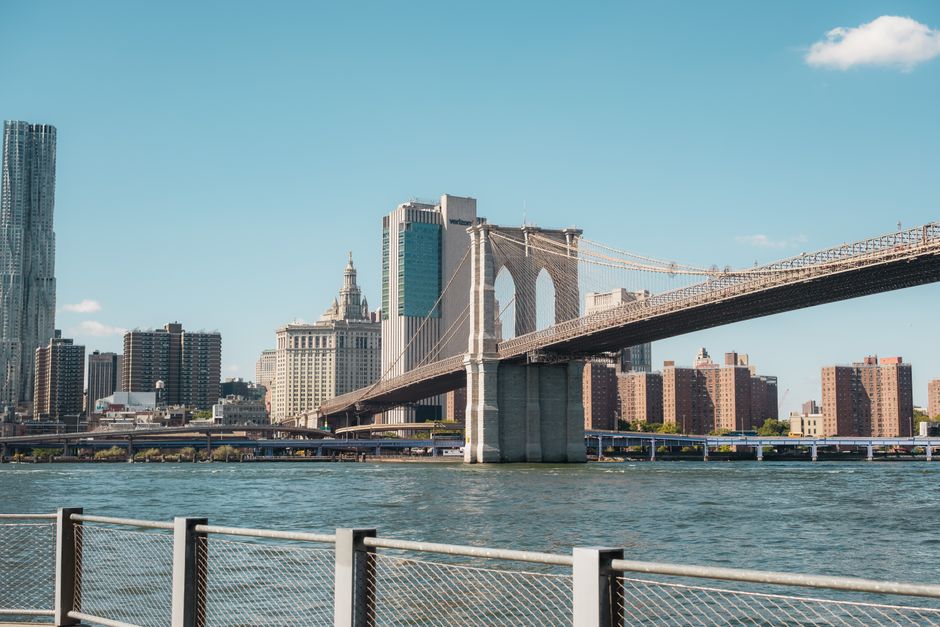
Brooklyn Heights, DUMBO, Cobble Hill, and Fort Greene offer the most rewarding introduction. Begin with a waterfront view, then move inland to residential streets and local parks. The contrast matters: the skyline is the visual hook, while the brownstones, stoops, and small businesses provide the sense of place.
Queens and the Bronx for a broader city picture
Queens adds a large range of cuisines and languages within a short ride from Manhattan. The Bronx offers larger green spaces and a different urban scale. Choose one borough for a half-day rather than trying to sample all five in one trip. The clear winner for a first extension is Brooklyn; Queens or the Bronx become better choices when food, gardens, or sports matter more than skyline views.
What surprises visitors beyond Times Square?
Is New York City quieter outside Midtown?
Some areas are remarkably calm, especially early in the morning and on residential side streets. Quiet does not mean empty. Local residents still commute, school groups still pass through, and small businesses may open later than expected. The most pleasant walks often begin before midday, when parks and waterfront paths have more space.
Are neighborhoods close together on a map?
Not always. A map can make Greenwich Village, SoHo, and the Lower East Side look connected, but traffic lights, crowded sidewalks, subway entrances, and bridge approaches slow the walk. Plan by districts rather than pinning every attraction. One strong area usually creates a richer day than four disconnected stops.
What mistakes cause the most frustration?
- Scheduling a distant museum, waterfront, and borough crossing on the same afternoon.
- Ignoring meal timing in busy neighborhoods where queues build quickly.
- Assuming every subway entrance serves trains in both directions.
- Leaving no space for rain, heat, tired feet, or unexpected closures.
- Choosing a viewpoint only for a photograph and skipping the surrounding streets.
The practical fix is simple: keep one anchor activity, one walking area, and one flexible choice each day. That structure protects the trip from small delays without making the schedule dull.
Which itinerary fits the time available?
A short visit should focus on contrast rather than coverage. Two days can show the difference between central Manhattan and a nearby neighborhood. Three days allow one full day outside the usual tourist core. Four or more days make room for Queens, the Bronx, a longer Brooklyn route, or a second visit to an area that deserves more time.
For a one-day extension
Choose Lower Manhattan, Chinatown, and the Lower East Side. This route is compact, visually varied, and easy to shorten when energy drops. Begin with historic streets, pause for lunch, then walk toward the river. It offers the highest return for limited time because every short transfer changes the atmosphere.
For a slower, more local-feeling day
Choose Brooklyn Heights, Brooklyn Bridge Park, and Cobble Hill. Start with the skyline, then leave the waterfront and follow residential streets inland.
Quick comparison
| Available time | Best route | What it delivers |
|---|---|---|
| Half day | Greenwich Village and West Village | Historic streets, parks, and evening atmosphere |
| One day | Lower Manhattan and Chinatown | History, food, architecture, and river access |
| Two days | Lower Manhattan plus Brooklyn Heights | Downtown history and strong skyline views |
| Three or more days | Brooklyn plus Queens or the Bronx | A broader view of the city beyond Manhattan |
The most convincing New York experience rarely comes from seeing everything. It comes from choosing a route with enough time to notice how the city changes from one block to the next.