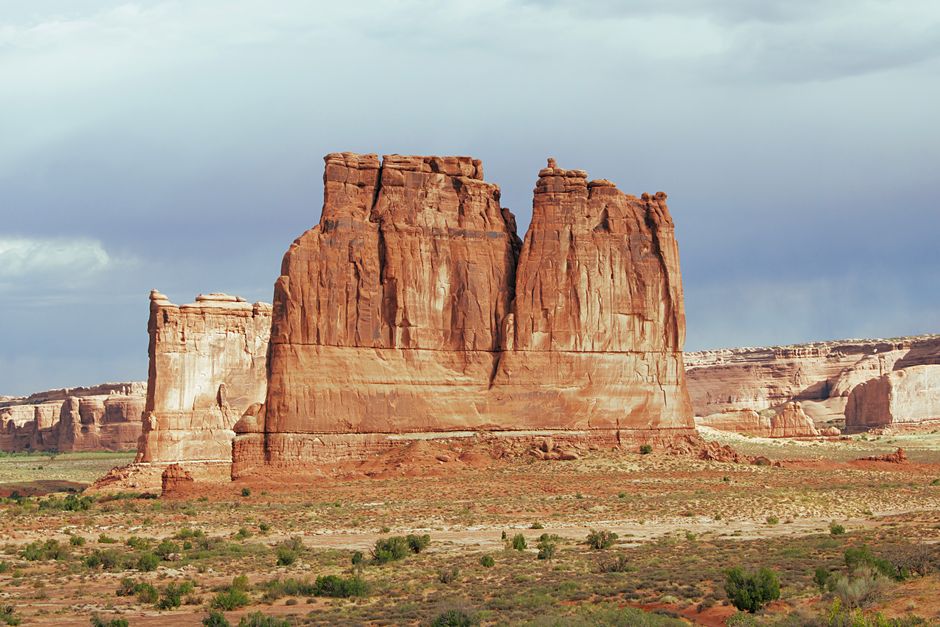
What the Mighty Five route actually covers
Utah’s five national parks form a long desert loop rather than a compact cluster. Zion sits in the southwest, Bryce Canyon rises farther north, Capitol Reef fills the centre, and Arches and Canyonlands share the Moab area in the east. The route works best as a road trip with time set aside for sunrise, short walks, viewpoints, meals, and unexpected delays.
The route at a glance
| Stage | Park or area | Approximate drive |
|---|---|---|
| 1 | Zion | Arrival day |
| 2 | Zion | Local driving |
| 3 | Bryce Canyon | About 85 miles from Zion |
| 4 | Capitol Reef | About 115 miles from Bryce |
| 5 | Arches | About 145 miles from Capitol Reef |
| 6 | Canyonlands | About 35 miles from Arches |
| 7 | Exit or buffer day | Depends on the departure city |
The seven-day version is possible, but it feels rushed. A ten-day route gives Zion and the Moab area two full days each. Fourteen days allows a slower pace, longer hikes, and a rest day between the busiest parks.
How many days are needed for the five parks?
The clearest answer is ten days. Seven days covers the landmarks, ten days balances driving and hiking, and fourteen days suits travellers who want dawn photography, longer trails, or a buffer for heat and storms.
Choose the trip length
- Seven days: spend two nights near Zion, then one night each near Bryce Canyon and Capitol Reef, followed by three nights in the Moab area.
- Ten days: add a second day at Bryce Canyon, Capitol Reef, or Canyonlands. The strongest choice is an extra Zion day for a slower canyon experience.
- Fourteen days: add rest time, a second hike in each major park, and a southern Utah detour outside the five parks.
Protect the first and last days
Do not schedule a demanding hike immediately after a long arrival drive. Keep the final day flexible too. A late storm, road closure, tired legs, or a slow start can easily consume several hours. The best itinerary has one spare block instead of five packed attractions.
What makes each park worth the detour?
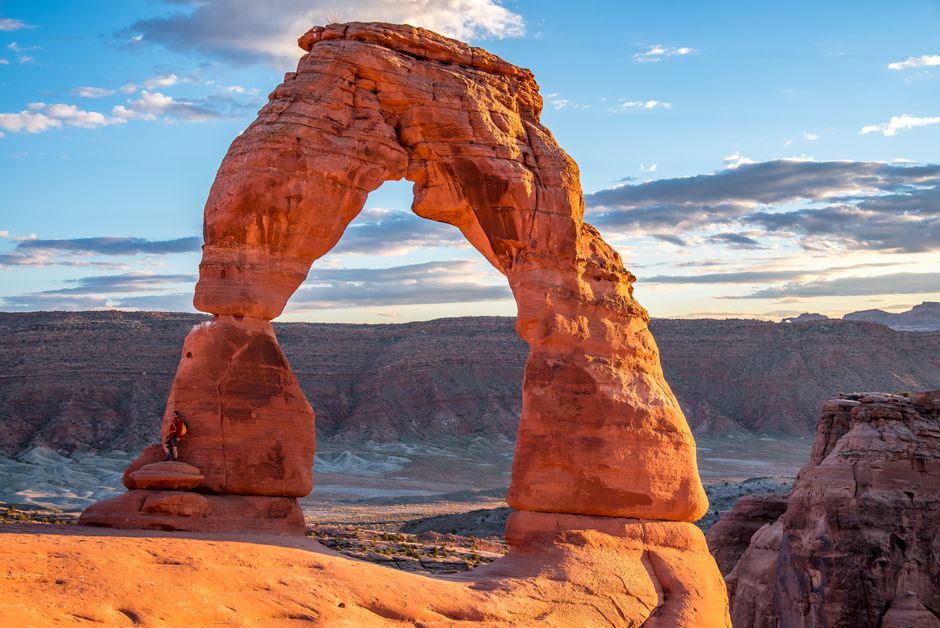
Each park solves a different travel question. Zion offers towering canyon walls and the most concentrated trail network. Bryce Canyon delivers a high-elevation amphitheatre filled with orange and cream spires. Capitol Reef feels quieter and more layered, with cliffs, domes, orchards, and the Waterpocket Fold spread across a broad landscape. Arches focuses on sculpted sandstone openings, while Canyonlands shows the larger forces that cut the Colorado Plateau into mesas, rivers, and deep ravines.
Zion: the best park for a first major hike
Zion rewards an early start. The canyon can feel crowded by mid-morning, and summer heat builds quickly on exposed trails. The Riverside Walk is an easier introduction, while the Narrows demands careful attention to water levels, footwear, and weather. Angels Landing covers about 5.4 miles round trip and includes exposed terrain; access rules can change, so check current park guidance before planning it. For many visitors, Zion deserves two full days.
Bryce Canyon: the best sunrise stop
Bryce Canyon sits at higher elevation than the other parks, so cool mornings and sudden weather changes are normal. The rim viewpoints are easy to connect, but the best understanding comes from descending into the amphitheatre. The Queen’s Garden and Navajo Loop combination covers roughly three miles and includes steep switchbacks. Start at sunrise, then hike before the sun reaches the lower sections.
Capitol Reef, Arches, and Canyonlands
Capitol Reef works well as a slower transition day. Hickman Bridge is about 1.7 miles round trip, while the scenic drive adds colour and geology without demanding a full-day hike. Arches needs a plan because popular trailheads fill early; Delicate Arch is about three miles round trip, and Devils Garden offers a longer route for strong hikers. Canyonlands is vast, so most short visits should focus on Island in the Sky. Mesa Arch is less than a mile round trip, while Grand View Point gives a wide, low-effort view of the canyon system. The verdict is simple: Zion and Bryce suit close-up exploration; Arches and Canyonlands reward careful viewpoint planning.
How to build a driveable itinerary
Start with park geography, then place hikes around light and heat. The common mistake is treating each park as a checklist stop. That creates long midday drives, full parking areas, and too little time on the trails.
Use this planning sequence
- Choose the arrival and departure city before selecting the park order.
- Place Zion first or last if the route begins near Las Vegas or Salt Lake City; avoid crossing the whole state twice.
- Give the Moab area at least three nights because Arches and Canyonlands require separate approaches.
- Assign sunrise to Bryce Canyon or a major viewpoint, then reserve cooler hours for hiking.
- Check road conditions, shuttle information, trail alerts, water warnings, and weather forecasts every evening.
Keep daily driving honest
A map may show a short distance, but park entrances, narrow roads, viewpoints, queues, and trailhead parking add time. Allow at least one extra hour around a major transfer. Fill the vehicle with water and food before entering remote stretches, and download maps because mobile coverage can disappear between towns and parks.
What should be prepared before entering the desert?
Start early and carry more water than the trail distance suggests. Desert parks create a false sense of ease: the roads are smooth, the viewpoints look close, and the air may feel cool at dawn. Heat, steep grades, dry wind, and intense sun can change the effort level within minutes.
Pack for changing conditions
- Carry enough drinking water for the planned hike, plus a reserve for delays.
- Use sun protection, a brimmed hat, light layers, and shoes with reliable grip.
- Keep a paper backup of the route, especially for long drives and remote trailheads.
- Tell another person the planned trail and expected return time before starting a remote hike.
Match the plan to the season
Spring and autumn usually offer the easiest mix of temperatures, but they can also bring busy roads and sudden weather. Summer rewards dawn starts and shaded trails; a midday canyon hike may be a poor choice even when the forecast looks manageable. Winter brings shorter days, cold nights, possible snow at Bryce Canyon, and reduced access on some roads. The safest plan is the one that changes when conditions change.
Which hikes fit common travel plans?
What works for a short visit?
For a first visit with limited time, choose one signature walk and one viewpoint circuit per park. In Zion, combine the Riverside Walk with a lower canyon viewpoint. At Bryce Canyon, walk part of the rim and descend through the amphitheatre. At Capitol Reef, choose Hickman Bridge or the scenic drive. At Arches, select Delicate Arch or a shorter Windows area walk. In Canyonlands, pair Mesa Arch with Grand View Point. This approach gives variety without turning every day into a race.
What works for strong hikers?
Longer days can include the full Navajo Loop and Queen’s Garden route, a longer section of Devils Garden, or a deeper Canyonlands trail. Fitness does not remove the need for timing. A ten-mile desert hike at noon can be harder than a longer route started before sunrise. Check elevation, shade, water access, and exit points before committing.
What works for families?
Families usually benefit from short trails, frequent viewpoint stops, and one major activity per day. Bryce Canyon’s rim walks, Capitol Reef’s petroglyph area, Arches’ Windows area, and Canyonlands’ overlooks provide strong scenery with manageable walking. Zion may require more transport planning, so build in time for waiting and rest. The best family itinerary leaves room for curiosity rather than measuring success by trail mileage.
Which mistakes can ruin a Mighty Five trip?
The biggest mistake is planning five parks as five quick photo stops. The landscapes are close on a map but different in elevation, heat, road access, and walking time.
Common failure modes
- Driving after dark on unfamiliar roads after a full hiking day.
- Assuming a short trail means an easy trail; steep grades and loose rock change the effort.
- Arriving at a popular park entrance late and losing the best hiking hours to traffic or parking.
- Ignoring altitude at Bryce Canyon and starting with a demanding route.
- Scheduling no buffer for storms, road work, shuttle changes, or a closed trail.
- Leaving food and water planning until reaching the park, where services may be limited.
The final verdict
A seven-day trip works for landmark seekers, but ten days is the better target for most travellers. Spend the extra time on early starts, one flexible day, and slower exploration rather than adding another destination. The most important takeaway is to plan Utah’s Mighty Five around time in each landscape, not the number of park entrances collected.