
The single most important thing to understand about pet-friendly lodging in the United States is this: there is no federal law requiring any hotel, motel, or vacation rental to accept your dog or cat. None. What exists instead is a patchwork of state health codes, corporate franchise policies, and individual property manager discretion. This article explains how that system actually works in 2026, what fees are typical, what properties cannot legally ask you, and how to verify a property before you drive 400 miles with a crate in the back seat.
This is not legal advice. If you have a dispute with a lodging provider over a pet policy, consult a licensed attorney in the state where the property is located.
What “Pet-Friendly” Actually Means at Chain Hotels in 2026
There is no industry-wide definition of “pet-friendly.” A property can use that phrase in its Google listing and still reject your 70-pound Labrador. What matters is the written policy, and even that changes by location because most budget and midscale chains operate under franchise agreements where the property owner sets pet rules.
Motel 6 remains the most consistent national option. Corporate policy allows up to two pets per room with no weight limit at most locations, and they do not charge a pet fee at company-owned properties. Franchise locations may add a $10 to $25 nightly fee. Red Roof Inn similarly allows one pet per room at no charge at most corporate-managed properties, though some franchised locations charge $15 nightly.
Kimpton Hotels, part of IHG, has the most generous upscale policy: no pet fee, no weight limit, no breed restriction, and no limit on the number of pets. This applies at all Kimpton properties in the U.S. La Quinta by Wyndham is the most inconsistent major chain. Some locations allow two pets free. Others charge $25 per pet per night with a 50-pound limit. You must call the specific property.
The takeaway: chain brand name tells you almost nothing. The franchise owner’s policy at the specific address tells you everything.
State Laws That Restrict What Hotels Can Ask About Your Pet
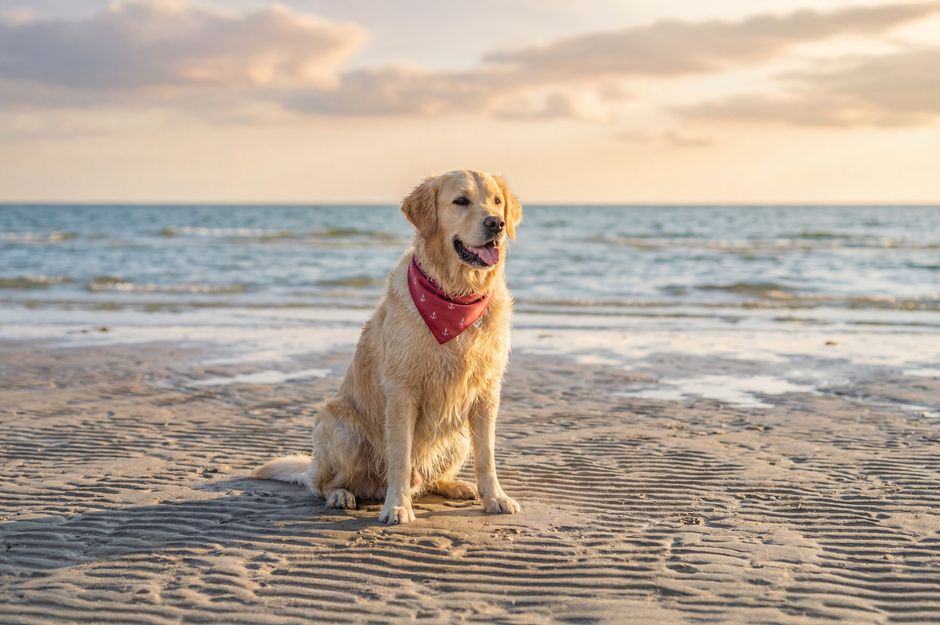
Several states have laws that limit what lodging providers can require regarding service animals, and a smaller number have rules affecting emotional support animals. These laws are frequently misunderstood by both travelers and front desk staff.
Service animals under the ADA
Under the federal Americans with Disabilities Act, a hotel may ask exactly two questions when a guest brings a dog and claims it is a service animal: (1) Is the dog required because of a disability? and (2) What work or task has the dog been trained to perform? The hotel may not ask about the person’s disability, require documentation, require the dog to demonstrate its task, or charge a pet fee. This applies in all 50 states. Hotels that violate this face DOJ enforcement actions and private lawsuits.
Emotional support animals are different
In most states, emotional support animals are not service animals under the ADA and hotels may treat them as pets, including charging fees or denying them. A handful of states, including California and New York, have state-level protections that are narrower than many travelers assume. In California, for example, emotional support animals do not have public accommodation rights under state law unless they are also trained service animals. This surprises many travelers who obtained an ESA letter online.
Breed restrictions and local ordinances
Some municipalities have breed-specific legislation that affects lodging. Denver, Colorado, for example, historically restricted pit bull-type dogs, though the city voted to repeal its ban effective 2026. Miami-Dade County, Florida, still maintains a pit bull restriction that applies to unincorporated areas. A hotel in such a jurisdiction may cite local law when denying a breed, even if the corporate chain has no breed restriction. Always check the city’s municipal code, not just the hotel’s website.
Fee Structures Compared Across Major Chains
Pet fees are not standardized. They range from zero to $150 per stay depending on the brand, the property, and sometimes the day of the week. The table below reflects typical 2026 policies at company-managed locations. Franchise locations may differ.
| Chain | Typical Pet Fee | Weight Limit | Pets Per Room | Notes |
|---|---|---|---|---|
| Motel 6 | $0 at corporate locations | None | 2 | Franchise locations may charge $10-$25/night |
| Red Roof Inn | $0 at corporate locations | None stated | 1 | Franchise locations vary |
| Kimpton Hotels | $0 | None | No limit | Most generous upscale policy |
| La Quinta by Wyndham | $0-$25/night | Varies by location | 2 | Call the specific property |
| Drury Hotels | $50 per stay | 80 lbs | 2 | Fee is per stay, not per night |
| Hilton Garden Inn | $50-$75 per stay | Varies | 2 | Fee varies by property |
| Marriott (select brands) | $75-$150 per stay | Varies | 1-2 | Many Marriott brands do not allow pets |
Note that a $50 per stay fee at Drury is cheaper than a $25 nightly fee at La Quinta for any stay longer than two nights. Always calculate the total fee for your specific stay length, not just the headline number.
Vacation Rentals: The 48-Hour Verification Rule
Airbnb and Vrbo listings have a pet policy field, but the enforcement of that policy depends on the individual host. A listing that says “pets allowed” does not mean the host has actually read or accepted your specific pet. Hosts may reject a booking request after you disclose your dog’s breed or size, even if the listing allows pets. This is legal in most states because hosts are not subject to the same public accommodation laws as hotels.
The practical rule for 2026: never book a vacation rental more than 48 hours before you have written confirmation from the host that your specific pet is accepted. Send a message that states the pet’s breed, weight, age, and whether it is crate-trained. Screenshot the host’s response. If the host does not respond within 48 hours, book elsewhere. A confirmed booking without host acknowledgment of your pet is not a guarantee.
Some hosts charge a pet fee through the platform. Others charge it in cash on arrival, which is against Airbnb’s terms of service for most listings. If a host asks for cash payment outside the platform, report it and cancel. That request is a red flag for other problems.
Three Mistakes That Get Travelers Turned Away at Check-In
Based on front desk staff reports and traveler complaints filed with state consumer protection offices, three mistakes account for most pet-related check-in denials.
- Not declaring the pet at booking. Many travelers book a standard room and assume they can pay the pet fee at the front desk. Some hotels have a limited number of pet-designated rooms. If those rooms are sold out, you will be turned away even if you offer to pay. Always book a pet-designated room type, not just a standard room with a note.
- Leaving the pet alone in the room. Most hotels that allow pets require the pet to be crated when unattended. Some prohibit leaving the pet alone entirely. Housekeeping staff will report an uncrated dog barking in a room. The hotel can evict you without a refund in most states. Read the unattended pet policy before booking.
- Assuming a service animal claim bypasses everything. Hotels may not charge a fee for a service animal, but they may evict a guest whose service animal is out of control, barking repeatedly, or not housebroken. The ADA does not protect disruptive animals. A fake service animal claim also exposes you to criminal penalties in states like Florida and California, where misrepresenting a pet as a service animal is a misdemeanor.
State-by-State Denial Patterns You Should Know
Most pet-friendly lodging disputes are not about the initial acceptance; they are about what happens after check-in. State law governs eviction and refund rights, and these laws differ significantly.
In Florida, a hotel may evict a guest for violating a posted pet policy without a refund if the violation is documented. In California, innkeepers have broad rights to evict for policy violations, but must follow specific notice procedures. In New York, a hotel that accepts a pet and later claims a policy violation must typically show that the guest was informed of the specific rule at check-in. If the rule was only on a website the guest never saw, the eviction may not hold up in small claims court.
In Texas, hotel liability for pet-related injuries falls on the pet owner in most cases, but the hotel may share liability if it allowed a dangerous animal on the property without reasonable precautions. This is why some Texas hotels carry breed restrictions even when the corporate chain does not.
If you are denied at check-in despite a confirmed pet-friendly booking, document everything. Take a photo of the front desk. Ask for the denial in writing. Request the specific policy language they are citing. Then contact the chain’s corporate customer relations line, not just the property manager. Corporate offices can override franchise-level denials in some cases, particularly for loyalty program members.
What I Would Do on a 2026 Cross-Country Trip
If I were driving from Chicago to Seattle with a medium-sized dog, I would book Kimpton properties in cities where they exist, Motel 6 for overnight highway stops, and Drury Hotels for mid-range stays longer than two nights. The Kimpton no-fee policy is the only upscale option that treats pets as guests rather than liabilities. Motel 6 is the most reliable budget option because the corporate no-fee policy removes the franchise fee surprise. Drury’s flat $50 per stay fee beats any nightly fee structure for multi-night stops.
I would not book any vacation rental without written host confirmation of my specific dog. I would not rely on a booking platform’s pet filter alone. And I would call every hotel directly 24 hours before arrival to reconfirm the pet room. Policies change when properties change ownership, and a 2026 policy screenshot does not bind a 2026 front desk clerk.
The bottom line: pet-friendly lodging in the U.S. is a negotiation, not a right. The travelers who get turned away are the ones who assumed a website filter was a guarantee. The travelers who get the room are the ones who verified in writing, booked the correct room type, and understood the fee math before they left the driveway.