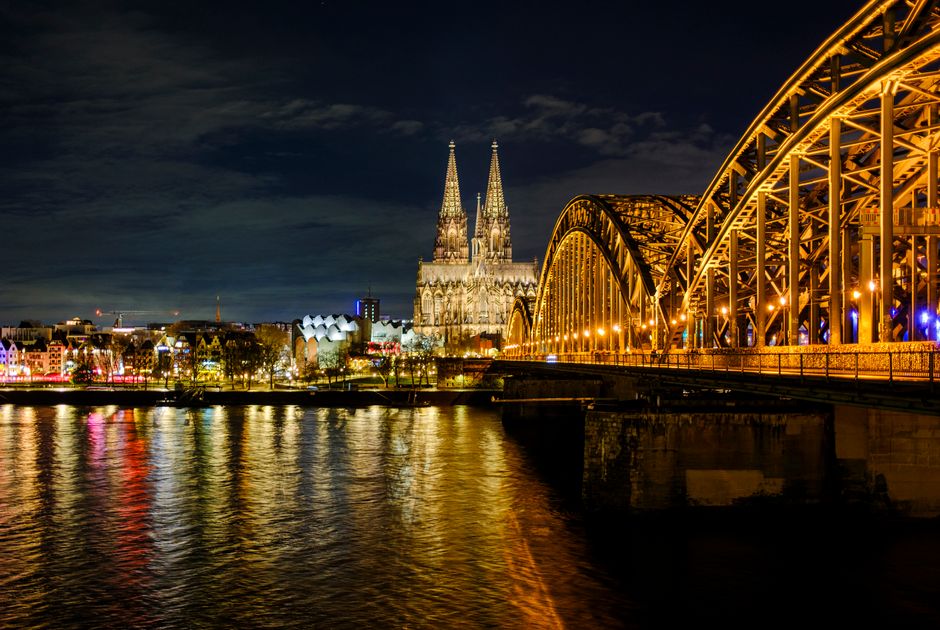
Cologne is easy to enjoy in one day if the route stays compact. Start at Cologne Cathedral, walk through the Old Town, cross or view the Hohenzollern Bridge, then finish beside the Rhine. The order matters. It avoids repeated walking, leaves room for a slow lunch, and keeps the best river views for the afternoon.
The best one-day Cologne route follows the river
The strongest plan begins near the main railway station and moves south and east in a loose loop. Cologne Cathedral comes first, before the busiest visitor period. The Old Town follows naturally, with short streets, historic squares, Roman remains and river access all within walking distance. The final stretch belongs to the Rhine.
Use this timetable as the basic route
| Time | Stop | Best use of the time |
|---|---|---|
| 08:30–10:00 | Cologne Cathedral | Interior visit, exterior details and optional tower decision |
| 10:00–11:00 | Hohenzollern Bridge | Walk toward the river and take skyline photographs |
| 11:00–13:00 | Old Town | Great St Martin, historic lanes and an early lunch |
| 13:00–15:00 | Roman and medieval Cologne | Choose one museum or continue through the old streets |
| 15:00–17:30 | Rhine promenade | Relaxed riverside walk and views back toward the cathedral |
| 17:30 onward | Old Town or riverfront | Dinner, evening lights or an early departure |
This schedule is deliberately flexible. The cathedral deserves more attention than a quick photograph, but a full museum day will crowd out the river. For a first visit, the best verdict is clear: choose the cathedral, Old Town and Rhine combination instead of trying to collect every attraction.
How should the Cathedral visit work?
Should the cathedral come first?
Yes. Cologne Cathedral is the day’s anchor, and the morning gives the visit a better chance of feeling calm. The building stands beside the railway station, so it is the simplest starting point for visitors arriving by train. Walk around the outside before entering. The west front, flying buttresses and tall twin towers make more sense when seen from several angles rather than from one crowded viewpoint.
Is the tower climb worth the effort?
The tower climb is worthwhile for visitors who enjoy long staircases and city views. It is not essential for understanding the cathedral, and it can take energy away from the rest of the itinerary. The interior is the priority. Look for the height of the nave, the stained glass, the shrine of the Three Kings and the contrast between dark stone and bright windows. Check the official visitor and service schedule before setting out because access can change during religious services, events or maintenance.
Keep clothing practical and voices low. This is an active place of worship, not only a sightseeing stop. Large bags can slow entry, and a rushed visit creates a poor tradeoff. For most people, one hour inside and around the exterior is enough. The clear recommendation: visit the cathedral properly, then skip the tower if the queue threatens the rest of the day.
Why Cologne Old Town works best on foot
Cologne Old Town is not a single postcard square. It is a compact collection of lanes, churches, small plazas and river-facing streets. Walking is the right way to read it because the character changes every few minutes. A wide public space opens beside a narrow lane; a modern building appears behind a medieval church; a quiet corner leads suddenly to the Rhine.
Follow a simple walking line
From the cathedral, head toward the Roman-Germanic Museum area and continue toward the Old Market. The Old Market is a useful orientation point, but it is not the only place worth seeing. Continue to the Alter Markt and Great St Martin, then turn toward the Rhine. Rathausplatz adds another layer of the city’s history, while the narrow streets around the central squares offer better details than a fast loop around the main landmarks.
Allow roughly two hours for this section, including stops. That sounds generous until time disappears in photographs, church interiors, food queues and river views. The city centre was heavily rebuilt after wartime destruction, so the Old Town is not a perfectly preserved medieval district. That is part of its story. Expect reconstructed façades, modern gaps and historic fragments sharing the same street.
What deserves attention beyond the main squares?
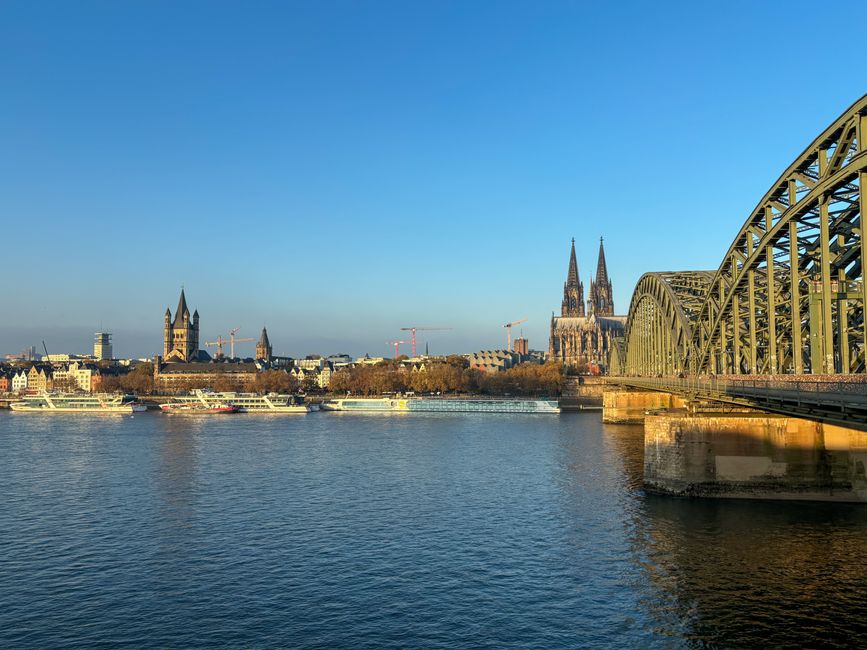
Look down as well as up. Some streets reveal traces of Roman Cologne, while church towers and old façades help explain the city’s long connection to trade and the Rhine. Great St Martin is especially useful as a visual marker from the waterfront. The Hohenzollern Bridge provides a different view: trains, river traffic, the cathedral and the dense city centre appear in one frame.
The practical verdict is to keep the Old Town unscripted for part of the visit. Mark three anchors, then wander between them. A rigid landmark checklist turns a walkable district into a race.
What usually goes wrong on a Cologne day trip?
The common mistakes are predictable. Avoid them and the same route becomes far more comfortable.
- Starting too late. Arriving at the cathedral near midday means more crowds and less time for the river. Begin in the morning whenever possible.
- Trying to visit every museum. Cologne has enough museums to fill several days. One carefully chosen museum is realistic; three is not.
- Treating the Old Town as a preserved film set. Parts are historic, parts are reconstructed, and some streets are busy with everyday city life. Expect variety.
- Ignoring walking distances. The core attractions are close, but a day still involves several kilometres on hard streets and pavements. Comfortable shoes matter more than an ambitious map.
- Leaving the Rhine until the final ten minutes. The river is not a spare attraction. Reserve at least ninety minutes for the promenade, bridge views or a quiet riverside stop.
- Depending on one exact opening time. Religious services, events and maintenance can affect access. Check official information on the morning of the visit and keep the outdoor route as a backup.
The biggest planning error is building a schedule that looks efficient on paper but leaves no space for delays. Cologne works better with one flexible block than with six timed reservations. If rain arrives, shorten the promenade and use a museum or church interior. If the weather is bright, protect the river section because that is where the city opens up.
Where should the day end beside the Rhine?
End beside the Rhine, not inside another landmark. The river gives the day a sense of scale that the narrow Old Town streets cannot provide. From the promenade, the cathedral rises above the centre, the bridge carries constant rail traffic, and boats and pedestrians create movement across the water.
Choose the river view that matches the remaining energy
For a short finish, stay near the cathedral side of the river and walk south along the promenade. This keeps the route simple and offers repeated views of the skyline. For a longer walk, cross the Hohenzollern Bridge and look back toward the cathedral from the opposite bank. The view changes immediately: the bridge structure frames the city, while the cathedral becomes part of a wider urban scene.
Late afternoon usually works better than the middle of the day. The light reaches the cathedral façade from a more attractive angle, and the riverfront feels less like a transfer point. There is no need to force a cruise, a second museum or a distant neighbourhood into the schedule. Those choices make sense on a longer stay, not on a first one-day visit.
When should the itinerary be changed?
Change the route if the cathedral is closed, the weather is severe or arrival is after lunch. In that case, start with the Old Town, use the river as the main open-air section, and treat the cathedral as an exterior landmark. Do not sacrifice the whole day to one attraction.