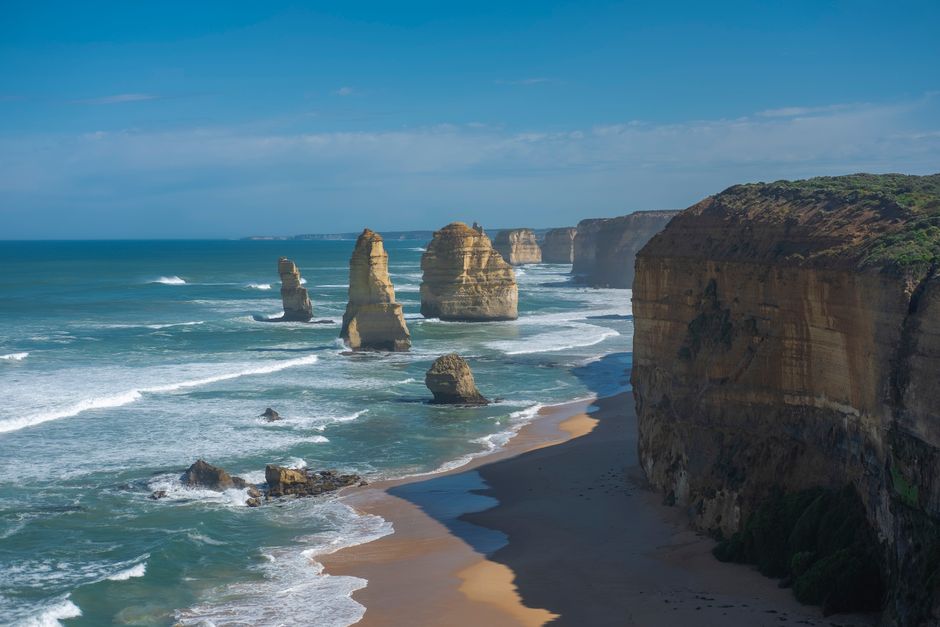
The best Melbourne trip combines three different experiences: a walk through the central laneways, a slow market morning, and a properly paced drive along the Great Ocean Road. Trying to force all three into one rushed day produces long walks, missed meals and a tiring coastal drive. Allow two full days for Melbourne, then give the Great Ocean Road at least two nights if the Twelve Apostles matter. That extra time is what turns a checklist into a trip.
How to Read Melbourne’s Laneways Without Missing the Point
Melbourne’s laneways are not one attraction with a single entrance. They are a loose network of old service lanes, arcades, small squares, cafés, galleries and street-art walls woven through the central grid. The useful approach is to walk them as connected neighbourhoods rather than chase one famous photograph.
Start with the grid, then leave it
Begin near Flinders Street and move north through Degraves Street, Centre Place and the arcades around Collins Street. Look up as well as ahead: older façades, suspended signs, balconies and narrow gaps between buildings often explain the city better than a single mural. Keep the first walk to about two hours. That leaves room for a proper meal and prevents the central lanes from becoming a blur of similar viewpoints.
Treat the laneways as working streets
Street art changes, businesses open at different times, and some lanes are delivery routes rather than quiet promenades. Walk to one side, avoid blocking doorways, and return after dark only if the route still feels comfortable. Hosier Lane is worth seeing, but it should not be the entire plan. Add the Royal Arcade, Block Arcade, Chinatown and the small lanes around Hardware Lane for contrast. The clear verdict: the best laneway route is a loop with several different streets, not a single wall followed by a quick departure.
A Practical Two-Day Melbourne Itinerary
Two days works well for a first visit because it separates the dense central city from the markets and neighbourhoods. The schedule below leaves space for weather, slow breakfasts and the occasional wrong turn.
Use one day for the centre
Keep the first day compact and walkable. Melbourne’s central free tram area covers much of the core, but walking is often faster across short blocks. Check the boundaries before boarding, since travel outside the free area requires the correct ticket or travel card.
| Time | Plan |
|---|---|
| 8:30–10:30 | Flinders Street, Federation Square and the river |
| 10:30–13:00 | Degraves Street, Centre Place and nearby arcades |
| 13:00–15:00 | Lunch and a slower museum or gallery visit |
| 15:00–18:00 | State Library area, Chinatown and Carlton Gardens |
Use the second day for markets and neighbourhoods
Choose one large market rather than trying to collect every market in the city. Queen Victoria Market suits a broad morning route and pairs easily with Carlton or the central city. South Melbourne Market works better with a southern neighbourhood walk. Prahran Market is a useful choice for visitors already exploring the inner south. Leave the afternoon flexible. Melbourne’s weather can shift quickly, and a market morning followed by a gallery, garden or café stop feels far better than six fixed reservations.
Which Melbourne Markets Belong on Your Route?
Markets are most enjoyable when treated as neighbourhoods with food and local routines, not as souvenir warehouses. Arrive early enough to browse before the busiest period, but do not arrive so early that half the stalls are still setting up. The right market depends on the rest of the day.
Match the market to the area
| Market | Best for | Allow | Pair it with |
|---|---|---|---|
| Queen Victoria Market | First-time visitors and a broad mix of food, produce and stalls | 2–3 hours | Flagstaff Gardens or the central laneways |
| South Melbourne Market | A relaxed food-focused morning | 2 hours | South Melbourne village streets and the foreshore |
| Prahran Market | Inner-south neighbourhoods and a shorter market visit | 1–2 hours | Windsor, Chapel Street or nearby gardens |
| Rose Street Artists’ Market | Small-scale design and weekend browsing | 1 hour | Fitzroy cafés and Brunswick Street |
How to Plan the Great Ocean Road Without Rushing It
The Great Ocean Road is a scenic route, not a single lookout beside Melbourne. The coastal section becomes slower and more winding as it approaches Lorne and Apollo Bay, while the Twelve Apostles sit much farther west. A return drive from Melbourne in one day is technically possible, but it leaves almost no time for beaches, rainforest, wildlife or safe rest breaks. The strongest plan is an overnight route.
Build the route in this order
- Start at Torquay. Use the surf coast as the natural beginning rather than treating the road as a direct motorway transfer.
- Slow down through Anglesea and Lorne. These towns work well for a walk, food stop or short beach break. Do not judge the route by map distance alone; bends and traffic add time.
- Continue through Apollo Bay and the Otways. This is where the trip changes from coastal viewpoints to forest, waterfalls and damp mountain air. Keep a layer and shoes that can handle wet paths.
- Finish near Port Campbell. Staying close to the western viewpoints makes sunrise or late afternoon far more manageable than returning to Melbourne after dark.
- Return inland if necessary. The inland route through Colac is usually a better return plan than repeating every coastal bend, especially after a full day of sightseeing.
Check conditions before leaving
Roadworks, flood damage, fires, storms and park closures can change the route. Check current road information, weather warnings and park access on the morning of departure. Download maps before entering forested sections because mobile reception can disappear. Keep fuel, water and rest stops in the plan, and stop only in marked bays. The verdict is simple: a two-night route is the right choice for the Twelve Apostles, while a one-night route suits travellers who mainly want the coast and a few major viewpoints.
Great Ocean Road Questions That Prevent Bad Days
Is the Twelve Apostles day trip from Melbourne worth it?
It is worth it only when time is extremely limited and the long return drive is accepted as the main activity. The distance, winding roads and stop-start sightseeing make the day tiring. Travellers who want rainforest walks, wildlife, beaches and smaller coastal towns should stay overnight. A rushed visit can show the landmark without giving any sense of the region around it.
Can the route be driven after dark?
It can, but it is a poor plan on unfamiliar coastal and forest roads. Wildlife is more active around dawn and dusk, visibility drops, and fatigue becomes a serious risk after a full day of stops. Finish the scenic section before dark whenever possible. If a late arrival is unavoidable, use the safest practical route and remove extra viewpoints from the schedule rather than trying to fit everything in.
What should happen when the weather changes?
Keep a flexible version of the itinerary. Rain can improve waterfalls and forest walks, while strong wind may make exposed lookouts unpleasant. Replace a beach stop with a town walk, visitor centre or shorter sheltered trail. Do not cross barriers for a better photograph, and never stop on the road itself. Conditions matter more than a perfect forecast.
The Best Trip Shape Is Two Cities, One Coast
The clearest recommendation is to separate Melbourne from the Great Ocean Road. Spend two days in the city, choose one market, then begin the coastal drive with enough daylight for the route. This structure protects the trip from the two most common failures: treating Melbourne as a collection of isolated attractions and treating the Great Ocean Road as a single long photograph stop.
When to choose a shorter coastal plan
Choose one overnight stay if the priority is the coast, the Twelve Apostles and a small number of viewpoints. Leave Melbourne early, sleep near the western end, and return inland the next day. This is efficient, but it sacrifices the slower rhythm of Lorne, Apollo Bay and the Otways.
When to add another night
Add a second coastal night for rainforest walks, wildlife, beaches, small towns or changing weather. It also makes the route kinder for drivers who have just arrived from a long flight. Melbourne rewards wandering, while the Great Ocean Road rewards patience. Give each the time it needs and the journey becomes far more memorable than a compressed loop.