A short Normandy trip can go wrong quickly: too many towns, a missed tide, and long drives between places that looked close on a map. A better route combines Mont-Saint-Michel with one or two coastal areas, leaving enough time for weather, walking, and slow meals.
How many days are needed for Normandy’s coast?
The best trip length
Four days is the best balance for Mont-Saint-Michel and coastal Normandy. Two days can cover the abbey and one nearby town, but the schedule will feel rushed. Five or more days allow a wider route through the western and eastern coast without turning every morning into a transfer.
Choose one coastal direction
Base the route around geography. The western option links Mont-Saint-Michel, Avranches, Granville, and the Cotentin Peninsula. The eastern option links Bayeux, Arromanches, Honfleur, Étretat, and the Côte Fleurie. Trying to cover both in a long weekend creates a driving holiday rather than a coastal escape. For a first visit, the western route wins because it keeps Mont-Saint-Michel central and adds smaller harbours, dramatic tidal landscapes, and fewer major-city detours.
A useful rule is one major sight and one smaller place per day. That leaves room for a market, a beach walk, or a weather change instead of treating every stop as a timed appointment.
What does a practical four-day itinerary look like?
The following route works best with a car, although the first and final transfers can use rail connections. Distances are approximate because local roads and seasonal traffic can change the timing.
| Day | Base or route | Main plan | Driving focus |
|---|---|---|---|
| 1 | Avranches or nearby | Arrive, explore the old town, and prepare for the bay visit | Keep the first day light |
| 2 | Mont-Saint-Michel | Visit the abbey early, walk the ramparts, and watch the tide from the shore | Allow half a day for the island |
| 3 | Granville | Harbour walk, upper town, coastal path, and nearby beach | About 50 kilometres from Mont-Saint-Michel |
| 4 | Barfleur or the Cotentin coast | Choose a harbour village, lighthouse walk, or quiet beach | Expect slower rural roads |
For a shorter trip, remove the final coastal day rather than squeezing it into the Mont-Saint-Michel visit. The island deserves a full morning and part of an afternoon, especially when the tide, shuttle, and queues line up poorly.
How should Mont-Saint-Michel be planned?
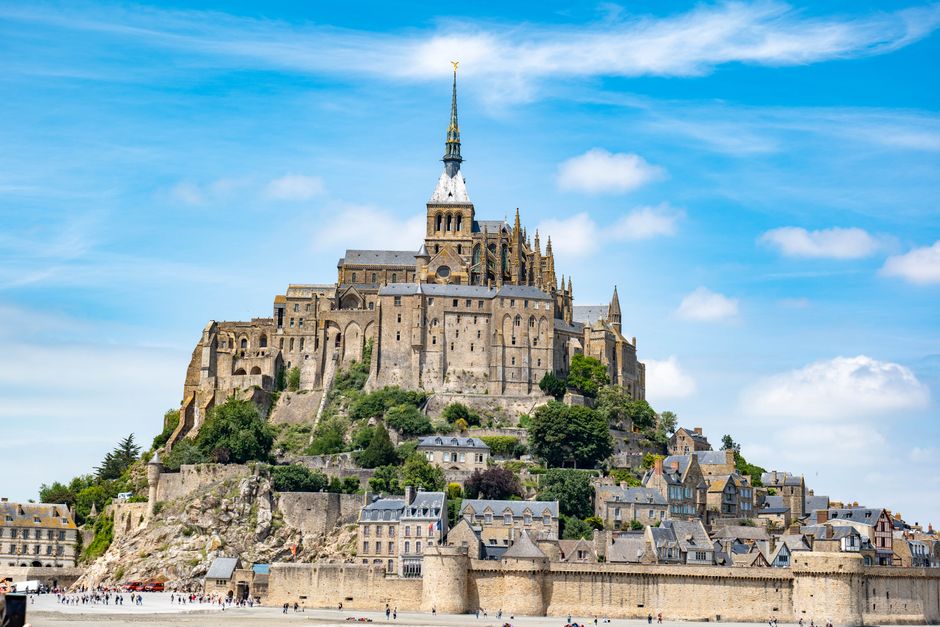
Arrive before the busiest hours
Mont-Saint-Michel is most enjoyable before late-morning crowds build. Arriving early gives time to walk from the mainland transport area, enter the abbey, and explore the narrow streets before the steep lanes become congested. The island has limited flat ground, so a visit involves stairs, uneven paving, and repeated climbs. Comfortable shoes matter more than an ambitious sightseeing list.
Read the tide before choosing the viewpoint
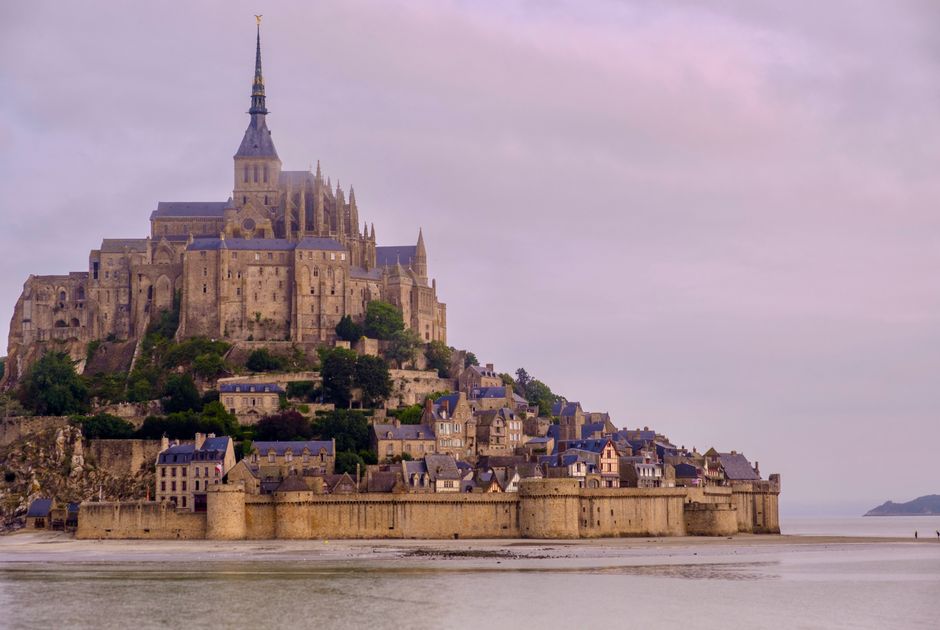
The bay changes character throughout the day. At low tide, broad sand and mudflats surround the rock. At high tide, water can appear to isolate the island, although the exact visual effect varies with the tide cycle and weather. Check the official tide information for the planned date, then allow extra time for transport and walking. Never cross the bay independently: quick channels, soft sand, and incoming water create serious risks. Guided crossings follow safer routes and explain the landscape.
The strongest plan separates the abbey visit from the tide spectacle. Enter the abbey when access is easiest, then watch the bay from the causeway, mainland shore, or a recognised viewpoint. This avoids spending the entire visit inside the crowded island streets while waiting for a particular water level.
Which coastal towns deserve time?
Normandy’s coast does not offer one single town that replaces every other stop. Each place has a different strength, and the right choice depends on the shape of the route.
| Town | Best for | What to expect | Trade-off |
|---|---|---|---|
| Granville | Harbour life and walking | A working port, upper town, sea views, and coastal paths | Less polished than the resort towns |
| Barfleur | A quiet harbour stop | Stone houses, fishing boats, and a compact waterfront | Limited activity after the harbour walk |
| Honfleur | Architecture and galleries | A picturesque old harbour, narrow lanes, and busy restaurants | More visitors and higher demand at peak times |
| Étretat | Cliff scenery | White chalk arches, steep paths, and open sea views | Weather and crowds can change the experience |
Granville is the clearest choice for a western Normandy route because it adds a real coastal town without a major detour. Barfleur suits travellers seeking a quieter final day. Honfleur and Étretat are excellent, but they belong on an eastern route with Bayeux or the Côte Fleurie rather than beside Mont-Saint-Michel in a rushed itinerary.
What should visitors expect on the island?
Is Mont-Saint-Michel a peaceful village?
Not during the busiest part of the day. The island is historic, photogenic, and highly visited, with narrow streets that concentrate people in a small space. The quieter experience comes from arriving early, staying after day visitors leave, or walking away from the main entrance as soon as practical.
Is the abbey suitable for every visitor?
The abbey rewards careful visitors, but it demands stairs and uneven surfaces. Anyone with limited mobility should check the latest access information before travelling and plan for the island’s sloping approach. Even visitors who skip the abbey can enjoy the exterior walls, bay views, and mainland perspectives.
What happens when the weather turns?
Wind can make the causeway feel exposed, while rain makes stone steps slippery. Keep a waterproof layer available instead of relying on a clear forecast from the morning. If visibility collapses, switch the plan to the abbey and village lanes, then save the broad bay views for a later stop. The landscape still works in changing weather, but the itinerary should not rely on one photograph.
What mistakes cause the most trouble?
- Booking every night in a different town. Frequent packing wastes more time than it saves. Two bases are enough for a four-day route.
- Treating the map like a timetable. Coastal roads, village traffic, parking, and short photo stops stretch the journey. Add at least 30 minutes to a rural transfer.
- Ignoring the tide cycle. The island looks radically different across the day. Check the tide before fixing the order of the visit.
- Arriving without a walking plan. The approach from the mainland and the island’s steep streets require more effort than the distance suggests.
- Trying to cross the bay alone. Mudflats and tidal channels are not ordinary beaches. Use a qualified guide for a crossing.
- Choosing a coastal town only for photographs. A beautiful harbour may offer little beyond a short walk. Pair it with a market, museum, beach path, or nearby village.
The most damaging mistake is overloading the route. Normandy rewards pauses, and the best coastal memories often come from an unplanned harbour walk between larger sights.
Should the route include eastern Normandy?
Choose eastern Normandy only when the trip lasts at least five days. Honfleur and Étretat offer a different landscape from the Mont-Saint-Michel area, with chalk cliffs, larger resort towns, and a more urban coastal rhythm. They are worth the extra distance, but adding them to a three-day schedule weakens every stop.
When the eastern route makes sense
Choose it for cliff walks, harbour architecture, seafood restaurants, and access to Bayeux or the D-Day coastline. A five- or six-day journey can place Mont-Saint-Michel in the west, spend a night near the central coast, and finish around Honfleur or Étretat. This creates a point-to-point route instead of repeated backtracking.
When to stay west
Stay around Mont-Saint-Michel, Granville, and the Cotentin coast when the priority is tidal scenery, small ports, open beaches, and a slower pace. This route has stronger internal logic and fewer long transfers. It also leaves room for bad weather, which matters on an exposed coast.
For most first-time visitors, the western itinerary is the better choice: Mont-Saint-Michel provides the major landmark, Granville adds everyday coastal life, and a smaller harbour supplies the quiet finish. The eastern coast can become the focus of a second trip rather than an exhausting final add-on.