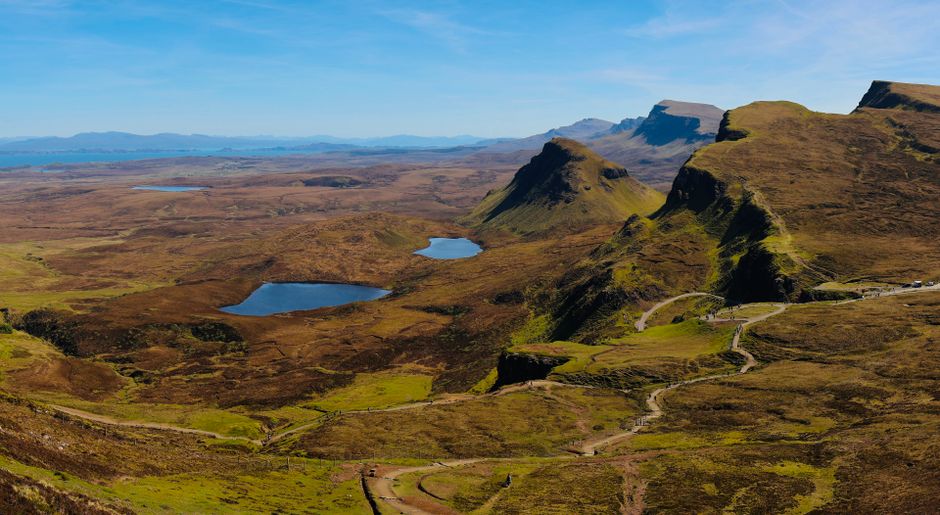
Which Isle of Skye route gives enough time for the famous viewpoints without turning the day into a race? The answer depends on how long the island visit lasts, but the planning rule is simple: group nearby places, leave space for weather delays, and treat the walking time as the main part of the day rather than a quick stop between drives.
How should an Isle of Skye route be planned?
Which areas work well together?
Skye is larger and slower to cross than a map suggests. Single-track roads, passing places, sheep, cyclists, coaches and sudden weather can all extend a journey. The Trotternish Peninsula works as one full day because the Old Man of Storr, Lealt Falls, the Quiraing and the Fairy Glen follow the same broad northern route. Fairy Pools, Sligachan and the western Cuillins fit together more naturally on another day. Neist Point and Dunvegan belong to a western itinerary, while Elgol, Broadford and the Sleat Peninsula suit a southern route.
How much time does each route need?
| Area | Main stops | Walking time | Realistic allocation |
|---|---|---|---|
| Trotternish north | Old Man of Storr, Quiraing, Fairy Glen | 3 to 6 hours | One full day |
| Cuillin west | Sligachan, Fairy Pools, Glen Brittle | 2 to 4 hours | One full day |
| West coast | Dunvegan, Coral Beach, Neist Point | 2 to 4 hours | One full day |
| South Skye | Elgol, Broadford, Sleat or Armadale | 1 to 3 hours | Half to one day |
The strongest route for a first visit is a three-day plan: Trotternish on day one, the Cuillins and Fairy Pools on day two, and the western or southern coast on day three. A two-day visit requires a choice. Trotternish delivers the largest concentration of famous scenery; the west gives more open space and stronger mountain views. Trying to cover both in one day creates long drives and short, crowded stops.
Which Isle of Skye viewpoints deserve priority?
The Quiraing is the best viewpoint route for dramatic landscape variety. It combines cliffs, ridges, grassy shelves and views across the northern peninsula, while the Old Man of Storr is the clearest choice for a short, iconic walk. The Fairy Glen works as a brief landscape stop rather than a major hike. Prioritise the place that matches the available daylight and walking ability.
For a short walk with a major landmark
Choose the Old Man of Storr. The route from the main car park climbs steadily across open ground to the rock pinnacles and broad views over the Sound of Raasay. Allow about two hours for the return walk, longer if the path is wet or crowded. The lower section is manageable for many visitors, but the climb is not flat and the exposed upper ground can feel tiring in strong wind. Arriving early gives the clearest path experience and reduces pressure on the surrounding verges.
For a wide landscape rather than one rock formation
Choose the Quiraing. The full circuit is roughly 6.5 to 7 kilometres and can take three to four hours in ordinary conditions. The path crosses steep, rough and muddy ground, with sections close to edges and slopes. Low cloud can hide the formations and make navigation harder. The strongest view often comes before the full circuit is complete, so turning back is sensible when visibility, wind or footing deteriorates.
For a quick stop between longer walks
Choose the Fairy Glen near Uig. Its rounded grassy hills, narrow tracks and unusual rock shapes create a distinctive scene in less time than the major hikes. The ground can be slippery, and the small roads around the site are easily congested. Keep the stop short, park only in permitted areas, and do not climb fragile formations simply to create a photograph.
Which Skye walks suit different abilities?
Short walks with a clear reward
The Fairy Pools provide one of the easiest ways to reach dramatic water and mountain scenery. The main path from the car park follows the river for about 2.4 kilometres to the largest pools and waterfalls, with bridges and uneven gravel underfoot. A return visit can take 90 minutes to two hours. The water remains cold even in summer, and slippery rocks make swimming a poor choice for anyone without strong water confidence. The route is accessible compared with the Cuillin hills, but it is not a smooth promenade.
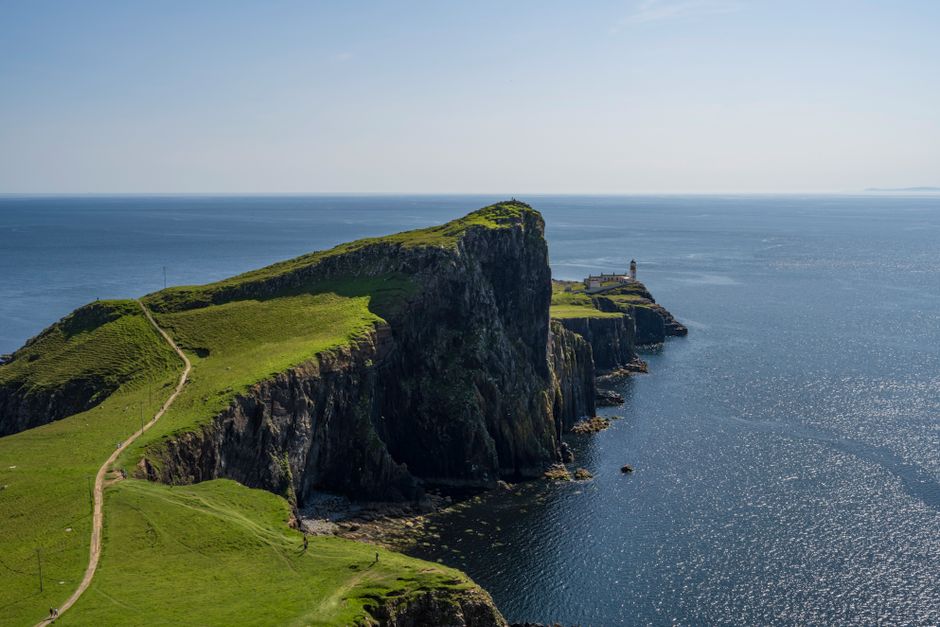
Neist Point is another short, high-impact walk. The path descends from the parking area towards the lighthouse and sea cliffs, with steps and a steep return climb. Allow about an hour for the walking, plus time for seabirds, waves and changing light. The final viewpoint is exposed, and the cliff edge needs distance. For a gentler coastal outing, Coral Beach near Claigan offers a roughly 3-kilometre return walk across tracks and rough ground. The beach is tidal, so the colour and visible shoreline change during the day.
Longer routes with rougher ground
The Quiraing circuit is the main test for visitors who want a full mountain landscape without committing to a technical summit. It demands sturdy footwear, weather protection and enough daylight to complete the return safely. The path can become muddy after rain, while mist can remove the visual landmarks that make the route easy to follow. Start with the forecast and turn around before the most exposed section if conditions shift.
The Sligachan area offers a more flexible choice. Short paths beside the river give views towards the Red and Black Cuillins, while longer mountain routes lead into demanding terrain. The Cuillin Ridge is not a casual walking route. It involves steep scrambling, route-finding and serious exposure, so ordinary sightseeing plans should stop well below the ridge unless the group has the required skills and conditions.
Walks for a slower day
Scorrybreac near Portree gives a coastal hill walk with views across the harbour, islands and surrounding water. The loop is around 3.5 kilometres and usually takes 90 minutes to two hours, depending on stops. Talisker Bay offers a longer beach approach of roughly 4 kilometres return, with open views and a quieter feel than the most visited sites. Neither route should be judged only by distance: wet grass, wind and uneven ground can make a short Scottish walk demanding.
What mistakes cause problems on Skye routes?
Common planning errors
- Trying to see the whole island in one day. Skye’s famous sites are spread across narrow roads. Select one geographic area and accept that some places will wait for another visit.
- Using drive-time estimates as the whole schedule. Add time for parking, passing traffic, queues, photographs, toilets and weather. A route that appears to take six hours of driving may fill the entire day before any walk begins.
- Stopping in passing places. These spaces allow vehicles to pass on single-track roads. They are not picnic bays or photograph stops. Pull into a proper lay-by or designated car park instead.
- Arriving without food, water or a charged phone. Services are spread out, mobile coverage varies, and some trailheads have limited facilities. Carry enough for the planned walk and keep an offline map available.
- Wearing ordinary trainers on wet ground. Mud, stone and steep paths quickly expose weak footwear. Waterproof layers and shoes with reliable grip make a bigger difference than extra walking speed.
- Assuming a viral viewpoint is a quiet local secret. The Old Man of Storr, Fairy Pools and Quiraing can be busy, especially in summer. Early starts, shoulder-season visits and less famous walks reduce pressure.
- Entering water without checking conditions. Pools and beaches can have cold water, strong currents, slippery rocks and changing tides. A photograph is not a reason to ignore those risks.
How can visitors reduce pressure on local communities?
Use marked parking, keep gates clear, take litter away and leave livestock undisturbed. On single-track roads, drive slowly and use passing places correctly. Do not create informal parking on grass verges, since repeated vehicle movement damages drainage and blocks access for residents. The Glen Brittle visitor information page shows why access details can vary by site and why local notices matter.
Is the Isle of Skye worth visiting without a packed schedule?
The clearest verdict
Skye is better with fewer stops and longer walks than with a checklist of every famous viewpoint. The island’s value comes from the relationship between road, weather, rock, sea and time outside the car. A rushed itinerary may include more names, but it usually produces less contact with the landscape. For a first visit, three days is the minimum useful length: one day for Trotternish, one for the Cuillins and Fairy Pools, and one for the west or south. Two days can still work if the route stays concentrated.
When should a different plan be chosen?
Visitors who dislike uneven ground, steep paths or exposed weather should avoid building the trip around the Quiraing and the Cuillin mountains. The Old Man of Storr, Fairy Glen, Portree viewpoints and selected coastal stops offer strong scenery with less commitment. Visitors who want remote, silent landscapes should also avoid peak daytime hours at the most photographed sites and choose lesser-known paths such as Scorrybreac or Talisker Bay. The right Skye plan is not the one with the most stops; it is the one that still feels comfortable when rain arrives and the road takes longer than expected.