Arriving in Jaipur before sunrise sounds romantic until the first plan sends visitors across the city in the afternoon heat, through traffic, and into a crowded fort with no shade. Jaipur rewards structure. Visit the major sights early, keep the old city for late afternoon, and leave space for the parts that cannot be scheduled: a quiet courtyard, a rooftop view, or a bazaar lane that suddenly becomes more interesting than the landmark on the map.
How to plan a two-day Jaipur itinerary
Two days are enough for a strong first visit if the route follows the city rather than crossing it repeatedly. The first day should focus on the eastern and central highlights. The second should begin in the hills and finish among the old city’s markets. Starting early is the single best planning decision because it improves light, temperature, traffic, and crowd levels at the same time.
| Time | Day one | Day two |
|---|---|---|
| Early morning | Hawa Mahal exterior and old city streets | Amber Fort |
| Late morning | City Palace and Jantar Mantar | Jaigarh Fort or a nearby hill viewpoint |
| Afternoon | Rest during the hottest hours | Return to the city and pause indoors |
| Late afternoon | Albert Hall area or a relaxed neighbourhood walk | Nahargarh Fort or a sunset viewpoint |
| Evening | Johari Bazaar and nearby lanes | Tripolia Bazaar and a final old-city meal |
Day one: keep the centre compact
Begin around Hawa Mahal, then move toward the City Palace and Jantar Mantar. These attractions sit close enough to combine without wasting the morning in a vehicle. After lunch, step away from the busiest streets. The Albert Hall area works better later in the day than at midday, when heat can flatten the experience.
Day two: go uphill first
Amber Fort deserves the clearest morning. Add Jaigarh only if energy and transport allow it; the two sites are related but not identical. Nahargarh works best near sunset, yet the road can become slow and crowded. Leave more time than the map suggests.
Which Jaipur fort should be visited first?
Amber Fort should be visited first. It has the strongest combination of scale, setting, courtyards, gateways, and interior detail, so it delivers the clearest introduction to Jaipur’s fortified history. Jaigarh is the better choice for military history and wide views, while Nahargarh is the clear winner for a city panorama. Trying to treat all three as equal stops usually creates a rushed day.
| Fort | Best for | Time needed | Main drawback |
|---|---|---|---|
| Amber Fort | Architecture, courtyards, hill setting | 2 to 3 hours | Busy access and exposed paths |
| Jaigarh Fort | Defensive walls, cannon history, views | 1.5 to 2 hours | Less intimate palace detail |
| Nahargarh Fort | Sunset and views over Jaipur | 1 to 1.5 hours | Longer road journey |
Amber Fort: choose detail over speed
Do not race through Amber Fort for photographs at the entrance. Move through the main courtyards, look at the defensive position above the valley, and notice how visitor routes shift from public spaces to more private palace areas. Morning light is kinder to the sandstone, and the stone holds heat later in the day.
Jaigarh and Nahargarh: make one the extra
Jaigarh adds depth when the trip has a strong interest in forts, armour, and military planning. Nahargarh adds atmosphere and an elevated view. For a first two-day visit, Amber plus Nahargarh is the better pairing for most travelers. Choose Jaigarh instead when fortification matters more than sunset scenery.
How should visitors explore Jaipur’s palaces?
Start with the City Palace, then walk instead of chasing isolated palace photo stops. Jaipur’s palace experience works best when visitors pay attention to movement: gateways frame courtyards, courtyards control access, and decorated rooms become more impressive after the scale of the outer complex has been established. The palace is not just a collection of ornate rooms. It shows how ceremony, privacy, administration, and display operated together.
Read the spaces in order
Begin with the larger courtyards and public-facing areas. Look for changes in ceiling height, floor material, painted detail, and the amount of decoration. These changes often signal a shift in purpose. A richly painted gateway is not merely decorative; it marks a threshold and manages attention. Smaller rooms can feel more personal, but they make more sense after the wider layout is clear.
Pair the palace with Jantar Mantar
Jantar Mantar sits nearby and deserves more than a quick photograph. Its large instruments turn astronomical calculation into visible architecture. The visit is strongest when taken slowly, with attention to scale and shadow. Guides can help, but the site remains understandable without a long technical lecture. The useful takeaway is simple: measurement and observation shaped court life as much as ceremony did.
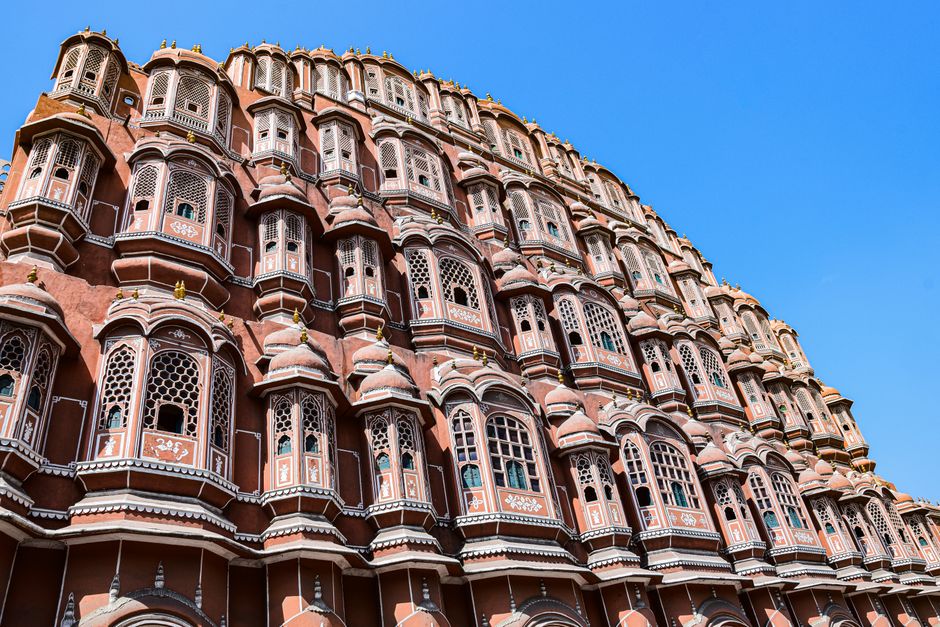
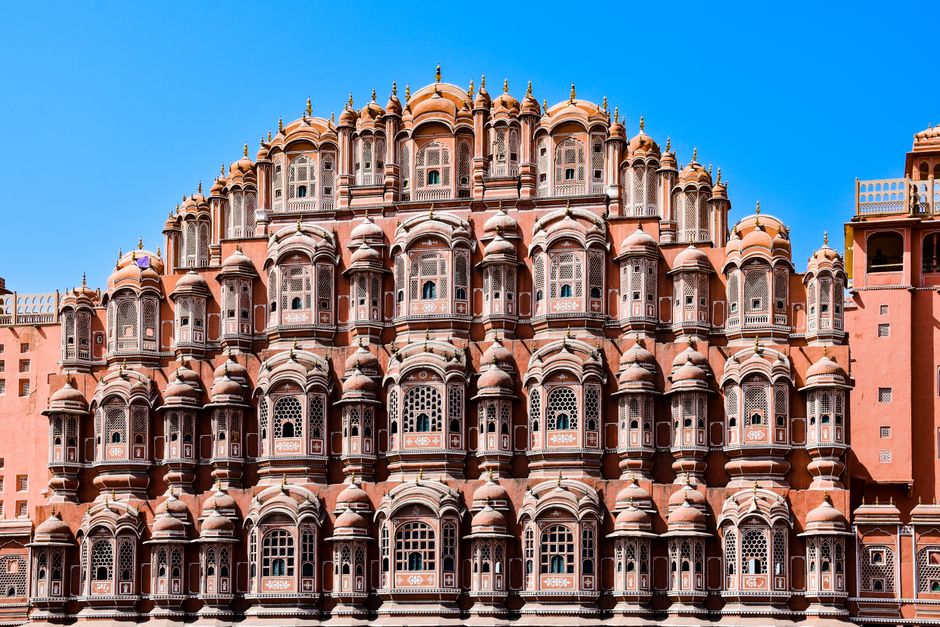
Hawa Mahal should be treated as a short architectural stop rather than a full morning attraction. See the facade from the street, explore the interior if open, and then move through the surrounding lanes. The building is most memorable when viewed as part of the old city rather than as an isolated landmark.
What is the right way to explore Jaipur’s bazaars?
Jaipur’s bazaars reward patience and a clear boundary. They are not museums, and browsing can interfere with local work when visitors block narrow lanes or photograph people without permission. Go with one broad goal, such as textiles, jewellery, block printing, or household crafts, then allow the streets to add surprises.
- Choose the right time. Late afternoon usually offers better light and a more comfortable pace than the hottest part of the day.
- Compare fabric weight, stitching, finish, and whether the design appears handmade or factory-produced.
- Clear questions prevent most confusion.
- Keep valuables secure. Crowded lanes require the same care as any busy market. Carry only what is needed and keep bags closed.
- Do not rush a negotiation. Bargaining should remain calm and good-natured.
Where the atmosphere changes
Smaller side lanes can be more interesting than the main road, but they are also easier to lose track of. Keep a landmark in view and arrange a meeting point if traveling in a group.
What should visitors know about heat, traffic and local etiquette?
Jaipur is easier when the day is split around the weather. Sightsee early, rest during the harshest afternoon hours, and go out again when the streets cool. Wear clothing that covers shoulders and knees at religious or ceremonial sites, remove shoes where requested, and ask before photographing workers, worshippers, or private courtyards.
How much time should transport take?
Build generous margins around every transfer. Traffic near the old city, fort roads, and major intersections can change quickly. A short route may take twice as long during a busy period. Walking works for compact central areas, but not every map distance is pleasant on foot because of heat, traffic, broken pavement, or narrow roads.
What problems catch visitors out?
Unwanted guides, inflated first offers, and unexpected detours are common reasons for frustration. Agree on the destination and the transport arrangement before setting off. Keep entrance arrangements, meeting points, and return plans clear.
When should a plan change?
Skip a viewpoint if the road is unsafe, visibility is poor, or the return journey would cut into a more valuable visit. Skip a market if exhaustion has turned browsing into irritation. Jaipur offers enough variety to replace one stop without ruining the day. A slower itinerary with two memorable sites beats a packed route remembered only as traffic.
How many days are enough for Jaipur?
Two full days are the right minimum for a first visit. One day can cover the City Palace, Jantar Mantar, Hawa Mahal, and a short bazaar walk, but it leaves the forts feeling like an afterthought. Three days allow Amber, Jaigarh or Nahargarh, a slower old-city visit, and time for a less crowded neighbourhood or cultural stop.
For one day
Choose the City Palace area in the morning, Hawa Mahal nearby, and one fort if the transport route is efficient. Amber is the best single fort choice. Leave the evening for a short market walk rather than attempting every major sight.
For two days
Use the compact central route on day one and the hill route on day two. This is the strongest balance of history, views, practical comfort, and local atmosphere. Do not add distant stops simply to fill a list.
For three days
Add time for slower meals, a second bazaar, a craft-focused visit, or a return to the old city after dark. The extra day should reduce pressure, not create another checklist.
The opening problem is easy to avoid: do not send the day across Jaipur in the heat. Start with Amber or the central palace district, rest before the afternoon becomes punishing, and finish among the bazaars when the city feels most alive. That rhythm reveals Jaipur clearly: fortified, formal, crowded, practical, and far more rewarding when given room to breathe.