Verona’s Roman Arena is older than Rome’s Colosseum by roughly 40 years. That is the first clue that this city deserves more than a quick photograph from a train window. A well-planned day can cover the Arena, the medieval center, the Adige River and the hilltop view from Castel San Pietro. The route works best on foot, with one short climb at the end.
What is the best one-day route through Verona?
The best route starts in the historic center and moves in one clean direction: Arena first, old town next, river crossings after lunch, and the hilltop viewpoint before sunset. This avoids the worst backtracking and places the steepest walk at the point when the city looks most rewarding.
Morning: Arena and Piazza Bra
Begin at Piazza Bra, the broad square in front of the Arena di Verona. Arrive early enough to walk around the amphitheater before the center fills with day visitors. The exterior gives a clear sense of its scale, but the interior is the stronger experience. The surviving arches, steep seating and open sky explain how Roman public entertainment worked far better than a plaque can.
Afternoon: old streets and the river
From Piazza Bra, follow Via Mazzini toward Piazza delle Erbe. This is the natural spine of the central walk. Continue to Piazza dei Signori, pass beneath the arch near the square, then walk toward the Ponte Pietra and the eastern bank of the Adige.
| Time | Area | What to do |
|---|---|---|
| 08:30–10:00 | Piazza Bra | Walk around the Arena and visit inside if open |
| 10:00–12:30 | Via Mazzini and Piazza delle Erbe | Explore the old town, market square and side streets |
| 12:30–14:00 | Historic center | Take a slow lunch away from the busiest square |
| 14:00–16:30 | Piazza dei Signori and Ponte Pietra | See medieval landmarks and cross the river |
| 16:30–18:30 | Castel San Pietro | Climb for the city view and return through Veronetta |
This schedule is a framework, not a race. The clear winner is the linear route. It protects time for the Arena and the view instead of spending the day circling the same few blocks.
What should visitors see in Verona’s old town?
Verona’s old town works because several layers sit within a small area. Roman remains, medieval towers, Renaissance façades and lively public squares appear within a few minutes of one another. The mistake is to treat the center as a photo backdrop. Look up, cross the squares slowly and notice how the streets change as they approach the river.
Piazza delle Erbe and Piazza dei Signori
Piazza delle Erbe is the busiest part of the old town and the easiest place to understand Verona’s urban shape. Its long, irregular form follows the footprint of the Roman forum. Buildings around the square show different periods rather than one neat architectural style. The market activity makes the space lively, but it also means the center can feel crowded and noisy.
Walk through the arch into Piazza dei Signori for a calmer contrast. The square feels more formal, framed by historic palaces and arcades. It is a good place to pause because the surrounding lanes offer shade and the flow of visitors thins out.
Juliet’s courtyard and the quieter alternatives
The courtyard associated with Juliet is easy to reach, but it is also one of the most congested stops in Verona. Treat it as an optional five-minute glance, not the emotional center of the day. The attraction is built around literary memory and popular tradition, so expectations should stay realistic. Crowds, barriers and narrow access can make the visit feel less romantic than the city’s marketing suggests.
Ponte Pietra and the Roman theater
Ponte Pietra is the essential old-town crossing. Its arches connect the historic center to the hillside and create a strong view back toward the riverfront. Nearby, the Roman theater adds another layer of ancient Verona. The route to it begins to rise, so the theater and hilltop can be combined if energy allows. For most visitors, the strongest old-town verdict is Piazza delle Erbe for atmosphere, Piazza dei Signori for architecture and Ponte Pietra for the transition toward the view.
How do you reach Verona’s best hilltop view?
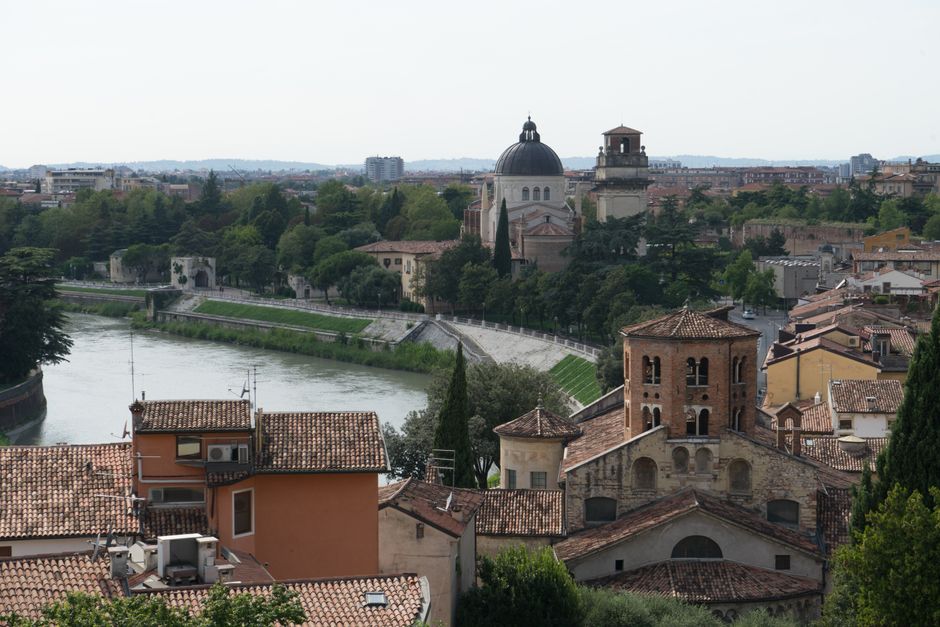
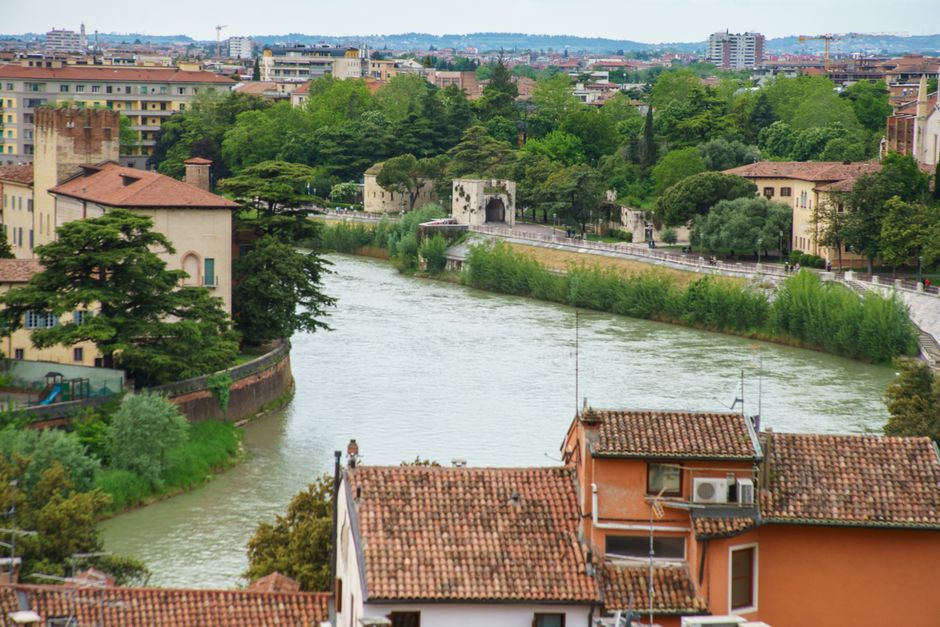
Castel San Pietro is the best final stop for a first day in Verona. The panorama is broad, direct and easy to understand: the Adige bends around the historic center while towers, domes and terracotta roofs fill the foreground. Reach it from Ponte Pietra, then choose the route that matches the weather and energy level.
- Cross Ponte Pietra from the old town and turn toward the hillside. This crossing gives the clearest approach and the most attractive river views.
- Follow the signs toward Castel San Pietro. The path rises through steps and a paved incline. Allow around 20 to 30 minutes from the bridge, depending on stops.
- Pause at the lower viewpoints before continuing. They offer good angles without requiring the full climb.
- Reach the terrace near the former fortress and look back across the river. Late afternoon usually gives softer light and less harsh glare than midday.
- Return through Veronetta if time remains. The neighborhood feels more local and less polished than the central tourist streets, with cafés, residential lanes and a slower rhythm.
Do not plan the climb immediately after a heavy lunch if the day is hot. The hill is modest, but the exposed steps can feel demanding in summer. The clear recommendation is to place Castel San Pietro late in the itinerary, not because it is difficult, but because it gives the day a proper finish.
Which Verona mistakes waste the most time?
Do not treat Verona as a list of famous names. The city rewards sequence and timing more than frantic sightseeing. The common mistakes are predictable, and each has a simple fix.
- Starting too late: A late arrival puts the Arena and the busiest squares at their most crowded. Start with the amphitheater, then use the quieter side streets as the day develops.
- Trying to see every interior: Churches, museums and historic buildings can easily consume the entire day. Choose one major interior, then keep the rest of the route outdoors.
- Expecting the Juliet courtyard to be peaceful: The site is narrow and popular. Visit quickly if it matters, but do not let a queue destroy the schedule.
- Ignoring heat and shade: Verona’s stone streets hold heat in summer. Plan a long midday pause, carry water and use arcaded streets when possible.
- Leaving the hilltop until darkness: The view loses detail after sunset, and the return route feels less clear. Arrive before the final light fades.
- Using the river as a divider: Crossing back and forth wastes time. Stay in the central district first, cross near Ponte Pietra once, then finish on the hillside.
For a single day, the best tradeoff is selective depth: the Arena, two central squares, Ponte Pietra and Castel San Pietro. That combination gives history, atmosphere and a city-wide view without turning Verona into a timed obstacle course.
Verona in a day: practical questions answered
Is one day enough for Verona?
One day is enough for the main historic sights and a strong first impression. It is not enough for every museum, church and nearby attraction. The smartest plan focuses on the Arena, the old town, Ponte Pietra and Castel San Pietro, with one flexible stop if time remains.
Where should the day begin?
Piazza Bra is the strongest starting point because it places the Arena at the front of the itinerary and connects directly to Via Mazzini. Starting there also makes the route easy to follow for visitors arriving by train or bus.
Should the Arena be visited inside?
Yes, if the interior is open and the queue fits the schedule. The outside is impressive, but the inside reveals the amphitheater’s size, steep seating and unusual sense of open space. If entry would consume several hours, keep the exterior visit and protect the hilltop view.
What is the best view of Verona?
Castel San Pietro provides the most complete view for a first visit. The river, bridges, old roofs and church towers appear together, which makes the city’s layout instantly clear. Ponte Pietra offers the best lower-level river scene.
What should be skipped?
Skip any attraction with a long queue that threatens the Arena or Castel San Pietro. The central streets themselves provide enough history and atmosphere to fill the gaps. A focused route beats a crowded checklist.
The final recommendation is specific: start at Piazza Bra, visit the Arena early, cross the old town through Piazza delle Erbe and Piazza dei Signori, continue to Ponte Pietra, and finish at Castel San Pietro before sunset. That is the best one-day version of Verona because it combines the city’s strongest ancient site, most characterful streets and clearest panoramic view.