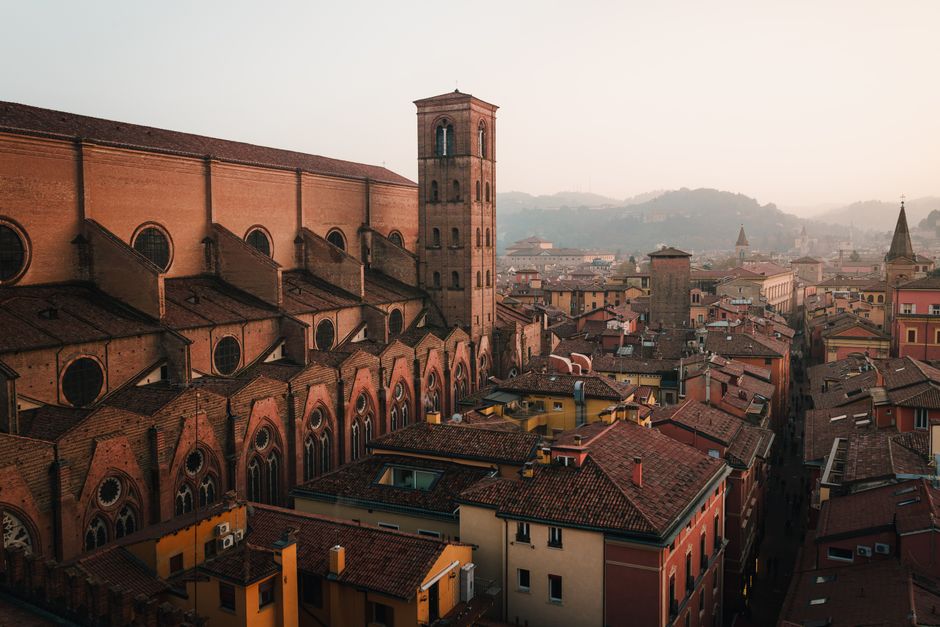
Bologna’s porticoes stretch for more than 60 kilometres across the city, turning an ordinary walk into a covered route through medieval streets, busy markets and quiet residential corners. The city rewards travellers who slow down. Its main sights sit close together, but the best experience comes from noticing how the centre changes from grand civic squares to food stalls, student streets and shaded lanes.
What Bologna’s Historic Centre Actually Feels Like
Bologna is compact enough to explore on foot, but it does not feel like a museum. The historic centre is active from early morning, when market traders unload produce, until late evening, when the arcades fill with people moving between cafés, restaurants and small squares. The main challenge is not distance. It is choosing a sensible order and allowing time for detours.
A simple map of the main sights
Use Piazza Maggiore as the central reference point. The medieval market streets lie to the east, the university quarter sits farther northeast, and the Two Towers mark the route between them. The long walk towards the Sanctuary of San Luca begins at the western edge of the centre and gradually leaves the busiest streets behind.
| Area | What it offers | Best time to visit | What to expect |
|---|---|---|---|
| Piazza Maggiore | Civic buildings, basilica and open space | Early morning or after sunset | Grand architecture and heavy foot traffic |
| Quadrilatero | Historic food lanes and market streets | Late morning | Narrow paths, busy counters and lively conversation |
| Two Towers | Medieval skyline and street views | Morning | Limited space, queues or changing access rules |
| University quarter | Bookshops, murals and student life | Late afternoon | A more informal and youthful atmosphere |
| San Luca route | Porticoes, hillside views and a long walk | Cooler parts of the day | Steady uphill effort and fewer central crowds |
The clearest first impression
Start with the open space of Piazza Maggiore, then move into the narrow lanes of the Quadrilatero. That sequence explains Bologna better than a list of isolated monuments: public power, religious architecture, trade and daily life all sit within a few minutes of one another. The historic centre is easiest to understand as a connected walking system, not as a set of separate attractions.
How to Build a One-Day Bologna Itinerary
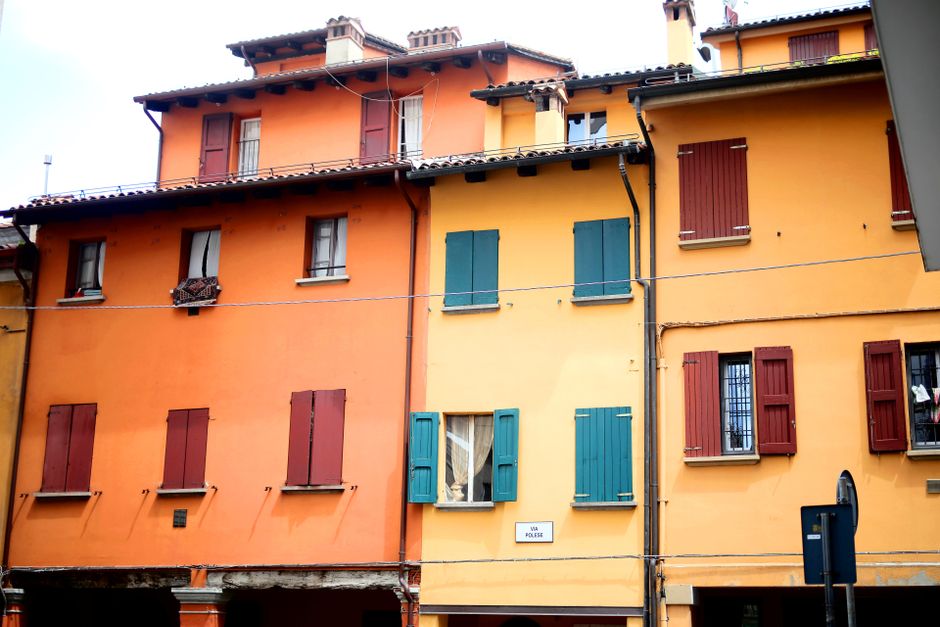
A first day should cover the city centre without trying to force every church, museum and viewpoint into one schedule. The strongest route moves east from Piazza Maggiore, then north towards the university quarter, with enough flexibility to stop when a market lane or covered passage looks interesting.
Morning: squares, churches and market lanes
- 08:30–09:30: Begin in Piazza Maggiore before the square becomes crowded. Look across the civic buildings, then enter the Basilica of San Petronio if it is open.
- 09:30–10:15: Walk past the Fountain of Neptune and along the covered streets towards the Quadrilatero.
- 10:15–11:30: Explore the market lanes slowly. The point is not to rush from stall to stall; it is to see how the district works as a daily food market.
- 11:30–12:15: Continue to the Two Towers and view the medieval streets from ground level. Tower access can change, so check the current rules locally rather than building the entire day around a climb.
Afternoon and evening: students, canals and porticoes
- 14:00–15:30: Walk through the university quarter, where the tone shifts from civic grandeur to student life, small cultural spaces and informal street scenes.
- 15:30–16:15: Search for the small canal views around Via Piella, accepting that the most photogenic openings may be busy or partly obscured.
- 17:00 onward: Return through the centre by a different route. A slow evening walk under the arcades often feels more local than adding another formal sight.
This itinerary works because it leaves open space. Bologna’s appeal sits in transitions: a market becomes a residential lane, a portico opens into a square, and a famous view appears between ordinary buildings.
Why Bologna’s Arcades Are More Than a Rainy-Day Shortcut
The arcades exist because Bologna grew upward and outward while trying to manage limited space. Covered walkways allowed buildings to extend over the public pavement, giving residents more usable ground-floor space and pedestrians protection from sun and rain. Over time, the porticoes became part of the city’s social structure. They connect homes, workshops, churches, cafés and public squares without creating one uniform streetscape.
How to read the architecture while walking
Look at the changes in height, material and decoration. Some arcades have broad stone columns and formal civic proportions. Others are narrow, low and practical, with uneven walls that reveal older construction. The contrast matters. A polished central route may lead into a rougher passage only a few streets away, and both are part of Bologna’s identity.
Watch the floor as well as the buildings. Covered paths can have smooth paving in busy areas, worn stone near older buildings and slopes that become tiring after several hours. The shade can also create a false sense of coolness during warm weather. Water, comfortable shoes and short breaks make the route easier than trying to maintain a fast sightseeing pace.
The long walk to San Luca
The portico leading towards the Sanctuary of San Luca is the clearest example of the system becoming a journey in its own right. It rises gradually from the city towards the hillside, with repeated arches creating a strong rhythm. The route is not a quick photo stop. It takes time, includes an uphill section and rewards travellers who treat it as a half-day walk rather than a final item squeezed into a crowded itinerary.
Weather changes the experience. In hot conditions, start early and carry water. After rain, smooth sections can become slippery. If the full route feels too demanding, walk part of it and return through the city. The practical verdict is simple: choose San Luca for the journey beneath the porticoes, not only for the destination at the top.
What to Expect at Bologna’s Markets and Towers
Are the markets mainly for visitors?
No. The historic food lanes attract visitors, but they still function as part of the city’s everyday life. Stand to one side before taking photographs, avoid blocking doorways and ask before photographing individual traders. The quieter observation point is often more rewarding than trying to capture every stall.
Can the Two Towers be visited?
Access depends on current safety rules, restoration work and ticket arrangements. The exterior remains important even when climbing is unavailable. Look up from the surrounding streets to understand how sharply the towers lean and how their height changes the scale of the medieval centre. Treat the towers as a landmark first and an interior visit second, so a temporary closure does not weaken the day.
Is Bologna suitable for a short visit?
Yes, provided the route stays focused. One full day covers the central squares, market district, towers and university quarter. Two days allow time for San Luca, quieter streets and a slower look at museums or churches. A short visit works poorly only when the schedule treats Bologna as a checklist of interiors and ignores the city between them.
Common Bologna Mistakes and How to Avoid Them
Bologna is easy to navigate, yet a few planning errors can make the city feel more tiring or less welcoming than it needs to be.
Mistakes that waste time
- Starting too late: The centre becomes busier as the day progresses. Early morning gives better views of Piazza Maggiore and more comfortable movement through the market lanes.
- Planning every tower visit in advance: Access rules can change. Keep the exterior streets, porticoes and nearby squares as a complete alternative rather than treating them as filler.
- Ignoring the walking surface: Several hours on stone and pavement can be harder than the map suggests. Supportive shoes matter more than a tightly packed schedule.
- Confusing a covered route with an effortless route: The arcades protect from weather but do not remove hills, crowds or long distances. The San Luca walk still requires energy.
Small habits that improve the day
- Carry water, especially during warm months.
- Use a small bag that can move easily through narrow lanes.
- Step aside before checking a map or taking photographs.
- Leave space between lunch and the next major walk.
- Check local opening and access information on the day of any planned interior visit.
Bologna does not need a complicated strategy. The single most important takeaway is to plan around walking time, not just landmark time, because the arcades, markets and changing streets are the experience.