Arriving in Split with a week ahead can feel deceptively simple: stay in the old town, visit a few islands, then continue south. The coast rewards a more careful plan. Ferries run on seasonal schedules, some islands suit quiet swims rather than nightlife, and moving every day can turn a beautiful route into a luggage transfer exercise.
How Many Days Are Enough for Split and the Dalmatian Coast?
Choose seven days for the essential route
Seven days is the best minimum for combining Split with two coastal stops. Spend two nights in Split, two nights on one island, two nights in another coastal base, and the final night near the departure point. This gives enough time for historic streets, swimming, a boat trip, and one slower morning without treating every ferry as a race.
Extend to ten days for a calmer trip
Ten days allows three nights in Split, three nights on an island, two nights around Korčula or Makarska, and two nights in Dubrovnik. The extra time matters because the coast looks close on a map but travel rarely happens door to door. A ferry port may sit outside the old town, boarding takes time, and summer queues can be long.
A five-day trip should stay focused: Split plus one island, or Split plus Dubrovnik by land. Adding Hvar, Korčula, and Dubrovnik in five days creates a checklist rather than a holiday. The clear verdict is simple: choose fewer bases and protect full afternoons for swimming, walking, and unplanned meals.
What Is the Best Route from Split to Dubrovnik?
A balanced seven-day route
The strongest route runs south in stages instead of using Split as a hub for every excursion. It links places with different personalities and avoids repeating the same journey.
| Days | Base | Best use of time |
|---|---|---|
| 1-2 | Split | Palace, market, Marjan, evening waterfront |
| 3-4 | Hvar or Brač | Swimming coves, villages, coastal walks |
| 5 | Korčula | Old town, vineyards, quiet bays |
| 6-7 | Dubrovnik | City walls, viewpoints, nearby islands |
When to skip Korčula
Remove Korčula if the trip lasts fewer than seven nights or if ferry connections do not line up. Replace it with two extra nights on Hvar or Brač. That choice is less varied but far more comfortable.
The best verdict for a first visit is Split, one island, then Dubrovnik. Korčula adds character, but it works only when the transport day does not consume the entire schedule.
How to Move Along the Dalmatian Coast Without Wasting Days
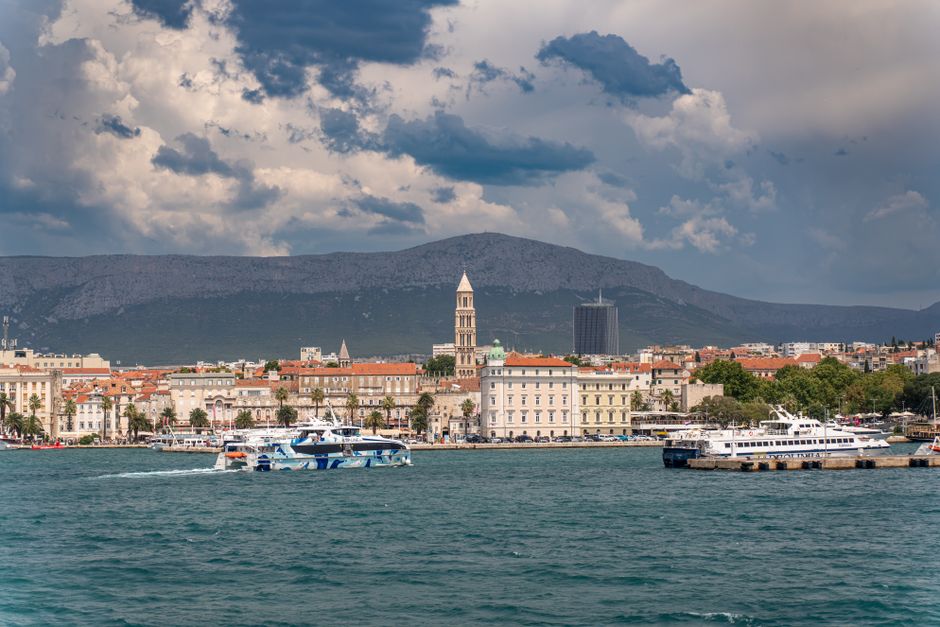
Use this simple transfer method
- Check the next morning’s ferry before confirming an island stay.
- Book a bed within walking distance of the port when carrying luggage.
- Keep one flexible connection day during the busiest summer weeks.
- Arrive at the terminal early for popular island routes.
- Carry water, sun protection, and a light layer for windy crossings.
- Use buses for mainland sections when the sea route adds a long detour.
Know the difference between a ferry and a fast boat
Car ferries usually take longer but carry vehicles and offer more space. Fast boats cut travel time and often stop in central ports, yet they can feel rough in strong wind and may impose stricter luggage rules. Neither option is automatically better. For a short crossing with a central arrival, the fast boat wins; for a longer ride or unsettled weather, the larger ferry is the safer choice.
Do not build a plan around the final boat of the day. A delay, a sold-out departure, or a weather change can leave a tight itinerary stranded. The practical winner is a route with one earlier connection than seems necessary.
What Should Each Stop Offer on a First Visit?
Split works best as a living historic centre
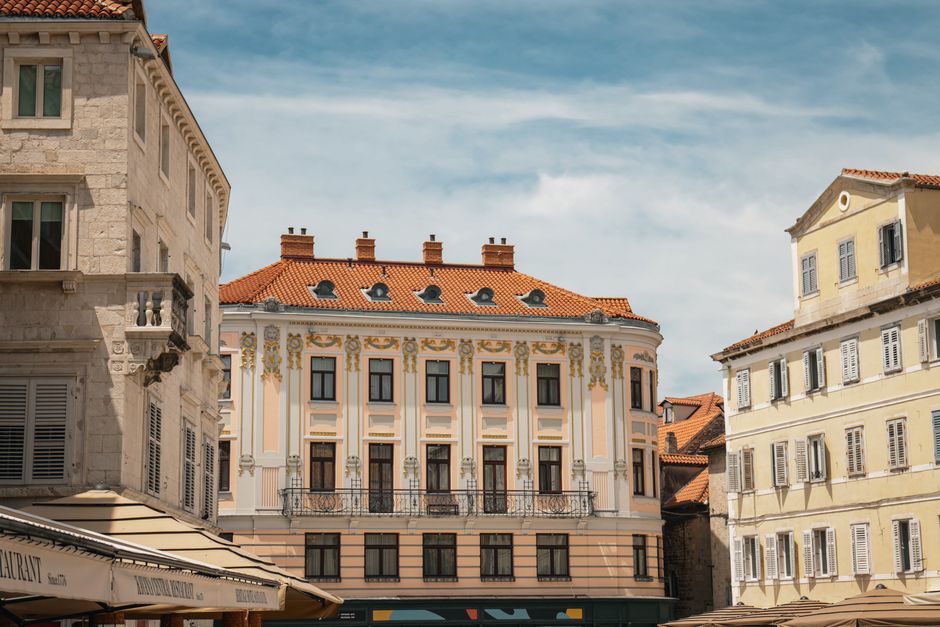
Split deserves more than a quick evening before an island transfer. Diocletian’s Palace is not a single museum behind a gate; it forms the working centre of the city, with lanes, courtyards, cafés, homes, and Roman remains woven together. Walk through the palace early, when the stone streets are cooler and quieter, then climb toward Marjan for a shaded view over the harbour. The green peninsula gives the city a different scale and provides a break from polished stone and tour groups.
Save the waterfront for late afternoon rather than treating it as a daytime sightseeing target. The light improves, the heat drops, and the promenade becomes a useful place to compare the pace of city life with the slower islands.
The islands should answer a specific travel need
Hvar suits visitors who want lively evenings, historic lanes, and easy access to boat excursions. Brač is the stronger choice for beaches, outdoor time, and a quieter base, especially around smaller coastal settlements. Korčula offers a compact old town and a more relaxed rhythm, but reaching it can require careful timing. Choose the island first, then build the route around it; choosing islands only because they are famous produces repetitive scenery and too many transfers.
Dubrovnik belongs at the end when possible. Early walks and late swims reveal a calmer side that midday sightseeing misses.
Which Dalmatian Coast Mistakes Cause the Most Trouble?
The biggest mistake is planning the coast like a road trip. Distances look short, but ports, weather, boarding times, and seasonal routes control the day. A beautiful itinerary can fail before breakfast if every stop depends on one exact departure.
- Changing islands every night: One-night stays leave little time for the place itself. Two nights should be the minimum for an island unless it serves only as a transport stop.
- Ignoring the shoulder season: May and October can bring pleasant walking weather, but some island services and excursions run less often. Check the route before selecting a remote base.
- Choosing a beach by photograph alone: Many famous swimming spots use pale stone rather than sand, and shade can be limited. Water shoes, a towel, and an early start make the experience easier.
- Assuming every boat accepts the same luggage: Fast services may limit storage or require bags to be placed in a shared area. Pack one manageable case instead of several small pieces.
- Leaving Dubrovnik for a day trip from Split: The distance and border crossing can consume most of the day. Dubrovnik works better as a separate base.
The clearest correction
Remove one destination before removing rest time. A spare afternoon protects the trip from delays and creates room for the moments that cannot be booked: a quiet cove, an empty lane, or a sunset viewed without checking the next departure.
Common Questions About a Split and Dalmatian Coast Itinerary
Is Split better at the beginning or end?
Split works best at the beginning for most travellers because it offers the broadest transport links and an easy introduction to the region. The historic centre is compact, the airport connection is straightforward, and the port opens several routes. Ending in Split also works when an early departure from the airport makes a final island night risky.
Should the itinerary include Hvar and Brač?
No. Pick one unless the trip lasts at least nine days. Hvar provides more nightlife and organised boat outings, while Brač gives a calmer mix of beaches, villages, and walking. Visiting both can make sense when ferry schedules align, but it rarely improves a short trip enough to justify another move.
Is Dubrovnik worth adding?
Yes, if the trip lasts seven days or more and the journey south fits naturally. Dubrovnik adds a different urban landscape and a strong historical finish. Skip it on a five-day trip and use the time for Split and one island instead.
Can the coast work without hiring a car?
Yes, and a car is often unnecessary for the main island route. Ferries connect the major ports, buses cover mainland towns, and many historic centres work better on foot. A car becomes useful for inland villages, remote beaches, or a route focused on the mainland rather than the islands.
When Should the Route Slow Down?
The best version of this journey leaves space for the coast to feel like a place rather than a sequence of names. Choose Split, one island, and Dubrovnik for seven days; add Korčula only when the connections create a clean southbound route. Choose Hvar for energy and boat access, Brač for beaches and quieter days, and Korčula for a compact old town with a slower evening rhythm. Avoid a car when the plan centres on ferries and historic centres, but use one for inland detours that public transport cannot serve well. The final verdict is to protect two-night stays, travel early, and keep one flexible afternoon in every major base. That structure handles delays, heat, crowded landmarks, and the simple fact that the most memorable part of the Dalmatian Coast may be the stop that was never on the original list.