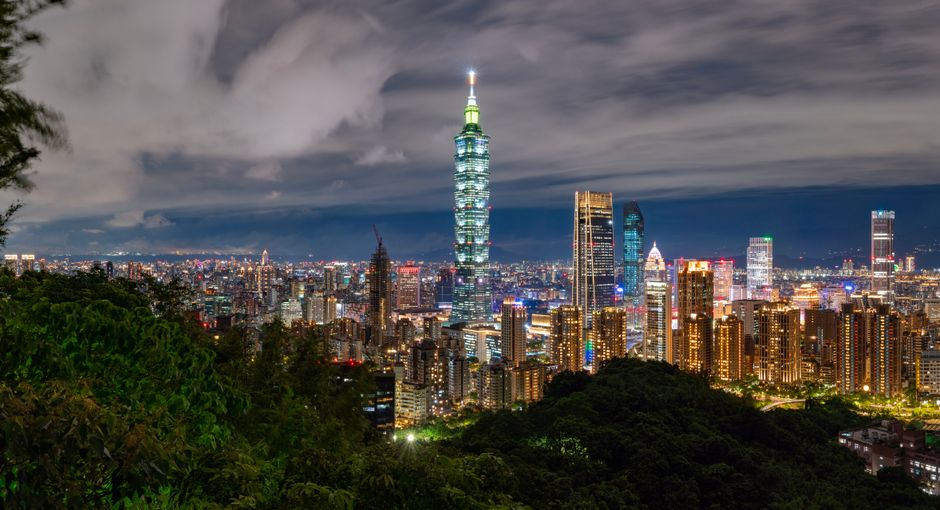
The classic Taipei day starts with a clear sky, turns humid by afternoon, and ends with rain, neon, and a very full stomach. That change is part of the city’s appeal. A few stops can take visitors from a forest trail or tea-growing hillside to a crowded food lane in the same evening.
The best plan does not try to see every market and every lookout. It pairs one mountain area with one night market, leaves room for weather delays, and uses the city’s rail network for the long moves. The result feels like Taipei rather than a checklist: green hills in the afternoon, temple smoke at dusk, and busy streets after dark.
Which Taipei route best combines hills and night markets?
The strongest first-time route is Maokong followed by Raohe Street Night Market. Maokong offers tea fields, winding lanes, and broad views over the Taipei Basin. Raohe then provides a compact evening market near a major rail station. The two areas show different sides of the city without forcing a long cross-town journey late at night.
| Time | Stop | What to do |
|---|---|---|
| 09:00-11:00 | Central Taipei | Start with breakfast and a flexible indoor visit |
| 11:30-13:00 | Taipei Zoo area | Travel south and have lunch before the hillside trip |
| 13:30-17:30 | Maokong | Take the gondola or bus, walk a tea trail, and stop at a viewpoint |
| 18:30-21:00 | Raohe Street Night Market | Eat in small portions and explore the surrounding lanes |
| 21:00 onward | Songshan area | Return by rail or continue to a nearby riverside path |
Why Maokong works in the afternoon
Maokong sits at the southern edge of Taipei and feels far more rural than its location suggests. The gondola journey takes about 20 to 30 minutes one way and includes several stops before reaching the tea-growing area. Once at the top, the main pleasure comes from slowing down. The roads are narrow, the slopes are steep, and the best views often appear between tea houses rather than at one single landmark.
Afternoon light usually gives enough visibility for the basin and surrounding ridges. If clouds arrive, the area still works because the tea paths and small lanes remain interesting. The official visitor information lists regular weekday service from 09:00 to 21:00, with longer hours on some weekends and holidays, but weather and maintenance can change operations. Check the official Maokong information before leaving.
Why Raohe is easier after a hill visit
Raohe Street Night Market is compact, linear, and close to Songshan Station. That layout matters after several hours on a hillside. There is no need to cross a huge district in search of the next stall. A two-hour visit is enough for a first look, while an early arrival gives more space to walk before the busiest period.
The route is also easy to shorten. Rain can end the mountain portion without ruining the evening, and tired visitors can leave the market after one pass. Shilin is the better choice for a larger, more spread-out night-market experience, but Raohe is the better partner for a mountain-view day.
How should visitors choose between Taipei’s mountain viewpoints?
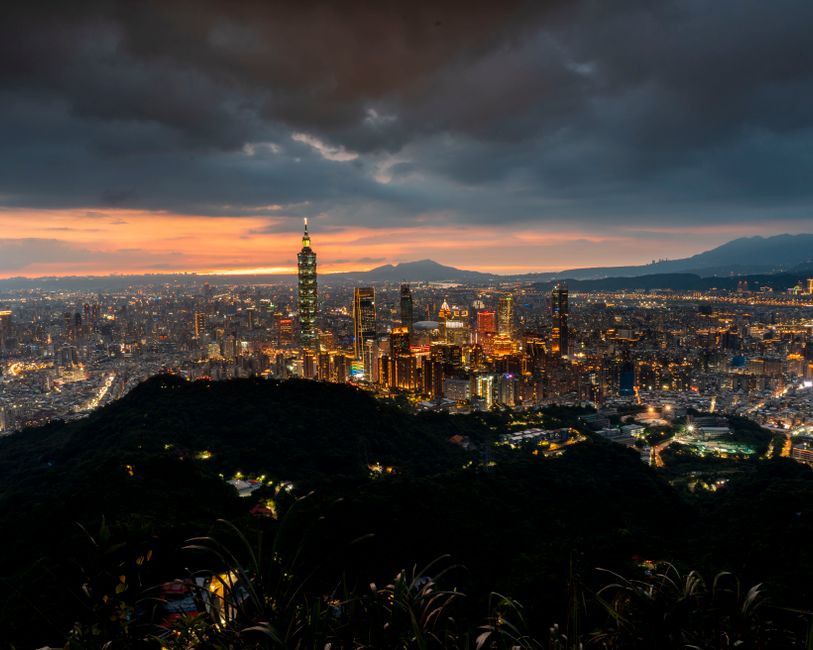
Taipei’s hills are not interchangeable. Some are built around tea farms and long views. Others offer a short climb close to the skyline. The right choice depends on the balance between scenery, walking, transport, and weather tolerance. A common mistake is choosing the highest-looking destination when a shorter trail would give a better chance of clear views.
Choose Maokong for tea fields and a slower half-day
Maokong is the best all-round choice for visitors who want a mountain atmosphere without committing to a full hiking day. The gondola gives the trip a clear beginning, and several bus routes serve the area when the gondola is crowded or closed. The Zhangshu Trail and nearby lanes pass tea gardens, small farm plots, and elevated viewpoints. Some paths are paved, but the slopes can still be tiring in wet weather.
The view changes with the light. In the early afternoon, the basin looks layered and hazy. Near sunset, the city becomes more visible when the heat begins to lift. After dark, lights spread across the plain, although clouds can remove the view entirely. Maokong wins for atmosphere, food, and a sense of distance from the center.
Choose Yangmingshan for volcanic landscapes and longer walks
Yangmingshan National Park suits visitors who want open grassland, volcanic features, hot-spring scenery, and a more rural day outside the central districts. The park covers a wide area, so a visit requires more planning than a single viewpoint. Bus connections can be slow during weekends, and weather at higher elevations often differs from conditions downtown.
The park is the stronger choice for a full-day nature plan, especially when the goal is walking rather than watching the skyline. It is a poor match for a late afternoon followed by a night market because the return journey can take longer than expected. Start early, pick one trail zone, and keep the evening destination flexible.
Choose Hushan or Xiangshan for a short skyline climb
Hushan and Xiangshan are better when the Taipei skyline matters more than the feeling of leaving the city. Both offer routes that can fit into a morning or early evening, although stairs make the climbs harder than their short distances suggest. Xiangshan is the familiar choice for a view toward Taipei 101, while Hushan provides a quieter trail network and different angles across the basin.
These hills work well before a nearby dinner because they do not require a long transfer. They also make sense on a cloudy day when a distant mountain trip could produce little more than mist. The clear verdict is simple: choose Maokong for a complete mountain-and-market day, Yangmingshan for a nature-focused excursion, and Hushan or Xiangshan for a fast city panorama.
What should visitors expect at a Taipei night market?
Night markets reward curiosity, but they are not open-air restaurants with one orderly queue. They are working neighborhood streets that happen to fill with food stalls, games, clothing, temples, scooters, and pedestrians. The best experience comes from treating the market as a moving meal rather than one long dinner.
A simple way to eat without wasting space
- Choose one savory item, one vegetable or soup-based item, and one sweet or cold item. Smaller portions create more variety.
- Keep cash, tissues, and a small bag easy to reach. Crowded lanes make large backpacks awkward.
- Stand to the side after collecting food. Do not stop in the center of a narrow passage while deciding what to eat.
- Use the available seating or return dishes where requested. Some stalls have limited space and serve customers quickly.
Local manners that make the visit easier
Queues can be informal, so watch the people ahead and ask before stepping toward a counter. A short greeting and a clear number of portions are usually enough. Pointing at a displayed item works when language is limited, but a translation app with the food name saved in advance can prevent confusion about seafood, meat, spice, or strong flavors.
Food waste is easy to create when every stall looks tempting. Sharing small portions works better than ordering a full serving at every stop. Some stalls specialize in one item and serve it quickly; others invite lingering. Follow the stall’s rhythm. The strongest night-market memory usually comes from three or four well-chosen bites, not from trying to consume the whole street.
Raohe is compact and straightforward for a first visit. Shilin covers a wider area and offers more variety, but it takes longer to explore and demands more navigation. Choose Raohe when the market is one part of a larger itinerary. Choose Shilin when the market itself is the evening’s main destination.
How can visitors move between Taipei’s hills and markets?
Public transport makes this combination practical, but the city’s compact map can create false confidence. A destination that looks close may sit on the other side of a river, a steep ridge, or a transfer-heavy route. Add walking time, station exits, and queues to every estimate.
Is the metro enough for the whole route?
The metro handles the main city-to-city moves well. The Wenhu Line reaches Taipei Zoo, the usual starting point for Maokong, while the Songshan-Xindian Line serves the area near Raohe. Official metro service generally runs from around 06:00 to midnight, but the final train depends on the station and direction. Check the official metro service information before planning a late return.
The metro does not remove the last-mile problem. Maokong requires a gondola, bus, or taxi after reaching the southern end of the line. Yangmingshan depends heavily on buses and can involve long waits. Xiangshan is easier because the trail begins within the urban rail network.
Should the route use a taxi or bus?
A taxi is most useful for the final steep section to Maokong, for a group sharing one ride, or when rain makes a long transfer unpleasant. Avoid building a tight schedule around one bus connection on a weekend or holiday.
How much transfer time should be added?
Allow at least 30 minutes beyond the map estimate for a mountain-to-market transfer. Add more if the gondola is involved, because queues, weather suspensions, and the walk between stations can change the timing. Leave the mountain area before the last comfortable connection, not when the final evening train is approaching. That small buffer keeps the market visit relaxed.