Petra and Wadi Rum work best as one connected journey: ancient stone architecture first, open desert landscapes second. The route is easy to arrange, but timing, walking distance, heat and overnight plans shape the experience more than a packed checklist.
How many days do Petra and Wadi Rum need?
Allow three full days for Petra and Wadi Rum if the route is built around the main sights rather than rushed transfers. Two nights near Petra and one night in the desert give enough time to walk beyond the famous entrance, reach Wadi Rum before sunset and leave room for delays.
Why Petra should come first
Petra demands the most physical effort. The main approach begins with a long walk through the Siq, followed by uneven ground, steps and exposed paths. Arriving before the desert camp creates a better rhythm: the first major day focuses on ruins and history, while the second destination offers space, silence and slower movement. Starting with Wadi Rum can make Petra feel tiring by comparison.
When two nights are better than one
Choose two nights near Petra when the itinerary includes the Monastery, the High Place of Sacrifice or a second visit at a quieter time. One day can cover the Siq, Treasury, Street of Facades and Roman-era remains, but it leaves little margin for heat, rest or photography. A short route suits travelers with limited time; a second night suits anyone who wants to explore without treating the site like a race.
What should a practical Petra and Wadi Rum itinerary look like?
The strongest route separates sightseeing from transfer time. Petra needs a full daylight block, while Wadi Rum is most rewarding from afternoon into the following morning. The schedule below keeps the main walks realistic.
| Day | Base | Main plan | Best timing |
|---|---|---|---|
| Day 1 | Petra area | Arrive, settle in, short orientation walk | Late afternoon |
| Day 2 | Petra area | Siq, Treasury, Royal Tombs and central ruins | Early morning start |
| Day 3 | Wadi Rum | Transfer, jeep tour, sunset and desert camp | Arrive before sunset |
| Day 4 | Next destination | Sunrise, short walk and onward travel | Before breakfast |
Best route for a short trip
With only three nights, use the first night near Petra, the second night near Petra again and the third night in Wadi Rum. This avoids changing beds after a long walking day. The desert transfer can happen after the Petra visit, but the schedule becomes demanding, so a late departure should not be treated as guaranteed.
Best route for a slower trip
Four or five nights allow a second Petra morning, a longer desert stay and time for nearby sites. The extra space matters during hot months, when a midday break can prevent the final hours from becoming an endurance test. The clear winner for comfort is the slower route, especially for families and travelers who prefer early starts.
How should Petra be explored step by step?
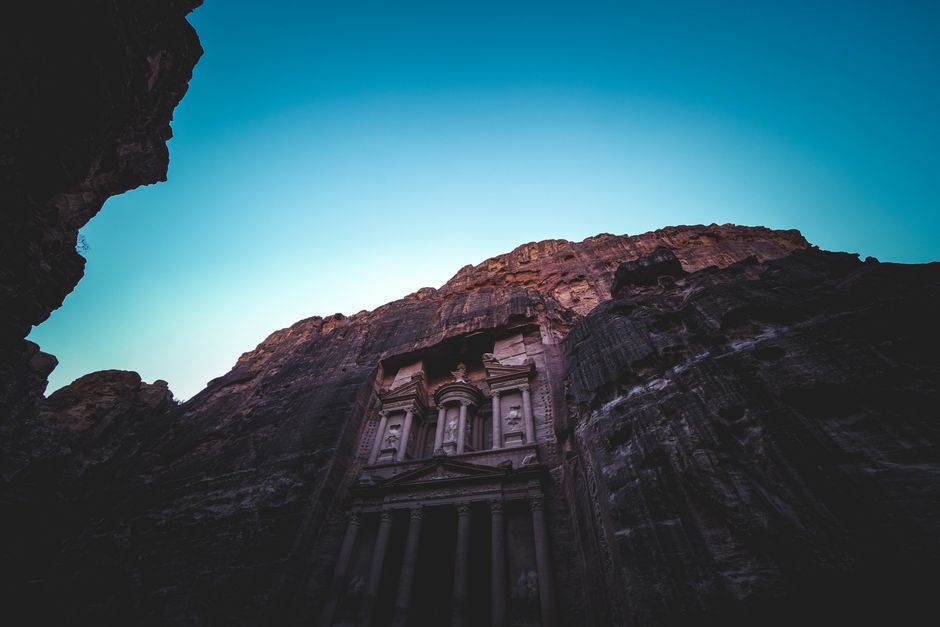
Petra rewards a simple walking plan. The first hour feels easy, but distance builds quickly once the route reaches the central ruins and higher viewpoints.
- Start early. Enter soon after opening to walk the Siq before the strongest heat and busiest traffic.
- Walk the full Siq. The narrow passage is part of the experience, not just a corridor leading to the Treasury.
- Pause at the Treasury. Take time to understand its carved facade, but do not treat this viewpoint as the end of Petra.
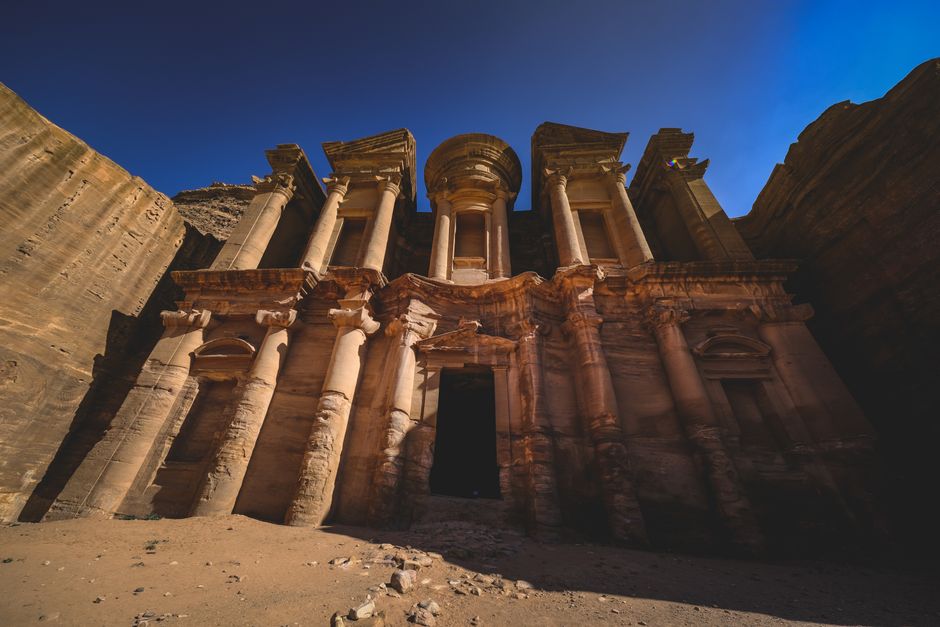
- Continue into the main valley. The Street of Facades, Royal Tombs, Colonnaded Street and Great Temple show how the city functioned beyond its most photographed monument.
- Choose one high route. The Monastery is the strongest choice for a major climb; a shorter viewpoint works better when legs, weather or time are limited.
- Carry the day out. Water, sun protection, closed walking shoes and a light layer matter because shade is limited and stone surfaces can be uneven.
Where the walking becomes difficult
The hardest sections are the long approach, repeated steps and exposed climbs. A traveler who reaches the central valley late may have to choose between the Monastery and the return journey. Pick one high objective before setting out. Trying to collect every viewpoint often turns the final descent into a tired, rushed walk.
How to protect the experience
Keep the Treasury as one moment among many. The Nabataean city extends far beyond the entrance, and the less crowded tombs, carved facades and broad valley often explain Petra better than a single photograph. A measured pace also leaves attention for details that disappear during a hurried visit.
What should visitors expect from a night in Wadi Rum?
Wadi Rum is a desert environment, not simply a scenic hotel area. The landscape feels vast because red sand, dark rock and distant ridges create long sightlines with few visual distractions. A desert stay usually combines transport across the protected area, short walks, sunset viewing, dinner and a night under a much darker sky than most cities provide.
The afternoon desert route
Arriving in the afternoon gives the trip a useful shape. A local driver can take visitors to rock bridges, narrow canyons, inscriptions and open valleys before reaching a sunset viewpoint. The order changes with weather and camp location, so the important detail is not a fixed list of stops. It is arriving early enough to cross the larger distances before darkness.
What the landscape feels like
Wadi Rum can be hot in direct sun, cool after sunset and surprisingly cold before dawn. Loose sand makes short walks more tiring than they appear, while rock surfaces can require careful footing. A scarf or light layer helps with wind and dust. The desert is quiet, but it is not empty of sound: engines, camp activity and nearby groups may carry across the valley.
Sunrise, food and the morning after
Sunrise is often the most peaceful part of the stay. The low light reveals color changes across the cliffs, and the cooler air makes a short walk easier. Meals commonly center on shared dishes and slow-cooked food, but dietary requirements should be stated before arrival. After breakfast, allow time to pack, check the transfer plan and leave before the day becomes hot. For travelers seeking long hikes rather than a scenic overnight, a guided trekking plan is a better fit than a standard short desert circuit.
Which Petra and Wadi Rum mistakes cause the most trouble?
The biggest mistake is planning the route from a map instead of from energy, heat and daylight. Distances that look short can include stairs, sand or exposed rock. The best plan leaves space for the place to be experienced at a human pace.
- Do not arrive at Petra late and expect to reach every major viewpoint. Choose the main route before entering.
- Do not schedule a tight desert transfer immediately after a long Petra climb. Delays and tired legs are common.
- Do not wear smooth-soled shoes. Uneven stone, sand and steps need stable grip.
- Do not skip the weather check. Heat, wind and occasional rain can change walking conditions.
- Do not assume every desert camp feels remote. Ask about camp location, shared areas and the type of overnight setup before booking.
- Do not treat local advice as decoration. Drivers and guides often know which route is exposed, crowded or difficult that day.
When the classic route is not the right route
Travelers with limited mobility may prefer a shorter Petra circuit and a vehicle-based desert visit with minimal climbing. Travelers who dislike organized camps may prefer a day trip through Wadi Rum followed by a stay outside the protected area. The right choice is the route that matches physical ability and comfort, not the itinerary with the largest number of stops.
What is the clearest verdict for planning Petra and Wadi Rum?
For a first Jordan visit, choose two Petra nights followed by one Wadi Rum night. This sequence places the longest walking day before the slower desert experience, protects the best sunset and sunrise windows, and reduces the chance that a late transfer will damage the schedule.
The simplest workable plan
Use the arrival day for orientation, the next morning for Petra, the following afternoon for Wadi Rum and the final morning for sunrise before departure. Build in water breaks, offline directions and extra transfer time. The route works because each destination gets a different kind of attention: Petra receives close observation and walking, while Wadi Rum receives distance, light and silence.
What stays with travelers
Petra is strongest when the visit moves past the Treasury and into the wider city. Wadi Rum is strongest when the desert is allowed to become quiet after the vehicle stops. Together, they offer a useful lesson in Jordanian travel: the memorable parts rarely come from adding more stops. They come from giving the landscape enough time to show its scale.