A common misconception is that Kanazawa is simply a smaller version of Kyoto. That comparison can send visitors in the wrong direction. Kanazawa has historic districts, refined gardens and traditional arts, but its appeal comes from how closely these places sit together and how ordinary city life continues around them. The real problem appears when a traveller arrives with one day, tries to see every landmark, and spends the afternoon crossing the city instead of experiencing it.
The route below explains what each area offers, what can be skipped, and how to avoid the timing mistakes that make a promising visit feel rushed.
Is Kanazawa Worth Visiting for Gardens and Old Streets?
What makes Kanazawa different from Kyoto?
Kanazawa is worth visiting for travellers who want historic Japan without reducing the experience to a list of famous temples. Its strongest features are varied: Kenrokuen presents a carefully managed landscape, the former samurai and merchant neighbourhoods show how people lived, and the tea districts preserve streets designed for evening entertainment rather than grand religious ceremonies. These elements create a compact cultural visit with several different moods.
The city also rewards slower observation. A narrow lane may contain a working craft studio, a family-run restaurant or a small shrine that receives far less attention than the major sights. That does not mean every street is untouched. Tourism is part of the local economy, and some tea-house lanes become busy during the middle of the day. The useful distinction is between seeing a preserved district and expecting it to function as a museum.
Who benefits most from a Kanazawa visit?
Kanazawa suits travellers who enjoy gardens, food markets, architecture and local craft. It is especially effective as a one-night stop between larger Japanese cities, because the main central sights can be grouped without an exhausting day trip. Visitors seeking a large nightlife scene or a long list of dramatic landmarks may find the city too quiet. The strongest reason to go is quality of atmosphere, not quantity of attractions.
The clearest verdict is this: Kanazawa is a strong choice for a culturally curious traveller with one full day, but it is a poor choice for anyone trying to copy a rapid-fire Kyoto schedule. The city rewards attention to seasonal details, changing light and small neighbourhood differences.
How to Plan a One-Day Kanazawa Route
The most reliable route follows a simple eastward line from the central garden area toward the market and then to the Higashi Chaya District. Exact walking times vary with weather, crowds and mobility needs, but the sequence reduces unnecessary backtracking. Check each site’s current opening schedule before departure, especially on days when a museum or garden may close.
A practical order for the main sights
| Approximate time | Area | Suggested focus |
|---|---|---|
| 8:00–10:30 | Kenrokuen Garden | Landscape, ponds, bridges and seasonal planting |
| 10:30–11:30 | Kanazawa Castle area | Gateways, stone walls and defensive design |
| 11:45–13:15 | Omicho Market | Seafood, produce, prepared food and local snacks |
| 13:30–15:00 | Nagamachi or nearby craft streets | Samurai-era lanes, earthen walls and small workshops |
| 15:30–18:00 | Higashi Chaya District | Tea-house façades, local sweets and evening streets |
How much time should each stop receive?
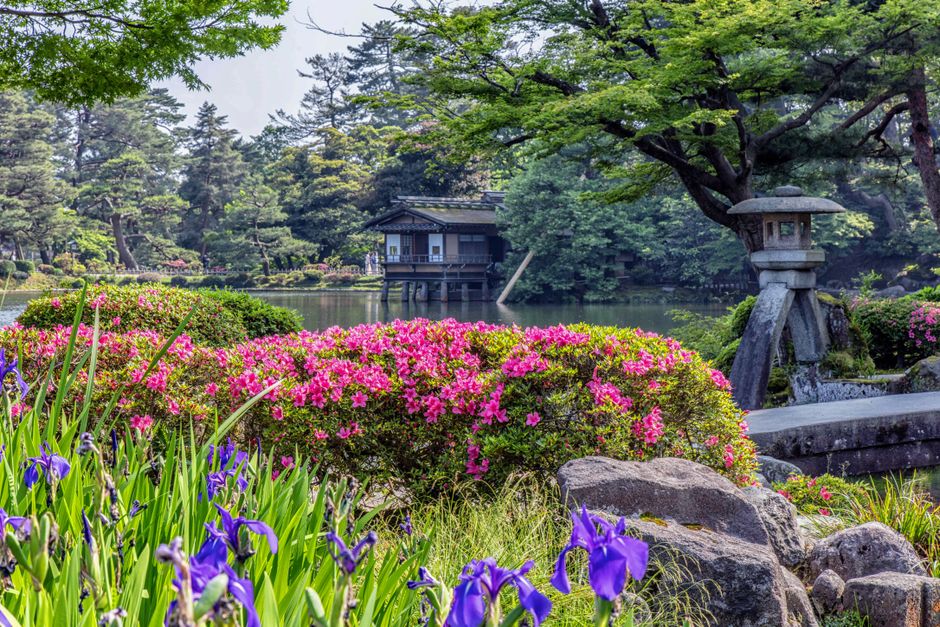
Kenrokuen deserves at least ninety minutes because its design changes from one section to another. Rushing from the main gate to the most photographed pond misses the relationship between water, borrowed scenery and carefully shaped trees. The market works best as a flexible lunch stop rather than a timed attraction. Allow enough time to compare stalls, eat without blocking a narrow passage and leave before the afternoon crowd becomes dense.
For a shorter visit, remove Nagamachi before removing the garden or Higashi Chaya. For a second day, add the 21st Century Museum area, more craft workshops or a slower walk through the samurai neighbourhood. The route is strongest when it has one clear priority per time block.
What Should Visitors Expect at Kanazawa’s Three Main Areas?
Each major area asks for a different kind of attention. The garden is about landscape composition, the market is about movement and food culture, and the tea district is about architecture, etiquette and atmosphere. Treating all three as identical sightseeing stops creates the wrong expectations.
1. Kenrokuen Garden: observe the design, not just the viewpoint
- Enter early when paths are less crowded and shadows reveal the garden’s contours.
- Follow the water systems, bridges and stone arrangements instead of moving directly toward one famous pond.
- Look for seasonal changes: plum and cherry blossoms in spring, fresh green growth in early summer, autumn colour and winter snow protection.
- Wear shoes suitable for uneven paths, damp stones and steps.
The garden is a managed landscape, not untouched wilderness. Its beauty comes from deliberate balance: open water beside dense planting, broad views beside narrow paths and formal features beside irregular rocks. That distinction matters because visitors who expect a natural park may find the careful maintenance surprising.
2. Omicho Market: eat carefully and keep the lanes moving
Omicho Market is best approached as a working food market with visitors, not as a theme park. Seafood, fruit, pickles and prepared dishes reflect the region’s coastal location and agricultural traditions. Follow posted rules, avoid photographing people without permission and do not stop in the centre of a narrow aisle.
3. Higashi Chaya District: expect preservation, not guaranteed performances
The tea district is known for wooden façades, latticework and streets connected to traditional entertainment. A visit does not guarantee a public performance by a geiko or maiko, and approaching performers for photographs can be intrusive. The most respectful experience is a quiet walk, a visit to an open cultural venue and an appreciation of the buildings after the busiest hours.
Which Kanazawa Areas Fit Different Travel Styles?
Is Kanazawa suitable for a first visit to Japan?
Yes, if the priority is a manageable introduction to gardens, regional food and historic streets. The central attractions are easier to combine than many visitors expect, and the city gives a clearer sense of local scale than a major metropolitan centre. A first-time visitor should base the day around Kenrokuen and the tea district, then use the market as the food anchor.
Is Kanazawa good for travellers who dislike crowds?
It can be, but timing matters more than the destination label. Early mornings, late afternoons and quieter side streets offer a calmer experience. The main market and the most photographed tea-house lanes become busy during the middle of the day. Travellers who dislike crowds should avoid building the entire visit around lunch at the market and should leave room for a slower neighbourhood walk.
Should families or older travellers follow the same route?
Not exactly. The garden includes uneven surfaces and long walks, while a market visit can involve tight aisles and limited seating. A shorter garden loop, a planned rest stop and fewer districts may produce a better day than completing every landmark. The strongest family route is usually garden first, a settled lunch, then one historic district rather than two.
What Mistakes Can Ruin a Kanazawa Day?
The best recommendation is to protect the first two hours of the day. Starting late often creates a chain reaction: the garden feels crowded, lunch becomes hurried, the market visit overlaps with peak foot traffic, and the tea district receives only a rushed final walk. Kanazawa does not require military precision, but it does require a sensible opening.
Common planning failures to avoid
- Trying to see every district: Choose two major areas and one smaller addition. More locations do not automatically create a richer visit.
- Assuming every tea house is open to casual visitors: Some buildings operate as private venues or have limited access. Look for clearly marked public spaces and respect closed entrances.
- Leaving food decisions until late afternoon: Market stalls and small restaurants follow daytime patterns. Keep a backup meal area in mind.
- Ignoring weather: Rain changes garden paths, visibility and walking speed. A museum, craft space or covered arcade can provide a useful buffer.
- Treating transport as the whole itinerary: Short rides can save energy, but the character of Kanazawa appears in the walking links between major places.
When should Kanazawa be skipped?
Skip it when the schedule allows only a few daylight hours and the journey requires a long detour. The city’s value comes from combining several experiences at a comfortable pace. A hurried stop that covers only one landmark may feel less satisfying than giving the time to a destination that fits the route better.
For the traveller who arrives worried that one day cannot cover gardens, a geisha district and a market, the answer is not to rush. Start early, follow the central sequence, leave one district optional and allow the city’s quieter details to complete the visit.