You step off the bus at the Friendship Bridge between Thailand and Laos. The heat hits you like a wall. A man in a wrinkled uniform gestures toward a booth. You hand over your passport. He says “$50 for visa.” You pay. Later you learn the official fee is $40. You just lost $10 to a bribe dressed as a fee.
This happens to thousands of travelers every year. The Laos border system is not complicated — but it is opaque. Officials exploit that opacity. With the right preparation, you can cross any Laos land border in under 30 minutes without paying a single extra dollar. Here is exactly how.
The Visa-on-Arrival Trap: How Officials Extract Extra Fees
Laos offers a visa on arrival at all international checkpoints. The official cost is $40 for most nationalities (US, UK, Australia, EU, Canada). But the actual amount you pay depends entirely on whether you know the rules.
The standard scam works in three stages. First, the officer quotes a higher price — $50 or $60 — and says it includes “processing.” Second, they claim they don’t have change for large bills. Third, they point to a sign that says “visa fee $40” but insist that’s the old price. All three are lies.
Bring exact change in US dollars. Crisp, new bills. No folds. No marks. Laos visa officers reject damaged currency. If you hand over a $100 bill, you will not get correct change. You will get $50 back and be told the rest is a fee. Carry $40 in two $20 bills or four $10 bills.
You also need one passport photo. If you don’t have one, they charge $2 for a photocopy of your passport. That’s fine — but don’t let that turn into a $5 “photo fee.” Hand over the photo yourself.
Fill out the arrival and departure cards before you reach the window. There are tables with pens and forms near the entrance. Use them. Travelers who arrive at the booth without completed forms are told to step aside, then charged a “priority” fee to skip the line. Complete the paperwork first and you skip that fee entirely.
Which Border Crossing Should You Use? A Comparison
Laos has four main land borders used by tourists. Each has a different reputation for scams, processing time, and onward transport connections. Here is the data.
| Border Crossing | Nearest City (Laos side) | Visa Scam Risk | Processing Time | Bus Connections |
|---|---|---|---|---|
| Friendship Bridge I (Nong Khai–Vientiane) | Vientiane | Medium | 20–30 min | Direct to Vientiane, then Luang Prabang |
| Friendship Bridge II (Mukdahan–Savannakhet) | Savannakhet | Low | 15–20 min | To Savannakhet, then Pakse |
| Friendship Bridge IV (Chiang Khong–Huay Xai) | Huay Xai | High | 30–45 min | To Luang Namtha, slow boats to Luang Prabang |
| Boten (China–Laos) | Luang Namtha | Medium | 25–35 min | To Luang Namtha, then Luang Prabang |
Friendship Bridge IV (Chiang Khong–Huay Xai) has the highest scam rate because it handles the most backpacker traffic. Officials there routinely add a $5 “overtime fee” or “stamping fee” that does not exist. Refuse politely but firmly. Say “I will pay the official $40 fee. Please provide a receipt.” Most officers back down when you cite the exact amount.
What to Pack for Laos That Most Guides Forget
Laos is not Thailand. The infrastructure is rougher. The roads are worse. The power cuts are frequent. Pack accordingly.
A headlamp with red light mode. Power outages happen daily in rural areas. A headlamp lets you read, walk to the bathroom, and find your bag without waking everyone in the dorm. The Black Diamond Spot 400 ($45) has a red light that preserves night vision and doesn’t attract mosquitoes. Do not rely on your phone flashlight — you will drain the battery in two hours.
A dry bag for electronics. The Mekong River slow boat from Huay Xai to Luang Prabang takes two days. Rain soaks everything. Backpacks get thrown onto the boat deck. A 10-liter Sea to Summit Ultra-Sil Dry Bag ($25) fits a phone, power bank, passport, and camera. Keep that bag on your body, not in your main pack.
Toilet paper and hand sanitizer. Public toilets in Laos rarely have paper. Some have a water hose. Some have nothing. Carry a small roll and a 60ml bottle of Purell Advanced Hand Sanitizer ($4). This is not a luxury. It is basic hygiene.
A power bank with at least 10,000mAh. Guesthouses in Vang Vieng and Luang Prabang often have one shared power outlet for the entire room. The Anker PowerCore 10000 ($25) charges a phone three times. It weighs 180 grams. Leave the 20,000mAh brick at home — it’s overkill for a three-day stay.
Long pants and a long-sleeve shirt. Temples require covered shoulders and knees. More importantly, mosquitoes that carry dengue fever bite at dusk and dawn. A lightweight cotton or linen shirt from Uniqlo ($30) blocks bites without making you overheat. DEET-based repellent works, but it melts synthetic fabrics. Covering skin is simpler.
Transport in Laos: The Real Costs and Hidden Delays
Laos has no passenger rail network outside the Vientiane–Boten line (opened 2026). Everything else is bus, minivan, or boat. The published schedules are optimistic. The actual travel times are longer. Here are the real numbers.
- Vientiane to Luang Prabang: Bus says 8 hours. Reality is 10–11 hours. Road is winding mountain highway. Minivans are faster but cramped. VIP bus costs $12. Minivan costs $18.
- Luang Prabang to Vang Vieng: Bus says 4 hours. Reality is 5–6 hours. Road is under construction in sections. Minivan costs $10.
- Huay Xai to Luang Prabang (slow boat): Published as 2 days. Reality is 2 full days, 8 hours each. Overnight stop in Pakbeng. Cost is $25 including food. No other option unless you fly.
- Vientiane to Pakse: Overnight bus, 12 hours. Costs $15. Bring a jacket — the air conditioning is set to arctic.
Book bus tickets through your guesthouse, not online. Online booking platforms like 12Go.asia charge a 15–20% markup. Guesthouses in Laos sell the same tickets at face value. They also tell you which companies are reliable. Avoid “local” buses that stop at every village. Pay the extra $2 for a VIP or express bus. The difference in comfort is dramatic.
Minivans are faster but more dangerous. Laos has one of the highest road fatality rates in Southeast Asia. Minivan drivers speed. They pass on blind curves. If you have the time, take the bus. If you must take a minivan, sit behind the driver — it’s the safest seat in a crash.
Flights within Laos are operated by Lao Airlines. The Vientiane–Luang Prabang flight costs $80 and takes 50 minutes. That is worth it if you only have a week. The baggage allowance is 20kg checked, 7kg carry-on. They weigh everything at the gate, including your daypack.
Where to Stay: Guesthouses vs. Hotels vs. Homestays
Accommodation in Laos breaks into three tiers. Each serves a different traveler type.
Guesthouses ($8–$20/night). These are family-run. Expect a fan room, shared bathroom, and a basic breakfast of baguette and jam. The best ones are in Luang Prabang’s old quarter, where colonial-era buildings have been converted. Guesthouse owners are your best source of local information — bus schedules, trekking guides, which restaurants are clean. Tip: ask for a room away from the street. Laos roosters start crowing at 4:30 AM.
Hotels ($25–$60/night). Mid-range hotels in Vientiane and Luang Prabang offer air conditioning, private bathrooms, and reliable WiFi. The MyLaoHome Hotel in Vientiane ($35/night) has a pool and is a 10-minute walk from the night market. The Luang Prabang View Hotel ($50/night) sits on the Mekong riverbank with sunset views. These are good for travelers who need to work remotely or want a quiet base.
Homestays ($5–$10/night, includes dinner). In rural areas like Nong Khiaw or Muang Ngoi, homestays are the only option. You sleep on a mattress on the floor of a family’s stilt house. Dinner is sticky rice, grilled fish, and papaya salad. This is not a hotel experience. There is no hot water. The toilet is a squat pan. But the hospitality is genuine. Bring a sleeping bag liner and earplugs.
When NOT to Visit Laos: The Three Seasons Problem
Laos has three seasons, and one of them will ruin your trip if you are not prepared.
November to February (high season). Cool and dry. Daytime temperatures in Luang Prabang are 25–30°C. Nights drop to 15°C. This is the best time to visit. Book accommodation two months in advance. Guesthouses fill up by November 15.
March to May (hot season). Temperatures hit 40°C in Vientiane and Vang Vieng. The air is thick with smoke from agricultural burning. Visibility drops to 2 kilometers. Luang Prabang’s famous sunsets turn orange from haze. Do not visit Laos in April unless you have a specific reason. The heat is exhausting. The air quality is unhealthy. If you must go, stay in the mountains — Luang Namtha or Phongsali are cooler.
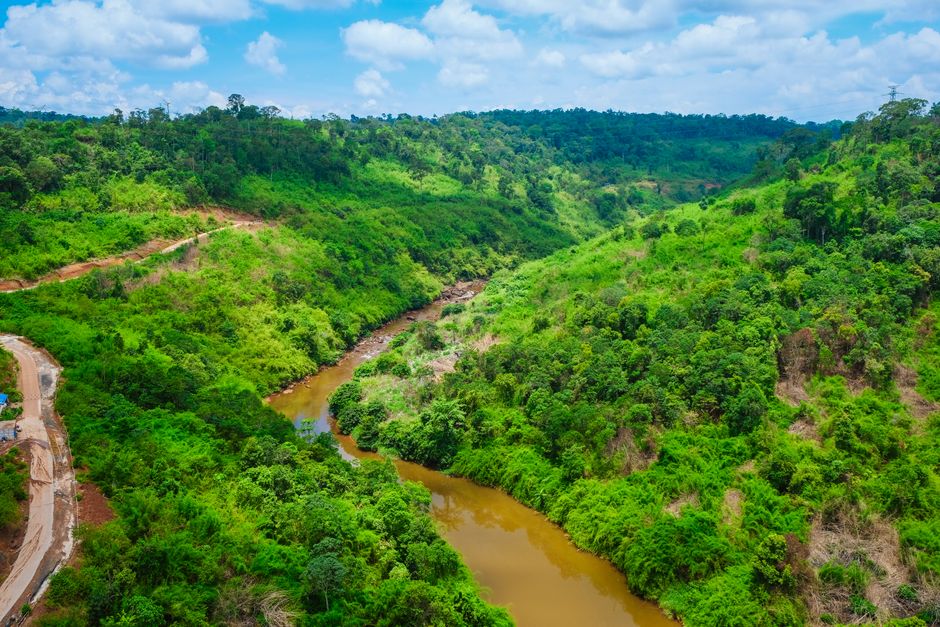
June to October (rainy season). Flooding is common in lowland areas. Roads to remote villages become impassable. The Mekong rises, and slow boat services sometimes cancel. But the landscape is stunningly green, prices drop by 40%, and tourist sites are empty. If you travel in rainy season, stick to paved roads. Luang Prabang and Vientiane are fine. Do not attempt the Gibbon Experience or trekking in the far north — trails become mud slides.
The rule: November–February for comfort. June–October for budget. March–May for people who really, really like heat.
You cross that border again on your way out. This time you hand over the exact $40 in crisp twenties. The officer stamps your passport without a word. You walk through to the Thai side. The whole process takes 12 minutes. That is what preparation buys you.