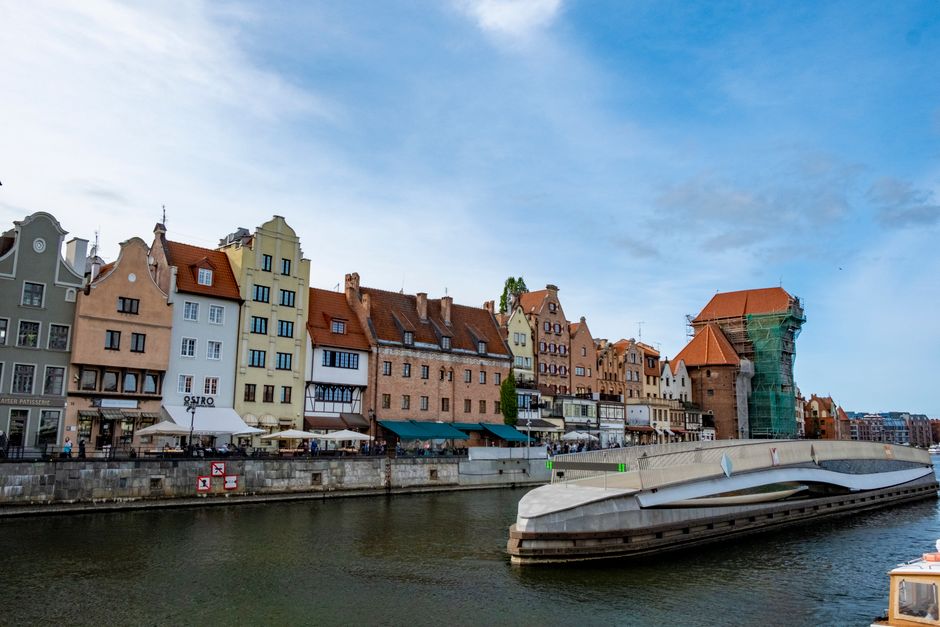
Gdańsk is easiest to understand as three cities joined by water: a polished historic centre, an industrial shipbuilding district and a broad Baltic coast. The best visit includes all three. Staying around Long Market alone gives a beautiful but incomplete version of the city.
The strongest one-day plan starts early in the historic centre, crosses toward the shipyards after lunch, then finishes beside the sea. A second day allows slower museums, a longer beach walk and a trip towards Sobieszewo or Nowy Port. The city rewards movement, but not frantic sightseeing.
How Gdańsk fits together beyond the old town
Gdańsk does not behave like a compact medieval town where every major sight sits inside one easy loop. The historic centre is walkable, but the shipyards lie to the north and the Baltic beaches sit farther beyond it. That geography shapes the visit. A traveller who treats the old centre as the whole destination will miss the places that explain why Gdańsk matters.
The compact historic core
Long Market, known locally as Długi Targ, forms the visual heart of the city. It is not a single square in the usual sense. It is the eastern section of the Royal Way, linked to Long Street and framed by tall façades, the Green Gate and the famous Neptune Fountain. This is the best area for a first orientation walk because major landmarks appear close together: Artus Court, the Main Town Hall, St Mary’s Basilica and Mariacka Street.
The centre is attractive but heavily visited. The busiest stretch is most enjoyable before late morning or after the main day-trip crowds begin to thin. Look up at the façades, then step away from the main route. Streets around the Motława waterfront often provide better views with less pressure to keep moving.
The water edge and northern districts
The Motława is a riverfront setting, not the Baltic Sea. That distinction matters. The waterfront has historic warehouses, bridges and the medieval Crane, while the open coast has wind, dunes, wide sand and a different scale. The Gdańsk Shipyard sits between these experiences. It is an active industrial area shaped by labour history, political protest and postwar reconstruction.
The practical verdict is simple: use the historic centre for architecture, the shipyards for context and the coast for breathing room. The three areas are connected, but they should not be squeezed into one rushed sightseeing circuit.
How to spend the first morning around Long Market
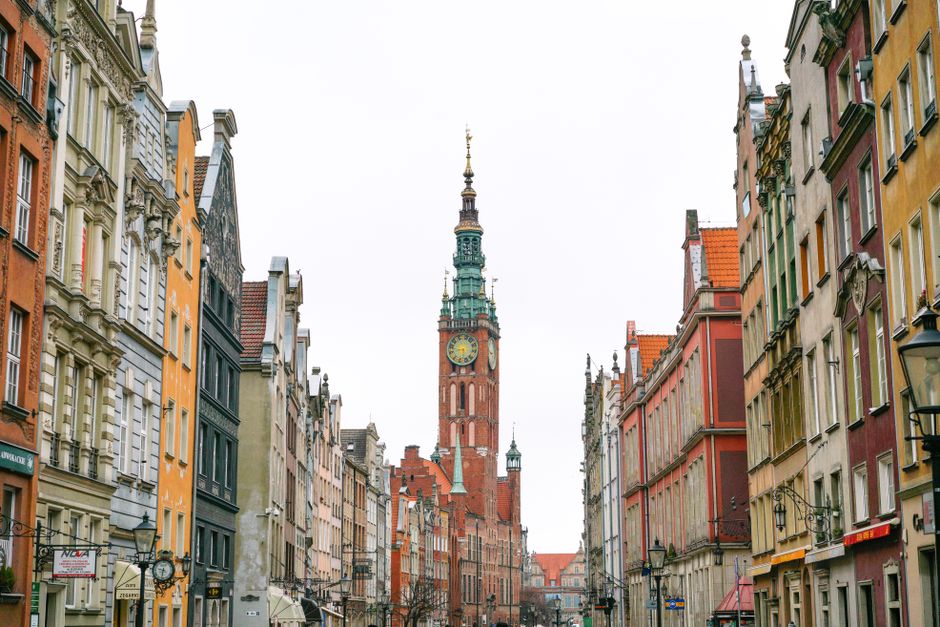
Long Market works best as a starting point, not a final destination. Arrive before the streets become crowded and follow a route that moves from the formal centre towards the river. The point is to understand the city’s layout before entering museums or stopping for a long meal.
- Start at the Golden Gate. Walk through Long Street towards Long Market. This direction reveals the ceremonial design of the Royal Way and gives the main façades a clear sequence rather than presenting them as disconnected photo stops.
- Pause at the Main Town Hall. The building anchors the historic centre and helps explain the former wealth of the city.
- See Neptune Fountain and Artus Court together. The fountain is the obvious landmark, but the neighbouring court adds the political and commercial setting behind the spectacle. The pair deserves more than a quick photograph.
- Turn down Mariacka Street. This narrow street leads towards St Mary’s Basilica and the Motława. Its steps, terraces and carved details make it one of the most atmospheric short walks in the centre.
- Finish at the Crane and riverfront. The waterfront shows how trade, transport and storage shaped Gdańsk. It also creates a useful break before the walk or tram journey towards the shipyards.
What deserves time inside
Choose one major interior rather than attempting every museum. St Mary’s Basilica gives scale and a high view when access is available. Artus Court gives a richer sense of civic life and merchant culture. The Museum of the Second World War offers a much longer, more demanding visit and works better when the schedule has several free hours.
Do not treat every landmark as a checklist item. The historic centre has been rebuilt and restored over time, so the value lies in seeing how the streets, gates, churches and riverfront work as one urban composition.
When the centre feels too crowded
Move one street away from Long Market instead of abandoning the area. The lanes behind the main route are quieter, and the waterfront near Ołowianka often gives more space. Early morning is the clear winner for photographs, architecture and calm walking. Evening is better for atmosphere, but the main square can still feel busy during the high season.
What the shipyards reveal beyond the postcard
The shipyards are the part of Gdańsk that turns a pleasant city break into a meaningful one. This is not just an industrial backdrop for photographs. It is where the city’s modern identity becomes visible: shipbuilding, organised labour, political opposition and the collapse of communist rule all meet here.
The route through the shipyard district
From the historic centre, head north towards the former shipyard area. The walk changes quickly. Ornamental façades give way to broad roads, industrial fencing, warehouses, cranes and open spaces. That change is the point. The district feels less finished and less curated than Long Market, which makes it easier to see Gdańsk as a working port rather than a restored tourist stage.
The Monument to the Fallen Shipyard Workers stands as the essential outdoor stop. Nearby, the European Solidarity Centre provides the deeper political and social context. Allow enough time to read, listen and follow the chronology. A rushed visit reduces a complicated history to a few familiar photographs.
Why the industrial setting matters
The shipyard story is closely linked to the Solidarity movement and to Lech Wałęsa, but the location should not be reduced to one famous name. The movement grew from workers, families, religious communities, underground publishers and wider public frustration. The shipyard became a symbol because the conflict was both local and national.
Architecture also carries the history. The monumental gate, worker housing, cranes and surviving industrial structures show different layers of the city’s past. Some spaces are accessible, some remain active or restricted, and some change as redevelopment continues. That unevenness is normal. Treating the district like a conventional open-air museum creates false expectations.
The best approach is to combine the outdoor route with one serious indoor visit, then leave time for quiet observation. The shipyards are not the most polished part of Gdańsk, but they are the most important correction to a postcard-only itinerary. For historical understanding, this is the clear priority after Long Market.
How to reach the Baltic shore without wasting a day
The Baltic coast is close enough for a half-day trip, but the experience changes sharply from beach to beach. Pick the shore based on the kind of day wanted. A broad sandy beach, a harbour walk and a quiet nature reserve are not interchangeable.
| Coastal area | Character | Best for | Main drawback |
|---|---|---|---|
| Brzeźno | Wide beach, pier and established promenade | A first Baltic walk with easy access and services nearby | Can feel busy in warm weather |
| Jelitkowo | Beach and long coastal path linking towards Sopot | Walking, cycling and combining the coast with another seaside town | Less wild and more developed |
| Stogi | Large sandy beach with a more local feel | Space, swimming weather and a straightforward beach day | Less connected to the central sightseeing route |
| Sobieszewo | Island setting, dunes, forest and quieter shoreline | Nature, birdlife and a slower coastal escape | Needs more time and planning |
| Nowy Port | Historic harbour district near the western side of the city | Port atmosphere and a shorter urban detour | Not the best choice for a classic open beach |
Brzeźno is the best default for a first visit because it offers the clearest balance between beach, promenade and access. Sobieszewo is the better choice for a second coastal outing or for travellers who dislike crowded waterfronts. The Baltic is often breezy even on a bright day, so a beach visit needs more than a sunny forecast. Wind direction, sand temperature and water temperature can change the mood within an hour.
How much time to allow
Set aside at least half a day for the coast. A rushed visit from the old centre, followed by a quick photograph and an immediate return, is not worth the travel time. Two to four hours allows a proper shoreline walk, a pause on the sand and enough flexibility for changing weather.
The best coastal alternative
If the weather turns wet or cold, keep the harbour and shipyard route instead of forcing a beach day. The Baltic shore is impressive because of its openness, but it does not need to be visited in poor conditions to prove a point. Gdańsk has enough indoor history and urban atmosphere to support a strong itinerary without sunshine.