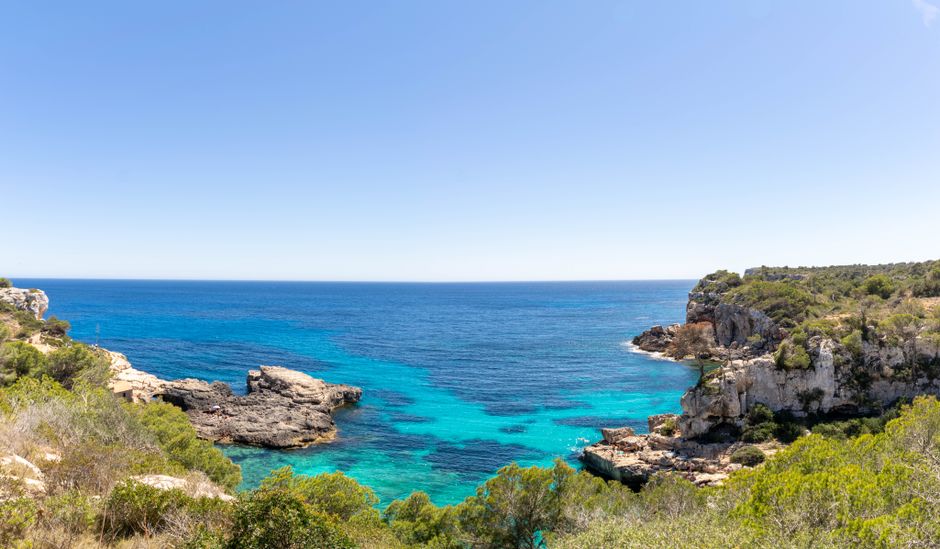
The common misconception is easy to understand: Mallorca appears to be a beach destination with a few mountain views added around the edges. That assumption creates a familiar problem. Visitors spend several days moving between crowded coastal roads, arrive late at inland villages, and leave without seeing the island’s older, quieter character.
Mallorca beyond the beaches is not a separate destination. It is a different way of reading the same island, built around stone villages, dry-stone terraces, market towns, mountain roads, farm landscapes, and historic streets. The best itinerary does not try to cover every corner. It links a small number of places that work well together and leaves enough time for weather, road delays, and an unplanned stop.
What Mallorca Is Like Beyond the Beach Strip
The island changes quickly inland
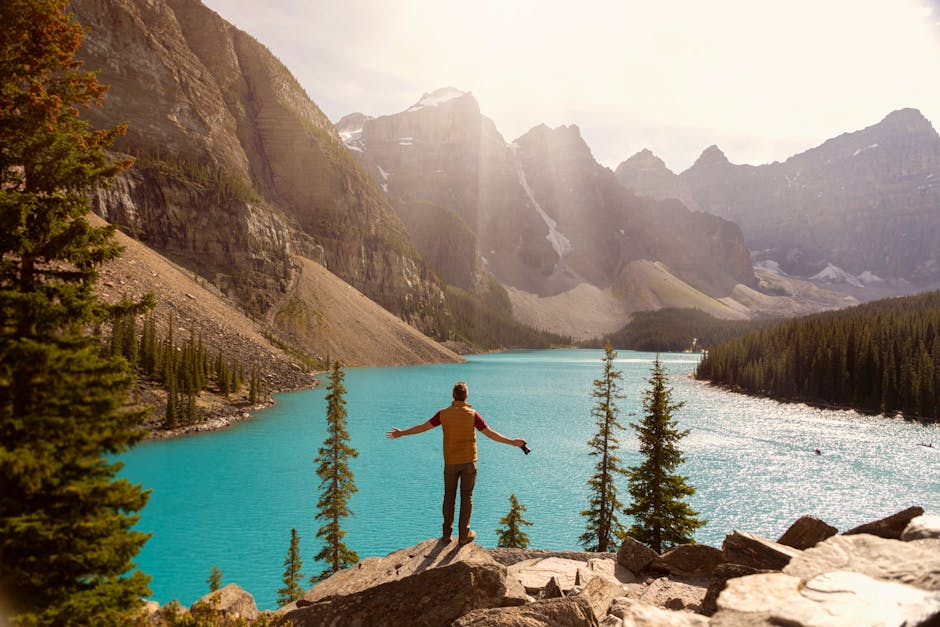
Within a short drive of the coast, the landscape can shift from resort apartments to almond groves, olive terraces, and low stone walls. The Serra de Tramuntana forms the island’s dramatic northwest spine, while the center is flatter and more agricultural. The east has a softer rhythm, with market towns, caves, small harbors, and inland roads that feel less polished than the main resort areas.
That change also affects the pace of a day. A village that looks close on a map may require a slow mountain road, a narrow approach, or a parking search outside the historic center. Travel distances are modest, but journey times are not always predictable.
The strongest experiences are often ordinary
A morning market, a shaded square, a bakery opening before the heat, or a footpath through olive trees can reveal more about local life than another viewpoint reached in a rush.
The practical verdict is clear: reserve at least one full day for inland Mallorca. The island’s identity becomes easier to understand when the schedule includes time for walking, eating, and observing rather than only collecting landmarks.
Which Inland Route Fits a Three-Day Trip?
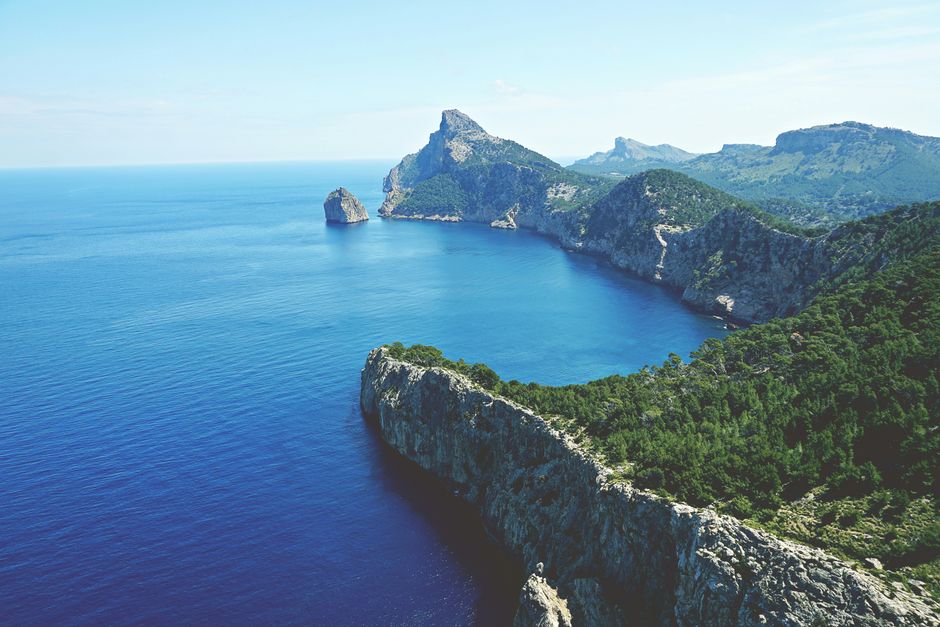
A three-day plan should choose one geographic direction. Crossing the island repeatedly wastes time and turns scenic travel into transport. The routes below offer different strengths, and each is more useful than trying to combine all of them.
| Route | Travel pattern | Main strengths | Planning caution |
|---|---|---|---|
| Northwest | Palma, Sóller, Deià, Valldemossa | Mountain scenery, stone villages, short walks | Roads are slow and parking fills early |
| Central and east | Sineu, Petra, Artà, nearby coves | Markets, rural scenery, quieter evenings | Public transport is less direct between stops |
Best choice for scenery
The northwest route is the strongest option for travelers who want mountain views and compact village visits. Palma can provide the arrival or departure point, while Sóller works well as a base for shorter excursions. Deià and Valldemossa deserve time on foot rather than a rushed drive-through.
Best choice for a slower pace
The central and eastern route is better for visitors who dislike busy coastal traffic. Market days, rural roads, and smaller town centers create a calmer sequence. The tradeoff is simple: fewer famous viewpoints, but more flexibility and less pressure to follow a fixed timetable.
How to Build a Mallorca Itinerary That Holds Together
The best solution is to plan around one inland base and one daily anchor. An anchor can be a village walk, a mountain trail, a market, or a historic district. Everything else should support that main activity. This approach prevents the common mistake of treating every stop as equally important.
Start with the time of day
Put outdoor activities early, especially from late spring through early autumn. Morning light is better for mountain roads and walking, temperatures are lower, and popular villages are easier to navigate. Use the middle of the day for lunch, museums, shaded streets, or a slower transfer. Leave the late afternoon for a viewpoint, a harbor, or a short town walk near the overnight base.
A useful structure is one major activity before lunch, one flexible stop afterward, and no more than one long transfer in the same day. This leaves room for roadworks, missed turns, weather changes, and the simple fact that old town streets take longer than modern roads.
Match the route to the transport method
A car gives access to remote viewpoints and rural villages, but mountain driving demands patience. Narrow roads, cyclists, livestock, and limited parking can turn a short distance into a demanding journey. Public transport works best when the itinerary follows a clear corridor, such as Palma toward Sóller or Palma toward the northern towns. It becomes less efficient when several rural stops are linked in one day.
Protect the trip from avoidable failure
- Check local access rules before driving to a famous viewpoint, because seasonal restrictions can change the final section of a route.
- Wear shoes suitable for uneven stone streets and dry paths, even when the day begins in a city.
- Carry water during walks because shade and refill points are not guaranteed outside town centers.
- Confirm market days and opening times before building an entire morning around them.
- Keep one unassigned block in the schedule. It can absorb delays or become the day’s best experience.
The practical rule is to measure an itinerary by usable time, not by the number of places listed. Three well-connected stops usually produce a better day than six scattered across the island.
What Should Visitors Expect From Inland Mallorca?
Is Mallorca comfortable without a beach day?
Yes, provided the day has a clear purpose. A village walk, a market, a short mountain route, or a visit to a historic estate can fill several hours without feeling like a substitute activity. Inland Mallorca rewards curiosity more than speed.
Are the mountain villages easy to reach?
They are reachable, but not always quickly. Roads through the Serra de Tramuntana can be narrow and winding, and navigation estimates may not reflect parking or pedestrian access. Arriving before midday typically makes the experience calmer. Large vehicles face more difficulty in older centers, where streets were designed long before modern traffic.
What should be expected from local dining hours?
Meal times may not match the schedule used at home. Some kitchens open later than visitors expect, and smaller places may close between services. A flexible plan avoids the mistake of arriving in a village after the main lunch window with no backup option. Markets and bakeries often provide an earlier start, while dinner can require a reservation in the busiest towns.
Weather also deserves careful attention. The coast may feel warm while higher ground remains windy or cool. A light layer, sun protection, and water are useful even on a short walk. Conditions can change faster in the mountains than on the flat central plain.
Which Mistakes Make an Inland Mallorca Trip Harder?
The biggest mistake is treating Mallorca as small enough to see casually. The island is compact on a map, but mountain roads, parking limits, walking routes, and seasonal controls create real travel time. A strong itinerary leaves space rather than filling every hour.
Common planning errors
- Booking accommodation on opposite sides of the island for consecutive nights without allowing time for the transfer.
- Arriving at a popular village at midday and assuming parking will be simple.
- Choosing a difficult mountain walk because photographs made it look short.
- Following a coastal route during peak traffic when an inland road would be slower but more relaxed.
- Ignoring Sunday and holiday schedules when planning markets, buses, or small local attractions.
When a beach-first plan still makes sense
A beach-centered itinerary remains reasonable for travelers with limited mobility, very young children, or only a short stop between flights. The mistake is not choosing the coast. The mistake is assuming every traveler wants the same balance of swimming, driving, walking, and sightseeing. For visitors seeking local atmosphere, the strongest alternative is a mixed plan: one coastal day, one inland village day, and one mountain or market day.
That balance gives Mallorca room to be both a Mediterranean island and a living place with its own geography, routines, and limits.