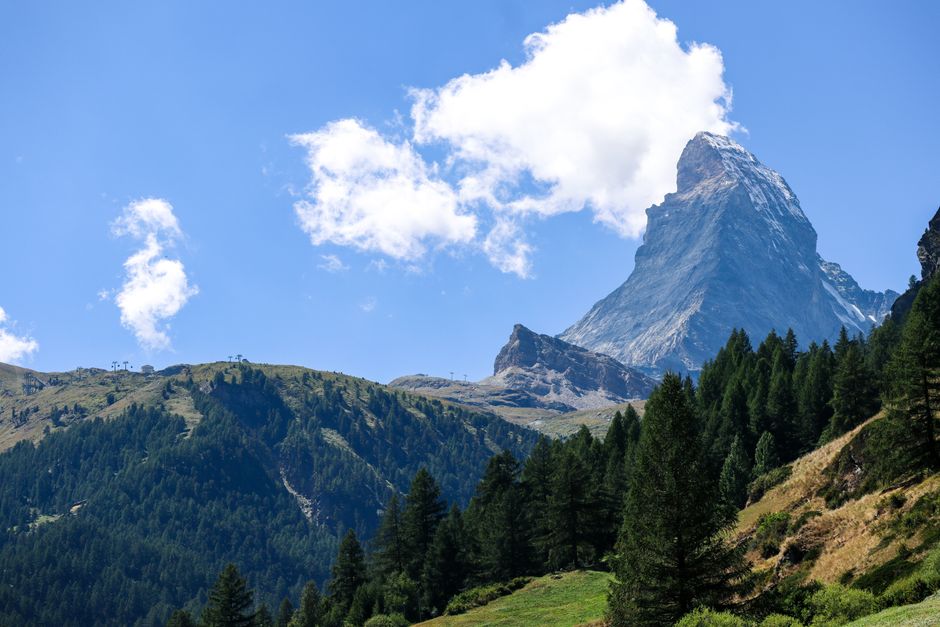
The classic arrival is simple: a train rolls into a mountain village, luggage leaves the platform, and the Matterhorn appears between rooftops when the clouds allow it. No rental car is needed. In fact, a car can create extra work because private vehicles stop outside Zermatt and the final journey continues by train. The best car-free plan uses the village as a base, groups mountain trips by weather and elevation, and leaves enough space for changing conditions.
How do you reach Zermatt without a car?
Take the train to the village entrance
Zermatt is one of the easiest major Alpine destinations to reach without driving. From larger Swiss cities, the trip usually involves a change at Visp or another regional junction. The final section climbs through the Matter Valley, so the journey itself becomes part of the experience rather than dead time.
Leave the car before the final valley road
Private cars cannot continue into central Zermatt. Drivers leave vehicles at Täsch, then take the short shuttle train or an authorised local transfer. This arrangement matters even for visitors who arrive by car: parking, luggage transfer and the final connection all add steps.
The clear verdict is to use public transport from the start when possible. It avoids parking stress, removes the final transfer decision and puts the arrival point directly inside the village.
What should be planned before arrival?
Build the trip around weather, not a fixed view
The Matterhorn is a sharp mountain with a habit of disappearing behind cloud at exactly the wrong moment. A clear forecast does not guarantee a clear summit, and a low village can have different conditions from a high viewing platform. Keep at least one flexible half-day. If the mountain is hidden, use the time for village walks, museums, cafés, valley paths or lower trails instead of spending the best weather window indoors.
Use a simple transport map
| Area | Approximate elevation | Best use | Planning warning |
|---|---|---|---|
| Zermatt village | About 1,608 metres | Arrival, dining and short walks | Cloud can still hide the Matterhorn |
| Sunnegga area | About 2,288 metres | Fast viewpoint access and family walks | Check operating times before leaving |
| Gornergrat | About 3,089 metres | Wide mountain panorama | Wind and cold arrive quickly |
| Glacier Paradise area | About 3,883 metres | High alpine snow and glacier views | Altitude can affect short visits |
Do not treat every mountain lift as interchangeable. Each reaches a different height, view and trail network. A strong plan chooses one main excursion per day, then keeps the rest of the day near the village.
What is the best two-day itinerary?
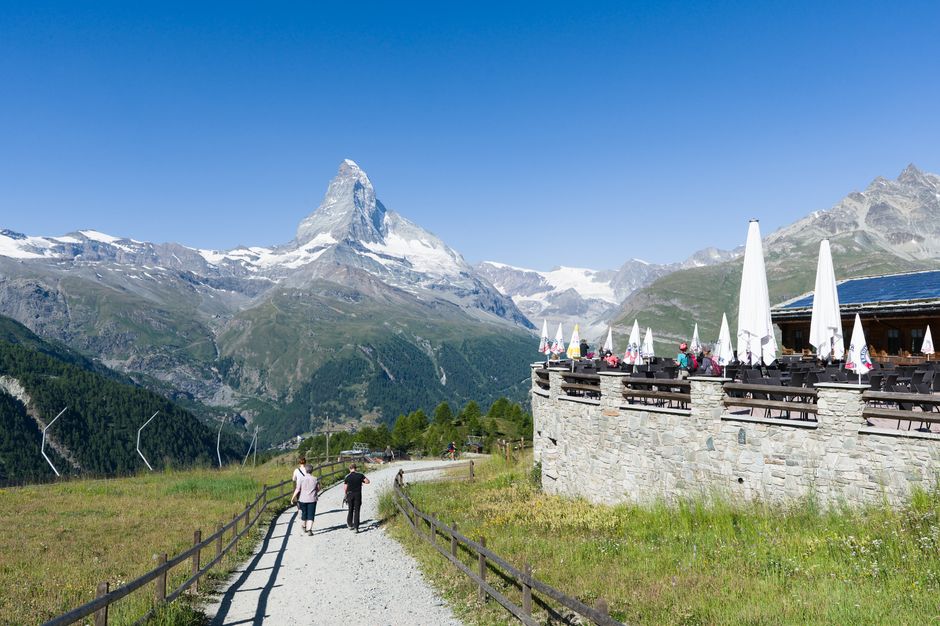
Day one: settle in and find the village view
- Arrive by train and walk to the accommodation or luggage drop.
- Take an easy orientation walk through the centre and toward the old village area.
- Watch the Matterhorn from a low viewpoint near sunset, when changing light can reveal the outline even after a cloudy afternoon.
The first day should stay deliberately light. Travel through the valley takes longer than the map suggests, and rushing straight onto a high lift can turn a scenic arrival into a tiring one. A village walk also reveals the practical layout: the station, lift entrances, footbridges, public paths and quieter streets.
Day two: choose one high viewpoint
- Check the live mountain weather before breakfast.
- Choose Gornergrat for a broad panorama or Sunnegga for a shorter outing with easier walking.
- Allow time for a viewpoint walk instead of returning immediately after the ascent.
- Return to Zermatt before late afternoon and use the valley for a relaxed evening.
For a first visit, Gornergrat is the stronger choice when visibility is good because the route gives a wide view of the Matterhorn and surrounding peaks. Sunnegga wins when time is limited or the group wants a shorter, less demanding day. The mistake is trying to fit both into one morning.
How should a three-day visit be structured?
Day one: arrival and orientation
Keep the first day close to the valley floor. Walk through the old wooden barns, cross the river and find a quiet viewpoint outside the busiest central streets. This creates useful context before the mountain transport begins. It also gives legs and lungs time to adjust to the village elevation.
Day two: the clearest high-altitude window
Place the biggest mountain outing on the day with the best visibility. Gornergrat suits visitors who want a long panorama and several easy viewpoint walks. The high glacier area suits those who specifically want snow, ice and a much higher alpine setting. The two experiences are not substitutes: one is about views across a chain of peaks, while the other is about altitude and glacier scenery.
Day three: a slower trail day
Use the third day for a moderate route between mountain stations or a valley walk toward the surrounding hamlets. Leave room for a shortened route because trail conditions change with season, shade and recent snowfall. A three-day visit works best when only one day carries a strict transport plan. The other days should have a main direction rather than a minute-by-minute schedule.
Pack water, sun protection and an extra warm layer even on a bright morning. At altitude, exposed paths can feel cold after a cloud bank moves across the ridge. Comfortable footwear matters more than speed, and the most enjoyable route is the one that still feels manageable after the return journey.
Should visitors walk or use mountain transport?
Use mountain transport for height and walking trails for character. Trying to hike every vertical section wastes valuable time and energy, while taking lifts for every short distance removes much of what makes Zermatt memorable.
When walking is the better choice
Choose a valley walk when the mountain is hidden, the legs need a quieter day or the route itself matters more than the summit view. Paths near the old hamlets offer timber buildings, streams and changing views of the valley. They also make useful bad-weather alternatives because a low route is often more comfortable than an exposed ridge.
When a lift is worth the time
Use a lift when the visit is short, the forecast offers one clear window or the main goal is a high panorama. The Matterhorn looks very different from different elevations, and a high viewpoint cannot be replaced by a village photograph. Select the one that matches the weather and the reason for the trip.
What do first-time visitors often ask?
Is Zermatt walkable?
Yes. The central village is compact, and most practical journeys can be made on foot. Distances become less convenient when luggage, snow or a steep slope is involved, so accommodation near the station or a main road can save effort on arrival.
Can the Matterhorn be seen from the village?
Yes, but visibility changes quickly. Buildings, trees and cloud can block the view from one street while a nearby bridge or open path gives a clear sightline. A hidden mountain is a weather problem, not proof that the location is wrong.
Is one day enough?
One full day can cover the village and one major viewpoint, but it leaves little room for cloud or transport disruption. Two nights provide a much better chance of seeing the Matterhorn clearly. Three nights allow a high outing, a village day and a flexible trail day without constant schedule pressure.
Is the high altitude difficult?
Some visitors feel headaches, breathlessness or unusual tiredness above 3,000 metres. Move slowly, drink water and avoid treating a short viewpoint stop like a normal lowland walk.
Which mistakes should be avoided?
- Booking only one night. A single cloudy day can erase the main mountain view. Two nights create a useful weather buffer.
- Scheduling the highest trip first. Arrival fatigue and altitude can make the most ambitious day feel harder than expected.
- Ignoring operating notices. Wind, maintenance and snow can change mountain transport plans. Check the same morning, not only when booking.
- Wearing city shoes on a trail. Even easy paths can turn wet, icy or uneven after rain and melting snow.
- Planning every hour. Trains and lifts may connect neatly, but weather rarely follows a spreadsheet.
- Assuming the best photograph comes from the busiest viewpoint. Quieter paths often provide cleaner sightlines and a more memorable experience.
The strongest alternative to a packed sightseeing schedule is a flexible base plan: one village route, one high mountain route and one backup for poor weather. Visitors who dislike lifts, crowds or altitude should spend more time in the valley and choose lower walks instead of forcing a summit experience.
The single most reliable rule for visiting Zermatt without a car is to stay at least two nights, reserve one clear-weather window for a high viewpoint and let the rest of the trip unfold on foot.