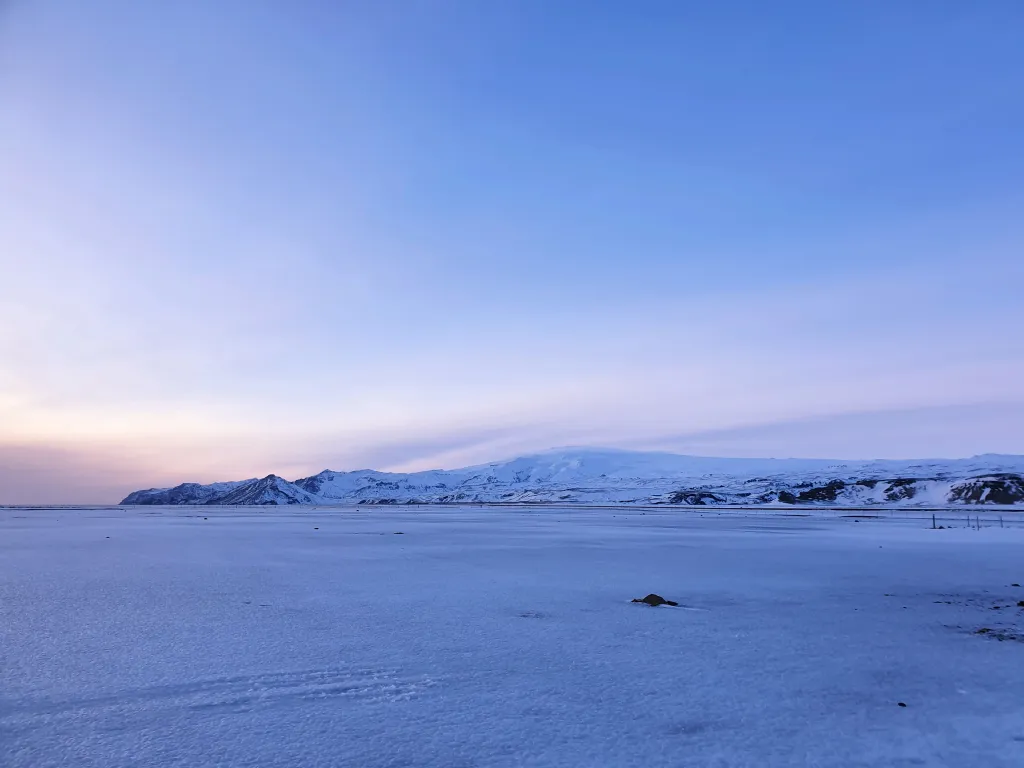
Most travelers go to Iceland between June and August. They fight crowds at Gullfoss, pay premium prices for hotels, and never see the Northern Lights. Winter is better. Fewer people. Lower prices. And you get things summer can’t offer — ice caves, frozen waterfalls, and skies that actually get dark enough for aurora borealis.
This isn’t a fluffy listicle. Here’s what actually makes winter in Iceland worth your time, plus the mistakes that will ruin your trip if you don’t plan for them.
1. The Northern Lights are not a guarantee — here’s how to actually see them
Every travel blog says “see the Northern Lights.” What they don’t tell you: standing outside for four hours in -10°C wind with nothing happening is the most common outcome. I’ve done it. It sucks.
The aurora is a natural phenomenon, not a theme park ride. You need three things to align: solar activity (KP index 3 or higher), clear skies, and darkness. Winter in Iceland gives you darkness — 4-5 hours of daylight in December — but clouds are the enemy. Reykjavik sits on the coast. It’s cloudy more than half the winter.
Where to go for the best odds
Get away from city lights. The Snæfellsnes Peninsula and Jökulsárlón glacier lagoon are two of the most reliable spots. Both have dark skies and relatively stable weather patterns compared to the south coast. Drive 45 minutes from Reykjavik to Þingvellir National Park if you’re short on time. It’s a dark zone with minimal light pollution.
What to check before you go
Use vedur.is (Icelandic Met Office) for cloud cover forecasts. The Aurora Forecast app (free) shows KP index in real time. Book a guided tour if you don’t want to drive at night on icy roads. Arctic Adventures and Gray Line Iceland run small-group aurora tours that include warm shelter and photography help. Expect to pay around $80-120 per person.
Verdict: The Northern Lights are spectacular when they happen. But don’t build your entire trip around them. Plan for other winter activities so the aurora is a bonus, not the only reason you came.
2. Ice caves are the real winter-only attraction
You cannot visit natural ice caves in summer. They melt. The Vatnajökull glacier ice caves are only accessible from November through March. This is the single best reason to visit Iceland in winter.
The caves form inside the glacier when meltwater carves tunnels through the ice. The light filtering through centuries-old compressed ice creates that surreal blue glow you’ve seen in photos. It’s real. It’s not edited.
How to visit without dying
Do not go alone. Glacier caves collapse. Guided tours are mandatory and cost around $100-150 per person. Local Guide of Vatnajökull and Glacier Journey are reputable operators. Tours depart from Jökulsárlón or the town of Höfn. You’ll ride a modified super-jeep to the glacier edge, then walk in with crampons and a helmet.
Book at least two weeks ahead. December through February sell out fast. March is less crowded and still has stable ice conditions.
One tip: wear waterproof boots that go above the ankle. You’ll be standing on ice for 45 minutes. Wet feet in subzero temperatures will end your day.
3. Hot springs hit different in winter
Sitting in 40°C water while snow falls on your head is a genuinely unique experience. Iceland has dozens of geothermal pools. Most tourists go to the Blue Lagoon ($90 entry, crowded, overpriced). Skip it.
The Sky Lagoon in Reykjavik ($55) has an infinity edge overlooking the ocean and a seven-step ritual that includes a cold plunge and a steam room. Better views, fewer people, lower price.
For the real local experience, hit the public pools. Laugardalslaug in Reykjavik costs about $10 and has multiple hot pots at different temperatures, a steam bath, and a 50-meter outdoor lap pool. Locals go here after work. It’s not fancy. It’s authentic.
Natural hot springs worth the drive
Reykjadalur Valley near Hveragerði is a 45-minute hike to a natural river hot spring. Free entry. The hike can be icy in winter — bring microspikes. Secret Lagoon in Flúðir is a man-made pool fed by a natural hot spring. Entry is $30. It’s less commercial than Blue Lagoon and has a small geyser that erupts every few minutes right next to the pool.
Verdict: Hot springs are better in winter. The cold air makes the heat feel more intense. Your skin doesn’t dry out as fast. Just bring a proper robe — the walk from the changing room to the pool in -5°C is brutal in a thin towel.
4. Winter road conditions will humiliate you if you’re unprepared
Iceland’s Ring Road (Route 1) is paved and plowed in winter. That doesn’t mean it’s safe. Black ice, sudden whiteout blizzards, and 50mph crosswinds are normal. Rental cars without studded tires are a bad idea. Four-wheel drive is not optional — it’s survival.
Here’s a real scenario: you’re driving the south coast between Vík and Höfn. The road looks clear. You crest a hill and the wind hits at 60mph. Your car drifts two feet sideways. You correct. The car fishtails. This happens to someone every single winter.
The winter driving rules
- Rent a 4×4 with studded winter tires. Blue Car Rental and Lotus Car Rental offer them. Add the gravel protection insurance — road salt and sand damage the paint, and rental companies charge for that.
- Check road.is before every drive. It shows real-time road conditions and closures.
- Never drive in a blizzard. Pull over at a gas station or guesthouse and wait. The storm will pass in 2-4 hours.
- Keep a fully charged phone, a power bank, and a physical map. Cell service drops in the mountains.
- Bring snacks and a blanket. If you get stuck, you might wait hours for help.
When NOT to drive
November through February, the interior highlands (Landmannalaugar, Kjölur route) are completely closed. Don’t try. The F-roads are unplowed and impassable. Stick to the Ring Road and the main tourist routes like the Golden Circle and Snæfellsnes.
If you’re uncomfortable driving in snow, book a guided tour. It costs more but removes the risk. Reykjavik Excursions runs day trips to the Golden Circle, south coast, and Snæfellsnes year-round.
5. The daylight situation is real — plan around it
In December, sunrise is around 11:15 AM and sunset by 3:45 PM. That’s 4.5 hours of usable daylight. Tourists who don’t plan for this end up driving in the dark to see waterfalls they can barely photograph.
Here’s how to make it work:
| Time | Activity | Why |
|---|---|---|
| 8:00-10:00 AM | Breakfast, pack, drive to first stop | Sunrise is late. Use the dark time for travel. |
| 10:00 AM-2:00 PM | Main sightseeing (waterfalls, glaciers, canyons) | Best light for photos. Sun is low and golden. |
| 2:00-3:30 PM | Second stop or short hike | Light fades fast. Keep it close to the car. |
| 3:30-6:00 PM | Drive to accommodation, check in | Dark. Roads are less crowded. Safer to drive now than at midnight. |
| 6:00-9:00 PM | Hot spring, dinner, Northern Lights hunt | Prime aurora hours are 9 PM-1 AM. Rest up. |
By February, daylight stretches to 8-9 hours. March gets 11-12 hours. If you hate short days, go in late February or March. You still get ice caves and aurora, but with manageable daylight.
6. What to pack (and what to leave at home)
You need layers. Not one thick coat. Three to four thin layers that trap air and wick moisture. The wind in Iceland will cut through a single puffer jacket like it’s tissue paper.
The actual packing list
- Base layer: Merino wool or synthetic. Cotton kills — it stays wet and cold. Icebreaker or Smartwool tops and bottoms.
- Mid layer: Fleece or thin down jacket. Patagonia Better Sweater or Uniqlo Ultra Warm Down.
- Outer shell: Waterproof and windproof. The North Face Apex Flex GTX or Arc’teryx Beta LT.
- Footwear: Waterproof boots with good tread. Merrell Moab 3 Mid WP or Columbia Bugaboot Plus IV Omni-Heat.
- Accessories: Wool hat, neck gaiter (not scarf — scarves flap in wind), waterproof gloves, hand warmers.
- Swimwear: You’ll use hot springs. Bring two swimsuits so one can dry.
Leave behind: jeans (they freeze when wet), cotton hoodies, umbrellas (wind destroys them), and dress shoes. You will not need anything fancy.
7. The verdict — is winter in Iceland actually worth it?
Yes. But only if you go prepared. Winter in Iceland is not a relaxing beach vacation. It’s an active, weather-dependent trip that rewards planning and punishes spontaneity.
Go for the ice caves and the hot springs. Chase the Northern Lights but don’t depend on them. Rent a proper 4×4 with studded tires. Pack smart. Book tours ahead. And give yourself at least 7 days — 10 is better — so you have buffer for weather delays.
Summer Iceland is crowded and expensive. Winter Iceland is raw, quiet, and unforgettable. If you can handle the cold, it’s the better season. Go in March for the best balance of daylight, ice access, and aurora potential. That’s the sweet spot.