You wake up to rainfall drumming on a canopy roof, roll over, and watch a three-toed sloth hanging in the cecropia tree twelve feet from your window. That’s not a brochure scenario — it’s a Tuesday morning at Finca Bella Vista, and it’s what Costa Rica’s treehouse scene actually delivers when you book the right property.
The problem is the word “treehouse” covers an enormous range. Some properties are ground-level cabins with a rope ladder bolted on for photos. Others are genuine elevated platforms 150 feet above the forest floor where wildlife encounters are structural to the experience, not accidental. This guide covers five stays that earn the label — with enough detail to pick the right one for your trip.
What Separates a Real Canopy Stay from a Marketing Gimmick
The test is simple: could you replicate the experience in a standard hotel room with curtains open? If yes, the elevation isn’t doing real work.
A genuine canopy stay changes the experience at every hour. At dawn, you’re at bird height — which in Costa Rica means toucans, parrots, and motmots at eye level rather than silhouetted against the sky from below. The sounds shift from ground-level insect hum to something more directional: branches cracking as coatis move through, rain hitting leaf layers fifty feet below you before it ever reaches the forest floor.
Structurally, a real treehouse stay means the platform is load-bearing from tree trunks or steel supports anchored to living trees, with the floor sitting at least 15–20 feet above ground. Most quality properties in Costa Rica position guests between 30 and 150 feet up. The difference matters: at 150 feet you’re in a different canopy layer entirely, with different species, different wind, and different light at sunset versus what you’d see at 20 feet.
The infrastructure matters as much as the height. Cheap treehouse stays compromise on what makes a night uncomfortable: mosquito screening that gaps at the corners, outdoor showers with inconsistent pressure, electrical systems that trip when the ceiling fan and a phone charger run at the same time. The five properties below have solved these problems — though each has tradeoffs worth knowing in advance.
Costa Rica holds roughly 5% of the world’s species on 0.03% of its land. That number sounds like tourism copy until you’re in a mesh-sided treehouse watching a great green macaw eat fruit three feet away. The national park system protects 25% of the country’s territory, meaning the wildlife corridor around most treehouse lodges is real primary forest, not managed landscaping. That’s the underlying reason these stays work here better than almost anywhere else.
Five Stays Compared: Location, Price, and Who They Suit
| Property | Region | Platform Height | Avg. Nightly Rate (2026) | Best Fit |
|---|---|---|---|---|
| Leaves and Lizards Arenal | La Fortuna, Pacific | 25–40 ft | $180–$260 | First-timers, couples |
| Finca Bella Vista | Southern Zone, Pacific | 30–150 ft | $120–$200 | Immersion-focused travelers |
| Almonds & Corals Lodge | Manzanillo, Caribbean | 15–30 ft | $160–$240 | Wildlife watchers, beach proximity |
| Lapa Rios Ecolodge | Osa Peninsula, Pacific | 20–35 ft | $350–$480 | Corcovado access, serious eco travel |
| Nayara Tented Camp | Arenal, Pacific | 20–30 ft | $450–$620 | Luxury couples, honeymoon |
Nayara’s rate includes meals and guided walks — that changes the value equation significantly. Finca Bella Vista operates more like a sustainable community than a hotel, with resident expats and long-term guests sharing infrastructure alongside short-term visitors. That’s either the appeal or a dealbreaker, depending on what you want from a stay.
Note on seasons: the Pacific dry season (December–April) does not apply to the Caribbean coast. Almonds & Corals in Manzanillo runs on a different rainfall calendar entirely. Plan coast-specific, not country-wide.
Leaves and Lizards Arenal Volcano Retreat
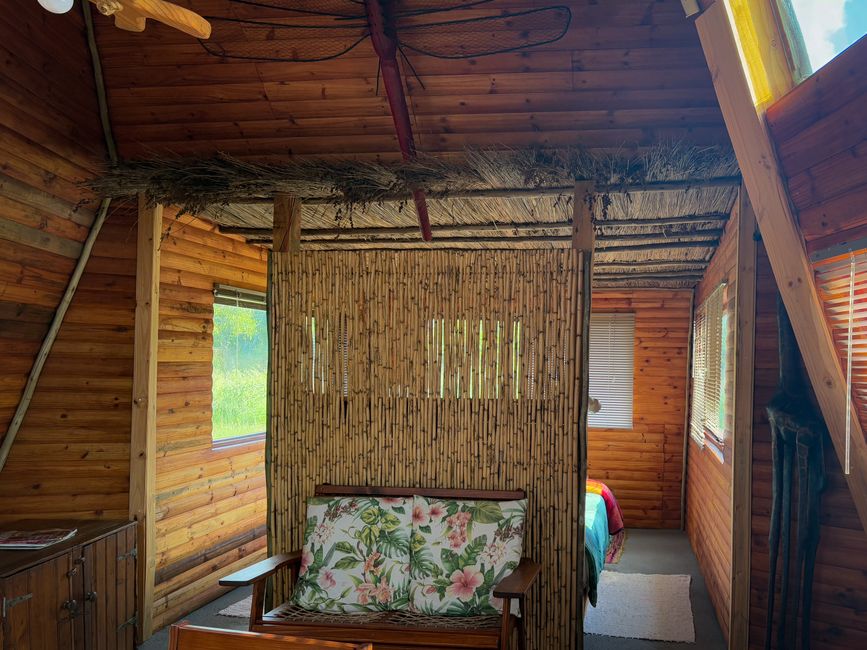
The strongest pick for a first Costa Rica treehouse trip. Leaves and Lizards sits near La Fortuna with direct sightlines to Arenal Volcano from the elevated deck platforms. The structures are proper canopy builds — wraparound screened verandas, real beds with quality linens, solar-heated water with actual pressure, and enough electrical capacity to run a ceiling fan and charge electronics without tripping the system.
The property stays small, typically fewer than ten guests at any time. That matters: you’re not sharing the wildlife corridor with a resort crowd, and early morning bird walks don’t require logistics coordination.
Wildlife in the Arenal Corridor
Howler monkeys are nearly guaranteed at dawn — the La Fortuna region has a healthy population that treats the canopy network like a commuter route. White-faced capuchins appear in the afternoons. The forest around Leaves and Lizards also sits within range of the great green macaw, which is considerably rarer than the scarlet macaw and difficult to observe without the right habitat access.
Getting There and What to Request
Most travelers fly into San José (SJO) and drive roughly 2.5 hours northwest via Highway 4 to La Fortuna. SANSA Airlines runs short domestic flights to Arenal Airport (FON) from San José if you want to save the drive. When booking, ask specifically for the volcano-view treehouse unit — not all structures at the property share the same sightline, and it’s worth requesting directly rather than assuming the booking system handles it.
Finca Bella Vista — A Functioning Canopy Community With 90 Acres to Explore
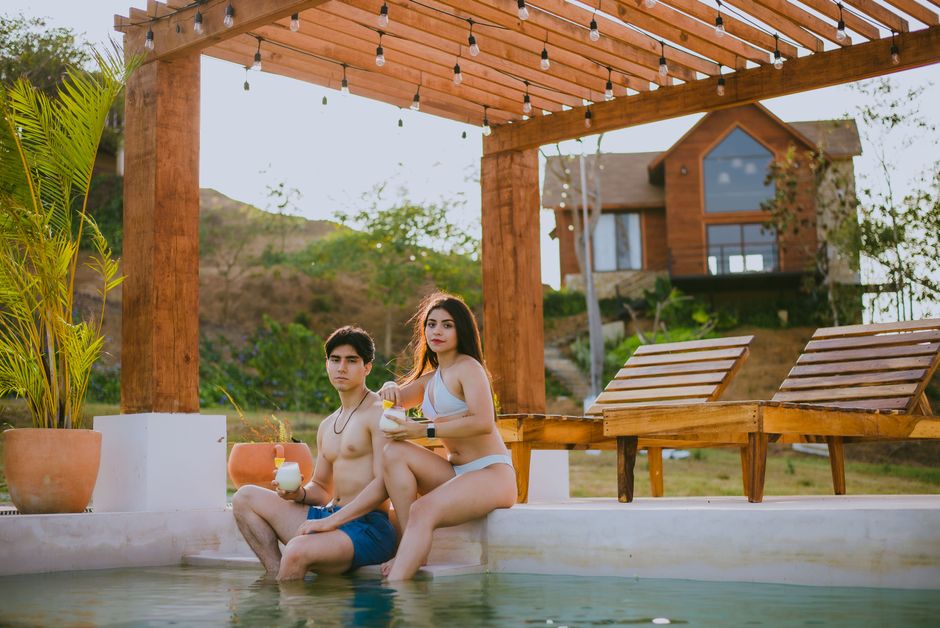
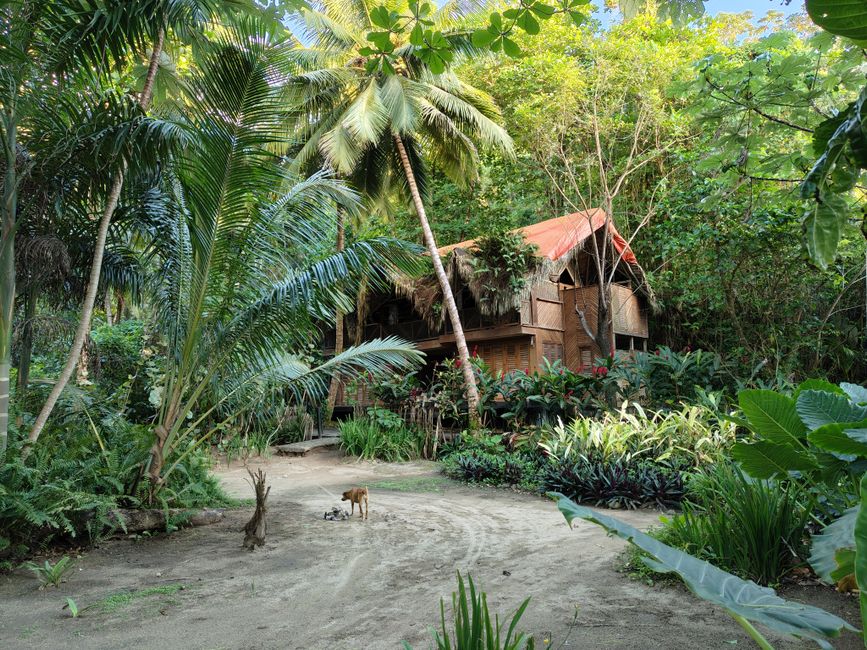
Finca Bella Vista operates differently from everything else on this list. It’s a sustainable community first and a lodge second — roughly 45 private lots across 90 acres of primary rainforest in Costa Rica’s Southern Zone, with a visitor program that lets travelers rent existing treehouses at various height levels.
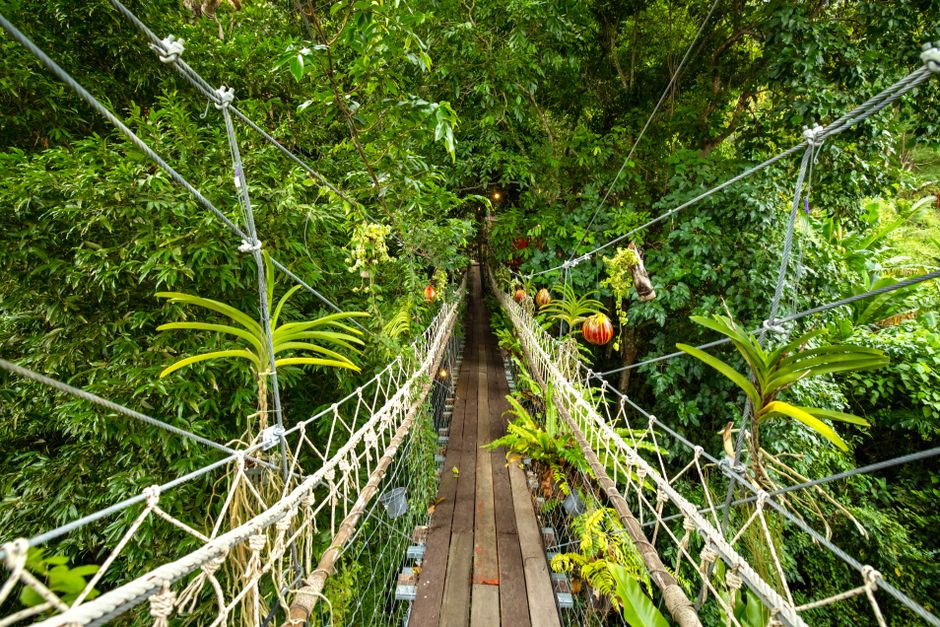
The highest platforms sit 150 feet above the forest floor, accessible by a zip trolley system — freight hauling, not thrill-ride. At 150 feet, you’re in the upper canopy layer: different species, different mammals, different light at golden hour compared to any ground-level jungle lodge.
The Zipline Access System
Getting from your treehouse to the communal kitchen means clipping into a harness. That’s a daily reality at Finca Bella Vista, not an activity upgrade. The system spans roughly 6,000 feet of zipline infrastructure across the property and is maintained under ICT standards. If you’re not comfortable with routine height-based movement as part of a morning routine, factor that in before booking.
Who This Property Actually Works For
This is a property for travelers where the canopy stay itself is the trip — not a backdrop to beach days and restaurant dinners. Meals are communal or self-prepared. People here are on bird walks at 5 a.m. and kayaking river channels by mid-afternoon. If you want a cocktail menu, this isn’t the right pick. If you want to spend five or six nights genuinely living inside a functioning forest canopy, it’s the most complete version of that experience in Costa Rica.
Pacific vs. Caribbean: How the Coast Changes the Stay
Almonds & Corals Lodge in Manzanillo makes the strongest case for the Caribbean side. Elevated tent bungalows sit inside the Gandoca-Manzanillo Wildlife Refuge — protected territory with almost no vehicle traffic after dark, which means the nighttime soundscape is clean in a way that Pacific highway-adjacent properties can’t match. Poison dart frogs move through the boardwalks below the platforms. The property is 15 minutes from Caribbean reef water, adding snorkeling access to the forest experience.
The tradeoff is humidity and rainfall. The Caribbean coast doesn’t run a Pacific-style dry season. February through August offers the best odds, but afternoon rain is common even then. That humidity is part of what makes amphibian and reptile density here extraordinary — understand it as a feature, not a flaw.
Lapa Rios Ecolodge on the Osa Peninsula occupies a different category entirely. The elevated bungalows border Corcovado National Park — the area National Geographic called the most biologically intense place on earth per unit area. At $350–$480/night, you’re buying proximity to jaguar, tapir, and scarlet macaw habitat that’s otherwise inaccessible without multi-day camping. The lodge includes guided Corcovado walks as part of the program.
Six Mistakes That Change the Experience Before You Arrive
- Booking for the wrong coast’s season. Pacific dry season (December–April) has no bearing on Manzanillo or the Caribbean corridor. Research the specific region’s rainfall calendar.
- Not specifying the exact unit. Multi-structure properties like Leaves and Lizards have meaningfully different sightlines between cabins. Request the unit you want by name or description.
- Underestimating transfer time from San José. Finca Bella Vista and Lapa Rios require 4WD vehicles and long overland routes or boat transfers from the nearest town. Budget 3–5 hours of travel time beyond your flight landing.
- Packing cotton into high-humidity canopy environments. Cotton stays wet for hours. Lightweight merino wool or synthetic fabrics dry overnight in canopy conditions. That distinction matters by day three.
- Assuming dry season means no rain. Costa Rica’s dry season reduces afternoon showers — it doesn’t eliminate them. A packable rain layer and waterproof electronics cases belong in every bag regardless of timing.
- Forgetting about howler monkey volume. At 5 a.m., from thirty feet below your platform, howlers register near 90 dB. Pack earplugs. You probably won’t use them, but you’ll be glad they’re there the first morning.
The Right Stay Based on Your Trip
First treehouse trip with a partner: Leaves and Lizards Arenal. Reliable access, well-finished structures, and volcano views without requiring a high tolerance for rough edges.
Week-long immersion where the canopy is the destination: Finca Bella Vista. Accept the communal setup, book a high platform, and plan for early mornings you’ll actually want.
Luxury honeymoon or anniversary: Nayara Tented Camp. The rate includes meals and guided programming — it’s a better deal than it looks at first glance.
Corcovado access without camping: Lapa Rios Ecolodge. Budget for the price. What you get is primary rainforest wildlife density that’s genuinely hard to match elsewhere in Central America.