Singapore Changi is the best airport on earth. That conclusion hasn’t changed in years, and if you’re choosing a layover hub with any flexibility, book through Changi and stop second-guessing. But if you want to understand why it leads — and more importantly, which airport actually performs best for your specific situation — a single ranking number hides more than it reveals.
The Skytrax World Airport Awards are the industry benchmark. Skytrax surveys active passengers on check-in speed, security queues, signage, cleanliness, lounge quality, and staff attitude. The methodology skews toward business travelers and premium terminal users. A family with a 7-hour connection has completely different needs from an executive with Qantas Platinum status. This guide cuts through the branding.
Note: Facility hours, visa-free transit eligibility, and security staffing levels change. Verify current conditions directly with airports before you travel.
How the World’s Top Airports Compare: Side-by-Side Data
Here is the hard data on the airports that consistently top global rankings. The Best For and Worst For columns reflect observed traveler complaints and operational patterns — not marketing copy.
| Airport | Skytrax Rank | Avg Security (min) | Airside Hotel Available | Best For | Worst For |
|---|---|---|---|---|---|
| Changi (SIN), Singapore | #1 | 10–15 | Paid options in T1–T3 | Long layovers, families | T4 budget routes |
| Hamad International (DOH), Qatar | #2 | 15–20 | Yes (Al Mourjan, paid) | Business travelers, premium layovers | Very long overnight connections |
| Incheon (ICN), South Korea | #3 | 12–18 | Yes (Transit Hotel T1) | Cultural layovers, Asia route connections | Peak season crowding |
| Tokyo Haneda (HND), Japan | #4 | 10–15 | No | Domestic Japan connections, efficiency | Long international layovers |
| Munich (MUC), Germany | #5 | 12–18 | Yes (Kempinski, paid) | European hub, schedule reliability | Non-Schengen visa checks |
| Zurich (ZRH), Switzerland | #7 | 15–20 | Paid | Tight European connections, reliability | High food prices (CHF 18–25 per meal) |
| Dubai International (DXB), UAE | #9 | 20–35 | Paid (multiple) | Emirates connections, volume routing | T3 crowd size, long terminal walks |
| London Heathrow (LHR), UK | #15 | 25–45 | Paid (multiple properties) | Legacy airline codeshares | Almost everything else |
Heathrow at #15, while handling 80 million passengers annually, tells you everything about the gap between airport reputation and operational reality. The physical infrastructure has not caught up with its passenger volume, and it shows in every queue.
What Skytrax Does Not Measure
The survey skips missed connection rates, average terminal walking distances, and food price-to-quality ratios. At Dubai International Terminal 3, the walk between Gate C and Gate B can exceed 20 minutes on foot. That data point matters more than lounge seat comfort ratings when you have a 95-minute connection window.
Strong Airports That Miss the Top 10
Hong Kong International (HKG) ranked in the global top 3 before 2019. The physical infrastructure remains excellent — clean, well-signed, efficient — and current ranking (#12) reflects external factors more than terminal quality. Tokyo Narita (NRT) handles most international Tokyo arrivals and runs efficiently despite rarely appearing on top-5 lists. For North America to Japan routes, Narita is a fully competent connection point that gets unfairly overlooked.
Singapore Changi: Why Every Other Airport Is Playing Catch-Up
Changi isn’t just the best airport on a ranking — it’s the only major hub where a long layover is genuinely worth booking for its own sake. This comes from more than four decades of deliberate investment in airport experience as national infrastructure, not as an afterthought to airline revenue.
The physical facts first. Changi operates four terminals plus Jewel Changi Airport, a 135,700 square meter complex built within the former open-air Terminal 1 forecourt. Jewel contains the Rain Vortex — the world’s tallest indoor waterfall at 40 meters — surrounded by over 2,000 trees and 100,000 shrubs across five levels. Canopy Park on the top floor includes a hedge maze, mirror maze, sky nets, and a bouncing net. All of this is accessible to transit passengers without clearing Singapore immigration.
Practical Changi Layover Guide by Connection Length
Under 2 hours: Stay airside. Free shower rooms are available in Terminals 1 through 3 — bring toiletries or pay SGD 3 for a kit. Free movie theaters in T2 and T3 screen recent releases with no booking required. The hawker-style food stalls in Terminal 3’s basement serve genuine Singapore food: laksa costs around SGD 6, Hainanese chicken rice around SGD 5.50. The quality beats most full-service airport restaurants globally, at a fraction of the price.
2–5 hours: Take the free inter-terminal transit to Jewel. No immigration clearance required for transit passengers. The Rain Vortex runs on a published schedule visible on the Changi Airport app. Tim Ho Wan and Shake Shack in Jewel serve food identical in quality to their city locations, priced about 15–20% above street level.
5 hours or more: Check eligibility for the free Singapore city tour program. Changi operates complimentary city tours for qualifying transit passengers with connecting flights at least 5.5 hours apart. Eligibility depends on nationality and valid travel documentation. Verify current eligibility requirements on the official Changi Airport website before counting on this — the rules change periodically. Tours depart from T2 and T3 departure halls multiple times daily and cover Marina Bay, Orchard Road, and other central areas.
Where Changi Actually Falls Short
Terminal 4 is a different experience entirely. Budget carriers including AirAsia, certain Cathay Pacific routes, and Korean Air on select services operate from T4. It’s clean and functional — but physically disconnected from the Jewel complex and noticeably inferior to T1 through T3. If both incoming and outgoing flights run through T4 exclusively, your Changi experience will be efficient but not the one in the rankings. Singapore prices also apply throughout: a sit-down restaurant meal runs SGD 18–28. The hawker stalls are where the value lives.
Four Mistakes That Turn a Great Airport Into a Miserable Layover
The airport’s quality does not matter if you mismanage the time. These failure modes show up consistently across high-volume connection hubs.
- Booking a 90-minute connection at an unfamiliar airport. Even at highly efficient hubs like Incheon and Changi, 90 minutes is thin. Deplaning takes 10–15 minutes. A distant gate adds another 15–20 minutes at larger terminals. Security re-screening when changing between international and domestic flows adds more. The minimum comfortable connection at any major hub is 2 hours. At Dubai DXB Terminal 3, build in 2.5 hours minimum — the walking distances and variable security staffing make anything tighter a genuine gamble.
- Assuming Priority Pass solves a bad airport. Priority Pass covers 1,400+ lounges globally. But at London Heathrow, the best Priority Pass lounges — No1 Traveller in T3, Club Aspire in T5 — cannot compensate for a 40-minute security queue or a 25-minute bus transfer between terminals. Good lounge access improves a good airport. It cannot transform a dysfunctional one.
- Skipping the airport app before departure. Changi, Incheon, Munich, and Hamad International all have dedicated apps showing real-time gate changes, food directories, and facility maps. The Changi app shows Rain Vortex showtimes and allows pre-booking of free shower rooms. Setup takes three minutes. Most travelers skip it and spend 20 minutes walking past a restaurant that quietly closed two months ago.
- Eating in the main departures hall. The best food at every major airport sits away from the highest-traffic areas. At Hamad International Doha, the food court near the central atrium has far stronger regional options than the main hall. At Munich Airport, the Biergarten in the MAC — Munich Airport Center — between Terminals 1 and 2 serves Augustiner Bräu on tap from 9am daily at near-city prices. A five-minute walk makes a significant difference in both quality and cost.
Hamad International Doha Is the Most Underrated Airport on Earth
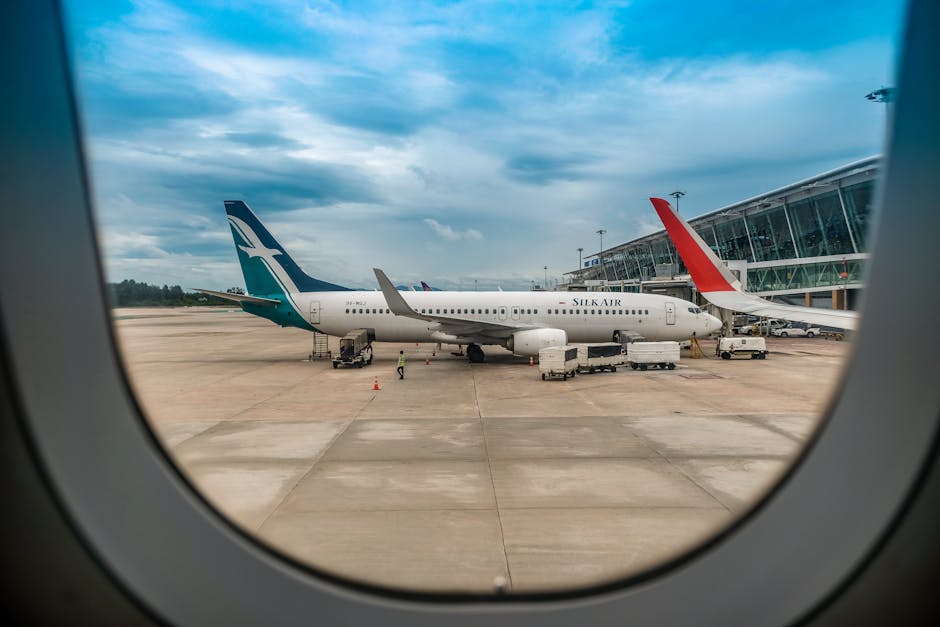
Travelers routing Europe-to-Asia via Qatar Airways consistently undervalue Hamad International. Full stop.
The airport holds a permanent contemporary art collection. Damien Hirst’s The Miraculous Journey — 14 large-scale bronze sculptures — runs along the central transit corridor, visible to all passengers regardless of class. The Al Mourjan Business Lounge is widely ranked as the best airport lounge globally for Qatar Airways business class passengers, with a 25-meter indoor pool, spa, and full-service dining. For travelers without lounge access, the food court adjacent to the central atrium offers legitimate regional options: fresh saj bread at QAR 12, proper mezze plates, Lebanese Flower’s full menu rather than an abbreviated airport-only version.
Routing through Doha on Europe-to-Asia or Africa-to-Asia trips typically adds 30–45 minutes to total travel time compared to direct alternatives. On layovers of 4 hours or more, that trade-off warrants serious consideration — particularly for routes where the Qatar Airways fare is competitive.
Europe’s Airport Reality: Munich and Zurich Lead, Heathrow and CDG Disappoint
Munich Airport (MUC) — Best European Hub for Connections
Munich consistently outranks Frankfurt, Paris CDG, Amsterdam Schiphol, and London Heathrow on passenger satisfaction. The reason isn’t complicated: it’s well-designed, runs on time, and has genuinely good food. The Kempinski Hotel connects directly to Terminal 2 airside — no customs clearance required to access it, with rooms from approximately €250 per night. The MAC Biergarten between terminals serves full Bavarian meals with Augustiner beer from 9am daily at prices roughly 30% above city rates, rather than the 200% markup common in airport food courts.
Security at MUC averages 12–18 minutes under normal operations. Paris CDG averages 25–40 minutes. Heathrow ranges from 20 minutes on a good day to 50 minutes when understaffed. That operational gap alone justifies routing through Munich when the fare difference is under €40–50 on the total ticket.
Zurich Airport (ZRH) — Reliability Over Spectacle
Zurich won’t impress you. It also won’t fail you. Swiss Air Lines and ZRH coordinate tightly on short connections — Zurich has one of Europe’s lowest missed connection rates. The terminal footprint is compact: any two gates are within 15 minutes on foot. Food is expensive at CHF 18–25 for a main course, but quality runs consistently above European airport average. For tight connections on Swiss Air Lines routes, ZRH is a low-risk choice and significantly less stressful than either Heathrow or CDG.
The CDG and Heathrow Problem
Both airports have structural layout issues that Skytrax rankings understate. Paris CDG’s Terminals 2A through 2G are separate buildings — several require buses between them, adding 15–25 minutes to any cross-terminal connection. London Heathrow’s five terminals mean a T3-to-T5 transfer (common on British Airways to American Airlines codeshares) requires the inter-terminal Express or bus, adding 25–35 minutes before you even reach the departures area. Both airports appear in missed connection reports at higher rates than their size should warrant. Route through them only when price differences are significant or no reasonable routing alternative exists.
Matched: The Best Airport for Each Type of Traveler
Here is the actual verdict, broken down by situation. Not “it depends” — concrete picks by specific use case.
| Situation | Best Airport | Specific Reason | Avoid |
|---|---|---|---|
| Long-haul with children, 4–8 hour layover | Singapore Changi (SIN) | Jewel complex accessible without immigration clearance; free movies, play areas, waterfall | Dubai DXB T3 (overwhelming crowds, long walks, hot) |
| Business traveler with premium lounge access | Hamad International (DOH) | Al Mourjan lounge: pool, spa, full-service dining — best-in-class globally | London Heathrow (inconsistent lounge quality, slow security) |
| Budget traveler making a European connection | Munich (MUC) | Fast security, MAC Biergarten value, strong schedule adherence | Paris CDG (confusing layout, long queues, poor value food) |
| Asia-focused traveler with 3–6 hour layover | Incheon (ICN) | Free cultural programs, Korean craft workshops, K-culture museum inside the terminal | Tokyo Narita (functional but limited transit activities) |
| Overnight connection without hotel budget | Singapore Changi (SIN) | Free 24-hour rest areas, overnight shower access, all-night hawker food | Paris CDG Terminal 2 overnight (notoriously uncomfortable) |
| North America to Asia, first long-haul trip | Incheon (ICN) via Korean Air | Clear English signage throughout, Korean Air’s strong service record, free cultural transit tours | Heathrow connection on this route (adds complexity without benefit) |
The consistent pattern: Changi and Incheon lead for Asia-Pacific routing, Hamad International for premium long-haul through the Middle East, and Munich for European hub connections. If you have meaningful routing flexibility on a long-haul ticket — defined here as less than a 2-hour increase in total travel time — choosing the better airport over the marginally cheaper alternative is almost always the right call on trips of 10 hours or more.
One final specific pick: for travelers flying North America to Southeast Asia, Korean Air through Incheon offers a consistently excellent experience with a free cultural transit program running multiple times daily from Terminal 1. A 4-hour layover at Incheon is a genuinely good use of time — more than can be said for most competing hubs on that route.