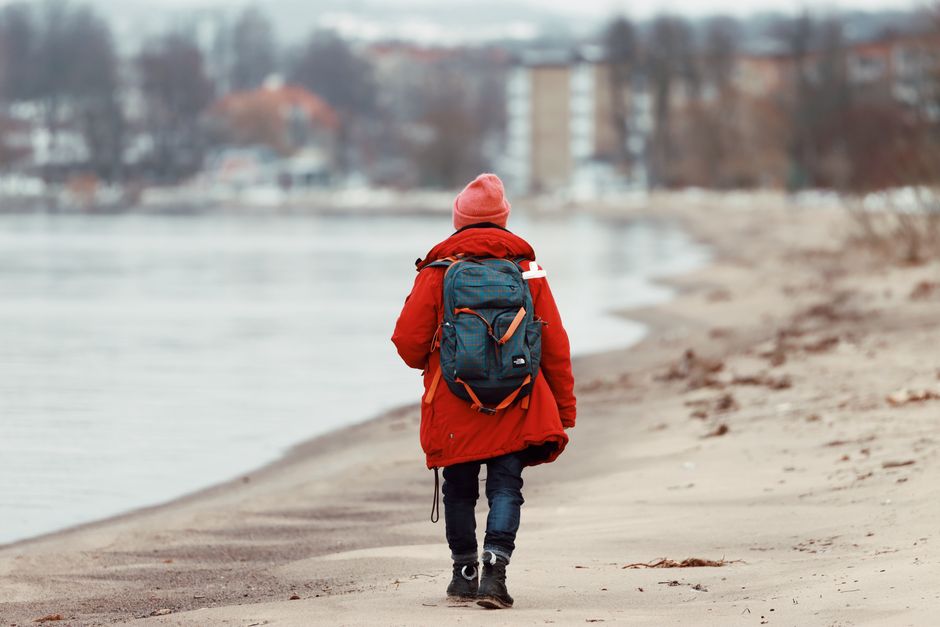
The first time you ride a KSRTC local bus through the Western Ghats alone — no itinerary, no travel companion, just a window seat and the smell of cardamom from someone’s tiffin box — you understand something no motivational poster has ever put clearly. Movement is the point. Not the destination.
Kerala has produced wanderers for centuries. Its geography demands it: mountains to one side, the Arabian Sea to the other, 44 rivers threading between them. The Malayalam literary tradition reflects this — centuries of writing full of figures leaving, returning, or deciding not to. That’s the context missing from most “solo travel quotes” roundups. Here’s what that tradition actually says, and what it means if you’re traveling alone.
Why Kerala Has Always Understood Solitary Movement
Malayalam literature is unusual in how honestly it treats loneliness. It doesn’t romanticize it. O.V. Vijayan’s novel Khasakkinte Itihasam (The Legends of Khasak) opens with a schoolteacher named Ravi leaving Bombay to run a tiny school in a remote village. He’s not on an adventure. He’s retreating. The novel became one of the most important works in Malayalam literature not because Ravi finds himself through travel, but because he doesn’t — and that’s treated as its own kind of truth.
Kumaranasan, Kerala’s most celebrated poet of the early 20th century, wrote consistently about liberation as movement. His narrative poems “Nalini” and “Leela” both involve characters whose freedom exists in transition — not in arriving somewhere safe. The Malayalam word yathra (journey) carries more weight than its English translation suggests. It implies pilgrimage, but also ordinary wandering. Both are treated with equal seriousness in the tradition.
This matters for solo travelers because it resets expectations. The Malayalam tradition doesn’t promise that going alone will fix you, enlighten you, or hand you a story worth telling. It says movement clarifies. Sometimes it clarifies that you were running from something. That’s still clarification.
The Vadakkan Pattukal — the Northern Ballads of Kerala — are packed with warriors and wanderers moving between communities. Aromal Chekavar, the most famous figure in these ballads, travels, trains, fights, and eventually meets a fate that proves his wandering life neither protected him nor wasted him. It simply was. That stoicism is a more useful mental model for solo travel than anything with a sunset background on social media.
Quotes Worth Carrying: A Practical Reference Table
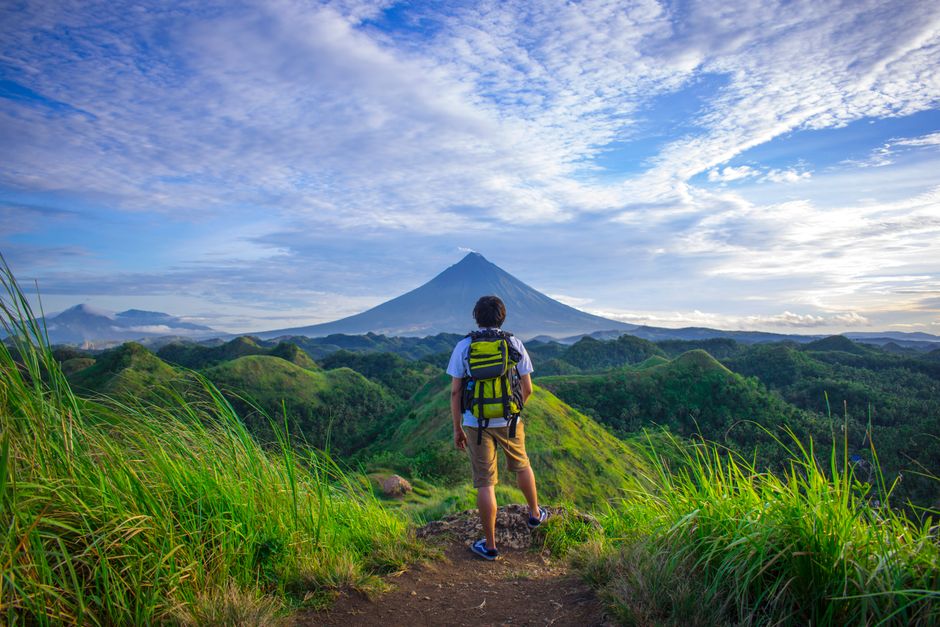
These are drawn from Malayalam literature, folk tradition, and everyday cultural sayings — translated here with their practical application for solo travelers. None of them require posting over a landscape photo. They work better as private checkpoints than public declarations.
| Quote / Saying | Source / Tradition | What It Actually Means for Solo Travel |
|---|---|---|
| “The river doesn’t ask the sea’s permission to flow.” | Malayalam folk tradition | You don’t need consensus to leave. The hesitation people show when you announce a solo trip is their river, not yours. |
| “A stone in its own place thinks it’s the center of the earth.” | Common Malayalam proverb | Travel doesn’t automatically make you humble — but staying in one place guarantees you won’t notice your own blind spots. |
| “He who has not traveled does not know the worth of his home.” | Kerala oral tradition | Not about hating where you’re from. About needing distance to see it clearly — and that requires going alone at least once. |
| “Even the temple elephant must take its own path through the forest.” | Malayalam saying | Even the most guided, protected life requires some solo navigation. No one accompanies you through every threshold. |
| “Yathra is not desertion — it is return by a longer path.” | Interpretation of Kumaranasan’s themes | Solo travel isn’t about escaping relationships or responsibilities. It’s a longer route back to what matters most to you. |
| “The crow that stayed behind called the gone birds foolish.” | Kerala folk saying | People who haven’t traveled solo will have strong opinions about your solo travel plans. Those opinions are about their fear, not your itinerary. |
The One Insight That Changes How You Pack
Malayalam culture’s strongest travel lesson is also its least glamorous: traveling light is a moral position, not just a logistical preference. The fewer obligations you carry into a journey — emotional, material, social — the more present you can be for what the road gives you. That’s it. Pack accordingly.
Four Malayalam Proverbs Translated for the Solo Road
Beyond the literary tradition, everyday Malayalam speech has a handful of sayings that solo travelers keep rediscovering the hard way. Here are four — with honest commentary on what they actually mean at 2am in an unfamiliar guesthouse:
-
“Vazhiyariyathe vazhipokare pokunnathu velicham kondu alla, vilakku kondu.” — roughly, “Those who travel without knowing the road travel not by light but by lantern.”
Translation for solo travel: Researching your route is not the opposite of spontaneity. It’s what makes spontaneity possible. The solo traveler who arrives in Wayanad without knowing it receives heavy rain from June through August finds out the hard way what ten minutes of planning would have told them.
-
“Onnu venam ennu thonnumbol randaayi.” — “When you want one thing, you end up with two.”
Translation for solo travel: Solo travel multiplies your experiences unpredictably. You plan to photograph Varkala’s cliffs. You end up in a three-hour conversation with a local painter that changes how you think about color. Budget time and energy for the unscheduled.
-
“Kadal kandaval koottam kandathu pole allelo?” — “Hasn’t the one who has seen the sea seen something like a crowd?”
Translation for solo travel: Solitude in front of something vast — a coastline, a mountain range, a festival crowd you don’t belong to — is its own form of company. This is what people mean when they say solo travel “doesn’t feel lonely.” It’s not that you’re never alone. It’s that the scale of what you’re watching makes that irrelevant.
-
“Charithrathil padam illatha sthalam nasham.” — “A place without history is a place lost.”
Translation for solo travel: Fort Kochi, Mattancherry, Thrissur — these places reward the solo traveler who slows down enough to actually read them. A fast-moving solo traveler just sees buildings. The Malayalam tradition insists on attention as a prerequisite to experience, not a bonus.
The Quotes That Set Solo Travelers Up to Fail
Most solo travel quotes are written for people who’ve already decided to travel alone and just need permission. They do that job well. They’re terrible at preparing you for what solo travel actually involves.
“Not all those who wander are lost” — Tolkien, not Malayalam, but everywhere online — is a beautiful line that tells you nothing about what to do when your guesthouse in Alleppey has no hot water in December and your phrasebook has let you down spectacularly at the reception desk.
The quotes that genuinely fail solo travelers are the ones that romanticize confusion. “Get lost to find yourself” sounds resonant until you’re actually lost — in Fort Kochi’s older lanes, after dark, with a dying phone. Getting lost is a problem to solve, not a spiritual state to inhabit.
The quotes worth trusting are about attention, not freedom. Kerala’s best travel wisdom is about noticing — noticing the shift in air when you cross from the coastal lowlands into the Ghats near Munnar, noticing the difference between Kottayam’s Syrian Christian architecture and Kozhikode’s Moplah heritage, noticing that the best fish curry you eat will almost certainly come from a place with no English on the sign. The tradition insists on noticing. Most solo travel quote culture skips straight to liberation without doing the noticing first. You only get liberation if you earn it with attention.
Solo Travel in Kerala: What First-Timers Keep Getting Wrong
Is Kerala safe for solo female travelers?
Broadly yes, with specific caveats. Thiruvananthapuram, Kochi, and Kozhikode are urban enough to be navigable with standard urban awareness. Varkala and Kovalam have established solo traveler infrastructure with plenty of other independent travelers around. Remote stretches of the Ghats — deep Wayanad trails, the Agasthyarkoodam trek — require proper preparation and a registered guide. The Kerala Tourism Development Corporation (KTDC) operates verified guesthouses and tour packages that give solo female travelers vetted accommodation without sacrificing independence. Their booking platform at ktdc.com lists properties with verified reviews.
What’s the realistic daily budget for a solo trip?
Budget end: ₹1,500–2,500 per day (roughly $18–30 USD). This covers a basic guesthouse (₹500–800/night in smaller towns like Thrissur or Varkala), KSRTC local bus travel (₹10–50 per trip), and meals at local restaurants. Mid-range: ₹4,000–7,000/day (~$48–85 USD) gets you a heritage homestay, occasional auto-rickshaw, and sit-down meals. A solo houseboat experience in Alleppey on a shared vessel runs ₹2,500–4,000/night — cheaper than most tour operators quote, because they’re quoting private boats.
Which Malayalam phrase matters most for solo travel?
“Eniku ariyilla” — “I don’t know.” Learning to say this clearly, without embarrassment, opens more conversations than any other phrase. Locals who hear a traveler admit ignorance in Malayalam tend to respond with actual help rather than tourist-facing scripted directions. Admission of ignorance is treated as respectful in Kerala’s cultural tradition. Use it freely.
What Solo Travel Actually Teaches You That No Quote Can Preload
The Malayalam tradition’s most honest contribution to solo travel philosophy is also its least quotable: travel teaches you nothing automatically. You have to decide to learn.
The wanderers in Vijayan’s fiction, in Kumaranasan’s poetry, in the Northern Ballads — they move, and some of them grow and some of them don’t. The movement is necessary but not sufficient. What makes the difference is attention sustained over time. Attention to what’s actually in front of you, not to what you planned to feel.
If you’re planning a solo trip to Kerala and want a framework rather than a quote, here’s a concrete one: spend one full day in each place doing nothing you scheduled. Not literally nothing — eat, walk, sit in a tea stall, ride a local bus to its final stop and back. But nothing from your itinerary. Every solo traveler who does this in Kerala comes back with one story that beats everything they planned. That’s been true in Munnar. It’s been true on the Varkala cliff walk. It’s consistently true in the backwaters near Kumarakom.
That’s not a quote. It’s a method. The best things about solo travel in the Malayalam tradition are all methods, not declarations. Go. Pay attention. Come back with more questions than you left with — that’s the whole philosophy distilled.