Is the Mekong Delta worth visiting for the markets?
Want the Mekong Delta to feel like a living river region, not a rushed boat photo stop? The timing, base, and route matter more than adding more towns.
The blunt answer is yes, the Delta is worth visiting, but the floating markets are not an all-day attraction. They are early-morning trading places. Arrive late and the busiest boats have already gone.
What the floating markets actually offer
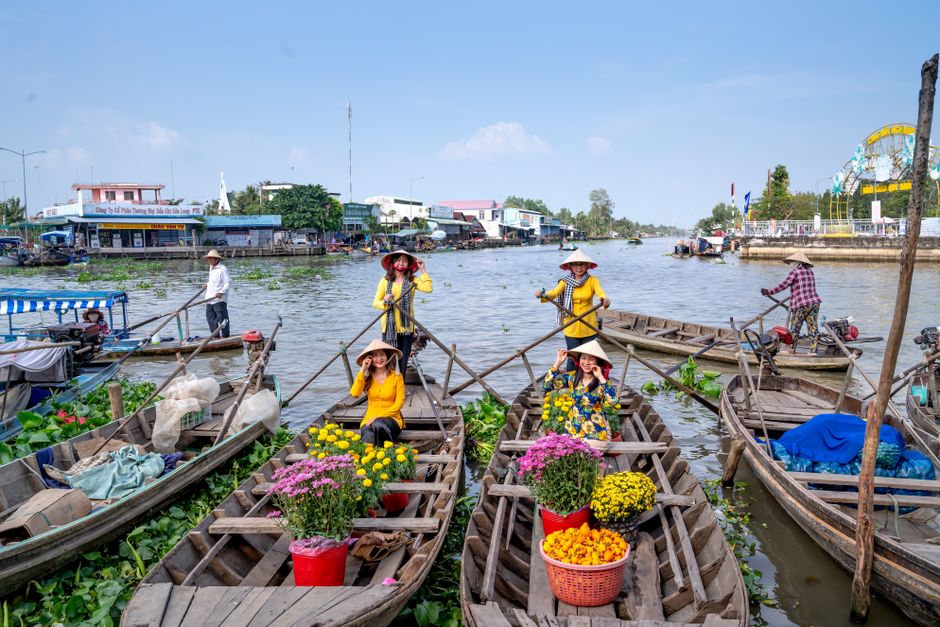
Cai Rang gives the clearest first look at river commerce. Sellers tie produce to tall poles so buyers can spot the cargo from a distance. Boats cluster, engines idle, breakfasts are served, and trading happens quickly. It feels busy because it is useful, not because it was built as a show.
What the river villages add
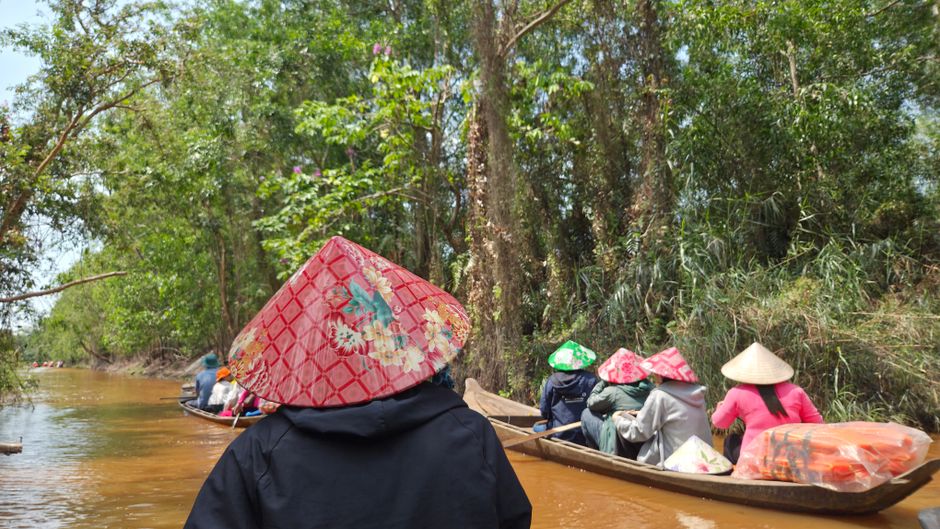
The quieter reward comes after the market: narrow canals, fruit gardens, small bridges, rice fields, and homes facing the water. Those details explain how the region works. A good itinerary leaves time for both the market and the slower landscape instead of treating the Delta as one postcard scene.
What a good first visit looks like
Good planning means arriving early, staying near the chosen market, and leaving the afternoon open from the outset. The river is not a theme-park circuit. Its strongest moments come from small changes in light, traffic, weather, and working boats.
Cai Rang or Phong Dien: which market fits the trip?
Choose the market by the experience wanted, not by the number of photos online. Cai Rang is the practical first choice. Phong Dien suits travelers who care more about a smaller, calmer setting.
Cai Rang rewards curiosity about trade; Phong Dien rewards patience. Neither is a guaranteed parade, and weather or seasonal harvests can change how full the river feels.
Use Cai Rang for scale and access
Arrive before 7 a.m. for the strongest activity. Cai Rang has more boats, more cargo, and a clearer sense of wholesale trade. It is the better pick for a first Delta visit or a single morning in Can Tho.
| Market | Best arrival | Feel | Best for |
|---|---|---|---|
| Cai Rang | 6–7 a.m. | Busy, open, commercial | First visits and short stays |
| Phong Dien | About 7 a.m. | Smaller, quieter, local | Slower mornings and repeat visits |
Use Phong Dien for a gentler morning
Phong Dien is the better choice for travelers who dislike crowded boat clusters. Its trade is smaller in scale, so the market can feel less dramatic, but that is exactly its strength. The mistake is trying to force both markets into one rushed morning. Pick one, then spend the saved time on canals or village roads. A quieter market is not more authentic; it simply has fewer boats and a slower pace.
How many days should a Mekong Delta itinerary take?
One day proves the Delta exists. Two or three days let the place make sense. The best first route uses Can Tho as a base and avoids changing hotels every night.
Build the route around sleep, not ambition. Stay in one place for at least two nights when possible. A market boat before sunrise, a hot midday, and a long transfer all compete for energy. The river rewards a loose schedule because weather and traffic can change the order of stops. A plan with one anchor activity each day leaves room to notice what happens between them.
One day: the minimum workable route
Book an early boat morning, then keep the afternoon flexible. Do not add a distant town after the market; road delays and heat will turn the day into transport.
- Reach the river before sunrise.
- Spend the first hours at one floating market.
- Continue through smaller canals or nearby gardens.
- Use the afternoon for a village walk and an early night.
Two or three days: the better plan
Use day two for rural lanes, a homestay area, or a second river landscape. A third day can connect Can Tho with Ben Tre or another town, but only if the route is planned around road time. Fewer stops create a better trip.
What happens on a floating market morning?
The market is easiest to understand as a working morning with a narrow peak, not as a permanent attraction. The river changes hour by hour, and the most useful details are easy to miss from a large tour boat.
Before sunrise
Leave early enough to be moving before the sky turns bright. The first stretch is often dark, cool, and quiet. Bring a light layer, protect phones from spray, and keep both hands free when stepping between boats. The river can feel calm near the pier, then turn choppy once several engines share the channel. A small boat gives a closer view, but it also moves more with the wake. Sit low, follow the boat operator’s instructions, and do not stand for a photo while the boat is turning.
At the busiest hour
Look for the poles carrying pineapples, pumpkins, or other cargo. They show what a boat sells without repeated shouting. Larger vessels may be supplying smaller sellers, while food boats move between them. This is commerce first and sightseeing second, so avoid blocking a trading boat or touching cargo. Ask before photographing people at close range. Noise, fuel smells, floating litter, and engine wake are part of the real scene; polished travel clips leave those out. Expect movement, not a neat line of stalls. Weather also changes the mood. Rain can reduce visibility, while strong sun makes the open river tiring fast.
After the boats thin out
By mid-morning, the market usually loses its force. That is the right time to move into narrower waterways, visit a garden, or return for breakfast on land. The quieter hours reveal why the Delta matters beyond the market: houses open onto canals, cargo moves by water, and bridges shape daily routes. If the trip ends at the market, the main lesson is missing. Leave room for the ordinary landscape after the spectacle.
What do travelers get wrong about river life?
Is the market open all day?
No. The useful activity is concentrated in the early morning. A late arrival may still find boats, but the trading peak has passed. This is the most common planning mistake on a first visit. Treat any mid-morning visit as a quiet tail, not the main event.
Can a boat trip feel too touristy?
Yes. Large boats, fixed photo stops, and identical routes can flatten the experience. A smaller boat and a clear departure time usually create more room to observe. Still, no boat ride gives a complete view of local life. The best guide explains the route and allows quiet stretches without filling every minute with commentary.
Is a homestay necessary?
No, but one can slow the trip down in the right way. It is useful for travelers who want rural mornings, shared meals, and less time in transit. It is a poor fit for anyone needing hotel-style quiet, easy late arrivals, or a tightly controlled schedule. The point is contact with a place, not a required badge of serious travel.
What should be packed?
Pack light clothing, a rain layer, sun protection, insect repellent, shoes that handle wet paths, and a sealed bag for electronics for the boat. The river is humid, boats get wet, and narrow piers are not forgiving of large luggage.
When should the Mekong Delta be skipped?
Skip the floating-market plan if waking before sunrise is impossible. The market will not wait for a late start, and forcing it into the afternoon produces a thin, disappointing version of the experience. A river trip should fit the day available, not punish it. The same rule applies to tight transfers, heavy rain, and travelers who dislike exposed, moving boats on open water in humid heat.
Skip the market if the schedule is too tight
A single free morning can work, but only when the base is nearby and the route has no fragile connections. Do not combine a distant arrival, a market, several villages, and an evening departure. Heat, boat timing, and road traffic leave little margin. Travelers with limited mobility should also check boarding steps and river conditions before committing to a small boat. If the plan allows no slack, choose a shorter canal outing instead.
Choose the Delta when the details matter
The Mekong Delta earns its place for travelers who want to watch a region function: produce moving by water, homes shaped by canals, and mornings organized around the river. The strongest plan is simple: one market, one reliable base, one slower rural day, and enough space for weather to change the route. That is the Delta in its most honest form.