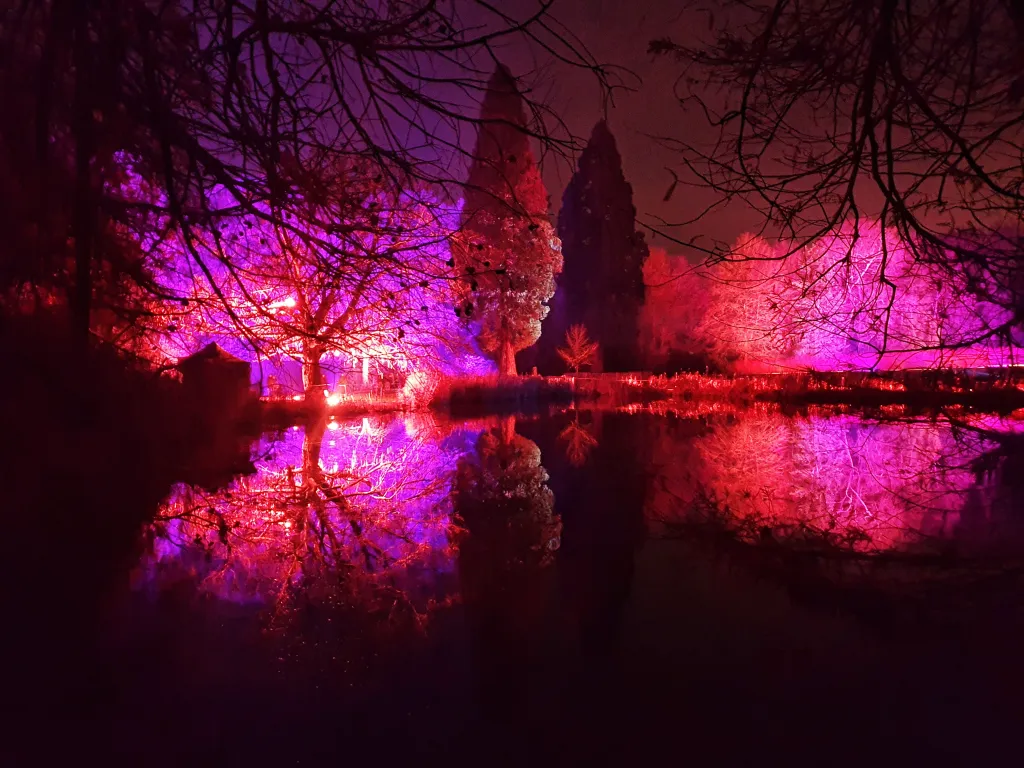
Most people assume all illuminated evening walks deliver the same experience. They don’t — and the gap between a genuinely enchanting Lanterna Magica-style walk and an overpriced string-light trail is wider than ticket prices suggest.
Illuminated walking events through historic gardens, stately home grounds, and city centers have become one of the fastest-growing categories of winter tourism across Europe. Dozens of venues now offer them. Knowing how to evaluate them before you book is worth more than any promotional photograph.
Why Most Illuminated Walk Events Disappoint (And How to Spot Them Before You Pay)
Here’s the misconception that costs visitors the most: the word “magical” in an event title carries no information. It’s marketing copy that appears on everything from genuinely exceptional experiences to glorified garden-center Christmas displays. Evaluating these events on verifiable criteria — not promotional language — separates the ones worth attending from the ones worth avoiding.
Lanterna Magica-quality events share three measurable characteristics: a dedicated walking route of at least 1.5km, original artistic installations rather than stock-library projections repeated from a vendor’s catalogue, and a timed-entry system that controls crowd density. Remove any one of these, and the experience degrades proportionally.
Top European Lanterna Magica-Style Events Compared
| Event | Location | Trail Length | Adult Ticket (2026) | Entry System | Crowd Risk |
|---|---|---|---|---|---|
| Christmas at Kew | London, UK | 1.6km | £19.50–£26 | Timed-entry | Medium |
| Lumina at Blenheim Palace | Oxfordshire, UK | 2km | £22–£28 | Timed-entry | Low–Medium |
| Lyon Fête des Lumières | Lyon, France | City-wide (4–8km) | Free | Open | Very High |
| Amsterdam Light Festival | Amsterdam, Netherlands | 2.5km walk / 3km boat | Free (walk) / €22 (boat) | Open (walk) | High (peak evenings) |
| Glow Eindhoven | Eindhoven, Netherlands | 3.5km | Free | Open | High |
| Festival of Lights Berlin | Berlin, Germany | City-wide (varies) | Free | Open | Medium |
The free events are not automatically inferior. Lyon’s Fête des Lumières features original commissions by internationally recognized light artists at a scale and ambition no ticketed UK garden event approaches. The crowd risk at open-entry events is real — but manageable with the right timing strategy.
How to Read an Event Listing Like an Analyst
Before booking any illuminated walk event, check for these specific data points on the event page:
- Trail length in km or miles — if it’s not stated, assume it’s too short to justify the price
- Timed versus open entry — open-entry paid events frequently overcrowd regardless of route design
- Number of named artistic installations, not total bulb count — “100,000 lights” tells you nothing useful; “17 artist installations across 2km” tells you everything
- Cancellation and weather policy — a non-refundable outdoor ticket in Northern European winter is a financial exposure most buyers don’t read until after a rainy evening
- What’s included versus sold separately on-site — this changes the effective cost comparison between events significantly
How to Plan an Enchanted Evening Walk So It Actually Delivers
Poor planning at these events produces a predictably poor outcome: 45 minutes in a queue, another 20 walking shoulder-to-shoulder with 400 strangers, and leaving without a clear memory of a single installation. This is avoidable with the right preparation sequence.
Pick Your Date on Crowd Data, Not Calendar Convenience
Weekend versus weekday attendance at peak illuminated walk events is not a minor difference — it’s a 40–60% difference in crowd density. For Lumina at Blenheim Palace, a Tuesday or Wednesday slot in the second or third week of the run is measurably less crowded than any Friday or Saturday across the entire season. Availability data on Blenheim’s booking page confirms this: peak-weekend slots sell out 3–4 weeks in advance; midweek slots stay available the week before the date.
For Lyon’s Fête des Lumières — which runs Thursday through Sunday in early December, typically over the weekend closest to December 8th — Thursday night carries the lightest crowds of the entire run. The event draws approximately 3 million total visitors over four nights, which means Saturday evenings near Place des Terreaux and the Fourvière installations can see 800,000 individual visits. The first night of any multi-day run is your most navigable option. Go Sunday if a weekday is impossible — crowd levels thin noticeably from Saturday’s peak on the final night.
Calculate Your Time Budget Before You Go
Christmas at Kew publishes an estimated trail time of 60–75 minutes. Lumina at Blenheim estimates 75–90 minutes. Both figures assume moderate crowd levels and a standard walking pace. Adjust for your group:
- Add 15–20 minutes if you’re bringing a camera and stopping for shots
- Add 10–15 minutes if you’re with children under 8
- Subtract 10 minutes if your group moves briskly and doesn’t linger at installations
The critical planning number is your post-exit buffer: how long between your estimated exit time and your parking meter expiry, your train departure, or your dinner reservation. A minimum 30-minute buffer absorbs the most common planning failure at these events — arriving everywhere else late because the trail ran longer than expected.
Check Terrain Before Choosing Footwear
Blenheim Palace’s Lumina route crosses gravel paths and open grass sections. Kew Gardens’ Christmas at Kew route is mostly paved. Wet December grass at 3–4°C in standard shoes produces a genuinely unpleasant 90-minute walk; ankle-high waterproof boots produce a comfortable one. Most venues publish terrain information in their FAQ sections — read it before the date. Pack a warm mid-layer, a waterproof outer layer, and a portable battery pack if you’re shooting photos. Some heritage venue stalls still operate cash-only; check the event FAQ in advance so you’re not caught short.
What Your Ticket Actually Covers: Key Questions Answered
Does admission include food and drinks on-site?
No. At virtually every ticketed illuminated walk event, standard admission covers entry to the walking route for your designated time slot only. Hot drinks, food, audio guides, and live performance areas are all priced separately on-site, at venue-captive-audience pricing. At Christmas at Kew, mulled wine costs £6–£7 per cup. Hot chocolate at Blenheim Lumina runs in the same range. A family of four adding two rounds of drinks and a snack typically spends an additional £35–£45 beyond the headline ticket cost. Factor this into your budget before comparing events on ticket price alone — an event at £28 adult with good on-site F&B included can be cheaper in total than an event at £19 where you’ll spend another £12 per person at the stands.
What happens if it rains — am I protected?
Almost certainly not. Christmas at Kew operates in all weather except official severe weather alerts, and the organizer refunds only if the event itself is cancelled — not if rain makes the experience unpleasant for you personally. Blenheim Lumina uses equivalent language. Some smaller regional events add “no refunds under any circumstances” clauses with no weather exceptions at all. Read the cancellation policy before paying, not after. The Amsterdam Light Festival walking route and Lyon’s Fête des Lumières avoid this problem entirely by being free — a consistently underrated advantage of the major free events over their paid equivalents.
Are third-party ticket platforms the same price as buying direct?
Often not. Reseller platforms frequently charge 15–20% above face value for illuminated walk events and add their own non-refundable layer on top of the venue’s existing policy. Always check the venue’s official website first. The Kew Gardens direct booking page, Blenheim Palace’s own site, and the Amsterdam Light Festival boat tour operators — Lovers Canal Cruises and Blue Boat Company are the main authorized operators — all sell at base price. The only reason to use a reseller is if the event is sold out on the official channel, and even then, verify authorization before purchasing.
Five Mistakes That Reliably Ruin the Experience
- Arriving at the very start of your timed-entry slot. Timed-entry windows run 30 minutes long. Showing up in the first 10 minutes puts you into the densest crowd wave entering the route. Arriving 20 minutes into your window places you into a noticeably lighter section of the trail almost immediately. This single timing adjustment changes the feel of the entire walk.
- Choosing a peak-Saturday slot when weekday alternatives exist. At Christmas at Kew and Blenheim Lumina, December Saturday slots sell out 3–4 weeks in advance precisely because they draw the heaviest crowds. Selecting them when Tuesday or Wednesday options remain available is a planning error that costs you the experience quality you paid for.
- Underestimating cold exposure duration. 90 minutes outdoors at 4°C with any wind is significantly colder than that number implies in isolation. These events don’t cancel for temperature. Dress for standing still at 4°C, not walking — because at the most popular installations, you will be standing still for extended periods while other visitors take photographs.
- Going to Lyon’s Fête des Lumières without a navigation plan. The Fête is the most artistically ambitious light event in Europe and entirely free, but 800,000 people on a Saturday night in a mid-size French city creates genuine crowd management challenges near the marquee installations. Arriving after 9:30pm and prioritizing the Croix-Rousse district’s installations over the heavily promoted Presqu’île centerpieces reduces crowd exposure substantially and often delivers better photography conditions.
- Expecting a narrative or guided experience. Lanterna Magica-style walks are ambient, not sequential. There’s no story arc, no commentary unless you purchase an audio guide separately, and no designed emotional climax at the route’s end. Visitors who arrive expecting structured storytelling or theatrical performance consistently leave disappointed. Visitors who arrive expecting a slow, atmospheric, visual walk consistently leave satisfied. The event itself is identical in both cases.
When to Skip the Lanterna Magica Format Entirely
These events are genuinely not for everyone — and the most useful outcome from reading this is occasionally concluding that you shouldn’t book.
For families with children aged 5–12 who want a managed outdoor evening event, the timed-entry heritage estate format is the right call. Lumina at Blenheim Palace and Christmas at Kew both offer defined 2km routes, controlled crowd levels, and well-lit paths that make after-dark logistics with young children manageable. These are the correct choice for that audience, and the £22–£28 adult ticket price is comparable to a cinema visit for the quality of the setting.
For visitors prioritizing artistic ambition over logistical comfort, Lyon’s Fête des Lumières is the clear recommendation. The scale and curatorial quality of the commissions there — including large-scale projections across UNESCO World Heritage facades and original installations by internationally recognized light artists — operate at a different level from any ticketed UK garden event. The crowd challenge is the direct tradeoff, and it’s a known one.
Skip illuminated walks entirely if: your only available date is a peak-Saturday open-entry event you can’t navigate around, the weather forecast shows heavy rain against a non-refundable ticket (check before buying, not after), or your group’s genuine interest in slow-paced visual exploration is low. Forcing an ambient atmospheric walk on people who want high-stimulation entertainment is a reliable way to produce a bad evening for everyone involved.
One specific recommendation for first-time Lanterna Magica visitors: the Amsterdam Light Festival walking route. It’s free, requires no booking, covers 2.5km along canal-lit streets, and runs November through January. It gives you an accurate read on whether this type of experience suits you before you commit to any paid ticketed event.
The One Variable That Actually Determines Your Experience
Visitor satisfaction at Lanterna Magica-style walks correlates almost entirely with pre-visit expectations, not event quality. Post-event survey patterns at Kew Gardens, TripAdvisor review distributions for Blenheim Lumina, and aggregated feedback from Amsterdam Light Festival attendees all show the same split: visitors who expected dramatic spectacle rated these events 3 out of 5; visitors who expected a quiet, beautiful, slow walk rated them 5 out of 5. The installations didn’t change. The expectations did.
Matching your expectations to what these events actually deliver — unhurried, atmospheric, visually rich, and deliberately slow — is the only variable you fully control before the gate opens, and it determines everything that follows.