Arriving in Dresden with only forty-eight hours creates an easy mistake: treating the city and Saxon Switzerland as two separate day trips. That wastes time on transfers and leaves both places feeling rushed. The stronger plan is simple: spend the first day on Dresden’s compact historic center, then give the second day to the Elbe Sandstone Mountains around Bastei and Kurort Rathen.
This route works for travelers who want major sights without turning the trip into a race. It includes practical walking distances, the most efficient order, a gentler alternative for difficult trails, and the checks that matter before leaving Dresden.
How should two days be divided between Dresden and Saxon Switzerland?
The best split is one full city day followed by one full landscape day. Dresden rewards slow walking because many of its strongest sights sit within the historic center. Saxon Switzerland needs more planning: a train, an Elbe crossing, steep paths, viewpoints and enough daylight to return without rushing.
| Time | Day one: Dresden | Day two: Saxon Switzerland |
|---|---|---|
| 08:00–09:30 | Historic center, Neumarkt and the Frauenkirche exterior | Leave Dresden by regional train and travel toward Rathen |
| 09:30–12:30 | Brühl’s Terrace, the riverfront and the Fürstenzug mural | Cross the Elbe by ferry and climb toward the Bastei |
| 12:30–15:00 | One major museum or palace interior, with lunch nearby | Bastei Bridge, viewpoints and the surrounding rock formations |
| 15:00–18:00 | Zwinger courtyard, Theaterplatz and a relaxed café stop | Choose the Schwedenlöcher loop or a shorter return to Rathen |
| Evening | River walk or dinner in the old town | Return to Dresden before the evening connection becomes stressful |
Why the city-first order works
Dresden is easier to enjoy after arrival because the central sights remain close together and do not depend on daylight in the same way as a forest hike. Starting with the city also protects the mountain day from a late check-in, delayed luggage or a slow morning after travel. The historic center can be covered on foot, while the countryside needs a firm departure time.
When the order should be reversed
Reverse the plan if the clearest weather is forecast for the first morning or if the second day ends with an early departure. Bastei is a viewpoint destination, so cloud, rain and strong wind can change the experience quickly. A clear morning gives better views across the Elbe valley and makes the steep sections more comfortable.
Day one in Dresden: a compact route through the historic center
Dresden’s old center is small enough to cross on foot, but large enough to punish a checklist approach. Start at Neumarkt and move outward in a loose loop rather than zigzagging between isolated attractions. This keeps the day flexible when a church service, museum queue or sudden rain changes the timing.
Start at Neumarkt and the Frauenkirche
Neumarkt is the natural opening point because it shows how much of Dresden was rebuilt around the historic center. The Frauenkirche dominates the square, while the surrounding streets lead directly toward the river and the palace district. Spend time looking at the stonework and the changing colors of the square instead of treating it as a quick photo stop.
From here, walk toward the Fürstenzug, the long outdoor mural made from porcelain tiles. It gives a compact introduction to Saxony’s rulers and connects the modern square with the older royal city. The route is short, but the mural deserves a slower look than most visitors give it.
Follow the river to Brühl’s Terrace
Continue to Brühl’s Terrace, where the elevated promenade opens over the Elbe. This is one of the best places to understand Dresden’s layout: the historic center sits behind the terrace, while the river creates a wide break before the newer districts. The view is especially useful early in the day, before the promenade fills with groups.
Do not spend the entire afternoon collecting interiors. Choose one substantial museum or palace visit, then return outside for Theaterplatz and the Zwinger courtyard. The balance matters. Dresden’s architecture makes more sense when the grand façades, river edge and public squares are seen together.
Use the evening for atmosphere, not another checklist
After the main sights, leave room for an unplanned river walk or a second pass through the old town. A two-day trip becomes tiring when every hour contains a timed entry. Keep the evening light because the next day begins with a transport connection and a hike that includes stairs, uneven surfaces and exposed viewpoints.
Day two: the Bastei, Rathen and the right walking loop
The classic Saxon Switzerland day begins with the journey to Kurort Rathen. From Dresden, the regional train follows the Elbe toward the national park area, and the final approach to the village includes a short ferry crossing. Services often run at regular intervals, but the exact timetable changes, so check the departure information on the morning of travel.
The classic Rathen-to-Bastei route
- Leave Dresden early enough to reach Rathen before the busiest part of the morning.
- Cross the Elbe by ferry and follow the marked route toward the Bastei.
- Climb steadily through the forest. The Basteiweg is not long by mountain standards, but it is steep in places.
- Allow time at the main viewpoint, the Bastei Bridge and the smaller overlooks near the rock formations.
- Continue toward the Schwedenlöcher only if the path is open and the group is comfortable with many steps.
- Return toward Rathen, leaving a generous buffer for the ferry and the train back to Dresden.
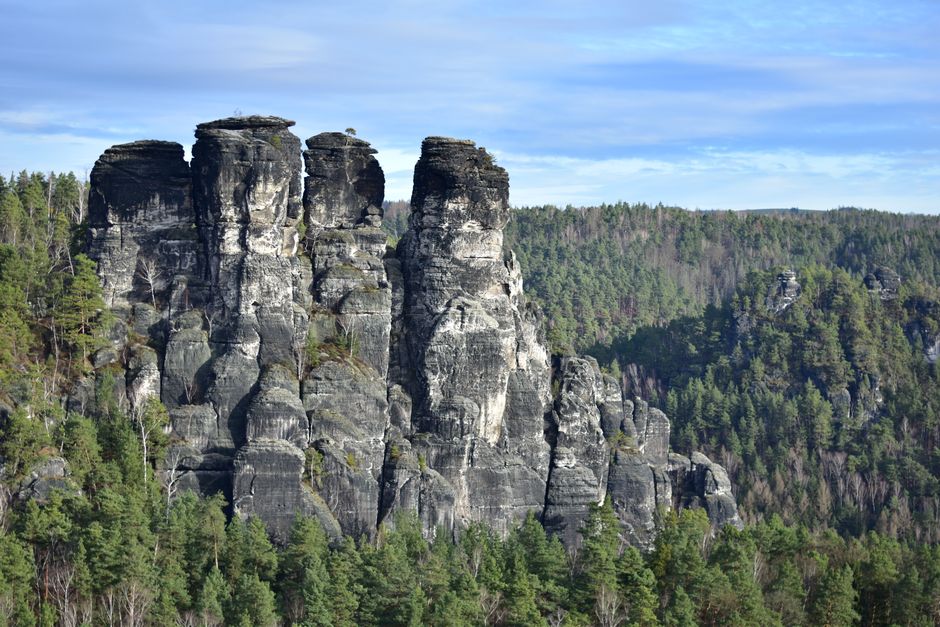
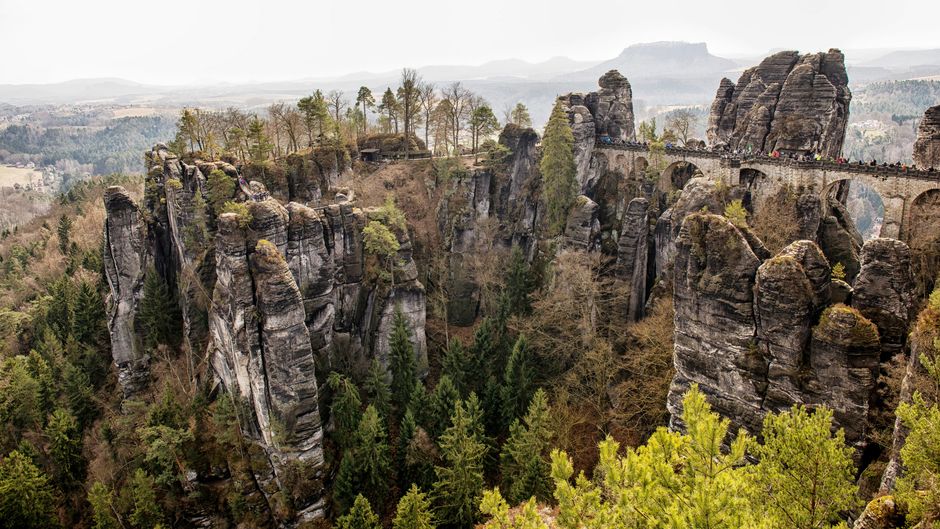
The Bastei Bridge stretches about 76.5 metres through the sandstone rocks, and the cliffs fall roughly 194 metres toward the Elbe. Those measurements explain the character of the place better than the word spectacular: the views are wide, but the terrain is also exposed and sharply layered.
The shorter option for a less strenuous day
Travel to the upper access area near the Bastei and use the short approach to the main viewpoint. The final walk can take roughly 10 to 15 minutes from the nearby parking and bus area, although the surrounding viewpoints still involve uneven ground. This option sacrifices the quieter forest approach from Rathen but keeps the main panorama within reach.
For a middle ground, walk from Rathen to the Bastei and return by the same route instead of adding the Schwedenlöcher. That creates a focused outing of roughly four to five hours, depending on stops. The full loop can take longer, especially when wet steps, crowds or trail diversions slow progress.
What to carry and what to leave behind
Carry water, food for the trail and a layer that handles changing wind on the rocks. Wear shoes with firm grip rather than smooth soles. Avoid carrying a large bag, because narrow paths and crowded viewpoints make it awkward. The national park requires visitors to stay on marked paths, take rubbish away and respect barriers around unstable terrain.
The clear verdict: keep Dresden as the base and make the countryside a full day
For a two-day visit, sleeping in Dresden and giving Saxon Switzerland its own complete day is the strongest plan. The city provides dense culture and easy evening flexibility; the national park needs daylight, transport patience and enough time to stop at viewpoints. Splitting both days between city streets and mountain paths creates more logistics without adding much experience.
When to sleep closer to the national park instead
Choose a night near Rathen or another Elbe Valley base when hiking is the main purpose, when the itinerary includes a longer route, or when the second morning begins in the mountains. That choice reduces the transport burden and makes an early start easier. It also means less time in Dresden, so it suits landscape-focused trips rather than balanced city breaks.
What not to force into forty-eight hours
Do not add distant castles, a complete long-distance trail or several separate viewpoints just because they appear close on a map. The sandstone landscape has steep vertical changes that maps hide. Keep the first day architectural and the second day outdoors, then leave room for weather and trail information.
That approach resolves the familiar arrival dilemma: instead of rushing from Dresden’s squares to a mountain viewpoint and remembering only transport connections, the trip has a clear rhythm. The first day belongs to the city. The second follows the Elbe into the rocks, with enough time to look around before returning.