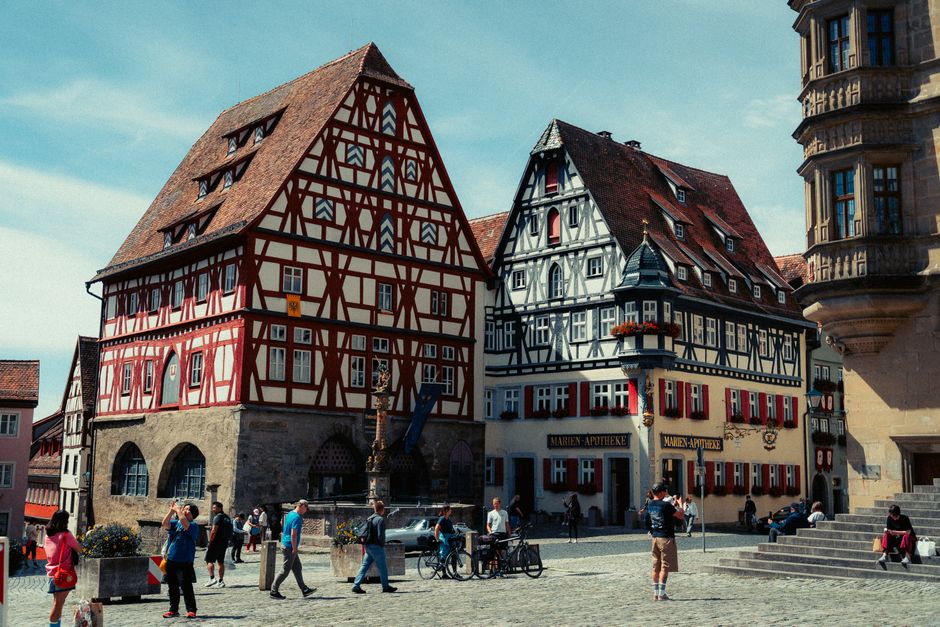
The Romantic Road crosses Bavaria from Würzburg to Füssen, linking vineyards, medieval walls, river valleys, and Alpine foothills. The route looks simple on a map, but the best experience comes from choosing a sensible pace rather than stopping everywhere.
What Is the Romantic Road and How Long Does It Take?
The route in practical terms
The Romantic Road is a scenic travel route of roughly 460 kilometres through southern Germany. Its northern gateway is Würzburg, while Füssen and the nearby castles form the southern end. The route passes through a chain of historic towns, but it is not one uninterrupted country lane. Some sections use ordinary regional roads, and larger towns sit outside the most scenic stretches.
A direct drive could take most of a day, yet that approach misses the reason to travel here. Allow at least three full days for a fast overview, four or five days for a balanced trip, and a week for slower visits, short walks, and unplanned stops. The distance between towns can look modest, but parking, walking through old centres, and waiting for castle transport all add time.
The best pace for most visitors
Four to five days is the strongest choice for a first visit. It leaves room for Würzburg, the medieval towns around Rothenburg, the southern villages, and Füssen without turning each day into a checklist. A shorter trip should focus on one region rather than attempting the entire route. A longer trip works well for travellers who want countryside walks, museums, local festivals, or extra nights in smaller towns.
Where Should a Romantic Road Road Trip Start?
North to south
Starting in Würzburg gives the journey a natural progression. The route begins among vineyards and baroque architecture, moves through walled medieval towns, then opens into farmland and Alpine scenery. This direction also builds toward the most dramatic southern finish near Füssen.
North-to-south travel is the clearest option for a first itinerary, especially when the final day includes a castle visit. It creates a strong change of scenery instead of repeating similar old-town views.
South to north
Starting in Füssen works better for travellers who want to place the castles first or connect the road trip with time in the Alps. The northern towns can then provide a quieter historical ending. The main drawback is that the route may feel less dramatic after the mountain scenery, so the final days require more interest in architecture, food, and local history.
How to Plan a Three-Day Romantic Road Itinerary
The plan below keeps the driving manageable while protecting time for walking.
| Day | Route | Suggested focus | Approximate driving |
|---|---|---|---|
| 1 | Würzburg to Rothenburg ob der Tauber | Residence Palace, vineyard views, old-town walls | About 70 kilometres |
| 2 | Rothenburg to Nördlingen and Dinkelsbühl | Medieval streets, town walls, evening walk | About 115 kilometres |
| 3 | Dinkelsbühl to Wieskirche and Füssen | Rural scenery, pilgrimage church, Alpine foothills | About 210 kilometres |
What this schedule gets right
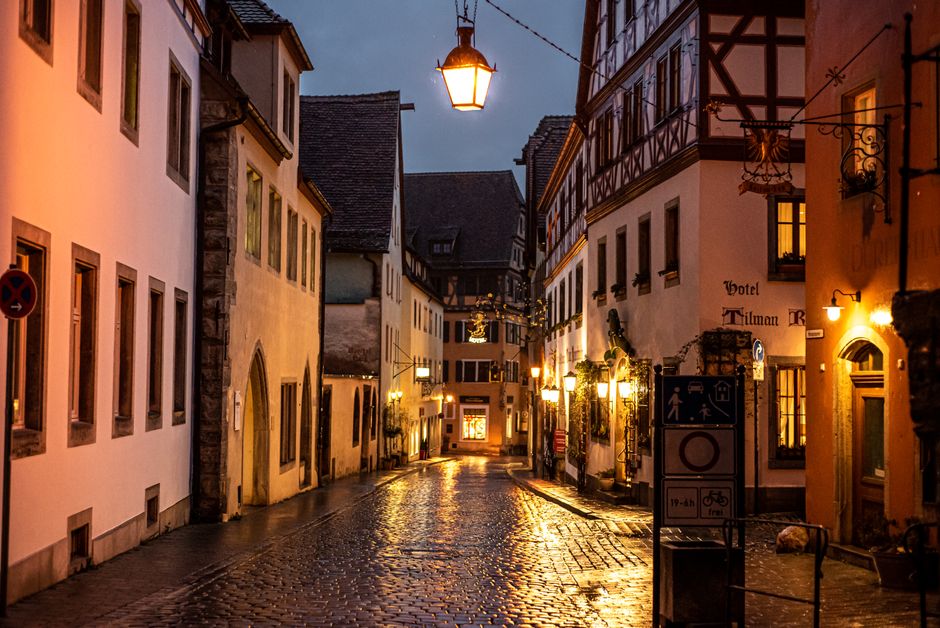
Day one gives Würzburg enough time for a major cultural stop before the route becomes more rural. Rothenburg deserves an overnight stay because its streets are calmer in the early morning and after day visitors leave. Day two combines two towns with different visual identities: Nördlingen has a compact centre enclosed by a complete wall, while Dinkelsbühl is known for colourful façades and a less monumental feel.
Where the plan becomes demanding
The final day covers the longest distance. The stop at Wieskirche should be short and respectful, since it is an active place of worship rather than a normal sightseeing attraction. If the southern drive feels too compressed, remove Nördlingen or skip Würzburg and begin closer to the centre of the route. The best three-day version is the one that preserves two unhurried evenings.
What Is the Best Five-Day Romantic Road Itinerary?
A five-day itinerary is the best overall format because it separates the historic north from the Alpine south. It also gives the smaller towns enough time to feel like places rather than photo stops.
- Day one: Würzburg. Explore the Residence, walk along the Main River, and allow time for the vineyard-covered hills outside the centre. Stay in or near Würzburg so the first morning does not begin with a long transfer.
- Day two: Würzburg to Rothenburg ob der Tauber. Add Weikersheim or Bad Mergentheim if opening hours and energy allow. Arrive in Rothenburg before evening, then walk the wall and central lanes after the busiest period.
- Day three: Rothenburg to Nördlingen. Take the smaller roads where practical, but do not treat every marked village as a required stop. Spend the afternoon inside Nördlingen’s historic centre and walk part of the wall.
- Day four: Nördlingen to Augsburg or the southern countryside. Augsburg adds urban history and stronger transport links. Travellers who prefer quiet scenery can stay farther south and use the day for short walks, farm landscapes, and smaller communities.
- Day five: Wieskirche, Füssen, and the castles. Reserve a timed castle visit when required, arrive early enough to handle parking and uphill walking, and keep the evening free for Füssen’s old town.
This plan avoids the common mistake of placing every famous town on the same day. It also creates a useful buffer: if rain affects a walk or a museum is closed, the trip does not collapse.
Which Romantic Road Towns Deserve Priority?
For medieval atmosphere
Rothenburg ob der Tauber is the clearest priority for travellers who want fortified walls, timber-framed buildings, and a highly preserved historic centre. It is also the busiest stop, so an overnight stay makes a larger difference here than in many other towns. Dinkelsbühl is the better choice for a gentler atmosphere, with a compact centre that rewards slow wandering.
For unusual history
Nördlingen stands out because the old town follows the circular shape of a meteorite crater, although the landscape is easier to appreciate from surrounding viewpoints than from inside the streets. Harburg offers a castle setting and a smaller-scale visit. Augsburg suits travellers who want Roman history, grand civic buildings, and more restaurant choice than the rural towns provide.
For landscapes and churches
The southern section is strongest for open views, pasture, and distant mountains. The Wieskirche is the major cultural stop, while Füssen works as the best base for the final castle area. Do not judge the route only by its postcard towns; the spaces between them are part of the experience, especially in the south where farms and church towers appear across wide fields.
What Driving and Parking Problems Should You Expect?
Is a car necessary?
A car offers the easiest access to the smaller towns and countryside, but the entire route does not require one. Public transport works well between larger centres such as Würzburg, Augsburg, and Füssen, while connections to smaller villages can be less frequent. A hybrid plan can work: use trains for the main cities and rent a car for the rural middle section.
How should each driving day be managed?
Start early when visiting Rothenburg, the castles, or any town known for coach groups. Check local parking signs before entering an old centre; historic gates often lead to narrow streets, restricted zones, or pedestrian areas. Keep luggage out of view, carry comfortable walking shoes, and allow extra time for finding a space outside the walls.
Navigation apps may choose a faster motorway route and quietly bypass the scenic road, so compare the suggested route with a map before setting off.
What Are the Most Common Romantic Road Mistakes?
Is it a mistake to visit every town?
Yes. Trying to stop at every named location produces rushed walks and repeated medieval façades. Select two or three major towns, then leave space for one small village, a viewpoint, or a countryside break. The route is more rewarding when the schedule has room for weather, traffic, and curiosity.
Should the castles be treated as a quick final stop?
No. The castle area requires more planning than many visitors expect. Timed entry, uphill routes, shuttle arrangements, and crowded viewpoints can occupy several hours. Treat Füssen and the castles as a separate destination rather than a decorative endpoint.
What is the clearest final verdict?
For a first trip, choose five days, travel north to south, sleep in Rothenburg, and keep the southern castle day flexible. A three-day version still works when the route is limited to a few highlights, while a seven-day version suits travellers who value walking and local events over constant movement. That approach turns the Romantic Road from a long list of stops into a coherent journey: vineyards near Würzburg, fortified towns in the centre, open farmland beyond them, and the Alps waiting at the finish.