Riga rewards travelers who connect its grand boulevards with its everyday food culture. A well-planned route can cover both in one day without turning the visit into a rushed checklist.
How to fit Riga’s Art Nouveau streets and Central Market into one day
The most efficient plan starts at Central Market in the morning and ends in the Art Nouveau district later in the day. The route also moves from the edge of the Old Town toward the quieter northern streets, so the day gradually becomes less crowded.
| Time | Area | What to do |
|---|---|---|
| 08:30–10:30 | Central Market | Explore the former airship hangars, food halls and surrounding stalls |
| 10:30–11:00 | Canal and Old Town edge | Walk north through the city centre and pause by the canal |
| 11:00–12:30 | Esplanade and boulevard district | Walk along Kalpaka bulvāris and Elizabetes iela |
| 12:30–13:30 | City centre | Take a relaxed lunch break |
| 13:30–15:30 | Art Nouveau district | Visit Alberta iela and nearby streets |
| 15:30 onward | Quiet central streets | Choose a museum, café or canal-side walk |
The walking distance between the market and Alberta iela is manageable, but the full day involves standing on hard pavements and stopping often. Comfortable shoes matter more than speed. Public transport or a short taxi ride can shorten the middle section if rain, limited mobility or cold weather changes the plan.
The clearest verdict: visit the market early and save the grand façades for later
The Art Nouveau district is the stronger afternoon stop because its value comes from careful looking rather than a single scheduled event. This split gives the day a useful contrast: one part is sensory and social, the other is visual and architectural.
Avoid treating both areas as quick photo stops. The market needs time to understand its separate halls and changing stalls, while the Art Nouveau streets reward slow attention to doorways, balconies, mosaics and sculpted faces. The most satisfying itinerary is therefore not the one with the most locations. It is the one that gives each area the right kind of time.
What should visitors expect at Central Market?
How should the market be explored?
Enter slowly and let the layout guide the visit. Start with one hall, notice how products are grouped, then move outside before returning to another section. Carry a small bag, keep valuables secure in crowded areas and ask before photographing individual sellers. A few basic Latvian words can make transactions warmer, but clear gestures and patience usually work.
What common mistake makes the visit disappointing?
Arriving close to closing time is the main mistake. Another mistake is expecting every stall to accept the same payment method. Keeping a practical payment option available and checking opening information before departure reduces avoidable stress, especially on Sundays or public holidays when schedules can differ.
Five walking details that make the Art Nouveau district easier to read
- Begin with Alberta iela. This street offers the most concentrated introduction to Riga’s Art Nouveau architecture. Look upward before moving on; many of the strongest details sit above eye level.
- Compare neighboring façades. The district is more interesting when buildings are viewed together. Notice differences in symmetry, ornament, color, balconies and entrance design rather than photographing one façade in isolation.
- Walk beyond the famous street. Elizabetes iela, Strelnieku iela and nearby boulevards add variety. The area becomes less crowded after the best-known façades, but the architecture remains strong.
- Use daylight carefully. Morning and afternoon light reveal different textures. A gray day can actually help because soft light reduces harsh shadows on pale stone and plaster.
- Leave room for interiors. Some buildings house museums, offices or private residences. Do not enter restricted spaces or lean against doors for photographs.
The district is not a single enclosed attraction. It is a residential neighborhood with working streets, parked cars and ordinary city noise. That matters because the experience depends on respectful movement. Stand to one side when taking photographs, keep voices low near entrances and avoid blocking residents. The strongest route combines two or three famous façades with several less advertised streets, giving the architecture room to feel like part of Riga rather than a display assembled for visitors.
Why this route works better than a rushed Old Town-only visit
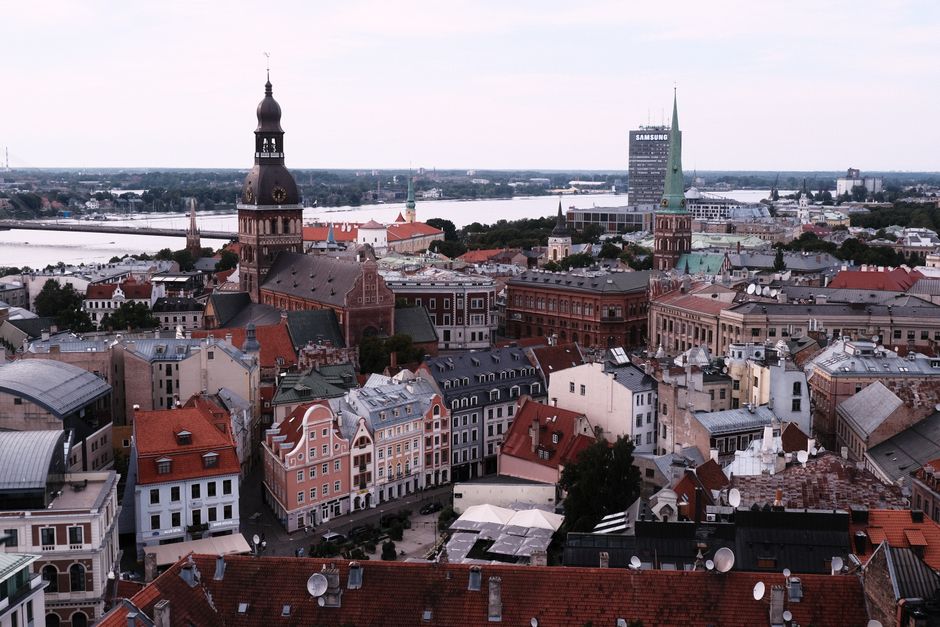
The strongest choice for a first Riga visit is to pair the market with the Art Nouveau district instead of spending the whole day inside the Old Town. The Old Town is visually important, but it can give an incomplete picture of the city if treated as the entire destination. Central Market shows daily commerce, while the northern centre shows Riga’s early twentieth-century ambition and design culture. Together, they explain more than either area alone.
That contrast also helps travelers judge what suits the rest of the trip. Visitors who prefer food, people-watching and informal discoveries may want extra time around the market and canal. Those drawn to architecture should extend the northern walk and include a museum visit. Travelers who dislike long urban walks should split the route across two mornings instead of forcing the entire plan into one day.
The trade-off is simple: the combined route covers more ground than an Old Town circuit and offers fewer postcard-style medieval lanes. In return, it provides a broader view of Riga’s identity. The route is especially useful for a short stay because it joins a major landmark, a local institution and a distinctive architectural neighborhood without requiring a day trip.
When to change the itinerary, and what can go wrong
Weather, mobility and opening schedules can change the best version of this plan. Riga’s pavements may feel uneven, rain can make long outdoor walks unpleasant, and winter daylight can narrow the comfortable sightseeing window. A reliable itinerary needs a clear fallback rather than blind loyalty to a route.
If rain arrives
Keep the market as the main stop, shorten the architectural walk and choose an indoor museum or café break between streets. Heavy rain makes façade photography less enjoyable and can turn the canal route into wasted time. Light rain is manageable with waterproof shoes and a compact route focused on the closest streets.
If the market is closed or quiet
Use the surrounding city centre, canal paths and food-focused cafés as substitutes, then move to the Art Nouveau district earlier. A closed market does not ruin the day, but it does remove the strongest morning anchor. Check local schedules before setting out, especially around public holidays.
If walking is difficult
Divide the visit into two shorter outings. Reach the Art Nouveau district by public transport, focus on Alberta iela and nearby façades, then visit Central Market on a separate morning. Trying to cover every street creates fatigue without adding much understanding. The practical priority is a comfortable pace, clear sightlines and enough time to stop.
Riga is easiest to appreciate when the itinerary leaves gaps. The market supplies movement and flavor; the Art Nouveau streets supply detail and scale. Give each area the time it needs, adjust the route to the weather, and the city’s contrasts become the main attraction rather than a problem to solve.