Is Interlaken worth visiting?
The short verdict
Interlaken is worth visiting as a base, not as the whole trip. The town sits between Lake Thun and Lake Brienz, with fast rail connections into the Jungfrau Region. Its real advantage is access. Within roughly an hour, travelers can reach high mountain viewpoints, waterfall valleys, alpine villages and long hiking routes.
Interlaken itself is compact and busy. The central streets have hotels, restaurants, tour offices and large visitor crowds, especially in summer. That makes the town convenient but not especially peaceful. The best scenery lies beyond the center, so a trip built around Interlaken alone will feel incomplete.
What the region actually offers
The Jungfrau Region works because it gives travelers several different landscapes in a small area. Lauterbrunnen has a steep valley and tall waterfalls. Grindelwald faces broad mountain walls and open meadows. Mürren sits above the valley with dramatic views toward the Schilthorn. Wengen offers a car-free village setting below the Jungfrau massif. Interlaken provides the easiest transport hub between them.
The area also rewards flexible planning. A clear morning may be perfect for a high viewpoint, while cloud and rain can make a valley walk or museum visit the smarter choice. The strongest itinerary treats Interlaken as a launch point and leaves room to change the order of activities.
How many days are needed in the Jungfrau Region?
A workable three-day plan
Three full days cover the main contrasts without turning every morning into a transport race. The first day should stay close to the lakes and town. The second should focus on one high mountain route. The third should explore a valley or village at a slower pace.
| Day | Main area | Best use of the day |
|---|---|---|
| 1 | Interlaken and Lake Thun or Lake Brienz | Arrival, lakeside walking and a relaxed boat or rail outing |
| 2 | Jungfraujoch or First | Choose one high-altitude viewpoint and allow time for weather delays |
| 3 | Lauterbrunnen, Wengen or Mürren | Waterfalls, village paths and a longer scenic walk |
When four or five days make sense
Four days allow a separate day for Lauterbrunnen and another for Grindelwald or Mürren. Five days make space for a bad-weather backup, which matters in the mountains. High routes can disappear into cloud even when the valley looks bright, and lifts or mountain railways can pause during storms.
A longer stay should not mean adding distant destinations just to fill the calendar. Repeating a favorite valley in different weather often produces a better trip than collecting rushed viewpoints.
Which mountain destination should be chosen?
Pick the viewpoint that matches the day
- Choose Jungfraujoch for glaciers, snow at high elevation and a major alpine landmark. The summit station sits at 3,454 meters, so cold, thin air and fast weather changes are normal even in summer.
- Choose First for active outdoor scenery, cliffside paths and easier access to walking routes around Grindelwald. It suits travelers who want mountain views without spending the entire day inside transport.
- Choose Schilthorn for a high panoramic viewpoint facing the Eiger, Mönch and Jungfrau. At about 2,970 meters, it delivers a strong summit experience, but cloud can erase the view quickly.
- Choose Harder Kulm for a short excursion from Interlaken. The viewpoint rises to about 1,322 meters and works well when only half a day remains.
The clear-day rule
Use the highest destination on the clearest forecast day. Mountain visibility matters more than ticking off a name.
For most first-time visitors, Jungfraujoch is the strongest choice for a one-time high-altitude experience, while First is the better choice for walking and open-air time. Harder Kulm wins when convenience matters most.
What should be done when the weather turns?
Cloud is not the same as a ruined day
Mountain weather changes by elevation. A gray forecast for Interlaken does not prove that every summit is hidden, and blue sky beside the lakes does not guarantee a clear view above 2,000 meters. Check conditions for the exact destination, then make the decision close to departure.
If high clouds cover the peaks, stay lower. Walk beside Lake Thun, explore the streets around Unterseen, visit the waterfalls near Lauterbrunnen or take a valley train toward Grindelwald. These places still provide scenery when the summit panorama disappears. Rain also makes waterfalls more forceful, although trails can become slippery.
A practical bad-weather sequence
Start with a short local walk rather than committing to a full mountain excursion. If the weather improves, move higher later. If it worsens, switch to a lakeside route, indoor attraction or long lunch in a village. Keep one flexible day in the schedule so a canceled lift or poor visibility does not destroy the entire trip.
Heavy rain, thunderstorms and strong wind require more caution. Avoid exposed ridges, cliff paths and narrow trails during unstable weather. Cable cars and mountain railways may stop for safety reasons, leaving travelers with fewer options than expected. The right response is simple: descend early, stay on marked paths and treat the forecast as a planning tool rather than a promise.
How do Lauterbrunnen, Grindelwald and Mürren compare?
Lauterbrunnen: the best first valley
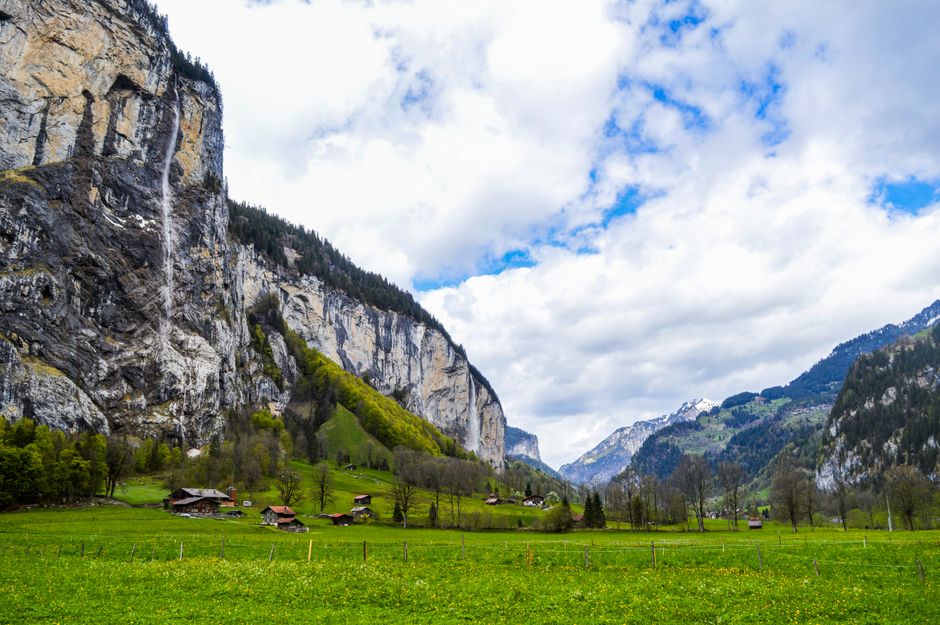
Lauterbrunnen is the easiest place to understand the geography of the region. The valley floor sits beneath near-vertical cliffs, and waterfalls drop from the surrounding rock walls. A short route through the valley gives strong scenery without demanding a full-day hike. It is the best choice for a first morning, a half-day visit or a lower-effort day.
Grindelwald: the best base for open mountain walks
Grindelwald feels more expansive. The village faces the Eiger and provides access to alpine paths, high viewpoints and routes with broad meadow scenery. It suits travelers who want to spend several hours outside rather than simply reach a lookout. Crowds gather around the main access points, so quieter paths require an early start.
Mürren: the best village atmosphere
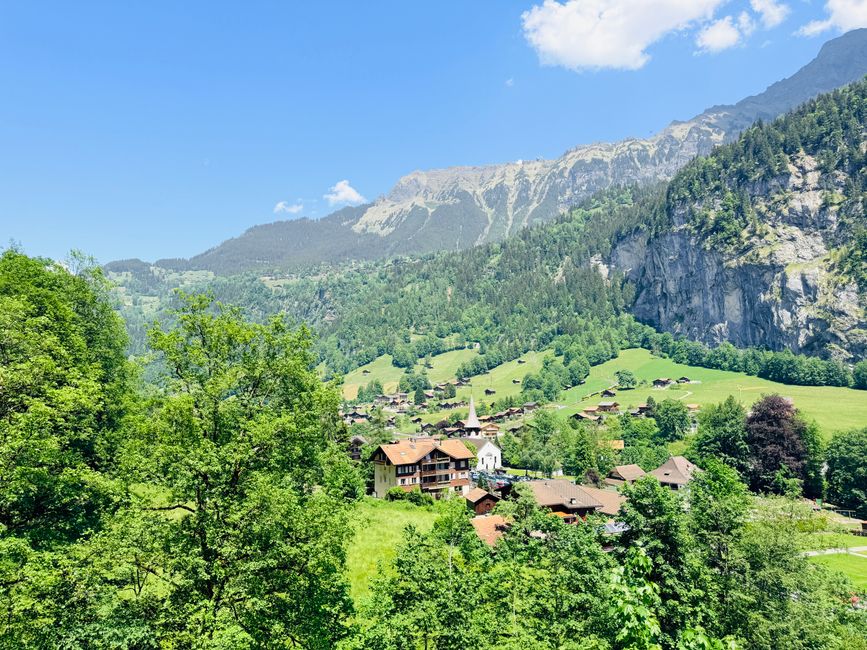
Mürren sits above the Lauterbrunnen Valley and offers a different perspective from the valley floor. The village is car-free, compact and backed by sharp mountain views. It takes longer to reach than Lauterbrunnen, but the journey is part of the experience. Choose Mürren for atmosphere and views; choose Grindelwald for walking variety; choose Lauterbrunnen for dramatic scenery with the least planning.
Where should travelers stay and how should they move?
Is Interlaken the best base?
Interlaken is the best base for short stays, late arrivals and mixed itineraries. The two main rail stations make excursions straightforward, and the town has the broadest choice of services. The tradeoff is atmosphere. The center feels busier and more commercial than the villages above the valleys.
Stay in Lauterbrunnen for immediate access to waterfalls and valley walks. Choose Grindelwald for mountain views from the village and easier access to outdoor routes. Choose Mürren or Wengen for a quieter alpine setting, accepting longer transfers when arriving or leaving.
How should transport be planned?
Build each day around one main direction. Interlaken to Lauterbrunnen and Grindelwald usually takes roughly 20 to 40 minutes by rail, depending on the route and connection. Reaching Mürren or high mountain stations adds transfers, so avoid combining several distant peaks in one day.
Check the official timetable before leaving and allow buffer time for connections. Do not schedule a final mountain train immediately before a flight or long-distance departure. Delays can come from weather, crowds or a missed connection, and the region is much more enjoyable when the schedule has room to breathe.
What mistakes ruin an Interlaken itinerary?
The common planning failures
- Trying to visit Jungfraujoch, Schilthorn and First on separate parts of the same day.
- Booking the highest excursion before checking the mountain forecast.
- Wearing smooth-soled shoes on wet valley paths or steep village trails.
- Assuming a clear view from Interlaken guarantees clear peaks.
- Ignoring altitude effects after arriving quickly at more than 3,000 meters.
- Planning every hour and leaving no replacement for a canceled lift or storm.
The final recommendation
The strongest plan uses Interlaken for access, then gives the Jungfrau Region enough time to show its different sides. Spend one day near the lakes and town, one clear day on a high mountain route, and one day in Lauterbrunnen, Grindelwald, Mürren or Wengen. Add a flexible day when possible.
Keep the order flexible, check conditions at elevation and avoid treating every famous viewpoint as mandatory. The best trip is the one that leaves enough time to enjoy the landscape between the transport connections.