The biggest misconception about Yosemite National Park is that one scenic drive through Yosemite Valley covers the whole park. The valley is the famous core, but Yosemite also includes high-country roads, giant sequoias, waterfalls, granite viewpoints, and quiet areas far from the busiest overlooks. A first visit works best when the route matches the season, the road network, and the amount of walking the group can handle.
Overnight stays still need planning, and roads can close because of snow, ice, rockfall, fire, or construction. The most useful preparation is simple: choose one base area, allow more time than the map suggests, and check official conditions before leaving.
What should first-time visitors expect in Yosemite?
Yosemite Valley is a starting point, not the entire park
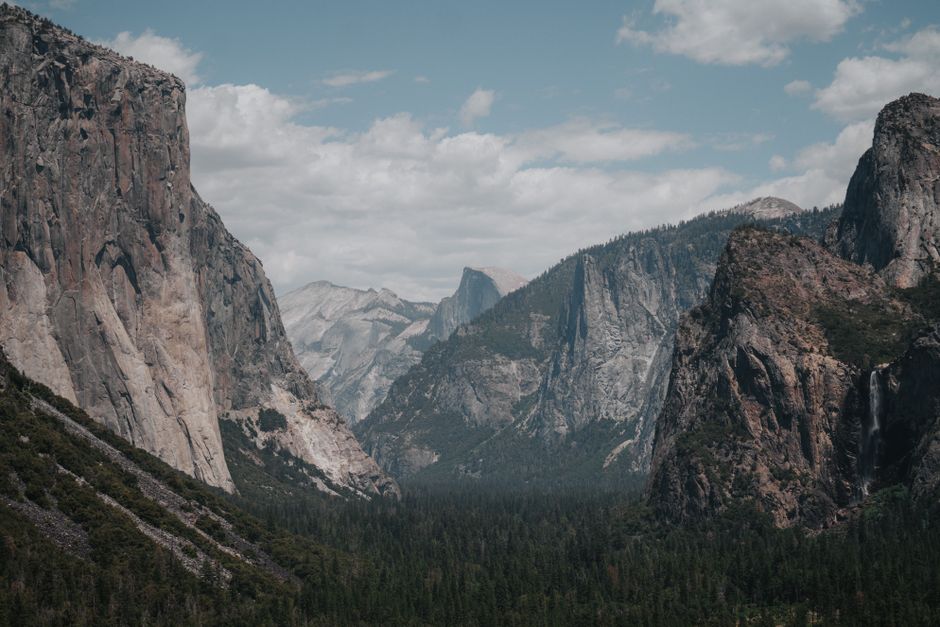
Yosemite Valley gives first-time visitors the quickest introduction to the park’s scale. From one compact area, visitors can see El Capitan, Half Dome, Bridalveil Fall, Yosemite Falls, the Merced River, and broad granite walls shaped by glaciers. Several viewpoints sit close to the road, but the valley floor itself is larger than it looks. Walking between stops can take much longer than expected, especially when paths are crowded or shuttle queues build up.
The best first-day goal is orientation, not a record number of attractions. Begin with a valley map, identify restrooms and water sources, then choose two or three walks. A short route to Lower Yosemite Fall, a section of the Valley Loop, or an easy meadow walk gives a better sense of the landscape than rushing between every parking area.
Distance, elevation, and weather change quickly
Yosemite covers nearly 1,200 square miles, with elevations ranging from roughly 2,000 feet in the western areas to more than 13,000 feet in the Sierra Nevada. A warm afternoon in the valley does not guarantee warm conditions on Tioga Road or at Glacier Point. Shade, snow, slippery rock, smoke, and sudden thunderstorms can change the experience within a few miles.
Cell service is limited, fuel and charging are limited, and GPS directions can send drivers toward unsuitable or closed routes. Download maps before entering the park, carry food and water for delays, and treat road signs as more reliable than a navigation app. The clear verdict for a first visit: spend the first day close to Yosemite Valley and add distant areas only after checking access.
When is the best time to visit Yosemite?
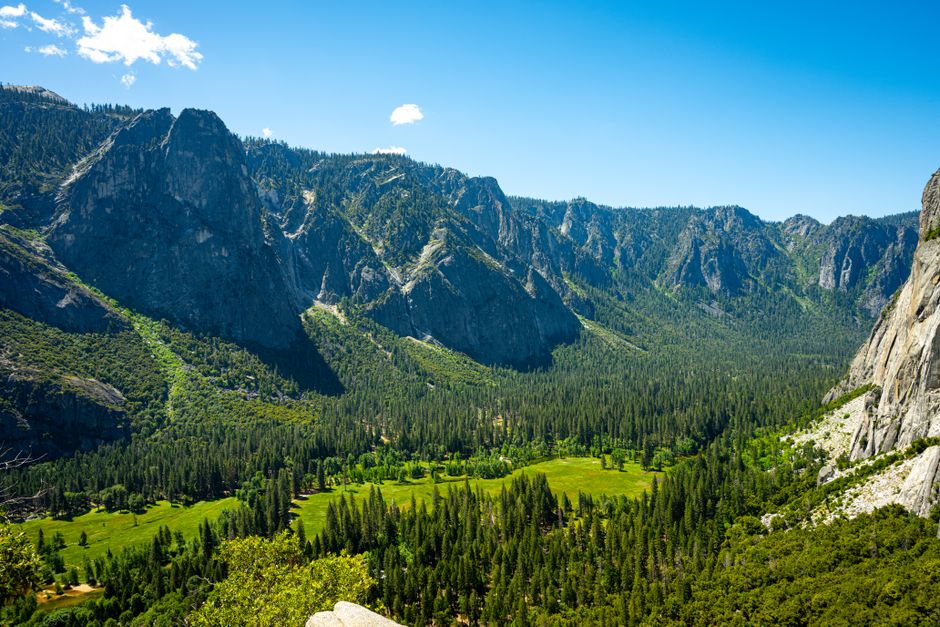
There is no single best season, but there is a best season for each kind of trip. Spring favors waterfalls, summer opens the high country, autumn brings cooler temperatures and fewer visitors, and winter offers a quieter valley with more road limits.
| Season | Best for | Main limits |
|---|---|---|
| Spring | Waterfalls and green meadows | Snow can close high roads and trails |
| Summer | Tioga Road, Tuolumne Meadows, long hikes | Heavy traffic and full overnight stays |
| Autumn | Cooler walks and changing foliage | Waterfalls may be low; high roads can close |
| Winter | Quiet viewpoints and snow scenery | Ice, chain controls, and seasonal closures |
How the entrances affect the trip
Highways 41, 140, and 120 from the west provide year-round approaches, although winter conditions can still require tire chains. Highway 140 through the Merced River corridor often offers the lower-elevation approach during snowy months. The eastern entrance over Tioga Pass usually closes from around November until late May or June, so it cannot support a winter cross-park route.
What to check before driving
Check road status, trail closures, weather, fire information, and campground conditions on the day of travel. The strongest planning rule is to leave room for a missed viewpoint, a slow shuttle, or a road delay.
How can a first-time visitor plan a realistic two-day itinerary?
A good two-day plan separates the valley from the higher roads. Trying to combine Yosemite Valley, Glacier Point, Mariposa Grove, and Tuolumne Meadows in one day creates more driving than exploring. The itinerary below suits a first visit when the main roads are open; in spring, autumn, or winter, replace closed areas with lower-elevation walks.
Day one: Yosemite Valley and the Merced River
- Early morning: Enter before the busiest part of the day, park once, and use the valley shuttle when operating. Start with Tunnel View if the approach road is open and the viewpoint fits the route.
- Keep the pace slow enough to notice changing views of the granite walls.
- Afternoon: Choose one longer activity, such as the Mist Trail toward Vernal Fall when conditions and access allow, or a flatter meadow and river route for a lower-effort day.
- Evening: Watch the walls change color from a meadow or river viewpoint. Leave enough daylight to walk back to the vehicle rather than relying on a final-minute shuttle.
Day two: choose one outer district
- High-country option: If Tioga Road is open, drive toward Tuolumne Meadows and stop at scenic turnouts such as Olmsted Point. Carry food and water because services can be limited, especially early and late in the season.
- Panoramic option: If Glacier Point Road is open, use it for a broad view over Yosemite Valley. Add a short viewpoint walk instead of attempting several strenuous trails on the same day.
- Sequoia option: Visit Mariposa Grove from the welcome area and use the required access arrangements in place at the time. Allow more time than the map suggests because the grove requires walking beyond the parking area.
- Winter or closure option: Stay in the valley, visit Wawona if roads are clear, or choose a short trail with verified conditions. A flexible day is better than driving toward a closed pass.
This plan has a clear winner for most first visits: spend one full day in Yosemite Valley and use the second day for only one distant district. That balance gives the park room to surprise the schedule.
Which mistakes should first-time visitors avoid?
The most damaging mistake is treating Yosemite like a drive-through attraction. The park rewards early starts, slow transitions, and backup plans. Avoid these failures:
Arriving at midday with no parking plan
Summer traffic can turn a short valley drive into a long delay. Arrive early, leave the vehicle in one suitable area, and walk or use the shuttle instead of moving between crowded lots.
Assuming every road is open
Tioga Road and Glacier Point Road normally close for part of the year. A map may show a route that snow, ice, construction, or a fire has made unusable. Check conditions on the morning of the trip and keep a valley alternative ready.
Planning a hard hike after a long drive
Visitors often underestimate the effect of heat, elevation, poor sleep, and steep granite. Pick a shorter walk if the group arrives tired. For trails near rivers and waterfalls, stay behind barriers and keep away from slippery rocks and fast water.
Ignoring overnight rules and wildlife storage
A campsite or room reservation does not automatically solve every access problem, and sleeping in a vehicle outside an approved site is not allowed. Food, rubbish, and scented items must stay in the designated bear-resistant storage. Bears remain active across the park, even near developed areas.
For a first visit, the best strategy is not to add more stops. It is to remove the stop most likely to break the day.
What can visitors do when famous sights are crowded or closed?
Is Yosemite still worthwhile without Half Dome or the high country?
Yes. Half Dome requires a permit when its cables are up, and high-country routes can close for months. The valley still offers major views, waterfalls, meadows, riverside paths, and accessible scenic areas. A first-time itinerary does not need a summit to feel complete.
What is the best response to a crowded viewpoint?
Move from the parking area to the trail system, visit a nearby meadow, or return later in the day. Crowds often gather at the same first overlook while quieter sections of the Valley Loop remain available. The park feels larger once the visit shifts from collecting photographs to following the landscape.
When should the plan change completely?
Change the route for smoke, unsafe water levels, icy trails, road closures, or worsening weather. Do not force a waterfall hike because a guidebook lists it as a highlight. Yosemite’s conditions change faster than a fixed itinerary can. The most reliable first visit combines one famous view, one manageable walk, and enough flexibility to stop safely.
That resolves the opening misconception: Yosemite is not a single valley that can be checked off in a few hours. It is a large mountain park with one famous gateway. Treat the valley as the introduction, plan around the season, and a first visit becomes calmer, safer, and far more rewarding.