The best way to combine Strasbourg with the Alsace Wine Route is to split the trip between one city base and one village-focused base. Use Strasbourg for the first two nights, move south toward Colmar, then spend two or three days exploring the smaller towns between the Vosges foothills and the Rhine plain. This plan avoids long backtracking, leaves room for slow lunches and walks, and works well without trying to visit every village in a single day.
How many days are needed for Strasbourg and Alsace?
The four-day version
Four days covers the main highlights but keeps the pace firm. Spend the first day in Strasbourg, the second on the central Wine Route, the third around Colmar and one nearby village, and the fourth on a final village visit before departure. This version suits travelers who want a clear introduction rather than a deep tour of the region.
The six-day version
Six days is the stronger choice. It allows two full days in Strasbourg, two days between Colmar and the surrounding villages, and one flexible day for a slower stop, a hilltop castle, or a countryside walk. The extra time matters because the villages are close on a map but not always connected by direct public transport.
| Trip length | Best use | Suggested overnight pattern |
|---|---|---|
| 3 days | Strasbourg plus one village day | 3 nights in Strasbourg or 2 nights in Strasbourg and 1 in Colmar |
| 4 days | City highlights and a compact Wine Route loop | 2 nights in Strasbourg and 2 in Colmar |
| 5 days | Strasbourg, Colmar and three village stops | 2 nights in Strasbourg and 3 in Colmar |
| 6 days | Unhurried city and countryside itinerary | 2 nights in Strasbourg, 3 nights in Colmar, 1 flexible night |
Best overall verdict: choose six days if the purpose is to understand the region rather than collect photographs. The extra day reduces rushed transfers and makes it possible to visit a village early, before the busiest hours.
What is the most efficient Alsace Wine Route itinerary?
Step 1: Begin in Strasbourg
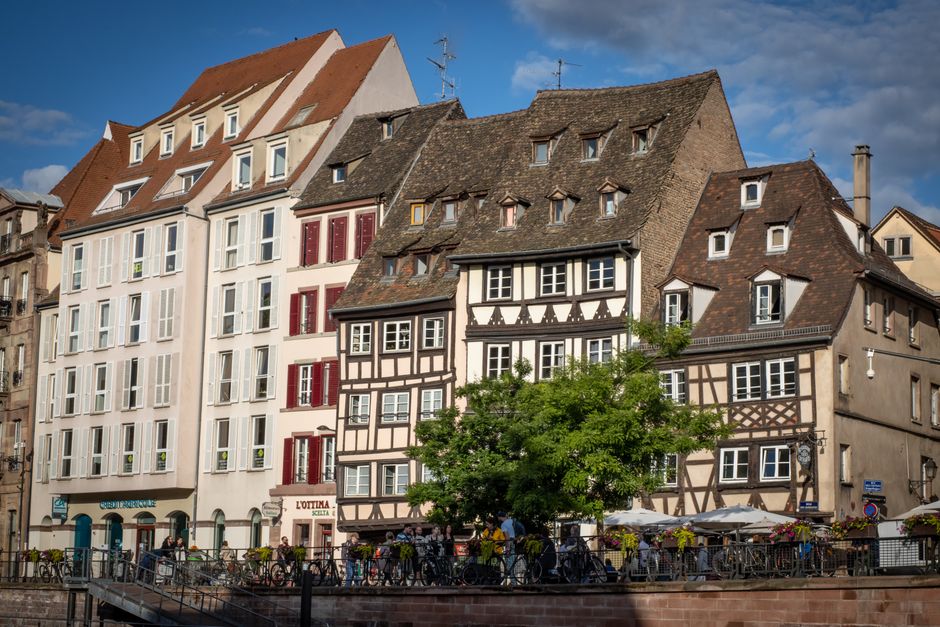
Give Strasbourg at least one full day. Walk through Petite France in the morning, cross the covered bridges, and continue toward the cathedral and the historic center. Keep the route compact instead of crossing the city repeatedly. A second morning can cover the European Quarter, a market area, or a quieter residential district with traditional Alsatian architecture.
Step 2: Move south through the central villages
- Travel from Strasbourg toward Obernai, a manageable first village with a lively central square and a strong introduction to Alsatian streetscapes.
- Continue toward Barr or Dambach-la-Ville for a less polished, more local atmosphere and vineyard views.
- Use Ribeauvillé or Riquewihr as the main afternoon stop. Arrive before lunch if possible, because narrow lanes become crowded later.
- Base the next stage in Colmar, then visit Kaysersberg, Eguisheim or another nearby village as a half-day outing.
Step 3: Finish around Colmar
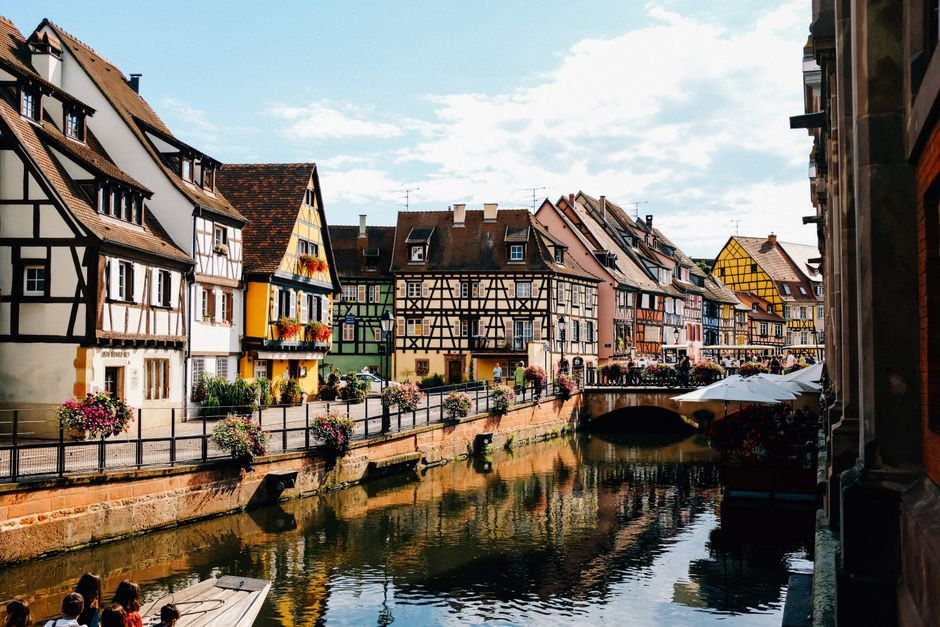
Colmar works well as the southern anchor because it has a dense historic center and better onward connections than the smaller villages. Reserve one evening for a canal-side walk and one morning for a relaxed market or neighborhood stroll. Do not treat Colmar only as a sleeping base; its old town deserves time after day visitors leave.
The clearest route is north to south. Strasbourg, Obernai, the central villages, Colmar and the southern villages form a natural line. Reversing that order creates unnecessary travel and makes the final days feel like a series of transfers.
What should visitors expect in the Alsace villages?
Pretty streets are only part of the experience
Riquewihr and Eguisheim are visually dramatic, but their appeal comes from more than colorful façades. Look for the way homes face the street, the enclosed courtyards behind gates, the steep roofs, the carved signs and the vineyards rising behind the town walls. The best visit includes time away from the central lane. Walk toward the edge of the village, follow a marked path into the vines, and notice how quickly the crowds thin.
Plan around village rhythm
Many small places become quiet during the middle of the day or close earlier than visitors expect. Some restaurants require advance planning, and a village may have only a handful of dining choices. Carry water, keep a flexible lunch window and avoid building a day around one specific opening time. A short morning visit followed by a countryside walk often feels better than staying in a crowded center for six hours.
Wine culture without rushing
The Wine Route is not a single attraction with one entrance. It is a network of growing areas, villages, cellars, viewpoints and family businesses spread across the region. A tasting visit can be formal, informal, short or arranged in advance. Ask about transport, opening hours and the style of visit before setting out. Travelers who are not interested in wine can still enjoy the route through architecture, food, walking trails and landscape.
Best village strategy: choose two major stops and one smaller stop in a day. Three places allow time to walk, eat and look beyond the main square. Four or five usually produce the same photographs with less attention and more time spent searching for parking.
Which mistakes can ruin an Alsace itinerary?
Five problems to avoid
- Trying to see every famous village. Pick a small group with different characters: one larger town, one highly preserved village and one quieter place.
- Using Colmar as a substitute for the whole route. Colmar is an excellent base, but it does not show the full range of vineyard landscapes or village life.
- Arriving at noon and expecting an empty center. Start early for the most popular villages, then use the afternoon for a less famous stop or a walk.
- Ignoring Sunday and seasonal schedules. Transport, restaurants and small visitor sites may operate on reduced hours. Check the return journey before committing to a remote stop.
- Driving between historic centers. Park at the edge, follow signs and walk. Central lanes are designed for pedestrians, not sightseeing from a car.
When not to follow the full route
Skip the long Wine Route loop if the trip includes only two nights, a late arrival or an early departure. In that case, stay in Strasbourg and take one carefully chosen day trip, or base the entire visit in Colmar and explore nearby villages. A smaller plan is better than spending half the trip moving luggage and checking timetables.
The route also deserves a different plan during major festivals and peak autumn weekends. Crowds can change the character of the most famous villages, while smaller neighboring towns may offer a calmer alternative with similar architecture and vineyard views.
Common questions about Strasbourg and the Wine Route
Is Strasbourg or Colmar the better base?
Strasbourg is the better base for a city-focused trip, rail connections and a first visit without a car. Colmar is better for repeated village outings and a slower countryside schedule. For a trip of five nights or more, split the stay. For a shorter trip, choose Strasbourg when urban history matters most and Colmar when villages are the main goal.
Can the route be visited without driving?
Yes, but the itinerary must be selective. Use Strasbourg and Colmar as anchors, travel between them by train, and choose villages with a workable bus connection or an organized local transfer. Do not assume every famous village has a direct connection from every other village.
Which village should be chosen for a first visit?
Kaysersberg is the strongest all-round choice for a first village stop because it combines a compact historic center, a river setting, walking routes and easy access from the Colmar area. Riquewihr is the better choice for dramatic fortified streets, while Eguisheim suits travelers who prefer a circular layout and a smaller center.
What is the best season?
Late spring and early autumn offer a strong balance of walkable weather, open businesses and vineyard scenery. Summer brings longer days but more visitors. Autumn adds color and harvest activity, though popular weekends become busy. Winter can be atmospheric in Strasbourg and Colmar, but some village services operate on reduced schedules.
The practical answer is simple: begin with Strasbourg, move south, slow down in the villages, and leave room for one unplanned turn. That approach turns a checklist of Alsace highlights into a trip with a clear rhythm, from city lanes and cathedral towers to vineyard paths and quiet village edges.