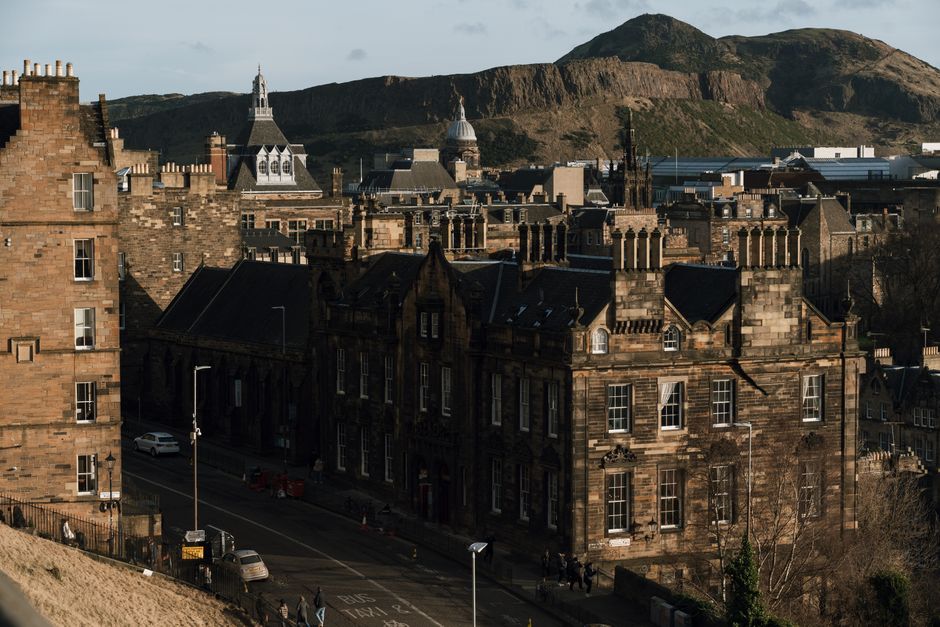
Edinburgh has two historic centres separated by a steep valley, yet the Old Town and New Town form one UNESCO World Heritage Site. The contrast is immediate: medieval lanes climb from the station towards the castle, while broad Georgian streets open towards gardens, galleries and elegant squares. The best way to understand both areas is on foot, with enough time for hills, weather changes and unplanned stops.
What is the difference between Edinburgh’s Old and New Towns?
Edinburgh’s Old Town is the city’s medieval heart. Its main spine, the Royal Mile, runs between Edinburgh Castle and the Palace of Holyroodhouse. Narrow closes lead away from the main street, while steep stairways reveal changing views over the rooftops. The area feels dense, dramatic and layered, with buildings from several centuries pressed into a small space.
Old Town rewards slow exploration
The Old Town is best for history, viewpoints and atmosphere. Start near Edinburgh Castle, then walk downhill along the Royal Mile. The route passes historic churches, courtyards, museums and entrances to hidden closes. The castle end is usually busier, so an early start creates a calmer first hour. Allow extra time for uneven paving and steep sections.
New Town offers space and order
The New Town was built mainly in the eighteenth and early nineteenth centuries as a planned expansion. George Street, Princes Street and Queen Street create a striking contrast with the Old Town’s irregular lanes. Charlotte Square and the streets around it show the clearest Georgian character.
Verdict: The Old Town provides Edinburgh’s strongest sense of drama, but the New Town makes the visit feel complete. Seeing only one means missing the city’s central story: medieval concentration beside planned Georgian expansion.
How should a two-day Edinburgh itinerary be planned?
Build the itinerary around geography rather than trying to cross the city repeatedly. Day one works best in the Old Town, where most sights sit along one rising-and-falling route. Day two can focus on the New Town, Calton Hill and the northern edge of the centre. This plan leaves room for weather delays and avoids turning every hour into a race.
Day one: castle, Royal Mile and Holyrood
| Time | Area | Suggested activity | Walking demand |
|---|---|---|---|
| 08:30–11:00 | Castle area | Explore the castle precinct and viewpoints | Moderate, with slopes |
| 11:00–13:00 | Royal Mile | Walk downhill through closes and historic streets | Mostly downhill |
| 13:00–14:00 | Old Town | Take a proper lunch break | Easy |
| 14:00–16:30 | Canongate | Visit museums, courtyards or local landmarks | Moderate |
| 16:30–18:00 | Holyrood | Choose the palace area or climb towards Arthur’s Seat | From easy to strenuous |
Day two: gardens, Georgian streets and Calton Hill
Begin in Princes Street Gardens, then walk north or east through the New Town. Follow George Street for its broad views and grand façades before turning towards Charlotte Square. Continue to Stockbridge if a longer neighbourhood walk appeals. Finish at Calton Hill, where the short climb gives one of the best panoramas of the castle, Old Town and surrounding hills.
The clearest choice is a two-day split: keep the first day historic and compact, then use the second day for architecture, viewpoints and neighbourhood wandering. A one-day visit should prioritise the Old Town and Calton Hill, rather than attempting every major landmark.
Which Old Town route gives the best first impression?

Start at the castle and walk downhill. This direction makes the city easier to read, reduces the hardest climb and reveals the Royal Mile as a sequence rather than a single tourist street. The route also creates natural points for short detours.
- Begin at the castle esplanade. Look across the rooftops before entering the historic complex. The view explains why the site became a defensive stronghold.
- Walk along the upper Royal Mile. Notice how the street changes from broad ceremonial space to tighter urban passages.
- Step into two or three closes. Choose them for atmosphere and architecture, but do not treat every narrow entrance as a public shortcut. Some lead to homes or private buildings.
- Pause around St Giles’ Cathedral. This is a useful midpoint for understanding the Royal Mile’s civic and religious importance.
- Continue towards Canongate. The buildings become less crowded, and the route feels more residential.
- Finish near Holyrood. From here, decide between museums, the palace area or the longer climb towards Arthur’s Seat.
Comfortable shoes matter more than a fast schedule. Another common error is leaving the castle until late afternoon; queues, timed entry and changing weather can disrupt the rest of the day. The most reliable approach is to reserve the morning for the castle area and use the lower Royal Mile as flexible time.
What should visitors expect from Edinburgh weather and walking?
Edinburgh’s centre is compact on a map but demanding underfoot. A route that looks short can include a sharp incline, a stairway, rough paving or a detour around crowds. Weather can change quickly, especially on exposed viewpoints such as Calton Hill and Arthur’s Seat. A useful day plan must allow slower walking and a warm indoor pause.
Pack for changing conditions
Use layers rather than one heavy outer garment. A light waterproof layer, comfortable trousers and shoes with firm grip cover most city walks. An umbrella can help in calm rain, but wind often makes a hooded waterproof layer more practical. Keep the day’s essentials in a small bag so narrow streets and public transport remain manageable.
Match the route to energy levels
Calton Hill is a short climb, while Arthur’s Seat is a proper outdoor walk with uneven ground and exposed sections. The two should not be treated as interchangeable viewpoints. Calton Hill suits a quick panorama at the end of a city day. Arthur’s Seat needs better weather, more time and footwear suited to rough paths.
For visitors with limited mobility, the Old Town requires careful planning because some closes and stairways are inaccessible. The main streets remain more practical, but cobbles and slopes still create challenges. Ask about step-free access before committing to a landmark, and keep an alternative route available. The best plan is the one that survives rain, fatigue and a closed passage.
Where do local details make the biggest difference?
Small choices can change the character of the visit. The Old Town is quieter early in the morning and more crowded around midday. The New Town often feels calmer after offices close, while the gardens and viewpoints depend heavily on the weather. Local rhythm matters as much as the landmark list.
When are the busiest areas most crowded?
The castle end of the Royal Mile usually gathers visitors first, followed by the area around St Giles’ Cathedral. Start before the main sightseeing period if photographs and uninterrupted views matter. Later in the day, move towards Canongate or the New Town, where the streets spread out and the pace often drops.
Which details are easy to miss?
Look above ground level. Carved doorways, unusual windows, painted signs and upper-storey additions reveal how the city changed over time. In the New Town, compare the repeated Georgian façades with the different uses inside them. In the Old Town, notice how closes connect the main street to hidden courtyards and sudden viewpoints.
Do not assume a famous viewpoint is automatically the best one. Edinburgh Castle offers history and height, Calton Hill offers a broad city panorama, and the higher slopes of Arthur’s Seat offer open landscapes. Each serves a different purpose. For a first visit with limited time, Calton Hill is the strongest effort-to-viewpoint choice.
What mistakes should be avoided on a first visit?
Q&A is the fastest way to settle the practical issues that often spoil an otherwise good route.
Is one day enough for both towns?
One day can show the main contrast, but it cannot cover both areas deeply. Spend the morning in the Old Town, cross through Princes Street Gardens, then walk to the New Town or Calton Hill. Two days provide a much better balance and leave time for indoor stops when the weather changes.
Should the Royal Mile be walked from Holyrood uphill?
That direction works for visitors who want to finish at the castle, but it demands a steady climb and can feel tiring late in the day. Starting at the castle and walking downhill is the better default for most travellers.
Is Arthur’s Seat essential?
No. It is worthwhile in dry, clear weather for visitors who enjoy a longer walk, but it is not required to understand Edinburgh. Calton Hill supplies a shorter, easier viewpoint, and the castle already provides a strong elevated perspective.
What deserves advance planning?
Schedule the most time-sensitive attraction first, then keep flexible space around it. Avoid packing the day with back-to-back bookings. Crowds, rain, delayed meals and slow climbs are normal parts of Edinburgh sightseeing.
The strongest Edinburgh itinerary is not the one with the most sights; it is the one that leaves enough time to notice the sharp contrast between medieval Old Town streets and the ordered Georgian New Town.