How to fit Innsbruck into two days without rushing
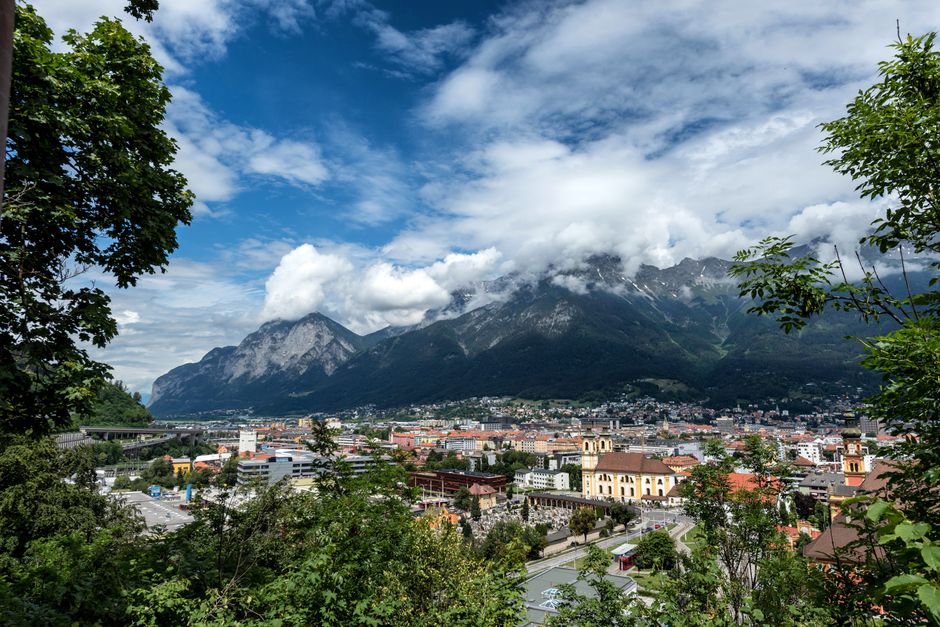
A two-day visit can go wrong in a predictable way: too much time disappears inside museums, the mountain trip starts late, and the historic centre gets reduced to a hurried photograph of the Golden Roof. Innsbruck works better when the itinerary follows its geography. The Old Town sits compactly in the valley, while the highest viewpoints rise quickly above it. One day should explain the city on foot; the other should protect a large block of time for the mountains.
The real constraint is geography
The centre is easy to cover without a car. Innsbruck tourism information places the main centre about a ten-minute walk from the railway station, while the bus connection from the airport takes roughly twelve minutes. That makes a short arrival day usable, but only if luggage, check-in, and mountain transport are planned separately. The historic centre route should begin around Maria-Theresien-Straße and move north toward the river rather than zigzagging between isolated sights.
Use the first afternoon to get oriented
Keep the first afternoon at street level. Walk from Maria-Theresien-Straße through the arcades, continue to the Golden Roof, look inside the cathedral, and cross toward the Inn for the clearest view of the colourful houses in St. Nikolaus. This sequence creates a mental map before the second day adds altitude. It also leaves room for a slow meal, an early evening, and a weather check before committing to the mountain.
Best overall strategy: place fixed indoor sights on day one and treat the mountain as a weather-sensitive appointment on day two.
Day one itinerary: an Old Town route that works
The first day should feel like a connected walk, not a checklist. Most of the key sights sit close enough to combine, but their value changes depending on the order. Start with the broad urban view, move into the medieval core, then finish beside the river when the light often separates the old façades from the mountains behind them.
Morning: Maria-Theresien-Straße to the Golden Roof
| Approximate time | Route | Purpose |
|---|---|---|
| 09:00–10:00 | Maria-Theresien-Straße and the Triumphal Arch | See the modern centre, historic façades, and first mountain alignment |
| 10:00–11:30 | Arcades, Herzog-Friedrich-Straße, and the Golden Roof | Follow the compact medieval core without backtracking |
| 11:30–12:15 | Cathedral Square and the Court Church | Compare religious, imperial, and civic architecture |
| 12:15–14:00 | Central lunch and a short rest | Keep enough energy for the afternoon walk |
The Golden Roof has 2,657 gilded copper shingles, but the surrounding buildings deserve equal attention. Look up at the oriel windows, painted façades, and covered passages instead of treating the landmark as a single photo stop. The official landmark information confirms the roof’s late-medieval date and its central position in Herzog-Friedrich-Straße.
Afternoon: imperial rooms, the tower, and the river
Choose one major interior rather than trying to enter every museum. The Imperial Palace suits visitors interested in court history, while the Court Church gives a tighter introduction to memorial architecture. If the City Tower is open, its 133 steps lead to a useful view over the Old Town. Finish at the Inn Bridge or the riverbank, where the mountains, water, and historic houses appear in one frame. That final stop gives the day a clear visual ending.
Day two verdict: put the clearest mountain view first
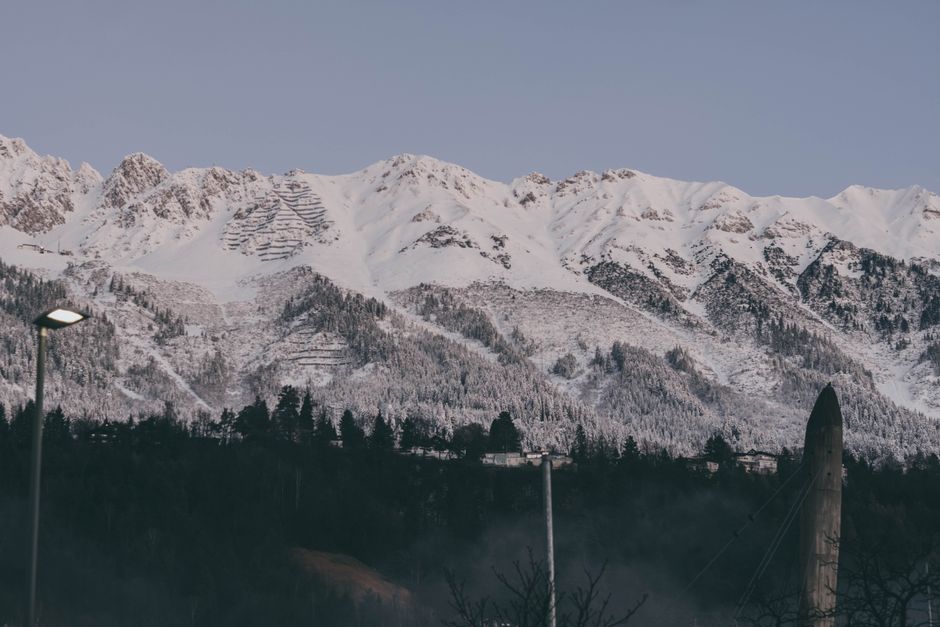
Best use of the morning
The mountain belongs in the first half of day two. Morning gives the best chance of preserving the main view before clouds, wind, or a delayed lift changes the plan, and the central cable-car system makes the ascent unusually simple for an Alpine city break because the route begins close to the Old Town, climbs through Hungerburg, and continues toward viewpoints above 2,000 metres.
What to do when the mountain weather turns
Cloud does not automatically ruin Innsbruck, but it does change the right activity. A summit hidden inside fog offers less value than a flexible city day, and mountain conditions can differ sharply from the valley. Use this five-step fallback plan:
The five-step fallback plan
- Check visibility before leaving. Look at the live operating notice, the forecast for the upper station, and the wind rather than relying on the blue sky above the city.
- Delay the ascent once, not repeatedly. If the cloud is expected to lift, move the mountain block later; if the forecast stays poor, protect the rest of the day.
- Choose a lower viewpoint. The riverbank, the City Tower, or a walk toward the northern neighbourhoods can still show the city-and-mountain relationship without committing to exposed terrain.
- Replace altitude with indoor depth. Select one museum, palace, church, or local cultural collection and give it enough time to be worthwhile.
- Keep the next morning open. A short walk at dawn can be more rewarding than forcing a late summit visit after rain and low cloud.
When the plan should stop
Do not turn a sightseeing day into an improvised hike because the lift ride was cancelled. Local guidance warns that mountain weather changes quickly and recommends rain protection, warm layers, a map, suitable footwear, water, and a charged phone. Route colours also matter: blue indicates easy routes, red intermediate terrain, and black difficult routes with exposed or secured sections. Sandals and smooth soles are a poor match for any trail above the city.
Mistakes that make a two-day visit feel longer
The biggest mistake is treating Innsbruck as a flat city with a mountain backdrop. The valley floor is friendly, but the elevation change affects temperature, transport timing, walking pace, and the amount of daylight needed for a safe return. A strong itinerary protects the mountain block and keeps the Old Town compact.
Do not split the summit day
Do not schedule a major mountain ascent between two fixed reservations. Even when the lifts run on time, the journey includes boarding, changes between sections, time at the viewpoint, and the return. A late start creates pressure to rush the best part. The better trade-off is one substantial mountain experience followed by an unplanned evening in the centre. That leaves room for a café, river walk, or second look at a street that seemed ordinary in the morning.
Do not mistake altitude for a casual stroll
Above the city, sunlight can feel stronger, paths can become uneven, and temperatures can fall quickly. Pack a light waterproof layer even during a warm valley afternoon. Cover shoulders and knees when entering churches, keep voices low during services, and avoid judging a route only by its length. A short trail with exposure can demand more attention than a longer valley walk. The local hiking guidance is clear on one practical point: turn around when conditions or energy deteriorate, because the return is part of the route.
Practical questions before leaving for Innsbruck
Is two days enough for the Old Town and the mountains?
Yes, if the plan gives each experience its own block. The Old Town is compact enough for a half-day walking circuit, while the Nordkette deserves several hours. Two days will not cover every museum, nearby village, and mountain trail, but it can deliver the city’s defining contrast: imperial and medieval streets below, steep Alpine views above.
Is public transport necessary?
A car is not essential for this itinerary. The railway station, Old Town, riverfront, and central lift access can be connected on foot, while buses and trams cover the airport and outer sights. The local network publishes current routes, diversions, and night services through its official route information. Check the journey planner after arrival instead of relying on an old map.
What should be packed for both days?
Use walking shoes with firm tread, one warm layer, rain protection, sunglasses, water, and a small day bag. Add gloves and a hat for an upper-mountain visit outside summer. The final choice is simple: give day one to the Old Town and day two to the highest clear view available, with an indoor alternative ready if the forecast refuses to cooperate.
| Priority | Main risk |
|---|---|
| Historic atmosphere | Spending too long indoors |
| Wide Alpine panorama | Cloud, wind, or maintenance |
| Reliable bad-weather day | Trying to force a summit view |