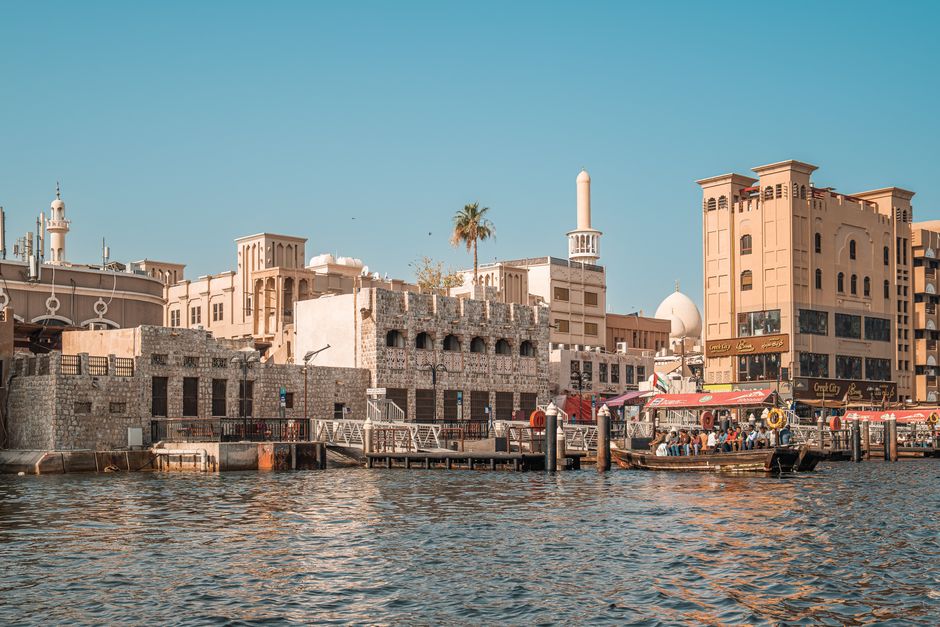
A short crossing from Bur Dubai to Deira reveals a different city: shaded lanes, working water transport, spice stalls, old courtyard houses and a waterfront shaped by trade. Add a carefully timed desert visit and Dubai becomes far more layered than its skyline suggests.
Which old Dubai neighbourhoods belong on the same day?
The historic core is compact, but each district has a different job
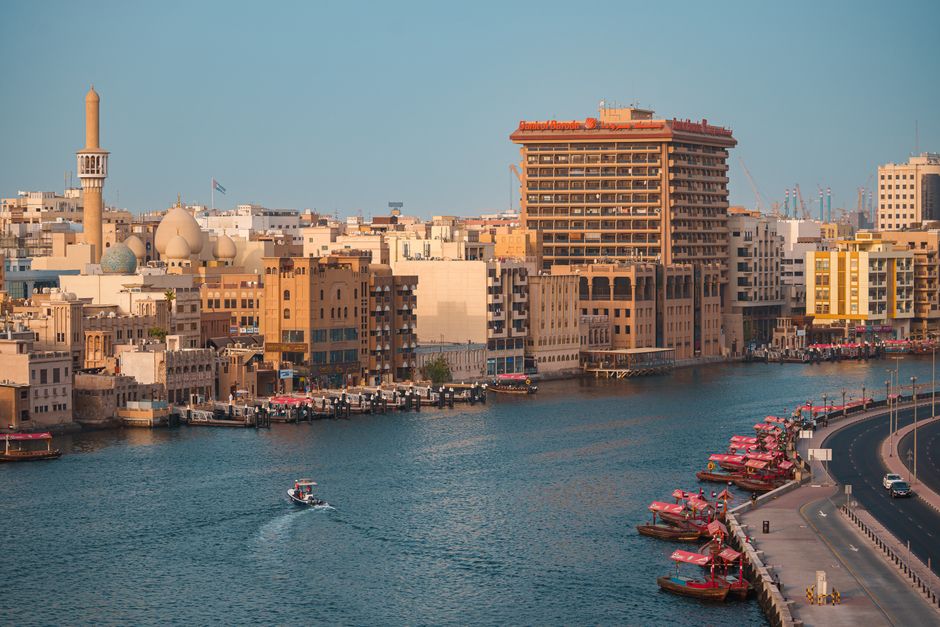
The historic core works best as a connected route rather than a collection of isolated attractions. Start in Bur Dubai, walk through the old lanes, reach the creek, cross the water, then finish among Deira’s markets. This order follows the geography and keeps the most exposed walking for the cooler part of the day.
| Area | What it offers | Best time | Time needed |
|---|---|---|---|
| Al Fahidi Historical Neighbourhood | Wind towers, narrow lanes, courtyards and cultural spaces | Early morning | 60–90 minutes |
| Bur Dubai waterfront | Creek views, traditional boats and older trading streets | Morning or late afternoon | 30–45 minutes |
| Dubai Creek crossing | A moving view of both historic districts and working harbour life | Before sunset | 15–30 minutes |
| Deira souks | Spices, textiles, perfumes and busy local commerce | Late afternoon or evening | 60–90 minutes |
| Al Seef | A polished creekside promenade beside older-style architecture | Evening | 45–60 minutes |
Al Fahidi deserves attention for its scale and texture, not because every lane contains a major sight. The appeal is the contrast between thick walls, filtered light and the high-rise skyline visible beyond them. Al Seef is easier to walk through, but it feels more curated, so it works best as a comfortable final stop rather than a substitute for the older neighbourhood.
The clear verdict: combine Al Fahidi, the creek crossing and Deira in one half-day. Save the desert for another day. Trying to add both before lunch turns a strong itinerary into a race.
How should a morning around Dubai Creek unfold?
A workable walking order
- Begin in Al Fahidi before the heat builds. Walk slowly through the lanes and look up at the wind towers, which were designed to move air through homes before modern cooling systems changed daily life.
- Continue towards the Bur Dubai waterfront instead of jumping straight into a market. The changing view matters: quiet courtyards give way to working transport routes, docks and open water.
- Cross Dubai Creek by traditional boat when services are operating. The crossing is brief, but it shows why the creek mattered. Deira and Bur Dubai developed as linked commercial districts, not as separate tourist zones.
- Enter the textile and spice market areas on foot.
- Finish with a shaded drink or meal near the creek, then leave before the afternoon heat makes walking unpleasant.
Small details that make the route better
Wear shoes suitable for uneven paving and keep shoulders and knees covered in a way that feels respectful in older residential and religious areas. Loose clothing also helps with the heat. Carry water, but avoid treating the route like a long-distance hike; most of the value comes from stopping, watching and noticing details.
The market areas can feel intense, especially when sellers call out from several directions. A firm, polite no is enough. Do not photograph people closely without permission, and avoid turning workers into background scenery.
Why does the desert need a separate plan?
Timing changes the entire experience
Early morning is the strongest choice for travellers who want silence, cooler air and clearer light. The sand holds sharp shadows, animal tracks are easier to spot and the landscape feels less crowded. Late afternoon offers a different reward: softer colour, longer shadows and a gradual shift from heat to cool air after sunset.
Midday is the weak point. The desert can look dramatic in photographs, but exposed sand and reflected heat make walking uncomfortable and increase the risk of dehydration. A short stop beside a vehicle is manageable; a long open-air programme is not a smart use of the harshest hours.
Choose the landscape before choosing the activity
Not every desert experience has the same setting. Areas close to the city are convenient but can show more traffic, tracks and group activity. Further conservation zones offer a better chance of seeing native wildlife and undisturbed dunes, but they require more planning and stricter rules. Pale open dunes, red sand and gravel plains each create a different visual experience.
A responsible visit keeps vehicles on established routes, avoids chasing animals and leaves shells, plants and stones where they are. Feeding wildlife changes animal behaviour and creates risks for both visitors and the animals. Loud music also works against the reason to leave the city: the desert’s strongest feature is its quiet.
The verdict is simple: choose sunrise for nature and calm, sunset for atmosphere, and never build a desert day around the hottest middle of the afternoon. The desert is not a theme park extension of Dubai. Its value comes from space, limits and the chance to notice how quickly the city disappears from view.
What does a balanced two-day itinerary look like?
Day one: the creek and old neighbourhoods
- Morning: Begin in Al Fahidi, allowing enough time for shaded lanes, courtyards and cultural displays rather than rushing from landmark to landmark.
- Late morning: Walk to the Bur Dubai waterfront, take the creek crossing and explore the textile and spice market areas in Deira.
- Afternoon: Rest indoors during the strongest heat. This pause is part of the plan, not wasted sightseeing time.
- Evening: Return to the creek for cooler air and a slow walk along the waterfront. Al Seef can fit here if a polished promenade appeals, but it should not replace the older districts.
Day two: the desert and a slower city evening
- Morning option: Visit the desert at sunrise, then return to the city for breakfast and an unhurried afternoon.
- Late afternoon option: Keep the morning flexible, leave the city with plenty of daylight and stay through sunset if conditions are comfortable.
- Evening: Choose a quiet neighbourhood walk or waterfront meal instead of scheduling another major attraction. The contrast between dense city life and open sand needs breathing room.
The two-day split is the best format for most visitors. It protects the creek route from heat, prevents the desert from becoming a rushed add-on and leaves room for delays caused by traffic or weather. A single day can cover both, but only by reducing each place to a brief photo stop.
What goes wrong in Old Dubai and the desert?
Is one afternoon enough for everything?
No. The old neighbourhoods need at least a morning or a late afternoon, while the desert deserves a dedicated time window. Combining them in one compressed block usually means walking through Al Fahidi when it is too hot and reaching the sand after the best light has gone.
Should the route rely entirely on walking?
No. Walking is ideal inside each historic district, but the full route includes heat, busy roads and changing distances. Comfortable pacing produces a better experience than proving that every section can be walked.
What is the most common desert mistake?
Underestimating the temperature difference. The desert may feel hot in daylight and surprisingly cool after sunset, so light layers matter. Water, sun protection and covered footwear are more useful than an overloaded day bag. The strongest plan is the one with enough time, shade and flexibility to stop before discomfort takes over.