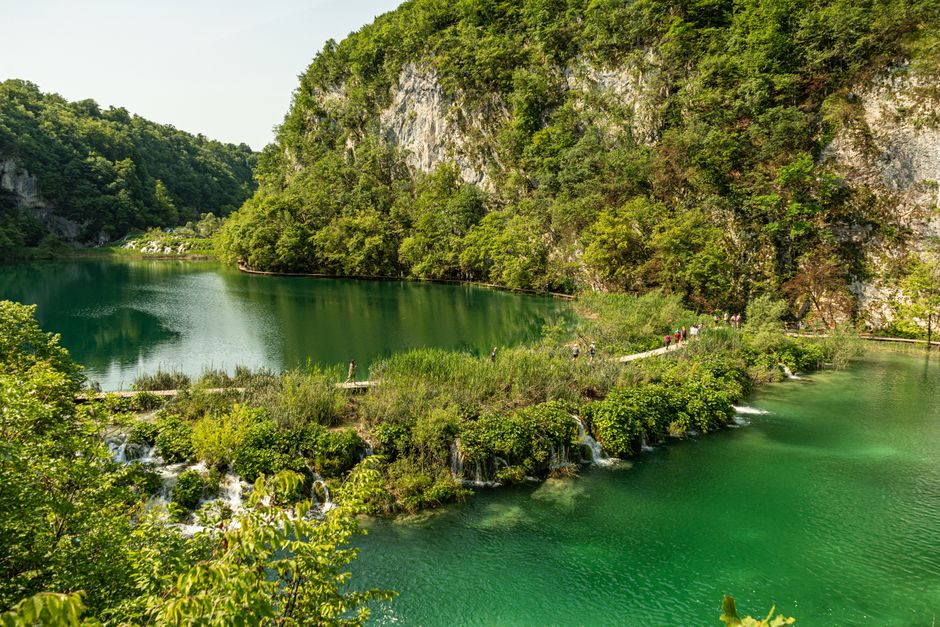
A common misconception makes Plitvice Lakes National Park harder to visit than it needs to be: many travelers assume the main task is simply walking from one famous waterfall to another. The real challenge is managing distance, elevation, timed entry, crowds, transport within the park and changing weather. A visitor who arrives late, chooses a route without checking its length or treats the wooden paths like ordinary pavement can lose several hours before reaching the most scenic viewpoints.
Plitvice is a large protected landscape, not a compact attraction. The lakes stretch through a forested limestone valley, with lower lakes, upper lakes, waterfalls, boardwalks, woodland paths and internal transport links forming one connected experience. The right plan depends on arrival time, physical ability, season and the amount of walking that feels comfortable.
How Much Time Does Plitvice Lakes National Park Need?
Allow a full day for the first visit. A half-day can work for a carefully chosen short route, but it leaves little room for queues, photo stops, wet paths or a delayed shuttle. The park rewards a slower pace because its scenery changes every few minutes: a broad lake can lead to a narrow gorge, then to a waterfall hidden behind dense vegetation.
Why a full day is the safer choice
A full-day visit usually means arriving near opening time, walking a planned section of the lower or upper lakes, using the park transport where it saves energy, and keeping time for viewpoints that are not directly beside the main path. The distance shown on a route map does not tell the whole story. Uneven boards, steps, damp ground and pauses at crowded crossings make the walk slower than a similar distance on a city pavement.
Visitors who arrive from distant coastal towns also need to account for the road journey. A long drive followed by several hours on foot creates a tiring day, especially in hot weather. Staying nearby the night before gives an early start and makes the visit less rushed.
When a half-day visit can work
A half-day is reasonable for travelers passing through the region, families with limited walking tolerance or visitors who mainly want the lower lakes and the large waterfall viewpoint. The route should be selected before entering, with a clear turnaround time. Once the group reaches that point, continuing deeper into the park may create a difficult return journey.
A short visit should not be sold as a complete experience. It can deliver a strong first impression, but it may exclude the upper lakes, longer woodland paths and quieter sections. The clear verdict is simple: use half a day for a focused introduction; use a full day for the park as a destination.
What changes by season
Spring often brings strong water flow and bright green vegetation, while autumn adds color to the forest and can produce cooler walking conditions. Summer offers longer daylight but also the heaviest demand on entrances, boardwalks and internal transport. Winter can be beautiful and quiet, yet snow, ice or restricted routes may change what is accessible. Seasonal conditions matter more than a generic route ranking.
Which Plitvice Route Fits a One-Day Visit?
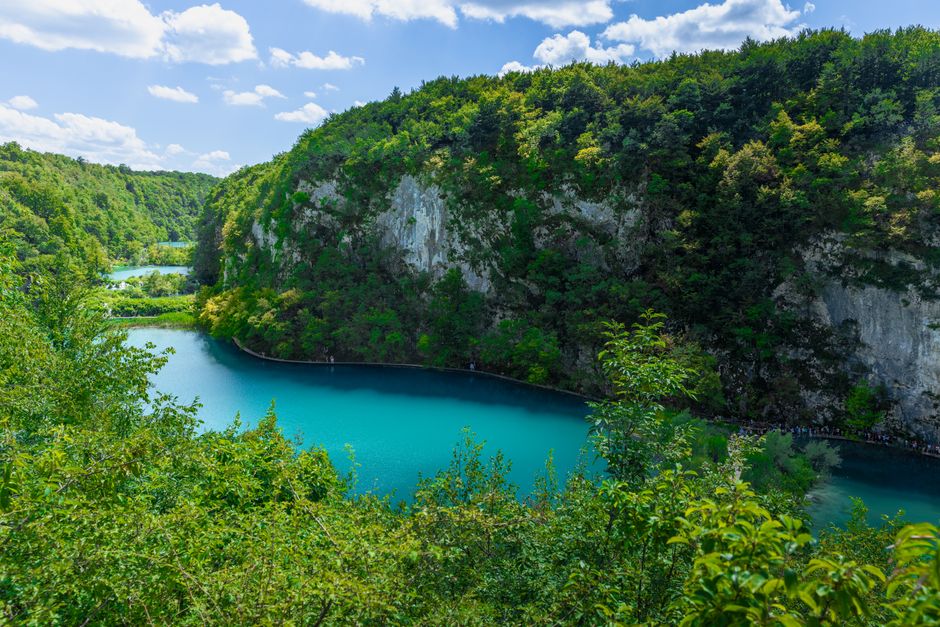
The strongest route choice is the one that matches available time and walking ability, not the route with the longest letter or the most ambitious distance. Park programs and route access can change, so the current official map should decide the final selection. The comparison below gives a planning framework rather than a fixed promise of access.
| Visit style | Approximate walking effort | Best reason to choose it |
|---|---|---|
| First visit with limited time | Short to moderate, with steps and uneven boards | Concentrates the most recognizable scenery |
| Balanced one-day visit | Moderate to long, depending on route connections | Shows the park’s changing landscapes |
| Quiet scenery and slower pace | Moderate, with longer stretches away from the main viewpoints | Offers more woodland and fewer dramatic bottlenecks |
| Family or mobility-conscious visit | Short to moderate; check current path conditions | Reduces pressure from steps, heat and long returns |
Lower lakes or upper lakes first?
The lower lakes usually provide the most immediate visual reward. The canyon narrows, waterfalls appear close to the path and several viewpoints are easy to recognize. That makes the lower section a strong choice for a first visit or a shorter schedule. It is also where crowding can feel most intense, especially at narrow boardwalks and popular photo stops.
The upper lakes feel more open and wooded. Their scenery is less concentrated, but the slower rhythm can be more enjoyable for visitors who prefer forest walks over constant viewpoint traffic. A full-day plan can connect both areas, while a shorter visit should choose one area rather than attempting a rushed crossing.
How to read the route map
Look for more than the total kilometers. Check the number of steep sections, stairs, transport stops, boat crossings and possible one-way stretches. A route that appears short may still take several hours if the path is crowded or if the group stops frequently. Mark one main target, one optional extension and one point where turning back remains easy.
The most reliable one-day verdict is a balanced route that combines the lower and upper lakes only when arrival is early and the group can walk for several hours. For a late arrival, the lower lakes offer a better chance of seeing major scenery without turning the final return into a race.
How to Build a Practical Plitvice Lakes Itinerary
Start with time, not landmarks. A workable itinerary protects the first two hours from delays and keeps an energy reserve for the return. The following sequence suits many first-time visitors, but the route should be adjusted to current access conditions and the group’s walking pace.
- Before leaving the accommodation: check the forecast, entrance instructions, route notices and internal transport timetable. Pack water, food that can be carried without spills, a light waterproof layer and footwear with firm grip. Avoid planning the day around a single photograph.
- Arrive near opening time: use the earliest practical entry slot and keep digital or printed booking information easy to reach. Early arrival reduces the chance of standing in the warmest part of the day and gives more flexibility if a path or transport connection is busy.
- Choose one primary route: decide if the lower lakes, upper lakes or a connected full-day route is the main goal. Do not wait until a crowded entrance area to compare every option. A simple decision saves time and prevents a group from splitting.
- Walk the most popular section early: use the first part of the visit for the viewpoints and boardwalks that matter most. The paths can become slower as more people arrive, so an early start improves both movement and visibility.
- Use internal transport as a planning tool: the electric train and boat connections can reduce repeated walking, but they are not instant transfers. Include waiting time, loading time and the possibility of a queue. Check the current timetable instead of assuming every service runs at the same frequency.
- Keep a fixed food and rest break: stop before the group becomes exhausted. A short break beside a permitted rest area is more useful than pushing on until someone cannot manage stairs or heat.
- Set a return deadline: work backward from the closing time, transport timetable and onward travel. The last section should feel unhurried. A route that looks achievable on paper becomes risky if the final connection is missed.
What to pack for the paths
Choose shoes with a closed toe, stable sole and enough grip for wet boards and muddy edges. Sandals with a smooth sole are a poor match for damp sections, even during warm weather. A compact rain layer is useful because showers can arrive while the forest remains cool and shaded.
Carry water in a reusable bottle and keep food contained. The park is a protected environment, so waste must leave with the visitor when no suitable disposal point is available. A phone battery can drain quickly while navigating, taking photographs and using transport information; a small power bank is practical for a long day.
How to pace the walking
Use a slower pace on narrow boardwalks. Stopping suddenly for photographs blocks people behind and can create unsafe pressure near the edge. Step aside only where the path widens, and never climb over barriers to reach a better angle. The scenery remains impressive from the marked route.
Groups should agree on a meeting point before entering. Mobile coverage may be inconsistent in wooded areas, and a separated family can lose time searching at the wrong junction. A basic plan is more useful than trying to keep everyone together by rushing.