You want to explore Ghent without the usual travel headaches. The most important conclusion up front: plan your public transport and key attraction visits meticulously. Ghent is incredibly walkable, but strategic use of its tram system and pre-booked tickets for major sights like St. Bavo’s Cathedral and Gravensteen Castle will save you significant time and money. Do not just show up. A little preparation makes all the difference.
Navigating Ghent: The Best Transport Options & Costs
For getting to Ghent, a train is hands down the most efficient choice, especially if arriving from Brussels, Bruges, or Brussels Airport (BRU). Belgium’s rail network is excellent, reliable, and covers the country well. Driving into Ghent’s city center is a hassle you want to avoid; it’s a low-emission zone, parking is expensive, and navigating the one-way streets and pedestrian areas can quickly become frustrating. Stick with the train.
Arriving by Train: Cost and Booking
To book your train tickets, use either the official Belgian Rail website (belgiantrain.be) or a third-party app like Trainline. Trainline (free on iOS/Android, small booking fee) often provides a smoother interface and combined international tickets if you’re coming from further afield. A standard one-way ticket from Brussels Central to Ghent-Sint-Pieters Station costs approximately €10-€12. From Brussels Airport (BRU), expect to pay around €15-€18, usually requiring a transfer in Brussels North or Central. Purchase tickets in advance online to avoid queues at the station, though same-day purchase is also possible. Validate your e-ticket on your phone or print it.
Getting Around Ghent: Tram, Bus, or Walk?
Once you arrive at Ghent-Sint-Pieters, the city center is not immediately walkable. You’ll need to use public transport or a taxi. The most practical solution is Ghent’s tram system, operated by De Lijn. Tram 1 or Tram 3 will take you directly from the station to the historic center (e.g., Korenmarkt or Gravensteen stops) in about 15-20 minutes. A single tram ticket costs €2.50 if purchased in advance via the De Lijn app (free on iOS/Android) or from a ticket machine, or €3.00 if bought from the driver. Consider a 24-hour (€7.50) or 72-hour (€15.00) pass if you plan to use public transport extensively. However, once you’re in the historic core, walking is your best friend. Most major attractions are within a 15-minute walk of each other. Comfortable shoes are non-negotiable.
Crafting Your Itinerary: Essential Sights and Time Management
Ghent offers a rich tapestry of history and vibrant modern life. To make the most of your visit, prioritize these key attractions. A 2-day visit allows for a good overview, while 3-4 days enable deeper exploration and more relaxed pacing.
- St. Bavo’s Cathedral & The Ghent Altarpiece: Allow 1.5-2 hours. This is non-negotiable. The ‘Adoration of the Mystic Lamb’ is a masterpiece. Entry to the cathedral is free, but viewing the Altarpiece requires a ticket, approximately €12. Book online at sintbaafskathedraal.be for your time slot.
- Gravensteen Castle: Budget 1.5-2 hours. This medieval castle offers incredible views from its ramparts. Audio guide (included in ticket price) is highly recommended. Ticket price is around €13. Purchase tickets upon arrival or online at gravensteen.stad.gent.
- Belfry of Ghent: Allocate 45-60 minutes. Climb (or take the elevator) for panoramic city views. Entry is approximately €10.
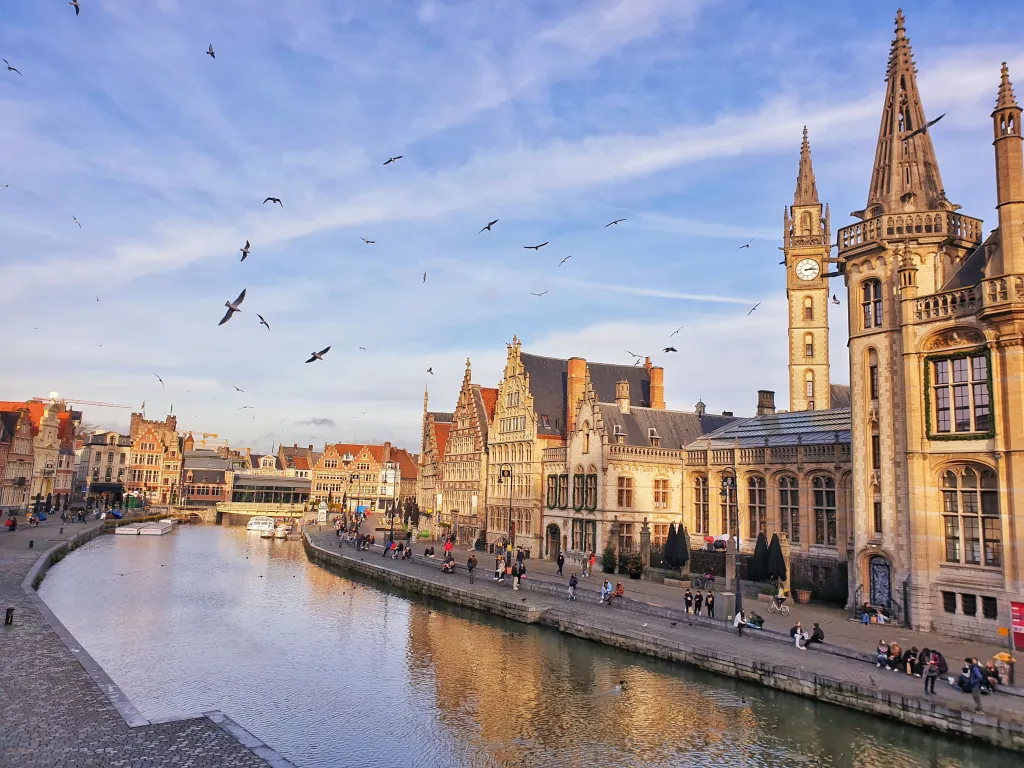
- Graslei and Korenlei: Dedicate at least 1-2 hours for wandering, people-watching, and perhaps a canal boat tour. A 40-minute canal tour costs around €8-€10 and departs frequently from these quays.
- Design Museum Gent: Allow 1.5-2 hours if interested in design. Ticket price around €12.
- Museum of Fine Arts (MSK) or S.M.A.K. (Museum of Contemporary Art): Choose one based on your preference; each requires 2-3 hours. Entry costs about €15 per museum.
- Vrijdagmarkt: Spend 30-60 minutes exploring the square, especially on Friday mornings for the market.
Prioritizing Your Visits: 2-Day vs. 4-Day Stays
For a 2-day trip, focus on the core: St. Bavo’s, Gravensteen, the Belfry, and extensive wandering along Graslei/Korenlei. You will feel rushed but see the highlights. Day one: arrive, check in, St. Bavo’s, Belfry, canal tour. Day two: Gravensteen, walk the medieval streets, explore Patershol district. For a 4-day trip, you can add one or two museums, explore the quieter areas like the Patershol district more thoroughly, enjoy more extended meals, and perhaps take a day trip to Bruges (30-minute train, €7-€8 one way). This allows for a much more immersive experience without the feeling of constant rushing.
Booking Ahead: Specifics for Popular Attractions
Always pre-book tickets for the Ghent Altarpiece at St. Bavo’s Cathedral. This ensures your entry and helps manage crowds. While Gravensteen Castle and the Belfry are generally fine to purchase on-site, checking their official websites for peak season advisories or special events is wise. Most museums also offer online booking, which can save a few minutes but isn’t as critical as the Altarpiece. For canal tours, tickets are usually bought directly at the quay just before departure.
Common Planning Mistakes to Avoid
Many travelers fall into predictable traps when visiting Ghent. These can easily be sidestepped with a bit of foresight. Don’t assume everything is close by, ignore local dining customs, or forget your power adapter.
Underestimating Walking Distances
Ghent’s historic center is compact, but the walk from Ghent-Sint-Pieters station to the center is significant (around 30-40 minutes). Walking between major sights like Gravensteen Castle and St. Bavo’s Cathedral is pleasant, but cumulative steps add up quickly over a day. A common mistake is planning too many back-and-forth trips. Group your activities geographically. For example, combine St. Bavo’s, the Belfry, and the Town Hall, as they are all in the same vicinity. Wear comfortable, broken-in walking shoes. Your €20 fashionable sneakers will punish you by mid-day. Opt for practical, cushioned footwear, like a pair of Hoka Clifton 9s (€150) or Brooks Ghost 15s (€140), if you plan heavy walking days.
Overlooking Local Dining Hours and Reservations
Belgian dining habits differ from some other countries. Lunch typically runs from 12:00 PM to 2:00 PM, and dinner often starts around 6:00 PM or 6:30 PM, ending by 9:00 PM or 10:00 PM. Many restaurants close completely between lunch and dinner service. Trying to grab a full meal at 3:30 PM can be challenging; you’ll likely be limited to cafes offering sandwiches or pastries. For popular restaurants, especially on weekends or evenings, make reservations. Use Google Maps to check restaurant hours and reservation links. A good strategy is to book dinner for 7:00 PM to ensure you get a table at your preferred spot, particularly in charming areas like Patershol. Failing to reserve can mean lengthy waits or having to settle for a less desirable option.
Forgetting Power Adapters and Offline Maps
Belgium uses Type E power sockets (two round pins, with a hole for the socket’s earthing pin) and operates on 230V at 50Hz. If you’re traveling from North America or other regions, you absolutely need a Type E/F adapter. A universal adapter with USB-C ports (e.g., EPICKA Universal Travel Adapter, €25) is ideal. Also, download offline maps for Ghent using Google Maps (free on iOS/Android). While Wi-Fi is available in many cafes and hotels, relying solely on it for navigation outdoors is risky. Signal can drop, or your data plan might be insufficient. Having the city map pre-loaded allows for seamless navigation without data, which is especially useful for finding your way back to your accommodation after a long day.
Ghent City Card vs. Individual Tickets: Which Saves You Money?
The Ghent City Card can be a fantastic value, but only if you plan to visit a specific number of attractions and use public transport frequently. It comes in 48-hour (€42) and 72-hour (€48) versions (prices as of 2026). Deciding whether to buy it means doing a quick calculation based on your itinerary. Here’s a typical cost breakdown:
| Attraction/Service | Individual Ticket Price (approx. €) | Ghent City Card Benefit |
|---|---|---|
| St. Bavo’s Cathedral (Altarpiece) | 12 | Free entry |
| Gravensteen Castle | 13 | Free entry |
| Belfry of Ghent | 10 | Free entry |
| Design Museum Gent | 12 | Free entry |
| Museum of Fine Arts (MSK) | 15 | Free entry |
| S.M.A.K. | 15 | Free entry |
| Public Transport (24-hour pass) | 7.50 | Unlimited use |
| Canal Boat Trip | 10 | Free |
| Tram from station to center (single) | 2.50 | Unlimited use |
| Bicycle Rental (1 day) | 15 | Free (for 1 day) |
Understanding the Ghent City Card
The card offers free or discounted access to most major museums and attractions, plus unlimited use of De Lijn public transport (trams and buses) within the Ghent urban area. It also includes a free canal boat trip and a 24-hour bicycle rental. This makes it particularly appealing for visitors who plan an intense sightseeing schedule and want to cover a lot of ground.
Calculating Your Savings
To determine if the card is worth it for you, list every attraction you plan to visit and sum their individual entrance fees, adding in any planned public transport use. For a 48-hour card at €42, you need to hit approximately €42 in savings. If you plan to visit St. Bavo’s (€12), Gravensteen (€13), the Belfry (€10), take a canal tour (€10), and use two 24-hour public transport passes (€15), your total individual cost is €60. In this scenario, the 48-hour card saves you €18. If your itinerary is lighter, say just St. Bavo’s, Gravensteen, and mostly walking, your individual cost is €25, making the card a loss. It’s best for ambitious travelers.
Essential Apps and Tools for a Smooth Trip
Which navigation app works best in Ghent?
Google Maps (free on iOS/Android) is the undisputed champion for navigating Ghent. It provides accurate walking directions, public transport routes (with real-time updates for De Lijn trams and buses), and cycling paths. Crucially, it allows you to download offline maps of the entire city, which ensures you always have navigation even without an internet connection. Simply search for Ghent, then select the option to download the offline map. It also integrates well with local business listings for finding restaurants, cafes, and shops, including their operating hours and reviews. Don’t overthink this; Google Maps is your primary tool.
What’s the best way to manage currency and payments?
For currency conversion, the XE Currency Converter app (free on iOS/Android) is simple and effective. It provides live exchange rates and can work offline with the last updated rates. Most establishments in Ghent accept major credit cards (Visa, Mastercard). Apple Pay and Google Pay are also widely accepted. Always have a small amount of euros (€50-€100) in cash for smaller purchases, market stalls, or places that might prefer cash, though these are increasingly rare. Avoid airport currency exchanges due to poor rates. Instead, withdraw cash from an ATM (Bancontact/Maestro, Visa, Mastercard accepted) using your debit card. Inform your bank of your travel plans to avoid card freezes.
Are there local public transport apps to download?
Yes, the official De Lijn app (free on iOS/Android) is invaluable. It allows you to purchase single tickets or multi-day passes directly on your phone, eliminating the need for physical tickets or fumbling with exact change. You can activate your ticket digitally and show it to inspectors if requested. The app also provides real-time tram and bus schedules, route planning, and information on service disruptions. While Google Maps covers routing, the De Lijn app offers more granular control and purchase options for public transport. Download it before you arrive and link a payment method.
Your Best Accommodation Strategy for Ghent
For maximum convenience and immersion in Ghent’s atmosphere, book your accommodation in the historic center or the immediate surrounding areas like Patershol or near Korenmarkt. This allows you to walk to most attractions, dine easily, and experience the city’s charm without needing public transport for daily sightseeing. While hotels near Ghent-Sint-Pieters station might be cheaper, the daily commute into the center quickly negates any savings in time and adds cost. Prioritize location over a marginally lower price; you’re there to experience Ghent, not just sleep in it.
You arrived in Ghent, uncertain about the best way to navigate its historic streets or how to make the most of your limited time. Now, armed with specific apps like Trainline and Google Maps, a clear understanding of public transport costs, and a calculated approach to the Ghent City Card, you’ve not only planned your itinerary effectively but also bypassed common pitfalls. Your comfortable shoes are ready, your tickets are pre-booked, and you know exactly where to grab that authentic Belgian dinner. Enjoy a seamlessly explored Ghent, just as you intended.