Why Luang Prabang’s Temples Deserve Two Unhurried Days
Luang Prabang’s historic peninsula contains more than 30 Buddhist temples, yet many visitors try to see the main sights in a single rushed morning. That misses the point. The town’s appeal comes from the slow rhythm between monasteries, river lanes, shaded courtyards and early-morning rituals.
The best approach is a two-day walking itinerary with one sunrise start, one afternoon break and enough time to sit quietly inside temple grounds. The temples are not a checklist of similar buildings. Each has a different setting and mood. Some face the Mekong, some sit behind busy streets, and others reveal their details only after the crowds thin out.
What the temple circuit actually offers
Wat Xieng Thong provides the most striking introduction, with its sweeping rooflines, detailed mosaics and position near the end of the peninsula. Wat Mai shows a more formal urban setting beside the former royal compound. Smaller neighborhood monasteries offer a closer view of daily religious life, especially when monks sweep courtyards or prepare for ceremonies.
Why rushing creates a weaker visit
Quick visits often produce the same mistakes: loud conversations, unsuitable clothing, rushed photographs and little understanding of what is happening. Two days allow a visitor to return to a favorite street, notice changes in the light and visit a temple when it is quiet. The clear verdict is simple: Luang Prabang works best as a walking town, not as a sequence of hurried photo stops.
How to Build a Two-Day Temple Itinerary
The most useful plan follows the town’s geography. Keep the first morning near the central streets and the peninsula, then reserve the second day for slower exploration and a longer riverside route. Distances are manageable on foot, but heat, uneven paving and the early start can make the day feel longer than the map suggests.
| Time | Day one | Day two |
|---|---|---|
| 5:30–7:00 | Observe morning alms from a respectful distance | Quiet walk along the Mekong and nearby lanes |
| 7:00–10:00 | Visit Wat Mai and the former royal district | Explore smaller neighborhood monasteries |
| 10:00–15:00 | Rest during the hottest part of the day | Visit a museum, café or shaded riverside area |
| 15:00–18:00 | Visit Wat Xieng Thong and the western peninsula | Climb Mount Phousi before sunset if conditions allow |
Start early, but do not treat the alms ceremony as an attraction staged for visitors. Afterward, breakfast and a rest period make the later temple visits more enjoyable. The strongest route places Wat Xieng Thong in the afternoon, when its architectural details remain visible but the first wave of visitors has eased.
What to Do Before Watching Morning Alms
- Choose modest clothing that covers the shoulders and knees. Loose, breathable fabric works better than tight or revealing clothing in the humid morning.
- Arrive before the procession begins, then stand well away from the walking line. A quiet side street is better than the most crowded corner.
- Turn off flash photography, silence the phone and avoid bright screens. The ceremony moves through residential streets, so silence matters.
- Never block a monk, step into the procession or touch a robe. Let the line pass without asking for a photograph.
- Do not hand out sweets, money or packaged food to children. This encourages performances and changes a religious practice into a street spectacle.
- If offering rice, follow local guidance and prepare properly. Visitors who are unsure should observe rather than join.
- Leave when the procession has passed. The ceremony belongs to the local community and does not need an audience lingering around it.
The key rule is distance. A respectful visitor becomes part of the background rather than the subject of the scene. The best photographs come from patience, not proximity.
What Morning Alms Really Means in Luang Prabang
Morning alms, commonly called tak bat, is a daily Buddhist practice in which monks walk through the community while residents offer food. The exchange supports the monastery and gives local families a religious role in the morning. It is not a performance designed for sightseeing, even though its route through the old town makes it highly visible.
The ceremony can feel quiet and brief. Monks walk in a line, residents kneel or stand at the roadside, and offerings are placed into the bowls with care. The scene may last only a few minutes on one street. A visitor expecting a large spectacle may feel disappointed, but that reaction points to the wrong expectation. The value lies in observing a living tradition without interrupting it.
Why the best viewing spot is rarely the busiest one
Busy corners often bring cameras close to the monks and create a wall of tourists around residents. A quieter section of the route offers a clearer view and reduces pressure on the people taking part. Stand behind the offering line, leave space for movement and keep the camera below eye level when the procession approaches.
How to read the atmosphere
Look for small details rather than dramatic moments: a resident preparing rice before dawn, a monk adjusting a bowl strap or a shopkeeper stepping back to let the procession pass. These details explain the practice better than a close-up portrait. The firm verdict is that observation without participation is the safest choice for anyone lacking local guidance.
Which Temples to Visit and What to Notice
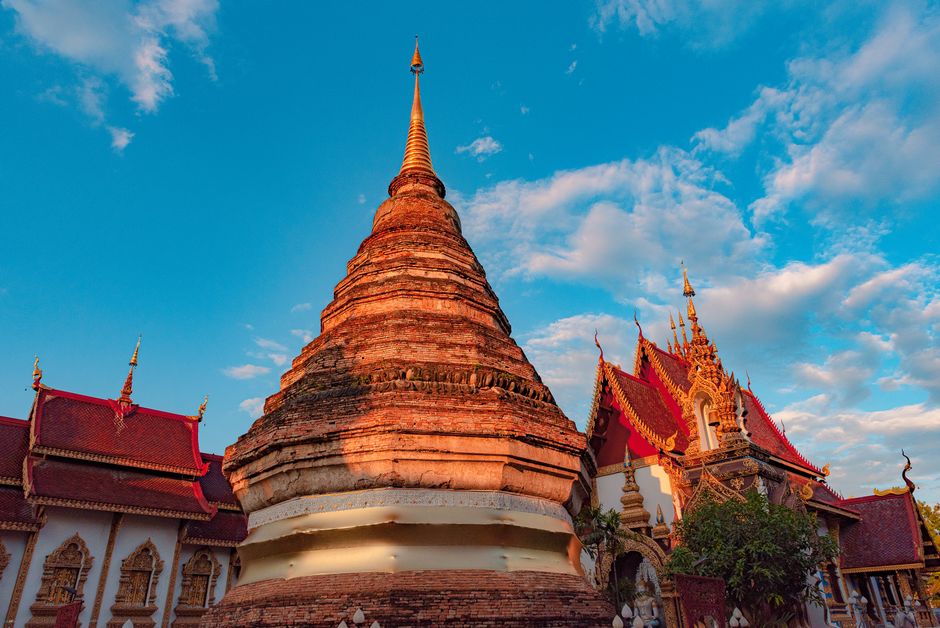
Wat Xieng Thong is the strongest first choice for visitors with limited time. Its layered roof, glass mosaics and riverside setting show why Luang Prabang architecture is distinctive. Look closely at the rear wall, roof edges and small side buildings instead of spending the entire visit in the main hall.
Wat Mai and the former royal district
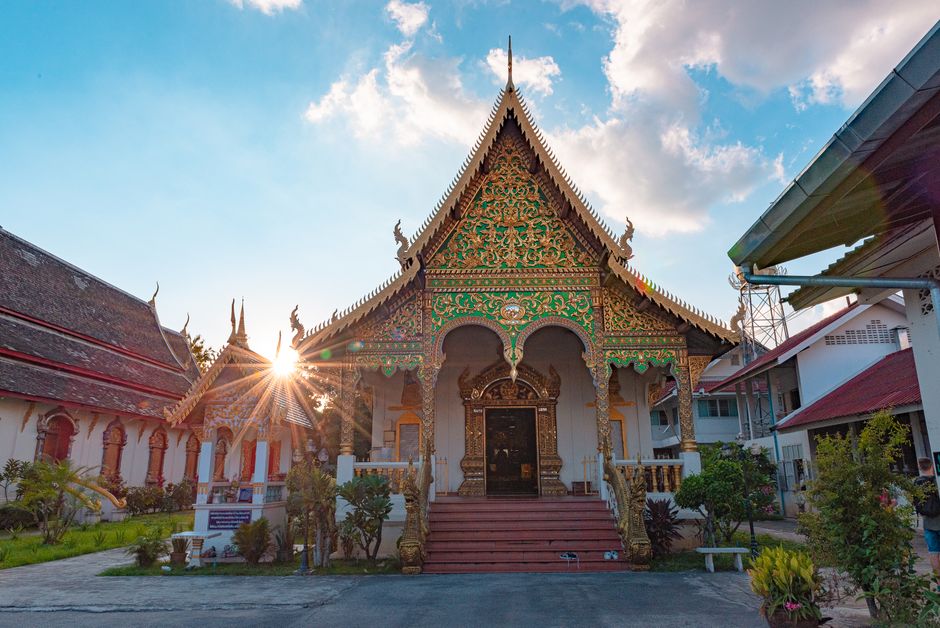
Wat Mai sits near the former royal compound and offers a useful contrast with Wat Xieng Thong. Its front veranda and carved details feel more connected to the central town, where streets are busier and the temple has a more public presence. Pairing the temple with the nearby museum area creates a compact morning route.
Wat Visoun and Wat Aham
Wat Visoun has a different visual character, with a broad, substantial structure and a long history. Nearby Wat Aham feels more intimate and shaded. The two temples work well together because the contrast prevents the visit from becoming a blur of similar roofs and gold surfaces.
Mount Phousi at sunset
Mount Phousi offers a broad view across the town, but the summit becomes crowded near sunset and the steps can feel demanding in hot weather. Arrive early if the view matters. Otherwise, choose a quieter riverside walk. The best alternative for visitors who dislike crowds is an early temple circuit followed by a late afternoon at street level.
Common Mistakes That Undermine the Experience
The most common error is treating every temple as a backdrop. Shoes come off before entering many religious buildings, voices drop inside prayer spaces and clothing should remain respectful beyond the main tourist streets. Signs and local behavior provide useful guidance, but silence and observation should come first.
- Arriving late for alms: Running into the route with a camera creates confusion. Arrive early or skip the ceremony.
- Using flash: Flash can disturb worshippers and produces harsh photographs inside dark halls. Natural light is safer.
- Standing in doorways: Doorways are active passageways, not viewing platforms. Move to the side.
- Touching sacred objects: Decorative details and statues may look accessible, but they still carry religious meaning.
- Trying to visit everything: More temples do not automatically create a better day. Fatigue makes visitors less attentive.
- Ignoring the heat: A midday break protects the rest of the itinerary. Shade and water matter more than one extra stop.
Visitors should also avoid assuming that every monk wants a portrait. A robe does not equal permission. If a photograph requires getting close, directing someone or interrupting movement, the photograph is not worth taking.
Questions Visitors Ask Before Visiting
Can the temples be visited without a guide?
Yes. The central temples are close enough for independent walking, and a simple map provides the basic layout. A local guide adds context about architecture, festivals and monastery life, but independent visitors should move slowly and read posted instructions.
What should be worn?
Shoulders and knees should remain covered, especially inside temple halls and during morning alms. Lightweight trousers, long skirts and shirts with sleeves are practical in the heat. A scarf can help, but it should not be used as a rushed substitute for suitable clothing.
Is sunrise the only good time for temples?
No. Sunrise suits the alms ceremony and cooler temperatures, while late afternoon brings softer light and a calmer walking pace. Midday is the least comfortable period for long outdoor routes, so use it for rest or an indoor visit.
Can children attend the alms ceremony?
Yes, but adults should explain the rules before arriving. Children need to remain quiet, stay behind the offering line and avoid touching monks or stepping into the procession. If they cannot follow those limits, a normal temple visit is a better choice.