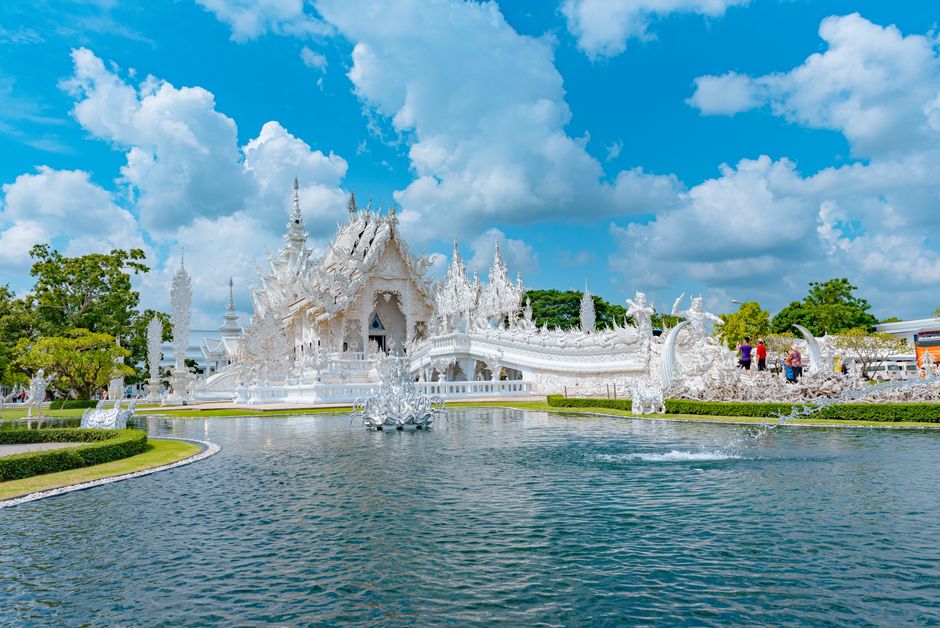
The White Temple is not an ancient monument. Wat Rong Khun is dazzling, symbolic and easy to reach from Chiang Rai, but a rushed midday visit can feel crowded and hot. A well-planned trip gives the temple room to make an impression.
What makes Chiang Rai’s White Temple different?
Wat Rong Khun, known in English as the White Temple, stands about 13 to 15 kilometres south of Chiang Rai city on the road toward Phan. Artist Chalermchai Kositpipat created the project as a modern Buddhist temple and art complex. The white surface represents purity. Small pieces of mirrored glass catch the light and suggest wisdom. The bridge leading toward the main hall represents the passage from ordinary desire toward a more disciplined spiritual path.
The design is deliberately more theatrical than the older Lanna temples found around Chiang Rai. White carvings, sharp roof lines, mythical figures, skulls, hands reaching from the ground and unusual modern references appear together. Some visitors expect a quiet historic shrine and feel surprised by the visual intensity. The better approach is to treat the site as both a religious place and a living work of art.
Why the temple is still unfinished
The complex was planned as a large group of buildings rather than a single shrine. Work has continued in stages, and different parts may look complete, under construction or closed during a visit. This is not a defect to hide. It is part of the site’s identity. The White Temple changes over time, so photographs from a previous trip may not match the current layout.
What to expect inside the main hall
The exterior is bright, reflective and easy to photograph. The interior is more restrained but contains symbolic imagery that mixes Buddhist themes with references to modern society. Dress should cover shoulders and knees, and quiet behaviour is expected. Photography rules can vary by building, so follow signs and staff instructions. Allow at least 60 to 90 minutes for the main temple area, longer if the art galleries and surrounding structures are open.
The strongest reason to visit is not simply the famous white façade. It is the tension between traditional religious symbolism and contemporary visual language. That makes Wat Rong Khun more memorable than a standard photo stop, especially when the visit includes time to look closely at the smaller details.
When should a visitor go to the White Temple?
Arrive early. The clearest light, cooler temperatures and thinner crowds usually appear during the first part of the visitor day, while late afternoon can bring softer light but less time before closing. Avoid treating the temple as a fixed stop between unrelated attractions: the road south can be busy, tour groups often arrive in waves, and the reflective white surfaces become harsh under strong midday sun. March and April can be very hot, and northern Thailand may experience smoky conditions during the burning season, which can reduce mountain visibility and affect outdoor plans. Check the temple’s current opening notice before travelling because hours, access to individual buildings and local events can change. For photography, the best practical window is usually the first hour after opening; for a quieter, slower look at the artwork, a late visit outside the busiest tour period can work better. A small umbrella, water and covered clothing matter more than a complex schedule.
How to build a Chiang Rai itinerary around the temple
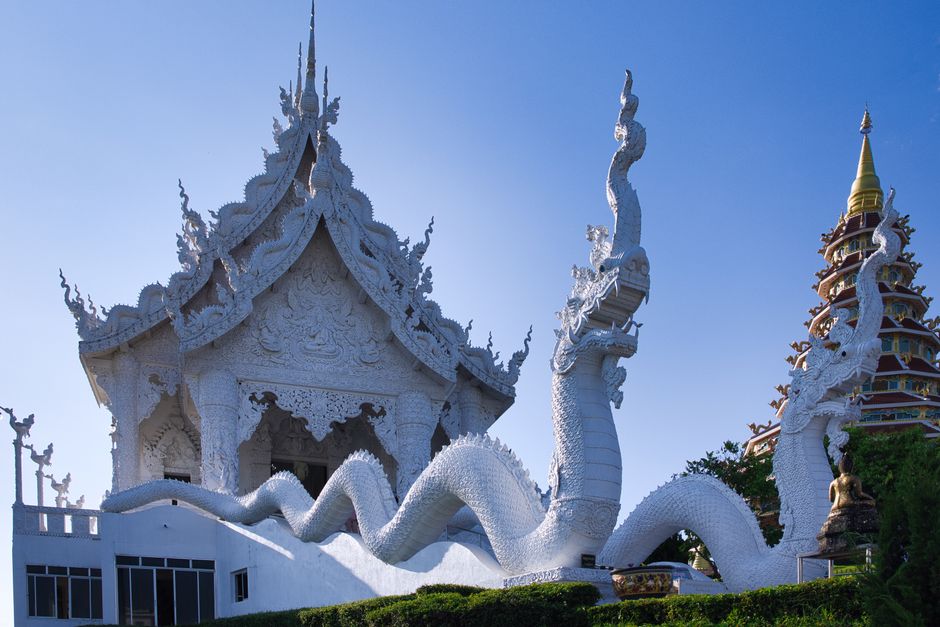
The White Temple works best as the southern anchor of a Chiang Rai day rather than as an isolated excursion. The city centre lies north of the temple, so a route that moves in one direction saves time. The following plan allows for traffic, walking and short pauses without turning the day into a race.
| Time | Stop | Suggested time |
|---|---|---|
| 08:00 | Wat Rong Khun | 90 minutes |
| 10:00 | Return toward Chiang Rai | 30 minutes |
| 10:30 | Central temple or local market area | 60 to 90 minutes |
| 12:30 | Lunch in the city | 60 minutes |
| 14:00 | One northern attraction | 90 to 120 minutes |
| 17:00 | Clock Tower and evening food area | 60 minutes |
Visitors with only one night in Chiang Rai should keep the plan compact. The White Temple, one central temple and an evening food area create a balanced first day. A second day can reach farther toward Doi Tung, Mae Sai, the Golden Triangle or the mountain viewpoints, depending on weather and transport.
Do not place the White Temple after a long northern loop unless there is no alternative. The return journey can take longer than expected, and missing the final access period creates a poor ending to an otherwise worthwhile day. The best itinerary has one main sight, two supporting stops and enough empty time to absorb delays.
Five mistakes that make the visit worse
Most problems at Wat Rong Khun come from planning errors rather than from the attraction itself. These are the mistakes most worth avoiding:
- Arriving at the busiest hour. A late-morning arrival can place a visitor behind several tour groups on the bridge and inside the main viewing areas. Early arrival gives more space and more comfortable temperatures.
- Confusing the White Temple with an old historic ruin. The site is modern and still developing. Visitors who expect centuries-old stonework may miss the point of the project.
- Trying to visit every famous sight in one day. Chiang Rai’s attractions spread across the province. Adding the White Temple, northern mountain areas, border towns and several museums creates long road time with little time at each stop.
- Ignoring temple etiquette because the architecture looks playful. The unusual sculptures do not make the site a theme park. Cover shoulders and knees, avoid loud behaviour, and follow photography restrictions inside religious buildings.
- Forgetting the heat between stops. The temple grounds have exposed paths and reflective surfaces. Water, sun protection and breathable clothing make the visit far easier, especially during the hot season.
- Relying on a photograph as the whole experience. The main façade is the obvious image, but the symbolism appears in smaller sculptures, murals and details around the complex. Leave time to walk slowly.
The clearest lesson is simple: reduce the number of stops and improve the timing of the important one. Chiang Rai rewards a slower route more than a checklist.
Common questions about visiting Wat Rong Khun
Is the White Temple a real Buddhist temple?
Yes. Wat Rong Khun functions as a Buddhist religious site, but it is also a modern art project and visitor attraction. That combination explains the unusual imagery and the large number of visitors. Religious etiquette still applies throughout the complex.
How long does a visit take?
Plan for 60 to 90 minutes for a focused visit. Add more time if the galleries, surrounding buildings and grounds are open. A quick photograph from the entrance is not enough to understand the symbolism, while several hours at the site may feel excessive for visitors who are not interested in art.
Can the temple be visited without a tour?
Yes. Independent travellers can reach the temple from Chiang Rai by local transport, hired vehicle or a driver arranged for the day. The main challenge is not finding the site but managing the return journey and combining it with nearby stops. Confirm the return plan before leaving the city.
What should visitors wear?
Wear clothing that covers the shoulders and reaches at least around the knees. Light, loose fabric works well in the heat. A scarf or overshirt can help if the day begins in casual clothing and continues to another religious site.
Is the White Temple suitable for children?
Older children often enjoy the dramatic sculptures and unusual details. Very young children may find the crowd, heat and symbolic figures tiring. A short early visit followed by shade and food is more comfortable than a long midday stop.
What happens if rain starts?
Rain can make the reflective surfaces even more striking, but paths may become slippery and outdoor areas less comfortable. Keep the schedule flexible and have an indoor city stop available. Sudden showers are a normal part of northern Thailand travel during the wet season.
A practical verdict for a first Chiang Rai trip
Chiang Rai’s White Temple deserves a place in a first northern Thailand itinerary, but it should not be treated as a complete picture of the province. The strongest plan is to arrive early, spend 60 to 90 minutes exploring the temple and then return toward the city for a quieter cultural stop and an unhurried meal. That route protects the visit from heat, crowds and unnecessary road time.
Allow extra space for changing opening conditions, traffic and weather. Keep mountain areas, border routes and distant viewpoints for another day unless the schedule is generous. Dress respectfully, follow local signs and look beyond the main façade. The small details explain why the site remains more than a popular photo location.
For a first visit, the clear recommendation is a two-day Chiang Rai stay: visit Wat Rong Khun at opening on day one, pair it with central Chiang Rai, and reserve day two for the mountains, museums or border landscapes. That balance delivers the White Temple’s visual impact without reducing Northern Thailand to a single landmark.