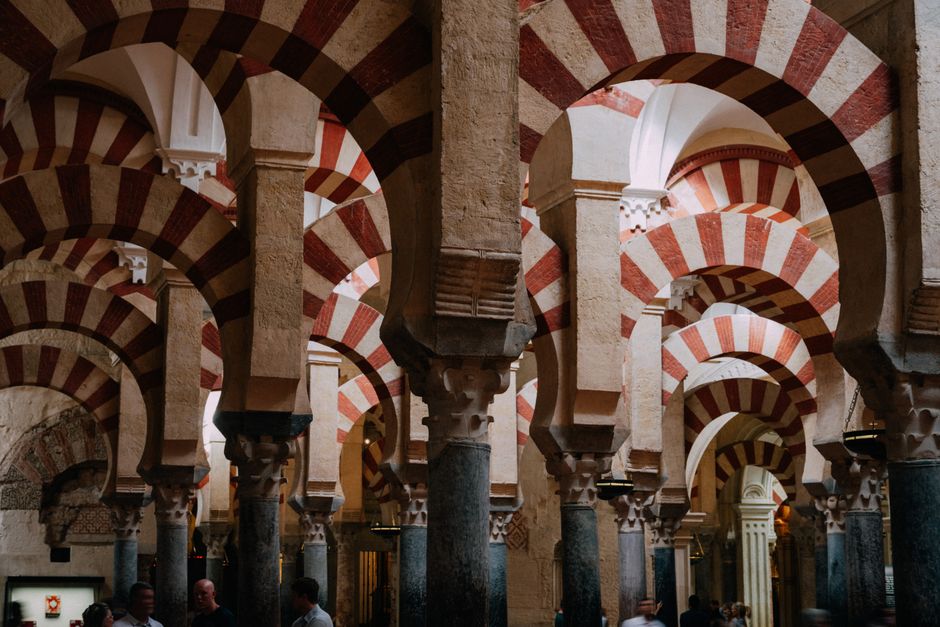
The Mezquita-Catedral de Córdoba contains more than 850 columns, yet its most surprising feature is not the scale. It is the way a cathedral rises inside a former mosque without erasing the building around it. Add flower-filled courtyards, narrow lanes, and severe midday heat, and Córdoba becomes a city that rewards a carefully timed day rather than a rushed checklist.
The best plan is simple: visit the Mezquita early, explore the old Jewish quarter while the streets are still comfortable, stop for a long midday break, then see the patios in the afternoon. The route below covers the essential sights without pretending that every corner deserves the same amount of time.
Why the Mezquita should come first
What makes the building different
The Mezquita-Catedral is not one monument with one clear identity. It is a layered building shaped by Roman, Visigothic, Islamic, and Christian periods. After the Christian conquest in 1236, the building became a cathedral. In the sixteenth century, a Renaissance cathedral nave was built into the former prayer hall.
That history matters because the interior does not read like a normal church or a preserved mosque. The double arches create a repeating red-and-cream pattern that seems almost endless, while the cathedral interrupts the rhythm with a tall central space, choir stalls, chapels, and a high dome. The contrast is the point. Walk slowly enough to see how each period competes for attention.
How to see the interior without missing its details
Enter with a route instead of wandering at random. Start by looking across the forest of arches from one of the wider aisles. Then move toward the mihrab, the richly decorated prayer niche that once marked the direction of Mecca. After that, turn back toward the Christian cathedral and compare the height, light, and materials of the two spaces.
Look down as well as up. The floor plan reveals how the mosque expanded in stages, and the direction of the arches changes near the later additions. The most impressive photographs usually come from the middle of the prayer hall, but the quieter side aisles explain the building better. Silence is part of the experience, so keep conversations low and avoid blocking narrow passages for photographs.
The first mistake to avoid
Do not treat the Mezquita as a quick photo stop between other attractions. Allow at least ninety minutes, and more if architecture interests you. Arriving late in the morning often means stronger heat outside, larger groups inside, and less time to understand the building before lunch.
What a realistic Córdoba day looks like
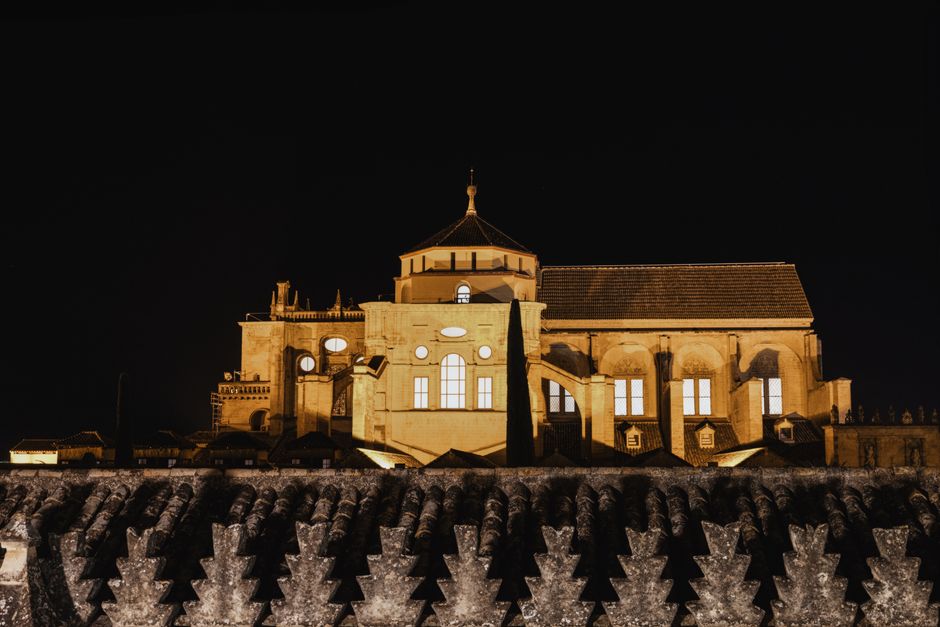
The route in one view
| Time | Area | What to do |
|---|---|---|
| 08:30–10:15 | Mezquita-Catedral | Explore the prayer hall, mihrab, cathedral nave, and main chapels |
| 10:15–11:00 | Roman Bridge | Walk south across the bridge and view the old city from the river |
| 11:00–12:30 | Judería | Follow the lanes near Calleja de las Flores and the old synagogue area |
| 12:30–15:30 | Central Córdoba | Have lunch, rest, and avoid crossing the city in the heat |
| 15:30–17:30 | Patio neighborhoods | Visit open courtyards and look for quieter residential lanes |
| 17:30 onward | Old town | Return toward the Mezquita area for a slow evening walk |
The best order for a first visit
This sequence wins because it protects the two experiences most affected by crowds and weather. The Mezquita needs concentration, while the patios are easier to enjoy when the day has slowed down. The Roman Bridge works as a short outdoor link rather than a separate expedition. The Jewish quarter belongs between the major stops, but it should not become a race to photograph every whitewashed lane.
Why the midday break is not wasted time
Córdoba can feel manageable in the morning and punishing after lunch. Stone streets hold heat, shade can disappear around open squares, and the most attractive lanes are not always the most direct route. A proper break protects the afternoon portion of the day. It also gives time to return to the old town without treating the patios as the final item on an exhausting march.
How to visit the patios without turning them into a checklist
Start with the idea behind the courtyards
Córdoba’s patios are not simply decorated gardens. They are living spaces built around a practical response to heat. Thick walls, interior courtyards, tiled surfaces, wells, shade, and carefully placed plants create cooler pockets inside dense neighborhoods. The tradition grew from Roman and Islamic approaches to domestic architecture, then continued through local homes and communal buildings.
That is why the courtyards look different from one another. Some are formal and carefully arranged. Others feel domestic, with laundry lines, working kitchens, old tools, or plants that clearly belong to everyday life. The strongest visits do not judge every patio as if it were a show garden. They notice how residents use space, light, water, and shade.
A practical walking method
- Choose one patio area rather than trying to cross the entire city. San Basilio is a useful starting point, while neighborhoods around Santiago, Santa Marina, and San Lorenzo offer a different feel.
- Visit a small number slowly. Three or four courtyards with time for conversation or observation are more rewarding than a dozen rushed entrances.
- Read the posted rules before entering. Some courtyards limit photography, control group size, or ask visitors to stay on a marked path.
- Look beyond the flowers. Notice the flooring, painted walls, wells, staircases, doors, and the relationship between public street and private home.
- Leave space in the schedule for an unexpected open courtyard. The best find may be a quiet entrance away from the busiest route.
When the famous patio season changes the experience
The annual patio festival, usually held in May, brings extra color and access but also more visitors. During the festival, queues can form, popular courtyards may feel crowded, and the most photographed spaces can become less intimate. Outside the festival period, fewer courtyards may be open, but the visit can feel calmer. Neither option is automatically better.
Visitors who want the widest choice should plan around the festival calendar and accept the crowds. Visitors who care more about atmosphere should look for open courtyards beyond the main route and visit outside peak hours. Do not enter a residential patio simply because a door is open. A courtyard can be visually inviting and still be private.
Which Córdoba questions matter before you go?
Is one day enough for the Mezquita and patios?
Yes, one full day is enough for the main experience if the itinerary stays focused. It is not enough for every museum, church, palace, courtyard, and food stop in the historic center. The sensible choice is to give the Mezquita the longest uninterrupted visit, then select one patio district instead of collecting distant addresses.
Should the Roman Bridge come before or after the Mezquita?
After works best for most visitors. The bridge is exposed, visually simple, and easy to connect to the old town once the interior visit is complete. Walking it first can work for early arrivals who want river views, but it risks using the coolest part of the morning on a stop that requires less concentration.
What should visitors wear and carry?
Wear shoes that cope with uneven stone and smooth, polished sections of pavement. Light layers help inside the Mezquita, where the temperature can feel cooler than outside. Carry water, especially between late morning and mid-afternoon, and keep shoulders and knees suitably covered for religious spaces. A small bag is easier in narrow lanes and crowded entrances than bulky luggage.
What if the patios are closed?
Do not treat a closed courtyard as a failed day. Walk through San Basilio or Santa Marina, look for public courtyards in cultural buildings, and pay attention to doorways, plants, and tiled entrances along the route. Córdoba’s patio tradition is visible in the wider architecture even when a particular home is not accepting visitors.
The clearest verdict for a one-day visit
The route that earns the time
Visit the Mezquita first, protect the midday break, and choose patios by neighborhood. That order gives the day a clear shape: monumental history in the morning, shaded urban walking later, and courtyards when the light softens. It also prevents the most common failure, which is spending too long on scattered sights and reaching the patios tired, overheated, and impatient.
The Jewish quarter deserves attention, but it does not need to become a maze-solving contest. The Roman Bridge is worth crossing, but it does not require an hour of posed photographs. The patios deserve curiosity, not a rushed scorecard. Leave room for the details that cannot be planned: a tiled passage, a quiet square, a cool interior, or the sound of water behind a courtyard door.
What the day should feel like at the end
By evening, the building’s contradictions should make more sense. The Mezquita showed how different histories can occupy one structure. The patios showed how people adapted homes to heat, privacy, and community. Together, they explain Córdoba better than a list of isolated attractions.
The opening fact now has a practical answer. More than 850 columns can seem overwhelming if viewed as a single spectacle, but a timed visit reveals the human decisions behind them: expansion, worship, reuse, shade, movement, and memory. Pair that slow architectural reading with a few carefully chosen patios, and one day in Córdoba feels complete rather than merely crowded.