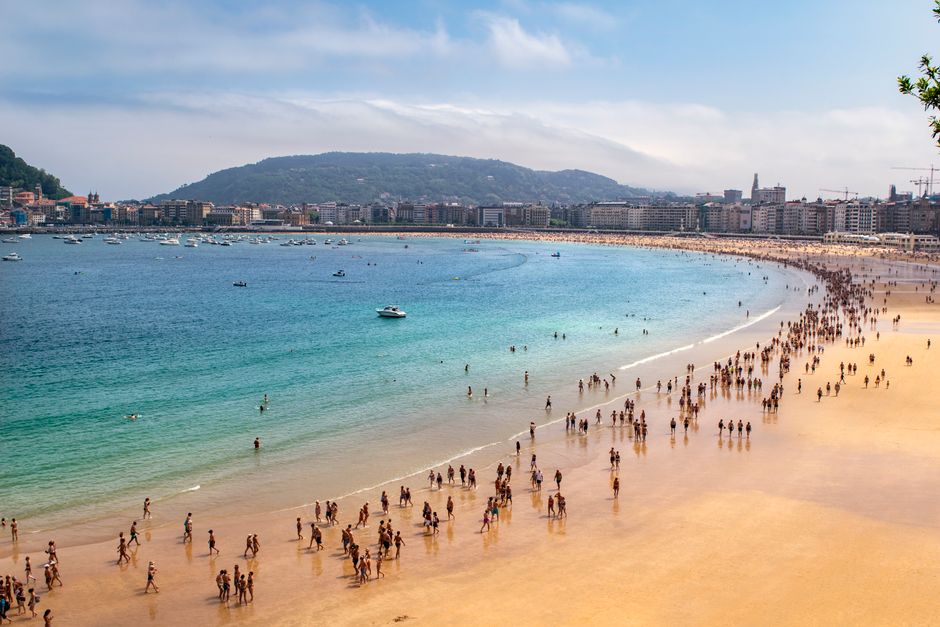
San Sebastián rewards travelers who slow down between the headline sights. The winning plan links a beach walk, the compact Old Town, and a deliberate evening of pintxos instead of treating them as separate stops.
What Can You See in San Sebastián in One Day?
A one-day visit works best as a west-to-east walk. Start beside the bay, cross the elegant central streets, climb a little for a view, then finish where the Old Town gets loud and hungry after sunset.
The efficient route
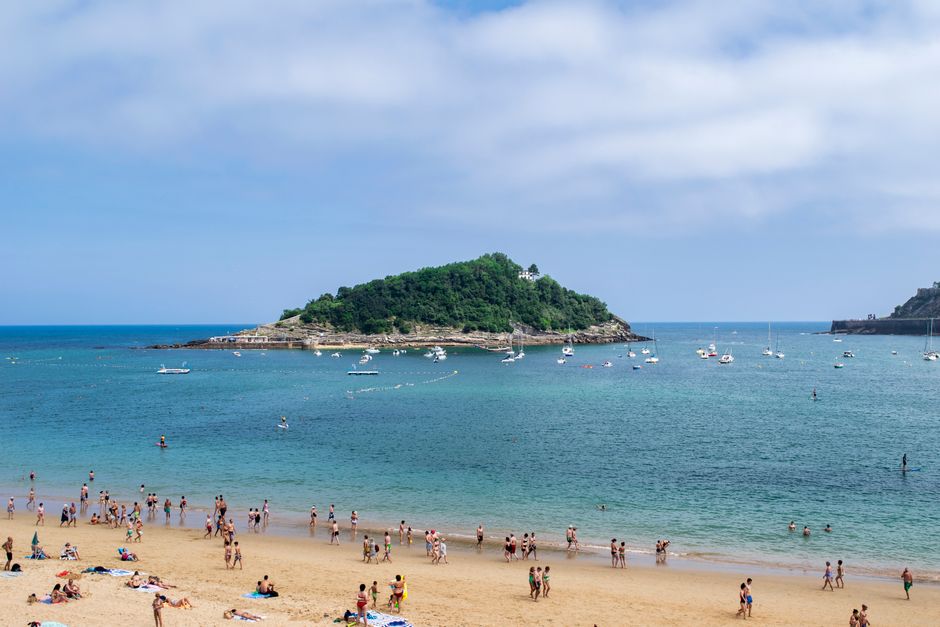
Begin at La Concha and follow the promenade toward the Old Town. This gives the day a clear visual opening: calm water, Santa Clara Island, the curved railing, and the wooded slopes around the bay. Continue through the centre rather than rushing straight into the narrow medieval streets. The contrast matters. San Sebastián is not only a beach resort or only a food destination; its appeal comes from the easy shift between both.
The realistic pace
Allow time for pauses. A rushed checklist misses the city’s best quality, which is how little effort it takes to move from one mood to another. The route below keeps the major sights together and leaves room for weather, tide, and a long lunch.
| Time | Area | Plan |
|---|---|---|
| 09:00 | La Concha | Walk the promenade and check the beach at low tide |
| 10:30 | Centre | See the cathedral, river bridges, and Belle Époque streets |
| 12:00 | Parte Vieja | Visit Plaza de la Constitución and the historic churches |
| 13:30 | Old Town | Take a proper lunch and rest |
| 16:00 | Mount Urgull | Walk uphill for harbour and bay views |
| 18:30 | Zurriola | Cross toward Gros for surf and sunset light |
| 20:00 | Parte Vieja | Start a short pintxos route |
How to Build a Three-Day San Sebastián Itinerary
Three days gives the city enough breathing room. The mistake is adding distant day trips before seeing the core properly.
Day one: bay, centre, and the Old Town
Use the first morning to understand the geography. Walk La Concha from the city side toward Ondarreta, stopping at the railing for views back across the bay. If the tide and weather cooperate, continue through the rocky passage near the Pico del Loro. Miramar Palace sits above this stretch, and the route explains why the city feels both urban and coastal at once.
Return through the centre and pause around the cathedral, the theatre, and the former casino building now used as the city hall. These are not isolated attractions. Together they show the late nineteenth-century expansion that gave San Sebastián its broad avenues and grand façades. Save the Old Town for the afternoon, when its churches, small squares, port, and covered streets are easier to read without the night-time rush.
Day two: Mount Urgull and a slower food day
Climb Mount Urgull before the heat builds. The paths are manageable but uneven, so proper walking shoes beat beach sandals. At the top, the viewpoints explain the city’s defensive history and give a clean view of the harbour, the bay, and the Urumea River. The climb is short enough to fit into a half day, but it deserves more than a quick photo stop.
Keep the afternoon flexible. Visit the port or a museum, sit by the water, and let the evening begin later than it might in northern Europe. Pintxos are not a race through every street. Three or four well-chosen stops with space between them usually feel better than a crowded sweep of ten counters.
Day three: Gros, Zurriola, and the city edge
Spend the final day on the eastern side. Start at Zurriola, walk the promenade toward Sagüés, and look back at the Kursaal’s sharp outline against the beach. Continue toward Mount Ulía only if the weather is steady and the group wants a proper walk; the coastal paths are more rewarding than a hurried uphill detour.
Finish with a final bay view rather than another checklist item. San Sebastián is small enough that repeating a favourite walk is sensible. The best three-day plan includes one deliberate return to the place that made the city click: the railing, the harbour, the hill, or a quiet street before dinner.
How to Eat Pintxos Without Wasting the Evening
Pintxos work as a social route, not a formal tasting menu. The strongest approach is simple: enter, look, choose a small amount, pay, and move on before the evening becomes a queue-management exercise.
A practical bar-hopping method
- Start before the peak. Early evening makes it easier to see the counter and ask a short question without blocking the doorway.
- Order selectively. Pick one or two items that look fresh, then add another only after the first round. The point is variety, not a plate piled with everything.
- Stand where the room stands. Pintxo culture is often casual and communal.
- Keep the route tight. Three nearby bars beat six across town. Less walking means more attention to flavour, texture, and the changing mood of the streets.
- Ask about hot dishes. Some of the best choices are prepared to order and may not be sitting in plain view. A direct question gets a better answer than guessing.
Mistakes that flatten the experience
- Do not treat every pintxo as a full meal.
- Do not assume the busiest counter is automatically the best. A crowd can mean a good room, a convenient location, or simply the local dinner rush.
- Do not plan the main food stop too early. Lunch and dinner run later than many visitors expect, and the Old Town feels different once the evening settles in.
- Do not turn the route into a photo session. Counters clear quickly, hot food cools, and a phone raised over people’s heads makes a small room harder for everyone.
The verdict is clear: choose fewer stops and pay attention. Pintxos are strongest when the meal feels like part of the city, not a scavenger hunt.
What Should First-Time Visitors Expect?
Is San Sebastián walkable?
Yes, for the central sights. La Concha, the centre, Parte Vieja, the harbour, and Zurriola connect through comfortable walks, but the city is not flat. Mount Urgull, Mount Igeldo, and the routes toward Mount Ulía add slopes and uneven surfaces. A realistic day includes one hill, not every hill.
When should beach time happen?
Check the tide before committing to a long beach session. La Concha can look generous at one hour and narrow at another. Morning is often better for a calmer walk, while late afternoon adds warmer light and more life along the promenade. Swimming conditions change with wind, swell, and season, so the sea should set the plan rather than a rigid timetable.
What should be packed?
Bring shoes that handle cobbles, a layer for Atlantic wind, and a small bag that leaves both hands free. A compact rain shell is useful even during a sunny forecast. The city rewards walking, but damp stone and sudden showers punish flimsy footwear. For the Old Town, modest clothing and quiet movement are more useful than a dressy outfit.
How to handle weather and short distances
San Sebastián looks compact on a map, and it is, but weather can change the effort required. A sudden shower turns a scenic promenade into a stop-start walk, while a strong Atlantic breeze makes the exposed route beside Zurriola feel colder than the temperature suggests. Keep the main sights grouped by area and treat public transport as a backup for tired legs, heavy rain, or a late return. Taxis and buses matter less for sightseeing than for protecting the rhythm of the day. The best practical choice is to avoid crossing the whole city for one reservation or one viewpoint. Save the long walk for clear weather, and use a museum, market, or sheltered square when the coast turns rough. This keeps the itinerary flexible without losing its shape.
Which San Sebastián Area Fits the Trip?
There is no need to choose one neighbourhood as a winner for every traveler. The right base depends on the rhythm wanted, but the city’s compact centre makes it easy to visit all of them.
Pick by mood
| Area | Best for | Trade-off |
|---|---|---|
| La Concha and the centre | First visits, promenade walks, classic views | More formal and busier in peak periods |
| Parte Vieja | Historic streets, pintxos, late evenings | Noisy and less restful at night |
| Gros | Surf, open beach, casual cafés | Farther from La Concha and the main historic sights |
| Ondarreta | Quieter beach access and bay views | Less central for repeated Old Town evenings |
The final call
For a first weekend, stay near the centre and walk outward. For a food-first trip, spend evenings in Parte Vieja but protect sleep from the late noise. For surf and space, choose Gros. San Sebastián is at its best when the itinerary moves between these moods: polished bay, working harbour, steep green hill, and crowded little bar. That contrast is the real reason to visit.