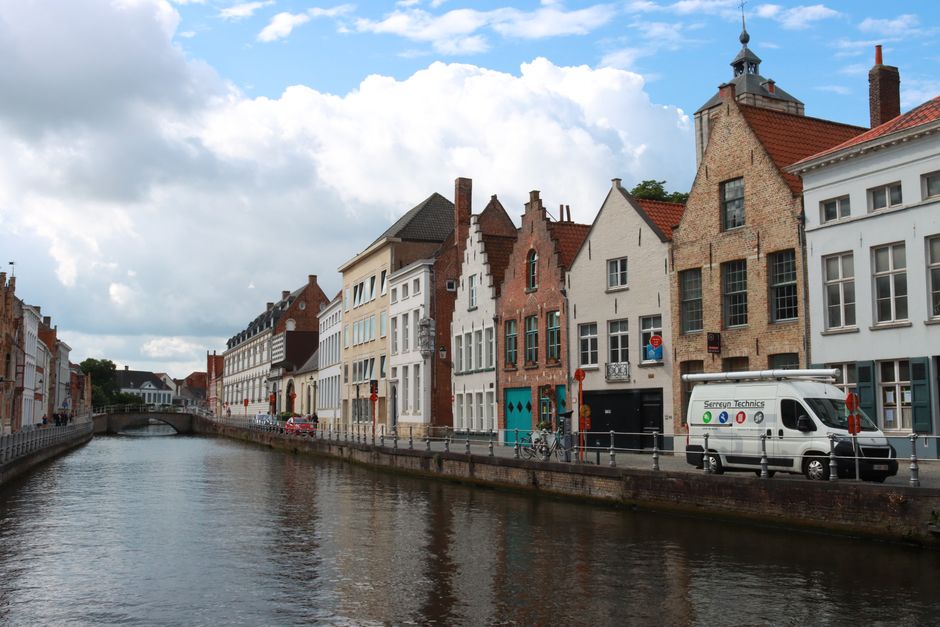
Bruges is easy to admire from the Markt, but the city becomes more interesting once the busiest square is behind you. A slower route through canals, quiet lanes, old almshouses and residential streets reveals how Bruges works beyond its postcard centre.
What lies beyond Bruges Markt?
The southern route leads to water and greenery
From the Markt, walk south through Steenstraat and continue towards Simon Stevinplein. This first stretch is busy, but the crowds thin near the canals around Katelijnestraat. From there, the route reaches the Begijnhof and Minnewater Park, two of the most peaceful places in central Bruges. The change is quick: shopfronts give way to pale brick walls, trees, still water and narrow paths.
The area around the Begijnhof is not a theme park or an empty historic set. It remains a quiet community, so voices should stay low and entrances should remain clear. The whitewashed houses are best viewed from the public paths rather than treated as photo backdrops.
The eastern route shows everyday Bruges
For a different mood, leave the Markt through the Breidelstraat and cross towards the Burg before continuing east. The canals near Jan van Eyckplein feel less compressed than those beside the main square. Further north, the streets around Sint-Janshuismolen and Kruisvest reveal a greener edge of the old city, with windmills, open views and fewer tour groups.
Best overall verdict: choose the southern route for a first visit, and the eastern route when the priority is space, local atmosphere and a longer walk.
How to plan a half-day walk through Bruges
Use this four-hour sequence
- Start early: Begin at the Markt before the central streets fill. Spend 20 minutes orienting yourself rather than trying to see every building immediately.
- Cross the Burg: Walk through the historic civic centre, then continue along the Dijver Canal. Allow 35 minutes for the canal views and side lanes.
- Slow down at the Begijnhof: Reach the entrance through Katelijnestraat and leave at least 25 minutes for the courtyard, bridge and surrounding streets.
- Continue to Minnewater Park: Follow the path beside the water. This is the best place to pause, especially after a crowded morning in the centre.
- Return through quieter lanes: Walk back via Walstraat, Wijngaardplein and the canals near Rozenhoedkaai. The return route feels different from the outward journey.
Match the route to the day
On a wet day, shorten the park section and spend more time in churches, courtyards and covered museum spaces. On a clear day, extend the walk towards Kruisvest and the windmills. The route works best on foot because many of the most attractive passages are too narrow for a relaxed cycle ride and too close together to justify constant transport changes.
Allow extra time for photographs, bridges and unexpected closures. Bruges looks compact on a map, but cobbled streets slow the pace. A realistic walking speed is closer to three kilometres per hour once stops and crossings are included.
Which Bruges neighbourhoods are worth the extra walk?
| Area | Best for | What to expect | Suggested time |
|---|---|---|---|
| Begijnhof | Quiet architecture | Whitewashed homes, a calm courtyard and narrow approach paths | 25–40 minutes |
| Minnewater Park | Open space | Water views, mature trees and a slower pace | 30–45 minutes |
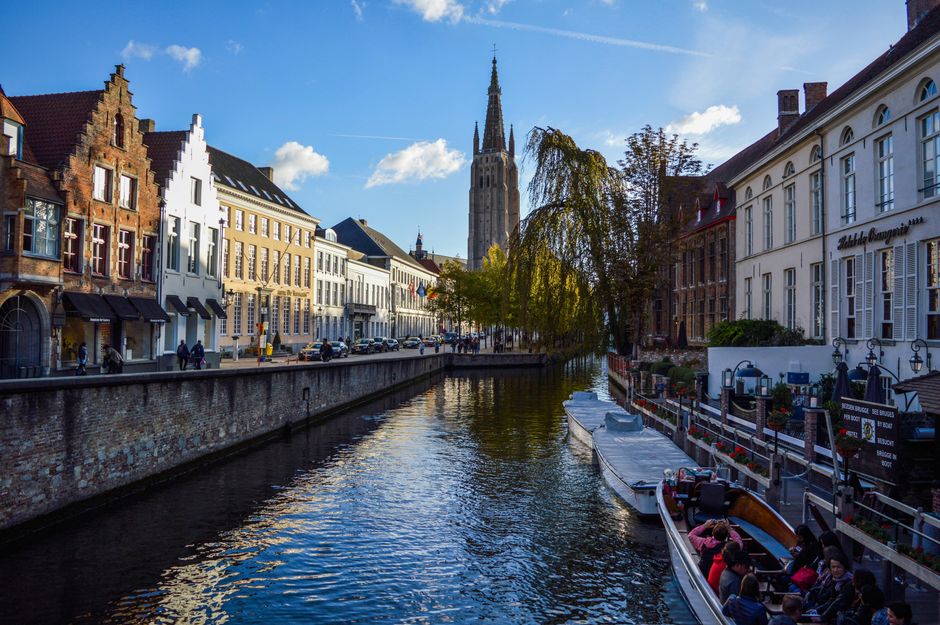
| Dijver and Groenerei | Canal scenery | Bridges, historic façades and good early-morning light | 30 minutes |
| Kruisvest | Windmills and views | A greener edge with longer walking distances | 60–90 minutes |
| Jan van Eyckplein | Less crowded streets | A broad square, canals and a quieter northern atmosphere | 20–30 minutes |
Pick one area instead of rushing through all of them
The strongest choice for a short visit is the Begijnhof and Minnewater combination. They sit close enough to connect naturally, yet they offer two different experiences: enclosed calm followed by open space. Kruisvest is the better choice for visitors with a full afternoon, comfortable shoes and an interest in the city’s outer historic edge.
Trying to cover every neighbourhood in one morning creates a checklist rather than a walk. Bruges rewards pauses, especially beside water where the view changes with each bridge.
What should visitors expect from Bruges canals and lanes?
Are the quiet canals really quiet?
They can be, but timing matters. The canals near Rozenhoedkaai and the Dijver are busiest from late morning through the afternoon. Arriving before the first major sightseeing groups gives a much better chance of seeing still water, open bridges and clear views. After rain, reflections can be striking, although slippery stones require care.
Why do short distances take so long?
Bruges has a dense medieval street pattern. Bridges, uneven paving, bicycles, horse-drawn traffic and slow-moving groups all affect the walking rhythm. A route that appears to take ten minutes may take twice as long during peak hours. Keep the itinerary flexible and avoid booking activities with no buffer between them.
Where does the city feel most local?
The quieter impression usually comes from residential streets rather than one secret attraction. Look around the edges of the centre near Sint-Anna, the northern canals and the lanes leading towards Kruisvest. These areas have fewer landmark façades, but they show doorways, small gardens, school routes and ordinary streets that are still part of the city’s daily life.
The practical rule: treat the canals as a walking landscape, not a race between viewpoints. The best discoveries often appear between named attractions.
Common mistakes when exploring Bruges away from the centre
The biggest mistake is planning Bruges as a list of landmarks. A better visit leaves space for detours because the city’s character changes block by block.
- Leaving the main square too late: Starting at midday means meeting the largest crowds on the narrowest streets. Begin early, then return to the central area later if needed.
- Ignoring weather and paving: Rain makes cobbles slick, while warm days expose the lack of shade near open water. Wear shoes with firm soles and carry a light outer layer.
- Entering residential courtyards: A quiet lane is not automatically public space. Follow signs, respect gates and avoid photographing residents at close range.
- Expecting every view to be empty: Popular canal corners remain popular. Move one or two streets away instead of waiting for a completely clear scene.
- Overloading a day trip: Combining every museum, canal route, park and outer district leaves little time to enjoy any of them. Select one main walking loop and one optional extension.
- Forgetting the return route: The historic centre is easy to enter but less intuitive when tired. Note a clear square, bridge or canal junction as a meeting point.
Visitors who want a more relaxed experience should skip the most photographed corners during the busiest hours and use them as orientation points instead. The quieter streets nearby often provide better views with less stopping and starting.
Which Bruges itinerary works best for each visit?
For a first visit
Choose Markt, Burg, Dijver, Begijnhof and Minnewater Park. This route covers the city’s major visual contrasts in roughly half a day: grand civic buildings, canals, small lanes, a historic community and open green space. It is the clearest introduction to Bruges beyond the main square.
For a repeat visit
Start near Jan van Eyckplein and walk north towards Sint-Janshuismolen and Kruisvest. This route has fewer headline sights but gives more room to notice the city’s scale, defensive edges and residential rhythm. It suits visitors who have already seen the central churches and canal viewpoints.
For a rainy or crowded day
Stay close to the Burg, Dijver and Katelijnestraat, where several indoor stops can be reached without crossing the entire city. Use the canals between stops, then return through quieter streets once the weather improves.
For most travellers, the best balance is the southern half-day loop: it offers the strongest scenery, manageable distances and a clear sense of how Bruges extends beyond the Markt. The northern route becomes the better choice when familiar landmarks matter less than quiet streets and open views.
| Visit type | Recommended route | Main advantage |
|---|---|---|
| First visit | Markt–Burg–Dijver–Begijnhof–Minnewater | Best mix of landmarks, canals and calm spaces |
| Repeat visit | Jan van Eyckplein–Sint-Anna–Kruisvest | More local atmosphere and fewer central crowds |
| Short morning | Burg–Dijver–Groenerei | Compact route with strong canal views |
| Slow full day | Southern loop plus Kruisvest | More variety without repeating the same streets |