How can a visitor see Heidelberg’s castle, Old Bridge and Philosopher’s Walk without spending the day rushing between viewpoints? The strongest plan follows the city’s natural sequence: begin in the historic centre, climb to the castle, cross the Neckar, then finish above the river on the northern hillside. This route keeps the most demanding uphill walk for the right part of the day and leaves room for pauses.
Heidelberg suits a one-day visit, but a second day changes the experience. The first day covers the famous landmarks. The second allows time for quieter streets, riverside paths, museums, and the less hurried rhythm that gives the city its character. This guide focuses on practical decisions, realistic walking times, access issues, weather, and the mistakes that can weaken an otherwise good itinerary.
How should a one-day Heidelberg itinerary be planned?
A practical sequence from morning to evening
Start in the Old Town and move south toward the castle before the main walking streets become busy. From the central historic area, the castle approach takes roughly 15 to 25 minutes on foot, depending on the starting point and pace. The route is uphill, so sturdy shoes matter more than speed. After the castle, return through the Old Town, continue to the Old Bridge, cross the Neckar, and reserve the late afternoon for Philosopher’s Walk.
| Time block | Suggested activity | Practical reason |
|---|---|---|
| 08:30–09:15 | Old Town streets and orientation | Quieter streets make navigation and photographs easier. |
| 09:15–12:00 | Castle approach, courtyard and viewpoints | Morning light suits the south-facing city panorama. |
| 12:00–14:00 | Return through the Old Town and take a meal break | A mid-day pause avoids combining the steepest walk with heat and hunger. |
| 14:00–15:00 | Old Bridge and riverfront | The bridge gives the clearest view back toward the castle. |
| 15:00–17:30 | Philosopher’s Walk and selected viewpoints | The northern hillside catches softer afternoon light. |
| 17:30 onward | Return to the Old Town or continue along the river | The plan stays flexible if the walk takes longer. |
How much walking is involved?
The classic route can reach 6 to 9 kilometres once side streets, viewpoints, and castle paths are included. The number matters less than the surface: cobbles, stairs, slopes, and uneven paths create more fatigue than a flat urban walk of the same length. Allow extra time for stopping. A group that walks quickly may finish the core route in six hours, while a slower group can spend the entire day covering the same sights.
The best plan protects one flexible block. If the castle visit takes longer, shorten Philosopher’s Walk rather than cutting the Old Bridge. If rain arrives, keep the Old Town and castle interior as the main focus, then return to the hillside only when the path is safe.
What should visitors expect at Heidelberg Castle?
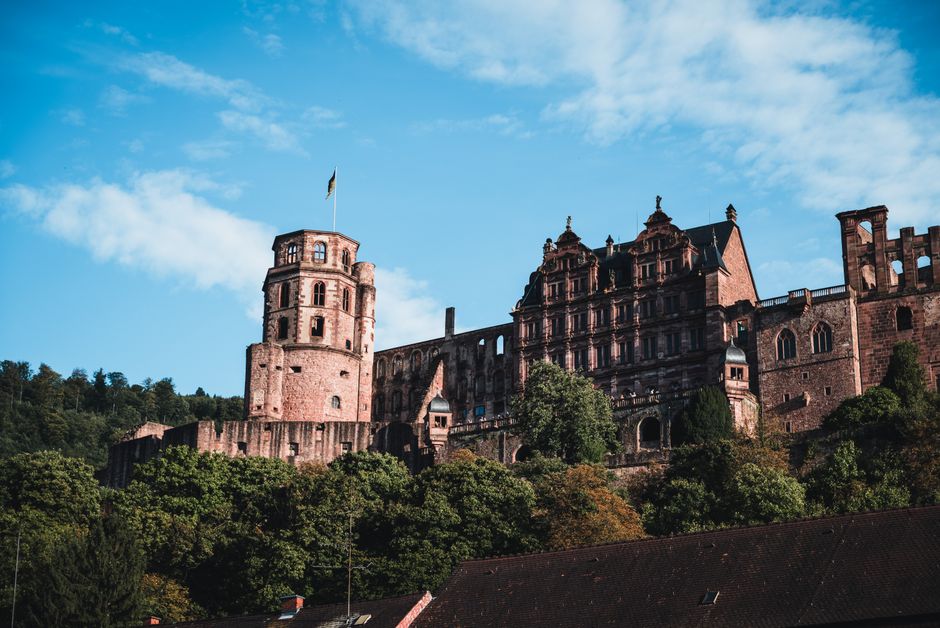
The castle is a ruin, viewpoint and historical site
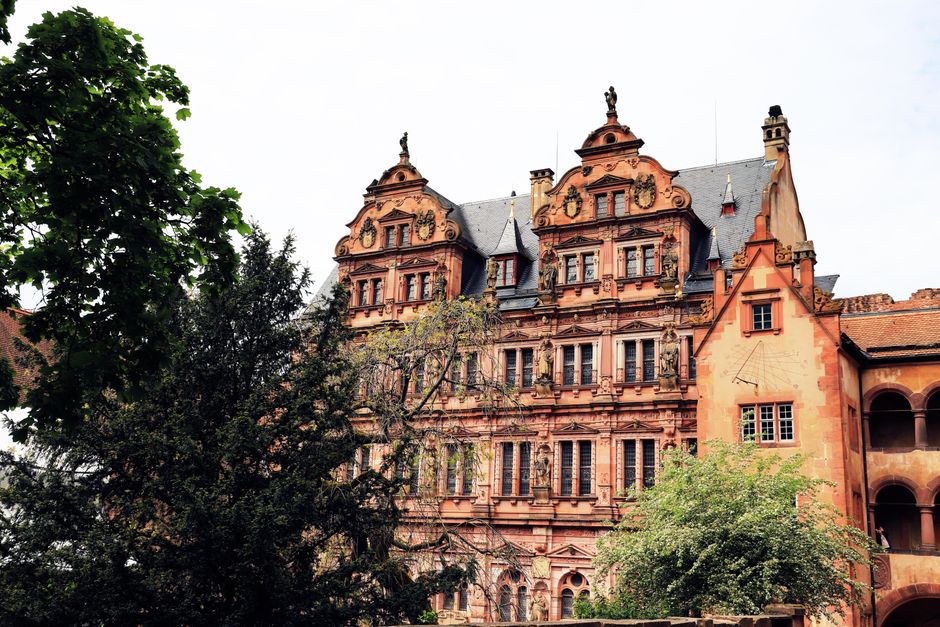
Heidelberg Castle is not a single polished palace with every room intact. It is a layered complex shaped by construction, war, fire, repair, and changing architectural taste. That condition is part of the visit. The surviving buildings show different periods, while the damaged sections make the site feel more like a historical landscape than a conventional royal residence.
The castle stands about 80 metres above the city, which explains both its visual impact and the effort needed to reach it. From the terraces, the Old Town appears compact, while the Neckar valley opens beyond it. The viewpoint is the main reward for visitors who have limited time, but the courtyard and exterior façades deserve attention because they reveal how the complex developed over time.
How to make the castle visit useful
- Begin with the city view so the geography becomes clear before reading detailed history.
- Look at the buildings as separate phases rather than expecting one uniform style.
- Pay attention to the contrast between repaired surfaces and preserved damage.
- Keep enough time for the terrace, courtyard, and route back down rather than using every minute inside one room.
Common castle expectations that cause disappointment
Visitors sometimes expect an intact residence, quiet photography at every angle, or a level route from the Old Town to the entrance. Those expectations create avoidable frustration. The castle is popular, the approach is steep, and some areas may have restricted access during maintenance or events. Conditions can also change with rain, ice, or crowd levels. The clear recommendation is to treat the castle as a major outdoor viewpoint with historical interiors, not as a fully preserved palace museum.
How do visitors walk from the Old Bridge to Philosopher’s Walk?
The route in five practical steps
- Reach the Old Bridge from the northern end of the Old Town and pause before crossing. The bridge itself frames the castle and the wooded slopes unusually well.
- Cross toward the northern bank and look back from the bridgehead. This is often the most balanced view of the castle, river, and historic centre.
- Follow signs and local streets toward the start of Philosopher’s Walk. The first section rises quickly, so the route feels more demanding than its distance suggests.
- Choose the lower viewpoints first. They provide strong city views without requiring a long hillside hike.
- Continue only if daylight, footwear, and weather allow it. The path becomes less urban as it climbs, and turning back is a sensible part of the plan.
What the walk feels like
Philosopher’s Walk is a hillside path rather than a single formal terrace. It combines paved sections, slopes, trees, gardens, walls, and openings toward the valley. The city view changes gradually, which is more rewarding than stopping at one marked point and leaving. In clear weather, the castle dominates the southern panorama; in mist, the wooded hills become the stronger feature.
Allow at least 60 to 90 minutes for a relaxed out-and-back section with photographs. A complete longer exploration can take much more. The route is best approached as a viewpoint walk, not as a race to a final destination. The most useful rule is simple: stop when the view becomes good enough, then return before tiredness turns a pleasant slope into a safety problem.
What mistakes should visitors avoid in Heidelberg?
Is it a mistake to visit the castle and Philosopher’s Walk back to back?
Not automatically, but the two sites demand different kinds of effort. The castle involves an uphill approach, stairs, and outdoor surfaces. Philosopher’s Walk adds another climb after the bridge. Visitors who schedule both without a break often arrive at the second viewpoint too tired to enjoy it. A meal or riverside pause between them improves the day more than adding another minor attraction.
Should visitors rely on exact opening times?
Schedules can change because of maintenance, public events, weather, or seasonal operation. Check official information shortly before the visit, especially for the castle interior, guided access, transport connections, and any temporary closures. Build the route around places that remain worthwhile from the outside. This protects the itinerary from one unavailable room or altered admission schedule.
Which practical errors are most common?
- Wearing smooth-soled shoes on cobbles, stairs, or damp hillside paths.
- Planning the full hillside route after sunset or in poor visibility.
- Leaving no time for the Old Bridge because the castle visit expanded.
- Assuming a short map distance means a short walk when the route includes steep slopes.
- Photographing only famous landmarks and missing the quieter lanes connecting them.
- Choosing a crowded central route at the busiest time instead of walking one street parallel to it.
The clearest failure mode is overpacking the day. Heidelberg rewards sequence and pauses more than a long attraction list. A visitor who protects the three core views usually leaves with a stronger impression than someone who adds several rushed stops.
Is two days in Heidelberg better than one?
The strongest recommendation
Two days are the better choice for travellers who value walking, history, and a calm pace. The first day can follow the classic south-to-north route: Old Town, castle, Old Bridge, and Philosopher’s Walk. The second can explore the riverbanks, quieter parts of the historic centre, additional cultural sites, and the hills beyond the main viewpoint. This structure removes the pressure to treat every street as a timed stop.
A useful two-day division
Use the first morning for the castle and the first afternoon for the bridge and hillside. Keep the evening close to the Old Town, where the streets feel different after day visitors leave. On the second day, start with a slower breakfast and choose one theme: architectural history, riverside walking, university life, or a longer hill route. A theme gives the day shape without forcing a checklist.
Two days also create room for weather. If rain weakens the first afternoon, the bridge and hillside can move to the next day. If clear skies arrive unexpectedly, the longer viewpoint walk can take priority. That flexibility is the main advantage, not simply the number of attractions covered.
When one day is enough
One day is sufficient for travellers passing through, arriving by train, or wanting only the defining landmarks. The route should then stay focused: castle terrace, Old Town, Old Bridge, and a manageable portion of Philosopher’s Walk. The single most important takeaway is to treat Heidelberg as a connected valley city, plan the castle before the bridge, and leave enough energy for the hillside view.